
Commercial Roof Leak Repair in Orange, CA
A fresh drip below an equipment curb gives us a starting location and a reason to examine the curb connection. We inspect the flashing turn, nearby seams and the drainage path, then compare those findings with the interior damage. Commercial roof leak repair in Orange, CA needs a plausible route from the opening to the wet area. Commercial Roofers Orange checks that route physically before closing the suspected defect. The repair recommendation separates the entry point from any wet insulation or damaged components that also need removal.
A leak above an Old Towne Orange storefront can threaten customer space, stock, or electrical fixtures, so work below the opening needs protection. A leak above an operating business there can affect a customer area, storage or electrical equipment, so protection below the work matters immediately. Santa Ana's Historic South Main Business District includes older retail stores and small businesses with their own operating constraints. We coordinate safe access and examine each roof on its own terms. We identify the installed membrane, examine curb and drain connections, and check affected layers to establish how far concealed moisture extends.
Match rain behavior to roof findings
A leak that appears during wind-driven rain can point toward a different detail from one that follows prolonged standing water. We ask about timing, affected rooms and recent equipment activity, then examine the corresponding roof area. Wall transitions, drains, penetrations and seams receive attention according to the observed pattern. The owner's observations help us choose where to investigate; the physical opening and surrounding condition determine what needs repair.
Inside the building, water can follow a deck flute, pipe or structural member before reaching the ceiling. We compare accessible interior observations with the roof findings and consider non-roof causes such as equipment condensate. A hands-on roof inspection can identify damage beyond the immediate complaint. Where a safe controlled water test is appropriate, we isolate details and consider the risk to the occupied space before introducing water deliberately.
Openings need a close examination
A hairline split at a flashing corner can be difficult to distinguish from a surface mark until the area is cleaned and examined. We inspect the material, bond and termination. A seam probe helps identify an unsealed edge on suitable membrane systems. At metal details, we check joints, movement and attachment. Repairing a failed flashing connection may require rebuilding the underlying support rather than spreading sealant across the visible line.
Southern California Santa Ana winds bring dry air through mountain passages and can cause property damage. After a wind event, displaced metal or a torn membrane detail needs a check of adjoining connections as well as the obvious opening. We trace that damage sequence to identify where movement has weakened the assembly. A condition photograph helps the owner see the measured opening, but physical checks determine the repair boundary and whether an adjacent component remains secure.
Follow moisture into the layers
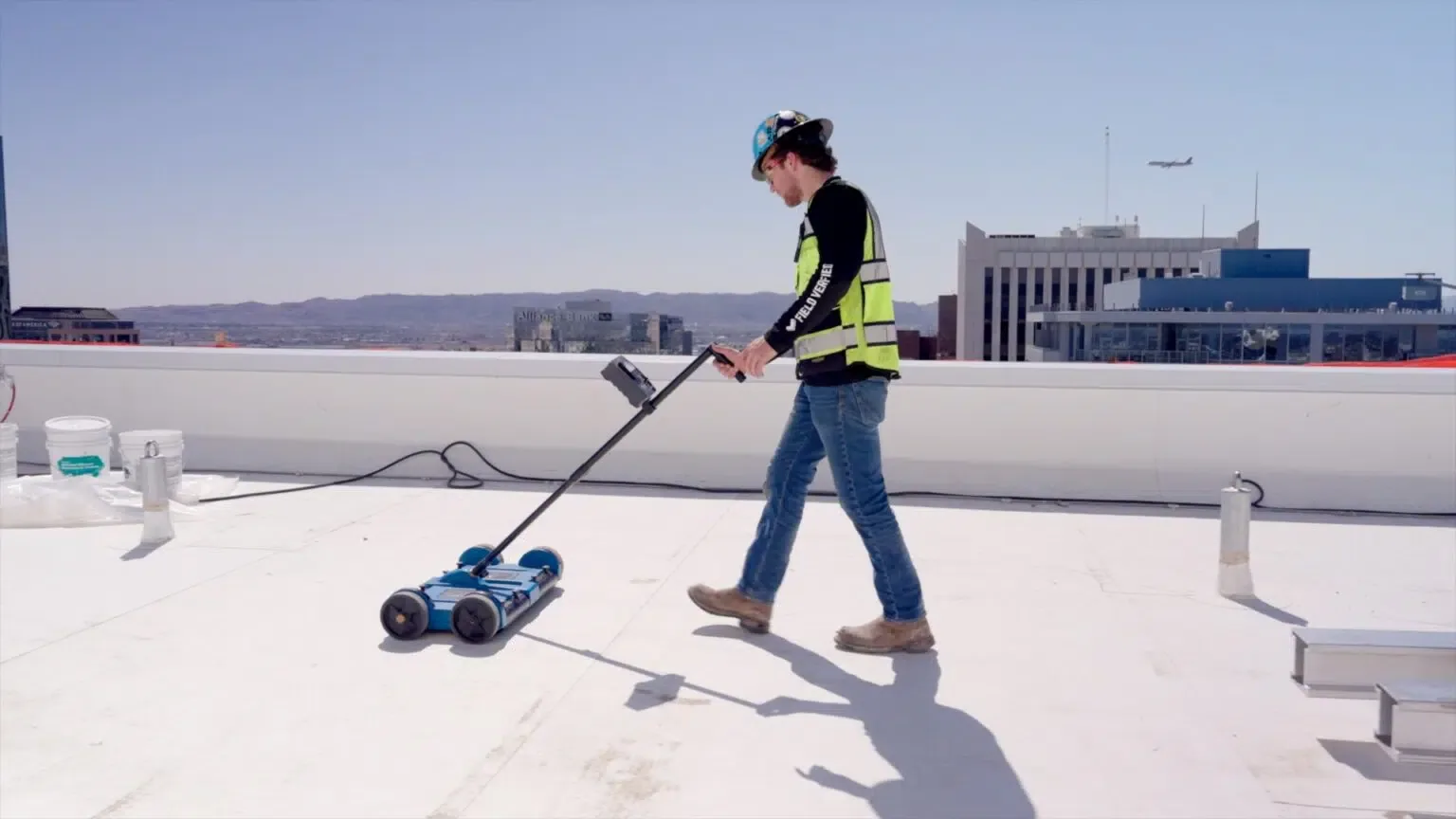
Wet insulation beside a leak may extend beyond the surface defect. We examine selected openings and compare the layer condition around the suspected entry. An infrared moisture investigation may help identify additional check locations when the assembly and conditions are suitable. The survey result needs physical confirmation before it becomes a removal area. Wet or deteriorated materials are handled within a scope that ends on suitable surrounding layers.
The deck also needs attention where prolonged water entry has affected its condition. Corroded metal, deteriorated wood or another support concern may require further evaluation before closure. We identify the affected area and coordinate the necessary repair responsibility. Replacing the membrane alone would leave a compromised support underneath. The owner receives a clear explanation of the entry repair, layer removal and any separate structural finding so each part of the work can be resolved.
Stop entry without hiding the cause
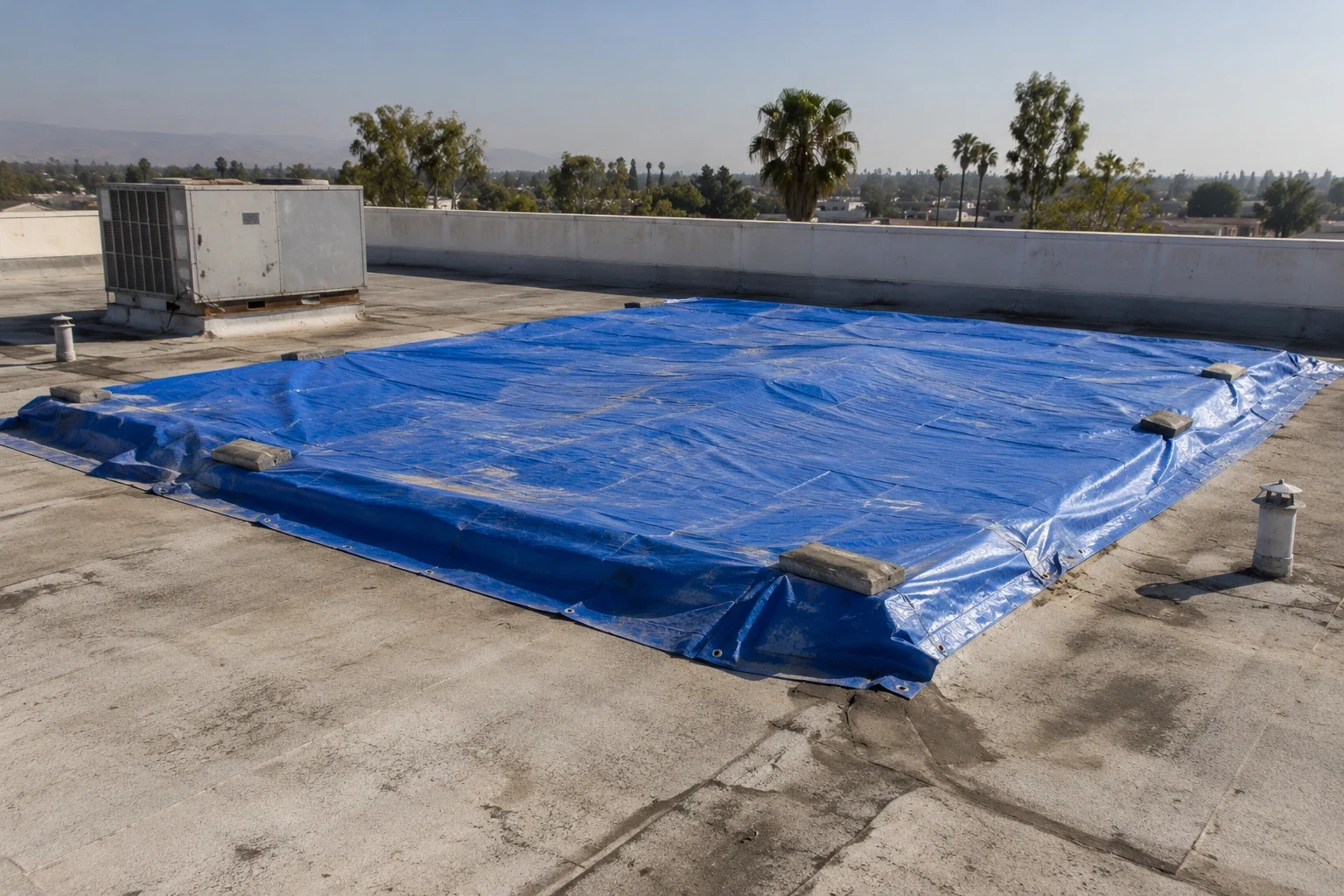
A temporary closure can reduce incoming water while a permanent detail is prepared. We select the temporary method for the surface, access and weather present, then establish the next step. If water is entering actively and immediate protection is needed, emergency roof response is available day and night, including weekends and holidays. Safe access and the condition of loose materials govern what can be done during the event.
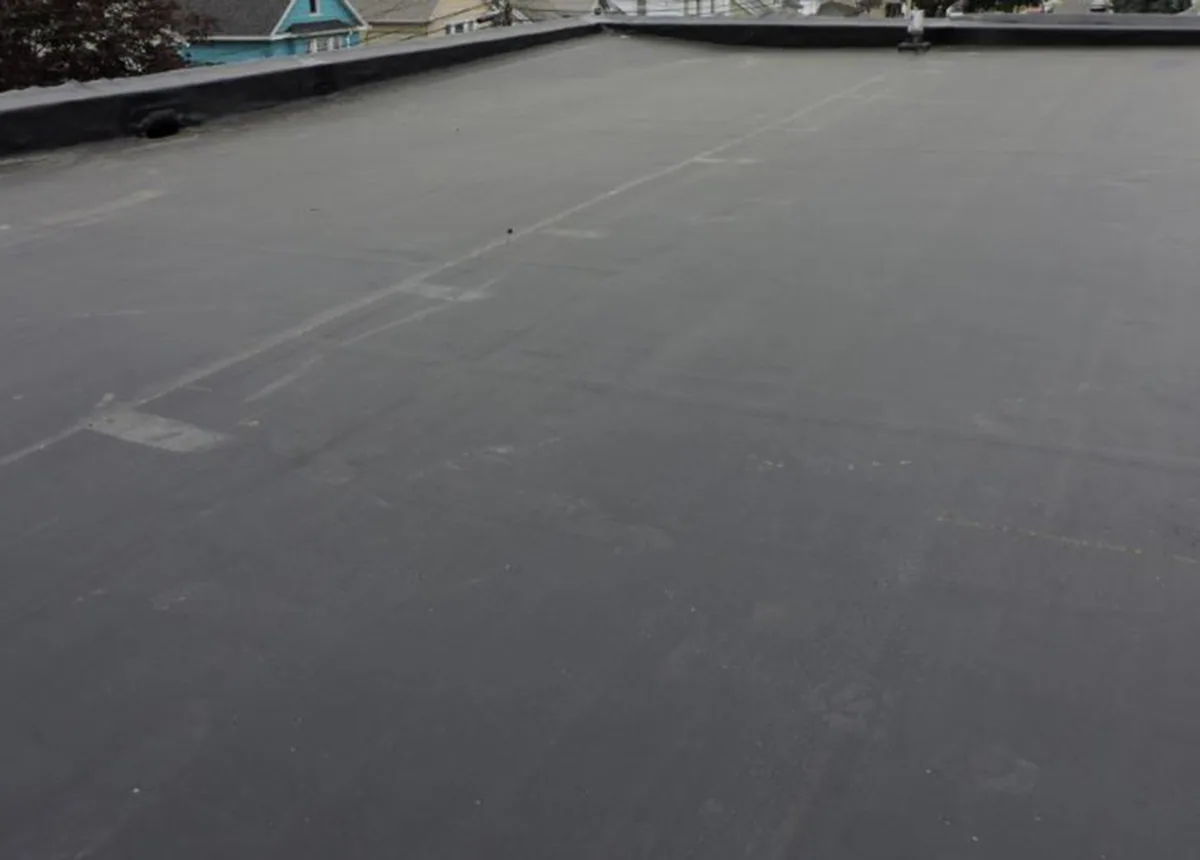
The permanent repair uses compatible material and restores the failed connection. An EPDM roof detail requires different preparation from a welded thermoplastic seam or a metal joint. We remove unsuitable earlier repairs where they interfere with the work. Drain restrictions and equipment movement are addressed if they contributed to the entry. The completed patch must connect to sound material and leave a water path that does not return to the same vulnerable detail.
Check the repaired water path
A dry ceiling immediately after work is useful, but the repaired roof connection still needs inspection. We check the seam, termination or drain detail using methods appropriate to the system. Where a controlled test can be performed safely, its location and limits are agreed before testing. A follow-up view after relevant rainfall can help assess the original complaint. We compare new observations with the original wet area rather than treat an unrelated interior mark as proof that the same repair failed.
For a building in Santa Ana or Orange, we ask the owner to track where and under what conditions water appears if the complaint continues. Multiple entry points can require separate corrections. The work record identifies the repaired detail and any area still under investigation, so the next visit starts with the actual completed work. That record supports the physical follow-up and helps avoid repeating a repair at a detail already checked.
Questions About Commercial Roof Leak Repair
Why does the drip appear only with rain from one direction?
Wind-driven rain can reach joints or wall transitions that remain dry during other storms. We examine those details alongside the roof membrane and compare the weather pattern with the interior location. A safe test may help isolate the opening if ordinary inspection leaves uncertainty. The recommended repair addresses the connection found during that investigation rather than sealing every nearby surface indiscriminately. We also check whether blocked drainage leaves water against that connection longer than intended. Correcting the outlet can be part of stopping the entry if the inspection connects the two conditions.
Does stopping the leak mean the insulation can stay?
Insulation that has become wet or lost useful support needs its own assessment after the entry point is corrected. We inspect the layers and establish whether removal is necessary and how far it should extend. Closing the opening does not automatically restore the concealed material. The owner can review the entry repair and the layer replacement as related but physically different tasks.
Can a roof leak return after an equipment service visit?
Service traffic, moved supports or changes to a curb can damage a membrane connection. We inspect the disturbed area and compare it with the prior repair boundary where that information is available. The equipment trade may need to address movement or support before we rebuild flashing. A protected service route can also reduce repeated contact with a vulnerable detail.
What should I tell you about a leak that has stopped?
Describe the affected room, the rain or operating conditions and any visible roof damage. Photographs taken safely from inside can preserve the wet location for the inspection. We still examine the roof connection and concealed condition where warranted, because a dry interval can leave the opening unchanged. Keep people away from unstable ceiling material and involve the appropriate trade for electrical hazards.
Related Roofing Work
Describe the water entry
Tell us the Orange property's wet area, timing and access restrictions. We can examine the roof connections, protect the affected area and explain the permanent repair. Call 555-555-5555 or request a roof assessment.