
Commercial Roofing in Anaheim, CA
A loose curb corner over a busy room can create a repair problem that is both technical and operational. In Anaheim, hotel and convention activity is part of the local economy, and Anaheim Canyon is an industrial business district. Hotel, convention and industrial properties can have public areas, equipment and service routes that need a defined work zone. We inspect the installed surface, seams, wall and equipment flashings, drainage and interior symptoms before choosing a method. A focused commercial roof inspection gives the owner a record tied to the roof section and the building's operating limits.
At the nearby Anaheim NOAA station, 1991 to 2020 normals show an August average daily high of 88.8 F and 47.2 days a year reaching at least 90 F. Heat exposure makes condition checks at seams, transitions and rooftop equipment useful, especially when repairs have been added over time. We inspect for open welds, brittle or displaced flashing and movement around curbs rather than assuming that a hot day caused a specific defect. The commercial roofing in Anaheim scope describes what we see and how it affects water control, occupancy and the next maintenance decision.
Sequence work around occupied spaces
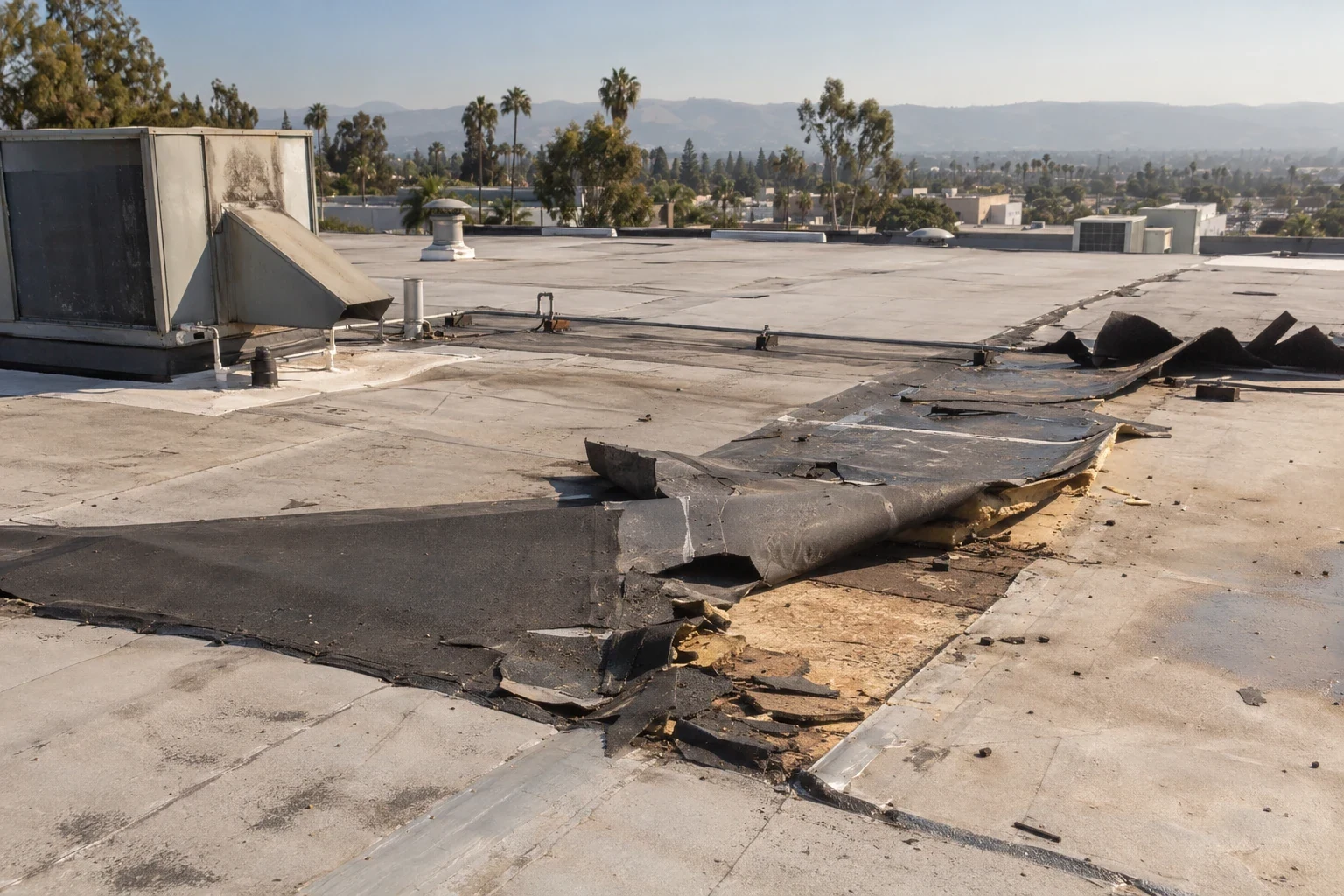
A hotel or convention-related operation may have guest areas, kitchens, meeting rooms and back-of-house routes under the same roof. Before repair, we ask which areas need quiet, which systems cannot be interrupted and how crews can reach the work without crossing public space. The physical inspection still traces the roof failure: membrane opening, flashing separation, blocked drain or damaged edge. We isolate the work zone, protect the interior and choose a sequence that can close exposed material before the crew moves. For water entry, a defined commercial roof leak repair separates immediate control from the permanent repair.
We document the conditions present at the inspected property, including equipment, access and occupied spaces that affect the repair sequence. A leak near a kitchen exhaust may involve curb flashing, a duct support or a roof seam several feet away; the interior location does not establish the source. Photos from the roof and below help explain the path. If operation requires access limits, we map the work area and identify any short shutdown before opening the assembly. That gives management a practical schedule and the repair crew a clear boundary to restore.
Inspect industrial roof sections methodically
Anaheim Canyon is an industrial business district within the city. On industrial properties, roof work may intersect with production schedules, rooftop ventilation and deliveries, so we organize inspection around roof sections and safe access. We record membrane type, seam condition, fastener lines, penetrations, drains and any visible patch history. We identify the installed roof assembly from project records, visible labels and physical inspection before selecting repair materials. A written roof condition report gives facility teams a map of confirmed defects, areas that require testing and repairs that can be tracked at the next visit. Our nearby Orange service area supports owners coordinating work across neighboring cities.
A thermal pattern can point to a useful test location, but direct assessment confirms moisture. We note scan conditions, mark candidate areas and use a test opening only when it will answer a scope question. If wet insulation extends beyond the visible leak, the repair boundary moves to dry material and the owner sees why. If the roof layers are dry and a seam is locally open, a patch may be more proportionate. The comparison ties labor and timing to the actual area rather than a broad description of the building.
Watch heat-related stress without guessing
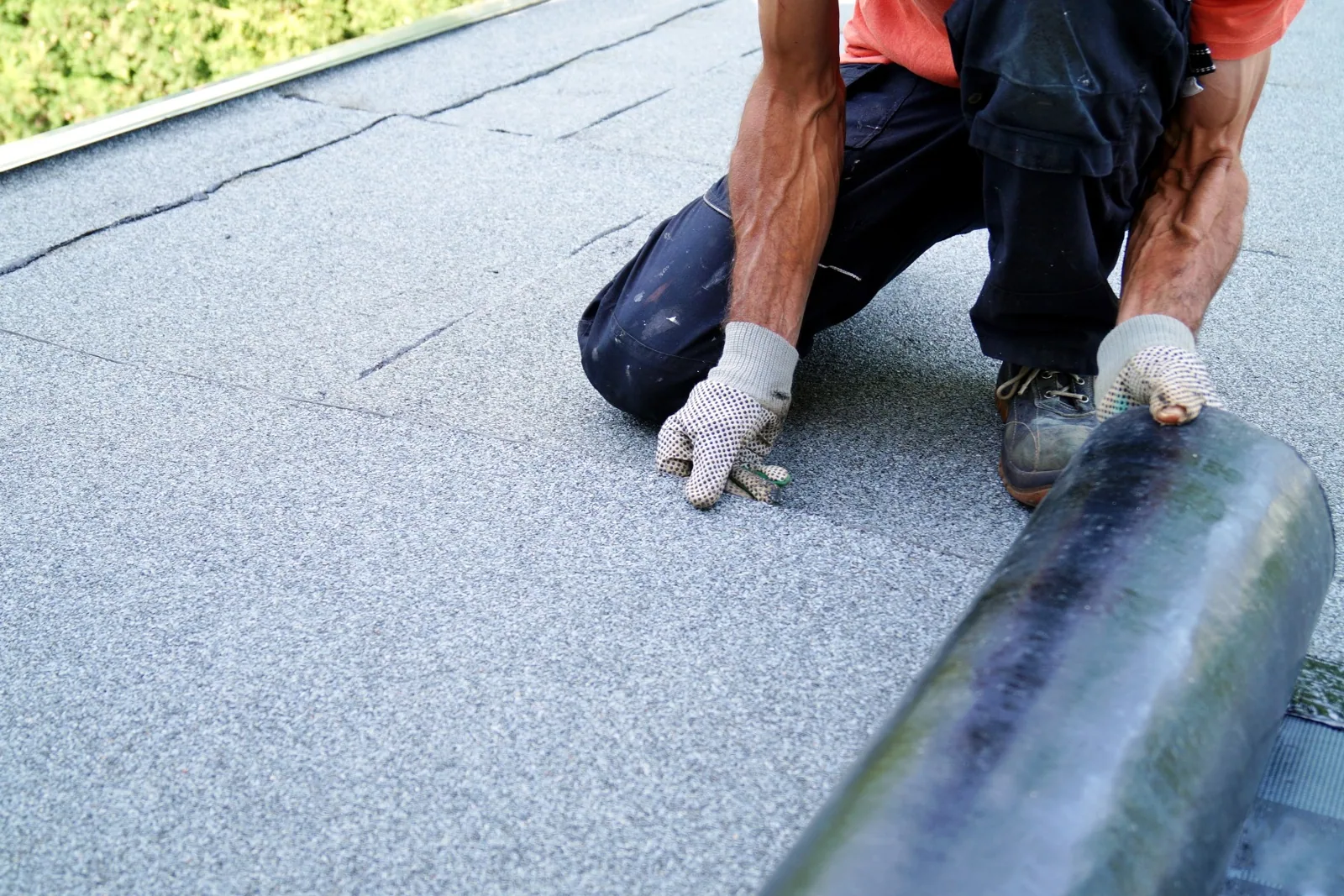
Warm roof surfaces can expose weaknesses in seams and flashed transitions, but a heat reading alone does not prove a failure. We look for a split, fishmouth, open weld, displaced termination or loss of adhesion, then test the adjoining material. At equipment curbs, the inspection checks whether repeated service traffic has scuffed or punctured the membrane. A wind damage assessment or heat-damage review records the specific defect and its extent. If the field membrane remains sound, repair can stay local; if brittleness or recurring separation spans a section, we compare broader restoration options.
The station's summer heat and winter rainfall pattern make exposed details and drainage useful inspection points; we check the actual roof condition before recommending work. Reflective coatings, new membranes and insulation changes each affect system design and need to be evaluated with roof slope, attachment and drainage. A coating is considered only where the existing substrate and assembly can support it. Where a replacement is needed, we inspect edge details and penetrations along with the field so the new system closes the same routes that allowed water into the building.
Check the whole drainage route
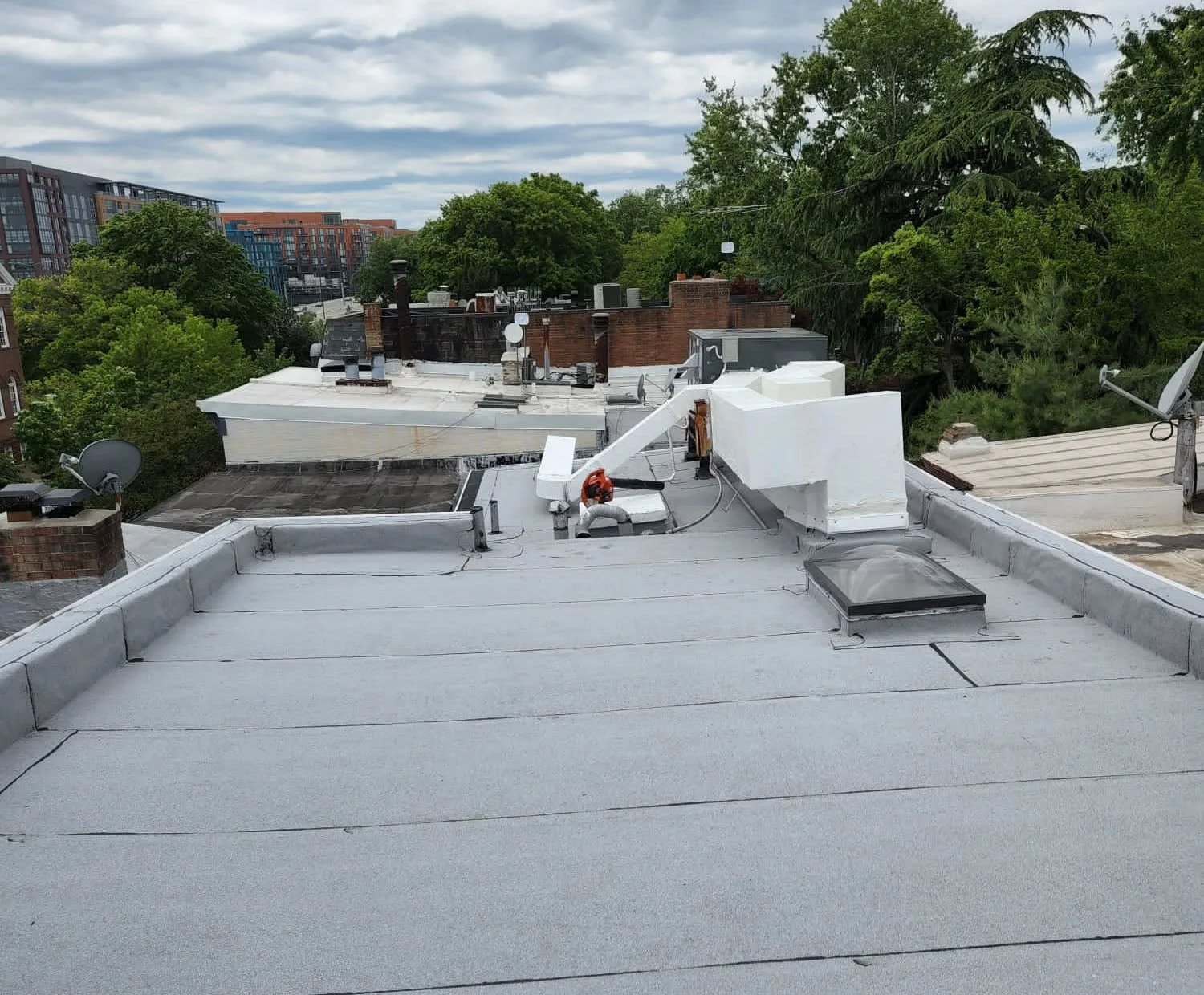
On a low-slope roof, water needs a clear route from the field to a drain, scupper or edge outlet. We inspect the bowl, strainer, sump, clamp and nearby membrane, then follow the overflow route to see where water would go if the primary outlet stopped flowing. A blocked strainer and a low roof section can produce similar ponding but require different corrections. Our roof drain and scupper inspection documents that difference and any seam or flashing stressed by standing water. Cleaning an outlet is not a substitute for correcting an assembly defect around it.
Hotel and industrial properties may have many drains divided across roof sections. We label findings by section and record access restrictions so maintenance staff can locate each condition. If water remains after debris is removed, the owner may need an elevation survey or design review before changing slope. We do not prescribe fill based on a single photograph. A safe correction should preserve drain access, leave seams serviceable and account for the existing insulation and deck. The work record then shows which conditions were corrected and which still need observation after rain.
Compare immediate work with a long-term scope
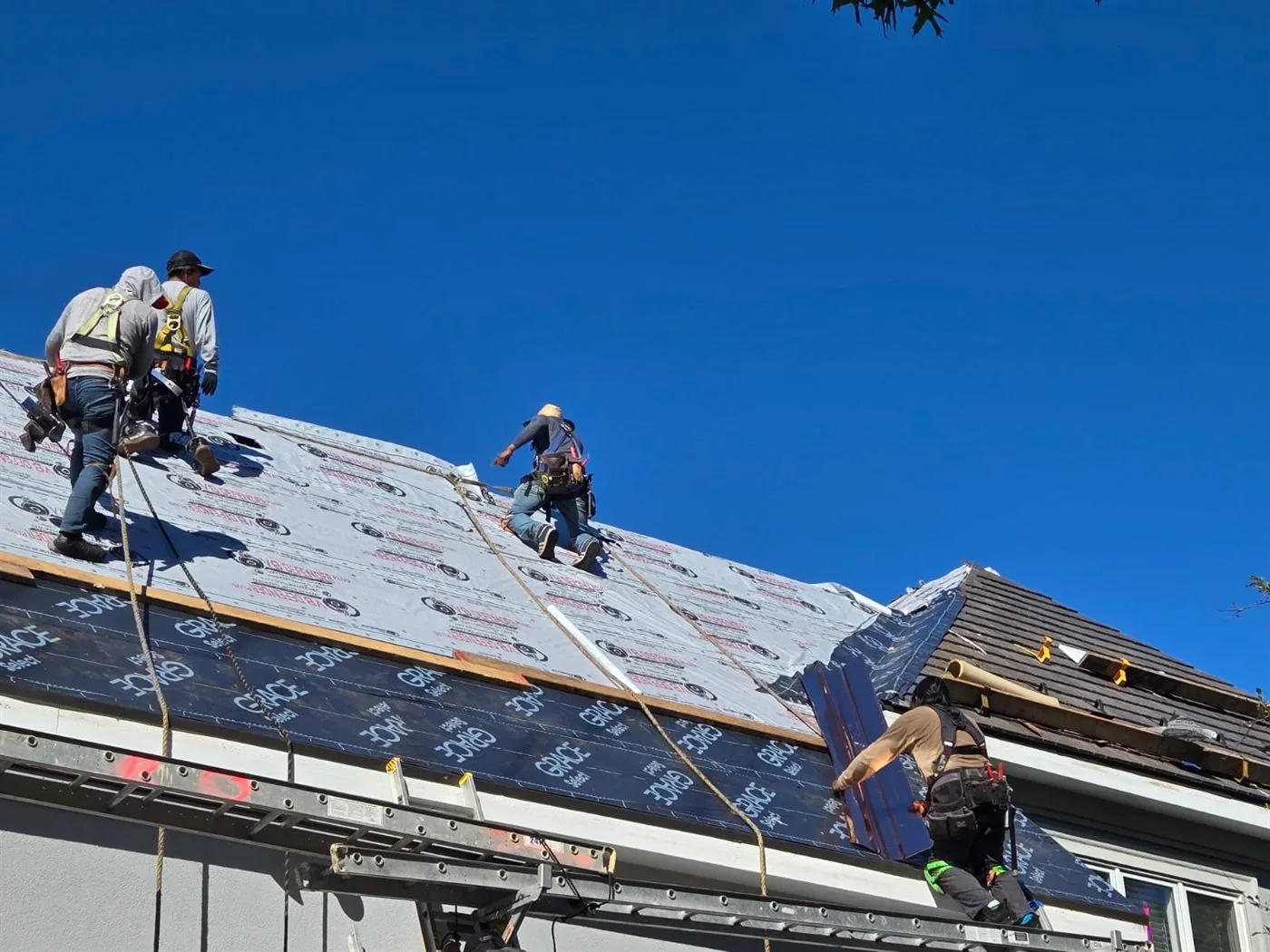
The roof decision depends on how much material has failed and whether the surrounding layers remain dry and secure. A repair may fit a limited penetration or seam opening. A recover may be possible only when moisture, attachment, drainage and added load support another layer. If those conditions fail, removal and commercial roof replacement can give the owner a more reliable scope. We compare affected sections, equipment curbs, wall transitions, drains, deck findings and operational constraints before setting the sequence. A follow-up maintenance visit can then revisit the repaired seam, drains and curbs. Facility teams operating along the Katella Avenue corridor can coordinate a separate roof assessment there.
The work plan covers access, protection below, temporary weather control and how each opened section will be closed. For a property that cannot tolerate interior exposure, phasing can reduce the area under construction at one time. We identify what inspection reveals before setting the scope. A written comparison helps ownership weigh patching against broader work by condition, not by the first visible stain. After completion, photographs and repair locations give the facility team a starting point for future inspections and maintenance.
Questions About Anaheim
Can you repair a roof without disrupting hotel or convention operations?
We plan access, noisy work, material staging and protection with the facility contact. Repairs can often be phased by roof section. Before opening material, we identify any room or service below that needs temporary protection or a short access restriction.
Does Anaheim heat mean the roof needs replacement?
No. Heat alone is not a replacement diagnosis. We inspect seams, flashings, attachment, insulation and drainage. A localized defect can support a repair, while widespread deterioration or moisture may justify comparing a broader scope.
Do you inspect industrial properties in Anaheim Canyon?
Yes. We can assess commercial and industrial roofs within Anaheim. We confirm the installed assembly, coordinate access around operations and provide findings by roof section so maintenance staff can track repairs and follow-up testing.
How do you find the source of a roof leak?
We compare the interior symptom with membrane seams, penetrations, walls, curbs and drains above it. A scan can guide follow-up, while direct inspection confirms the material condition. We document what is established and the next test when the path remains concealed.
Related Roofing Work
Request commercial roof service in Anaheim
Describe the building use, roof area and operating window. We will inspect the assembly, coordinate access and explain the repair choices from documented conditions. Call 555-555-5555 or request a roof assessment.