
Commercial Roofing in Santa Ana, CA
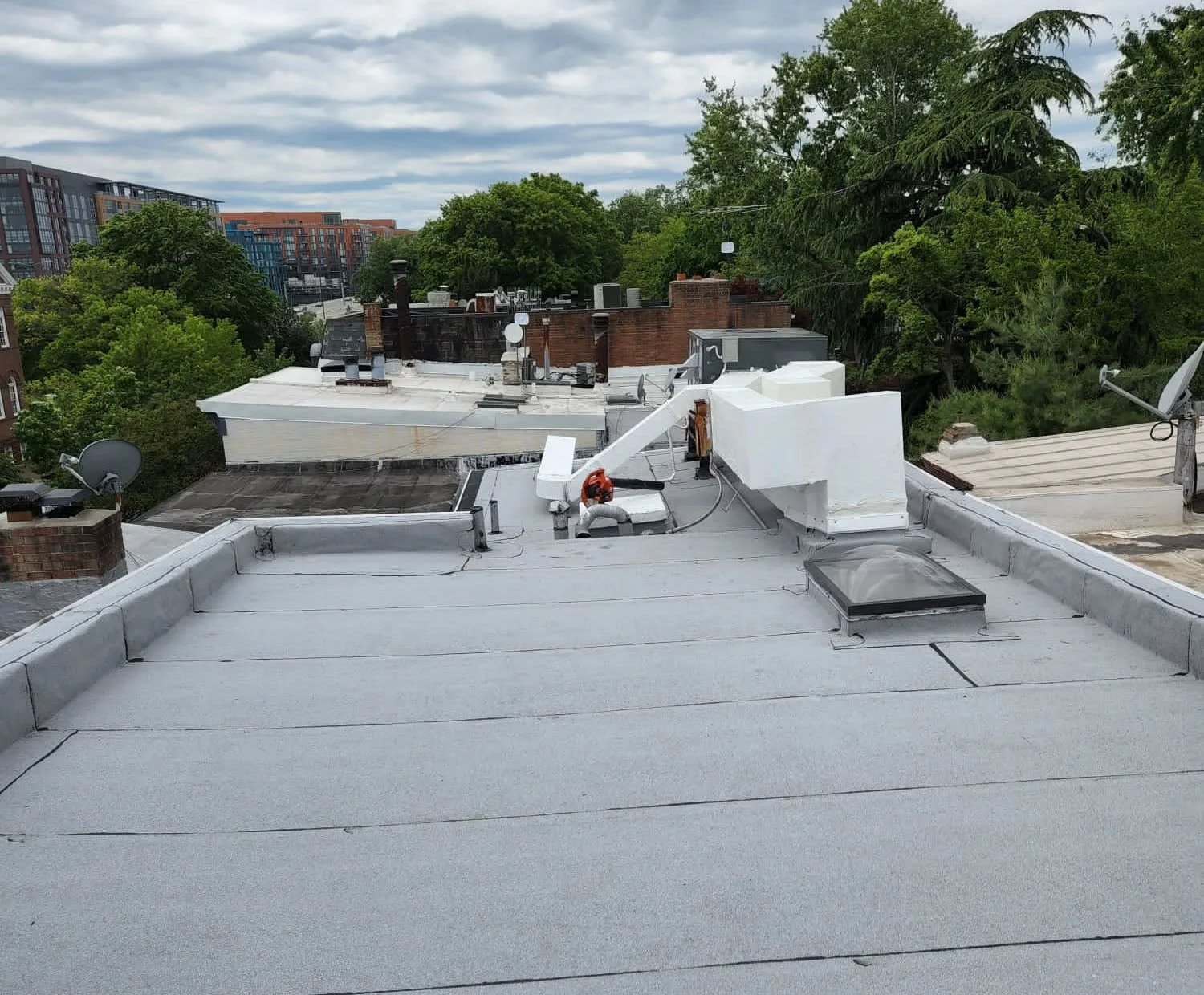
A narrow ceiling stain below a parapet sends us back to the roof edge, where a flashing joint can open without a visible field tear. Santa Ana includes the Historic South Main Business District, where older retail stores operate among other small businesses, and Metro East lies near the Santa Ana and Costa Mesa freeway junction. For older storefronts, we coordinate roof access with the owner and protect customer routes below. Our commercial roof inspection follows the membrane, flashing, edge metal and drain route, then shows the owner which component failed and how far the condition extends. Commercial property teams also use our neighboring Orange coverage. Roofs in the nearby Old Towne Orange district are also within our coverage.
The right repair also has to fit the property schedule. A store, office or service operation may need entrances, receiving and interior work areas kept usable while crews reach the roof. We coordinate staging and protection with the owner, then keep the opened area controlled until it can be closed. When water is active, emergency roof response response can limit exposure while the permanent scope is confirmed. Photographs and a repair map connect the roof finding to the interior symptom without treating a ceiling mark as proof of the exact entry point.
Check perimeter details after wind events
Santa Ana winds are a regional event associated with dry air moving through mountain passages, most common from September through May, and can cause major property damage. After a wind event, we inspect corners, perimeters, coping, rooftop equipment and membrane terminations for displacement or opened seams. A loosened metal panel and a weathered joint need different work. Our wind damage assessment records each condition and the adjacent material so the scope addresses the attachment, not only the visible gap.
A roof check after high winds also looks for punctures from moved equipment, debris impacts, separated sealant and material lifted at corners. We note whether fasteners are exposed, whether a membrane remains bonded and whether water has reached the insulation or deck. A surface wrinkle alone does not establish that the assembly has failed. When safe, we probe or test the detail, then set a repair boundary around material that can support a lasting patch. If the edge system is broadly loose, we explain the securement correction and any design review needed before replacement.
Work carefully around older commercial fabric
The Historic South Main Business District contains older retail stores and other small businesses. For storefronts, we document transitions between membrane, masonry, metal and parapets, including changes made by earlier repairs. We examine transitions where membrane meets masonry, metal, skylight or parapet, and note where prior work has changed the detail. A test opening is placed only when it will answer a moisture or attachment question. The resulting written roof condition report can show the current repair boundary and any concealed layer that still needs confirmation.
Older buildings can have several roof zones added at different times. We follow changes in slope, drain placement and membrane type rather than treating the surface as one uniform assembly. If a storefront leak appears under a wall line, we inspect both the roof termination and adjacent flashing before prescribing interior work. Where proposed changes touch a visible exterior detail, we describe the roof scope so the owner can coordinate any applicable review. Our written scope connects each proposed removal to a roof observation and explains how the finished edge will close.
Trace runoff to its outlet
A roof drain can be clear at the strainer yet restricted below, and a scupper can pass water while its metal lining leaks into a wall. We check the outlet, sump, clamp and surrounding membrane, then inspect the path water follows across the roof. At low areas we distinguish a blocked route from a slope problem or a patch that is holding water. The roof drain and scupper inspection captures the condition and whether it has stressed adjoining seams or flashing. That evidence prevents a recurring interior mark from being managed as a cleaning issue alone.
Metro East's location near two freeway routes can make delivery timing and crew access relevant, so we confirm staging and access with the property contact before work begins. We coordinate where materials can be staged and keep the roof route clear for service access. If a correction changes slope or overflow behavior, we identify the section and recommend design review before construction. A maintenance visit then checks the same outlets, seams and low areas after seasonal debris or roof work. Owners can see whether water exits freely and whether the earlier repair remains intact, rather than relying on an occasional view from the ground.
Choose a proportionate repair
A small membrane puncture with dry insulation nearby can support a localized patch. A long open seam, repeated edge movement or a wet assembly may require a wider repair boundary. We examine the layers around the defect, including cover board, insulation and deck where accessible, and explain how the proposed limit was selected. The commercial roof repair should tie into compatible, secure material and account for nearby penetrations. When the condition extends across several sections, we compare repair with commercial roof replacement using the observed moisture and attachment findings.
The scope should also state how the building will stay protected during work. We plan temporary water control, interior safeguards, access routes and the order of open sections. For occupied businesses, that sequence may matter as much as production time. The inspection establishes whether water control, a targeted repair or broader work fits the condition found. The comparison identifies urgent exposure, work that can be scheduled and any follow-up test needed to close an uncertainty.
Use the repair record at the next visit
A roof record becomes useful when it captures location as well as condition. We identify the section, mark the leak path, photograph the detail, and note the material and repair completed. If a location was inaccessible or concealed, that limit stays attached to the relevant item. The preventive roof maintenance can revisit open seams, parapet joints and drain restrictions on a planned schedule, with photos that make changes easier to recognize.
Tell us which part of the Santa Ana property is affected, whether wind or rain preceded the symptom, and what hours allow safe access. We can respond overnight and on weekends when exposure is active. The inspection will distinguish temporary protection from the permanent correction, and the closeout will show the repaired detail and any remaining follow-up. That gives ownership, building staff and future maintenance crews a consistent account of what was found and why the repair stopped where it did.
Questions About Santa Ana
What should we inspect after Santa Ana winds?
We check roof corners, perimeters, edge metal, coping, terminations, seams and rooftop equipment for movement or damage. We also look for debris impacts and water entry. Findings are separated by roof section so loose components can be corrected before they affect adjoining membrane.
Can you work on older retail buildings in Santa Ana?
Yes. We inspect the actual roof and coordinate around business hours, public access and interior protection. At a property in the district, we inspect the membrane, flashing, drainage and attachment before defining the work.
How do you keep a leak repair from becoming too broad?
We trace the entry path and test the surrounding assembly where needed. The repair limit follows confirmed damage and sound material. If moisture continues outside that boundary, we explain the evidence and expand the scope only to the area that must be removed or tied in.
Can you provide a record for future maintenance?
A maintenance record identifies the roof section, photographs the defect and completed repair, and notes materials and access limits. That record helps a later visit compare the same seam, edge or drain and determine whether it has changed.
Related Roofing Work

Schedule commercial roof service in Santa Ana
Tell us what changed, where the interior symptom appears and when the roof is accessible. We will inspect the roof detail and plan protection around business activity. Call 555-555-5555 or request a roof assessment.