Planned Commercial Roof Repair in Orange, CA
A lifted patch corner exposes more than the old repair surface. Water can enter beneath it, and another coating across the corner may leave the failed bond in place. We examine the patch, adjacent membrane and concealed layers before setting the repair limit. Commercial roof repair in Orange, CA should correct the failed connection and end on material capable of holding the new work. Commercial Roofers Orange explains that boundary through the physical findings, then checks the completed detail using the method suited to the roof system.
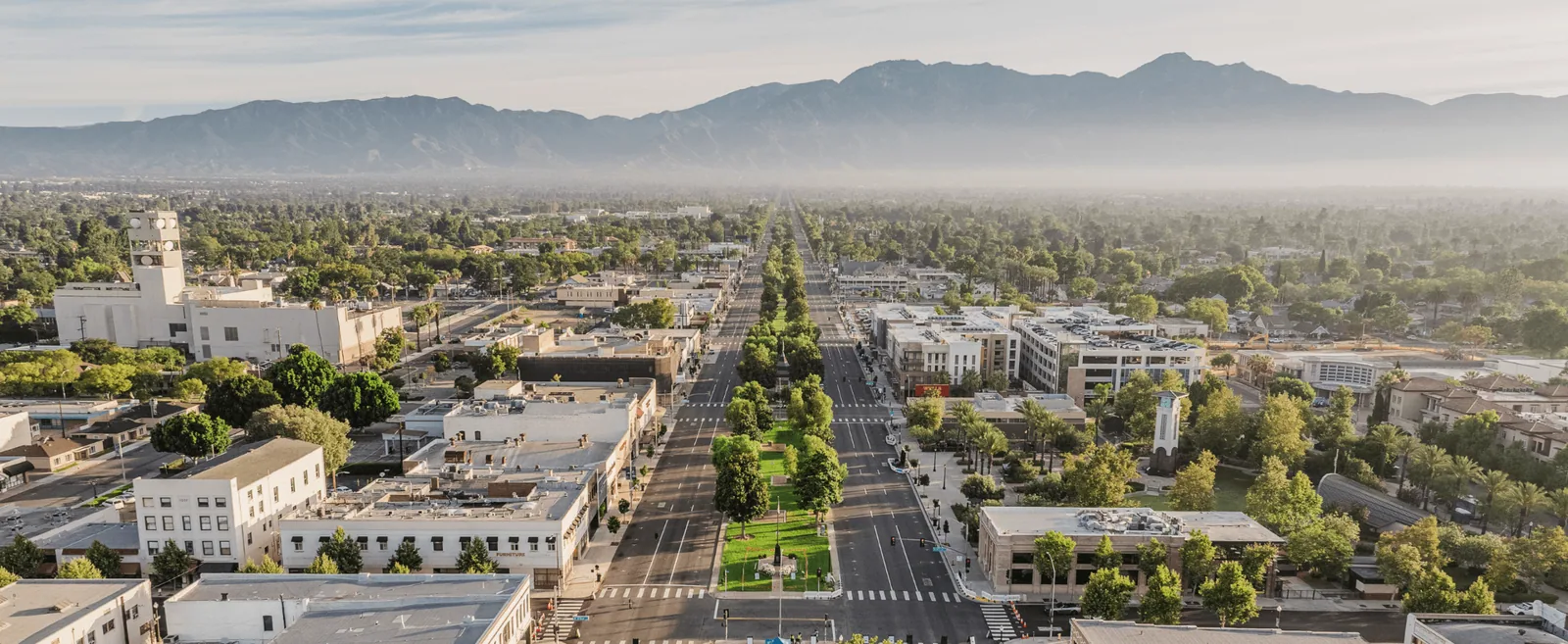
A restaurant roof in Old Towne Orange needs work that considers exhaust equipment, access and the business below. The district includes dining and retail among historic structures. Near Katella Avenue and Main Street, warehouses and general-industrial properties sit among commercial and mixed-use activity. A repair on an industrial building may require a different service route or protection below the opening. We examine the membrane, adjoining layers and equipment access, then select a repair sequence that protects the operation beneath the opening.
Find the failed connection
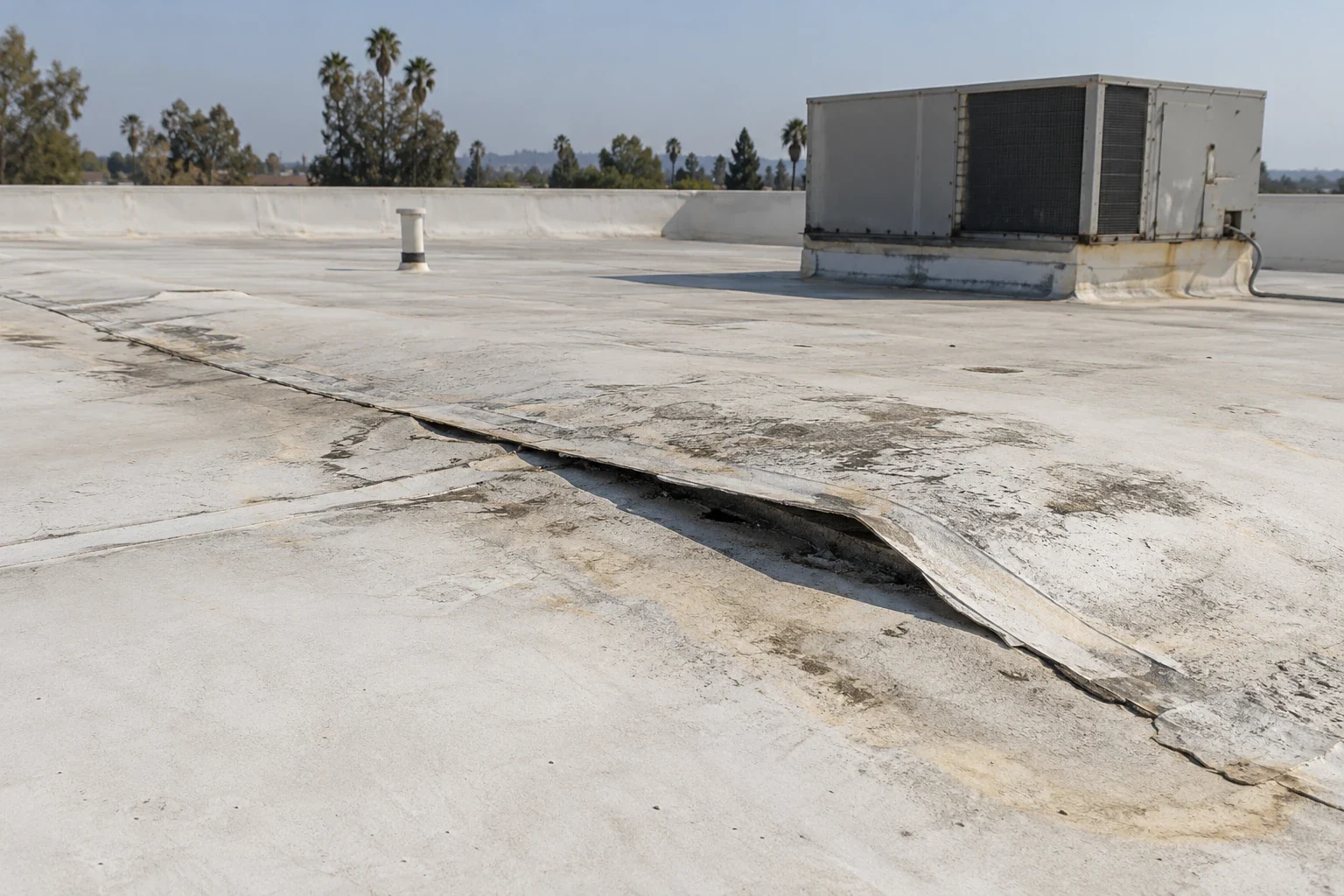
A separation along a membrane seam needs a seam probe and a close examination of the surrounding sheet. We look for incomplete bonding, damage from traffic and movement at the connection. Similar-looking openings can require different repair methods. For a seam that has opened, the repair must reach suitable material and use a compatible connection, rather than hide the opening under an unrelated sealant.
At a wall or curb, we examine the flashing turn, termination and attachment. A surface patch will not correct movement from a loose component behind it. We identify whether the membrane, backing, fasteners or adjacent metal needs attention. Where water is entering during rain, tracing the active leak helps connect the roof finding to the affected interior. That sequence keeps the repair focused on a plausible water path instead of every mark near the wet room.
Remove damage to a sound boundary
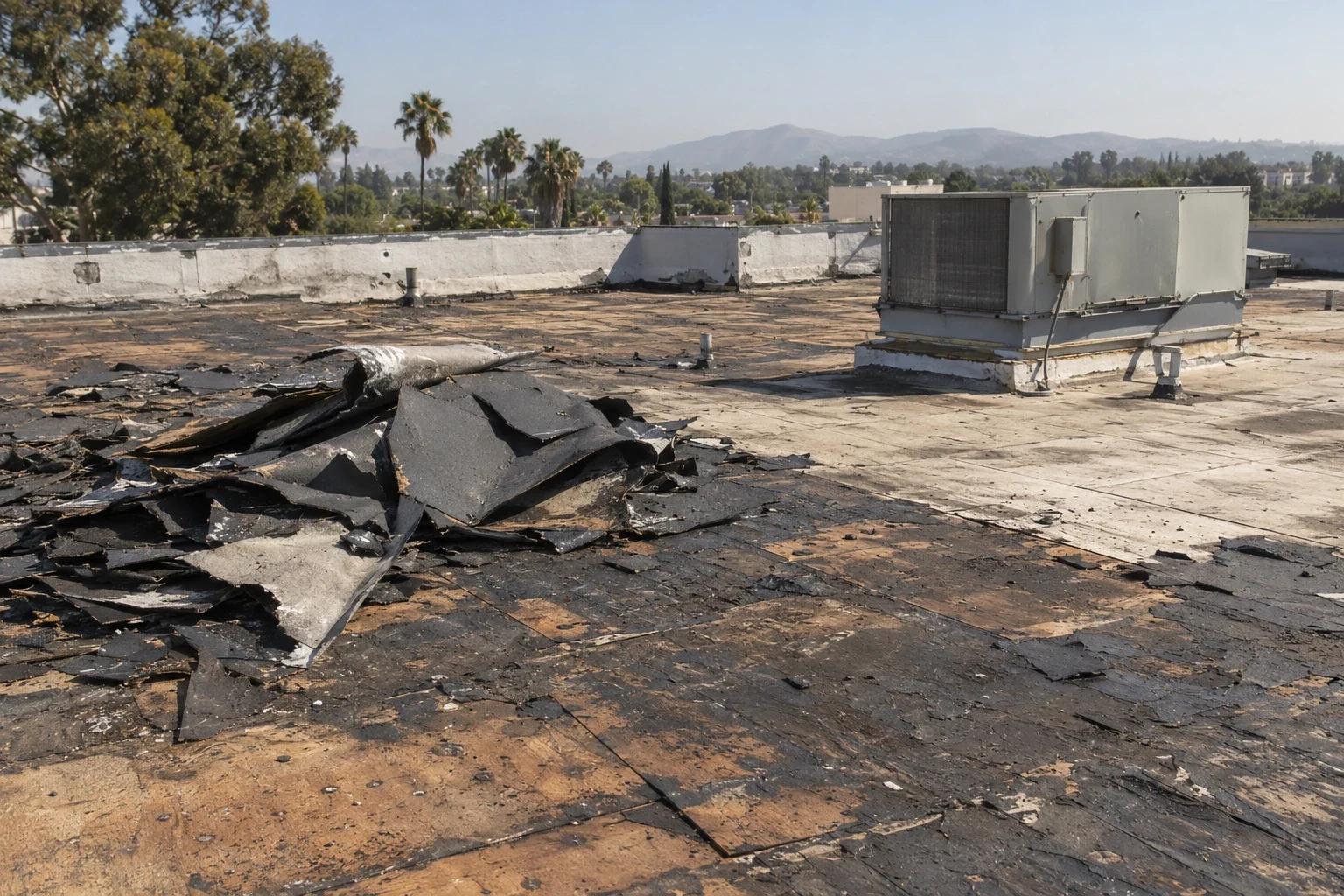
A puncture can extend beyond the opening visible from above. We check the surrounding membrane, insulation and support for crushed, wet or detached material. The repair area grows where those findings require it. A patch that ends on weak or contaminated material can fail at its own perimeter. We explain the removal boundary and which layers will be replaced before closing the opening, so the owner can distinguish a surface repair from a deeper assembly repair.
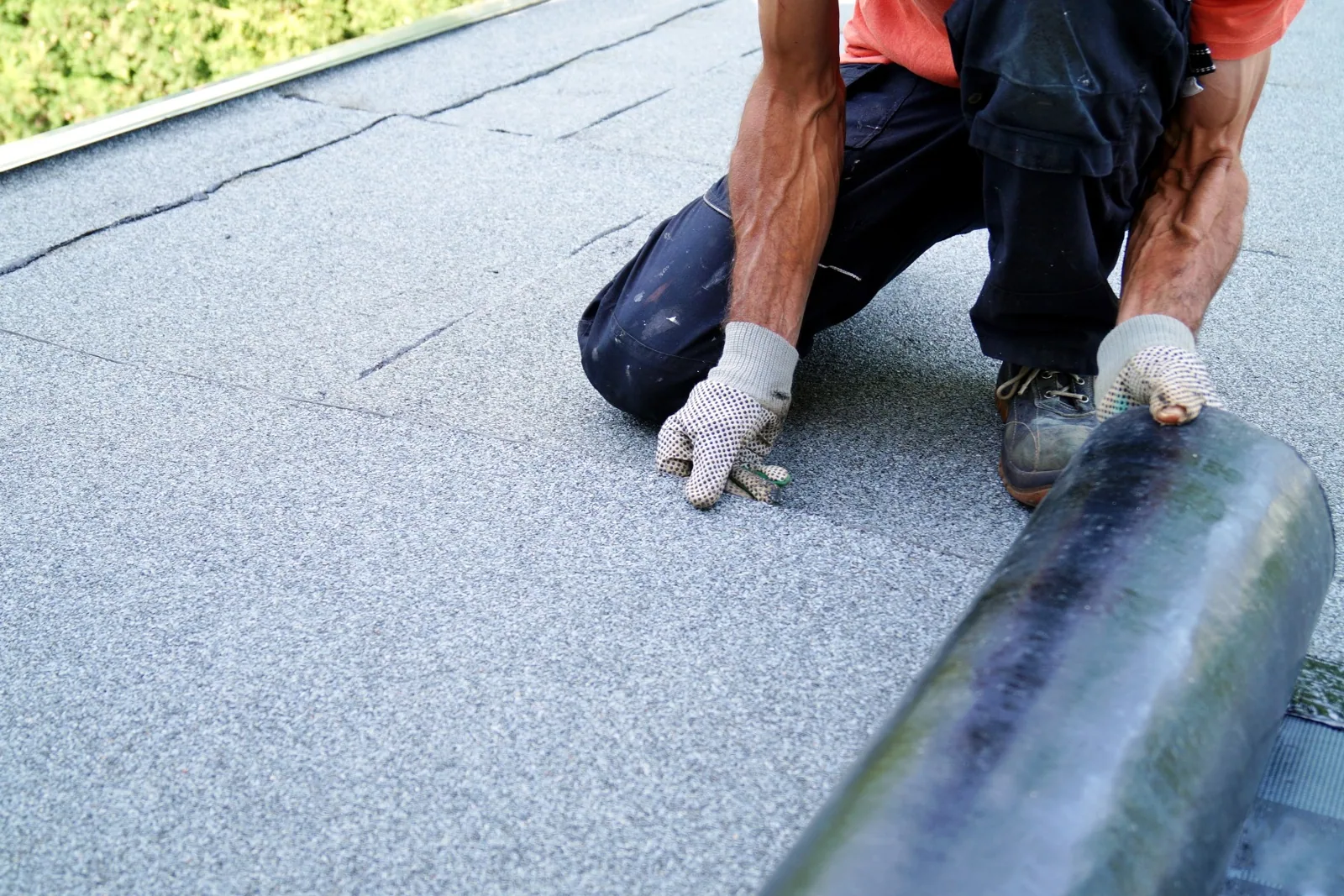
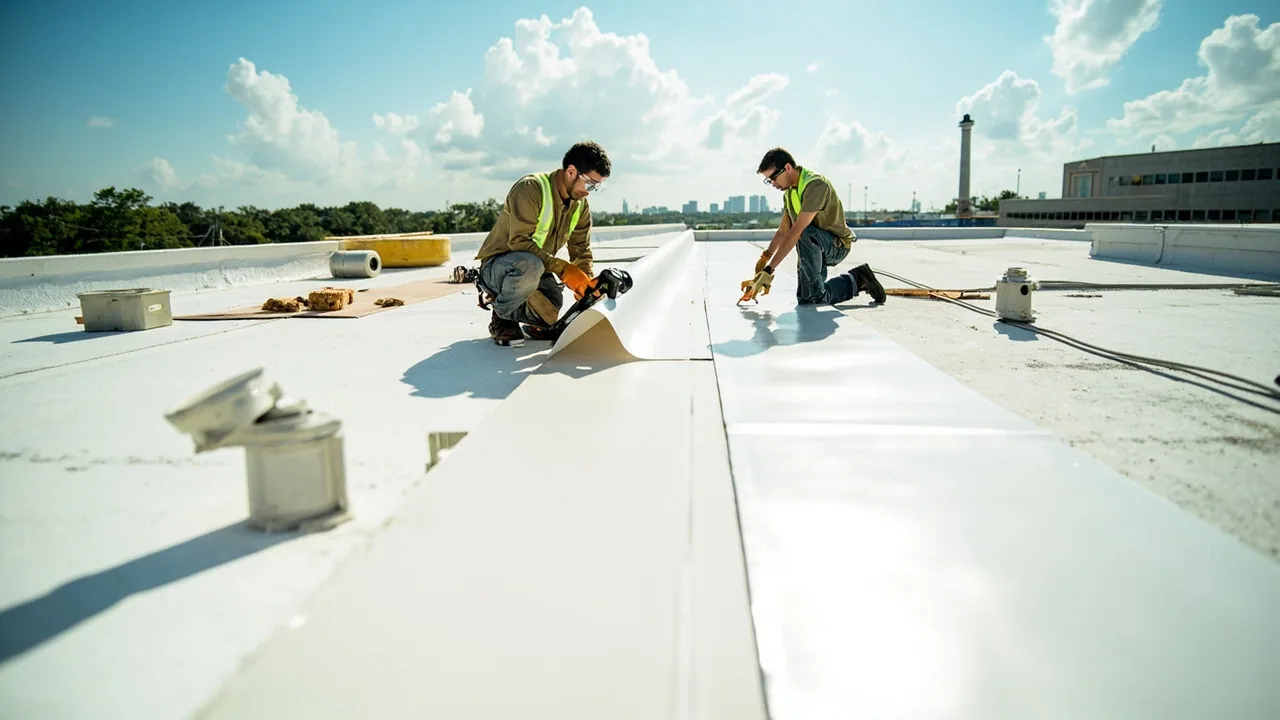
The replacement materials must fit the existing system. A PVC membrane repair needs a suitable joining method and preparation for the material present. Modified bitumen, built-up roofing and metal each have different repair requirements. We assess coatings, age-related surface changes and earlier repairs that may interfere with bonding. Cleaning and preparation belong to the repair itself, because a new material placed over an unsuitable surface does not create a dependable connection.
Details can reopen the problem
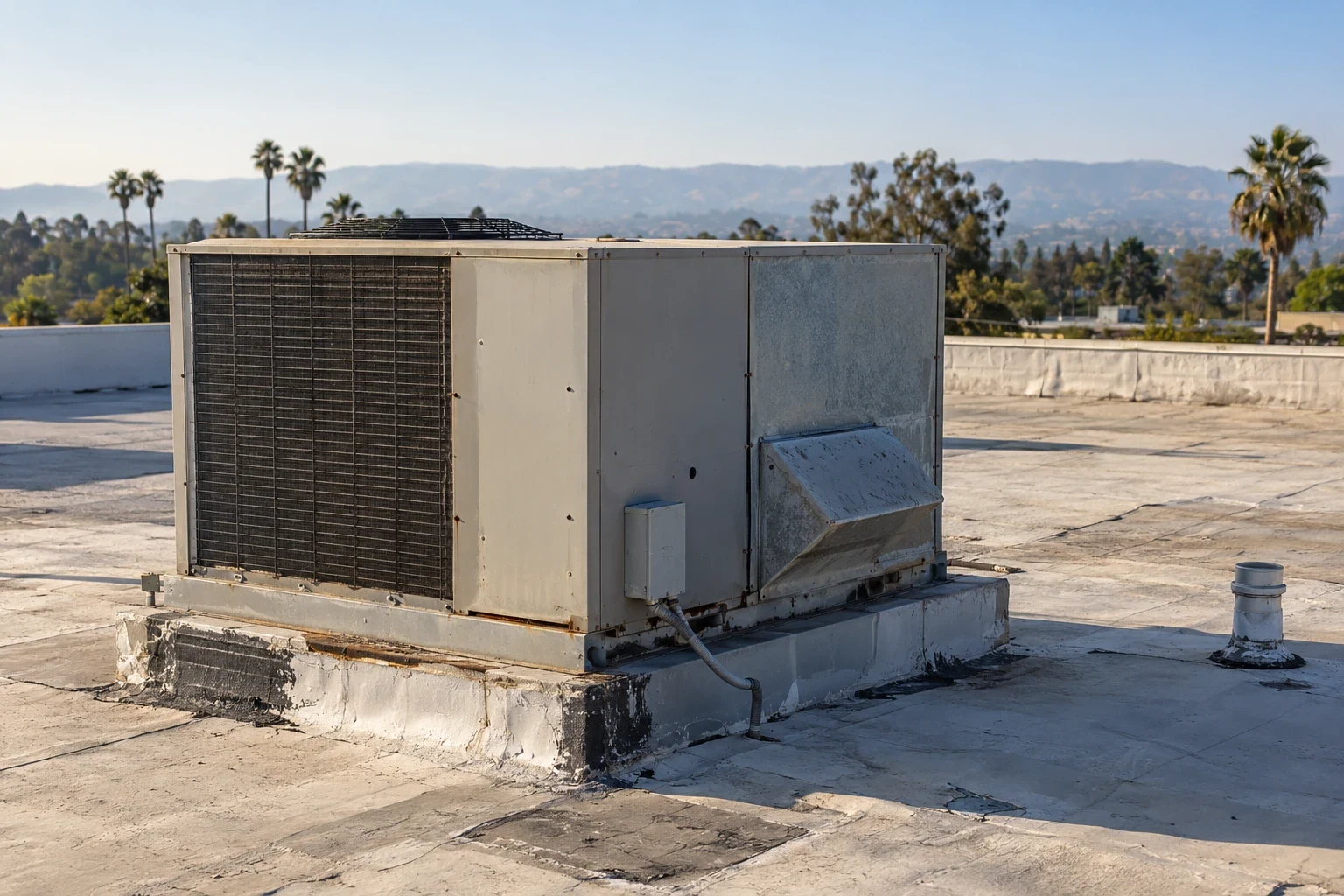
A cracked seal at an equipment curb deserves a check of the flashing geometry and the component movement. We inspect the support, exposed edge and the path water takes around the curb. Where the equipment blocks drainage, the repair may need a change beyond sealing one joint. Equipment curb and support work should be coordinated with the relevant trade before the roof connection is rebuilt.
A drain restriction can send water toward a marginal flashing detail even when the field membrane remains sound. We check the outlet and surrounding roof elevation alongside the damaged area. Clearing a blockage, replacing a compromised connection or correcting local slope addresses different causes. Southern California's Santa Ana winds can damage property, which gives loose edge components another reason for physical attention. We examine attachment and adjacent materials rather than treat a displaced piece of metal as a cosmetic issue.
A small repair has a clear purpose
An isolated defect with sound surrounding layers may support a defined repair. Repeated failures across deteriorated material can make the same small scope less useful. We compare what the repair corrects with the condition it leaves behind. The owner can then choose between keeping a serviceable assembly in use and investigating replacement of failing roof layers. Observed condition guides the repair boundary, the sound material retained and the connection rebuilt, including any adjoining layers requiring removal.
Cost and timing follow access, removal depth, material compatibility and detail complexity. A repair beside a busy intake or above sensitive stock may need a different sequence from an open roof area. A damaged deck can require additional review before closure. We explain these drivers in the proposed work, including the point where a concealed finding would change the scope. The owner can compare the removal depth, access work and detail reconstruction before approving a repair for the inspected opening.
Close the opening and check it
A finished patch needs a check at its perimeter and at any reconstructed transition. We examine the new connection for the chosen system, including probing appropriate seams and inspecting terminations. A test or close view is directed at the repaired component rather than a broad statement about the entire roof. If a detail needs correction, we address it while the work remains accessible. The owner receives a clear description of the completed repair and any neighboring condition that still needs attention.
For a property along the Katella Avenue corridor, future equipment service can place traffic near a completed repair. We identify where protection or a service route is needed. Condition photographs show the original defect, removed layers where relevant and the finished boundary. A follow-up view after rain can be useful where the original complaint involved water entry. It helps assess the repaired path alongside the owner's interior observations and any remaining investigation.
Questions About Planned Commercial Roof Repair
Should several old patches be removed at the same time?
Older patches need individual examination of their attachment, material and surrounding roof. We remove unsuitable work where it interferes with the proposed repair or conceals damage that needs correction. A sound patch elsewhere does not automatically need removal because a nearby patch has failed. We show which areas belong in the repair limit and explain the findings supporting each inclusion.
Can a coating take the place of fixing an open seam?
An open seam needs its connection repaired before a coating is considered. The coating system also requires a suitable substrate and its own detail preparation. We examine how the seam failed, rebuild the connection appropriately and assess whether a wider restoration is suitable. Coating over an unresolved opening can leave the original water entry mechanism beneath a new surface. The surrounding sheet also needs preparation and a check for damage that would prevent the new connection from holding.
How do you handle a repair beneath rooftop equipment?
Restricted access can require temporary equipment movement or coordination with the equipment trade. We first locate the defect and determine whether the connection can be repaired properly in place. Where removal is necessary, the scope identifies that work and the roof closure sequence. Reaching only the visible edge of a failed detail can leave the inaccessible portion untreated.
Why would a planned patch become a larger removal?
Wet insulation or damaged support discovered at the opening can extend the work beyond the initial surface defect. We establish a new boundary using the exposed condition and checks into adjacent material. The owner receives that finding before the revised area is closed. Replacing only the visible sheet while leaving the damaged layer underneath would preserve a weakness that the repair needs to address.
Related Roofing Work
Show us the damaged detail
Tell us the Orange location, the visible defect and any operating restrictions. We can inspect the adjacent layers and explain a repair with a clear physical limit. Call 555-555-5555 or request a roof assessment.