Commercial Roofing in Orange, CA
A damp ceiling tile can be the last visible point in a longer roof path. We inspect the membrane, nearby seams, curb flashing and drainage before assigning a repair boundary. Orange includes light-industrial and industrial-manufacturing districts, while the Katella Avenue and Main Street area contains warehouse, general-industrial, restaurant and mixed-use activity. Those uses bring different access hours and protection needs, but the roof diagnosis still starts with the material and the failure. Our commercial roof inspection pairs close roof observations with the condition below so an owner can see what is confirmed and what needs another test. Nearby commercial properties in Old Towne Orange receive the same condition-based inspection.
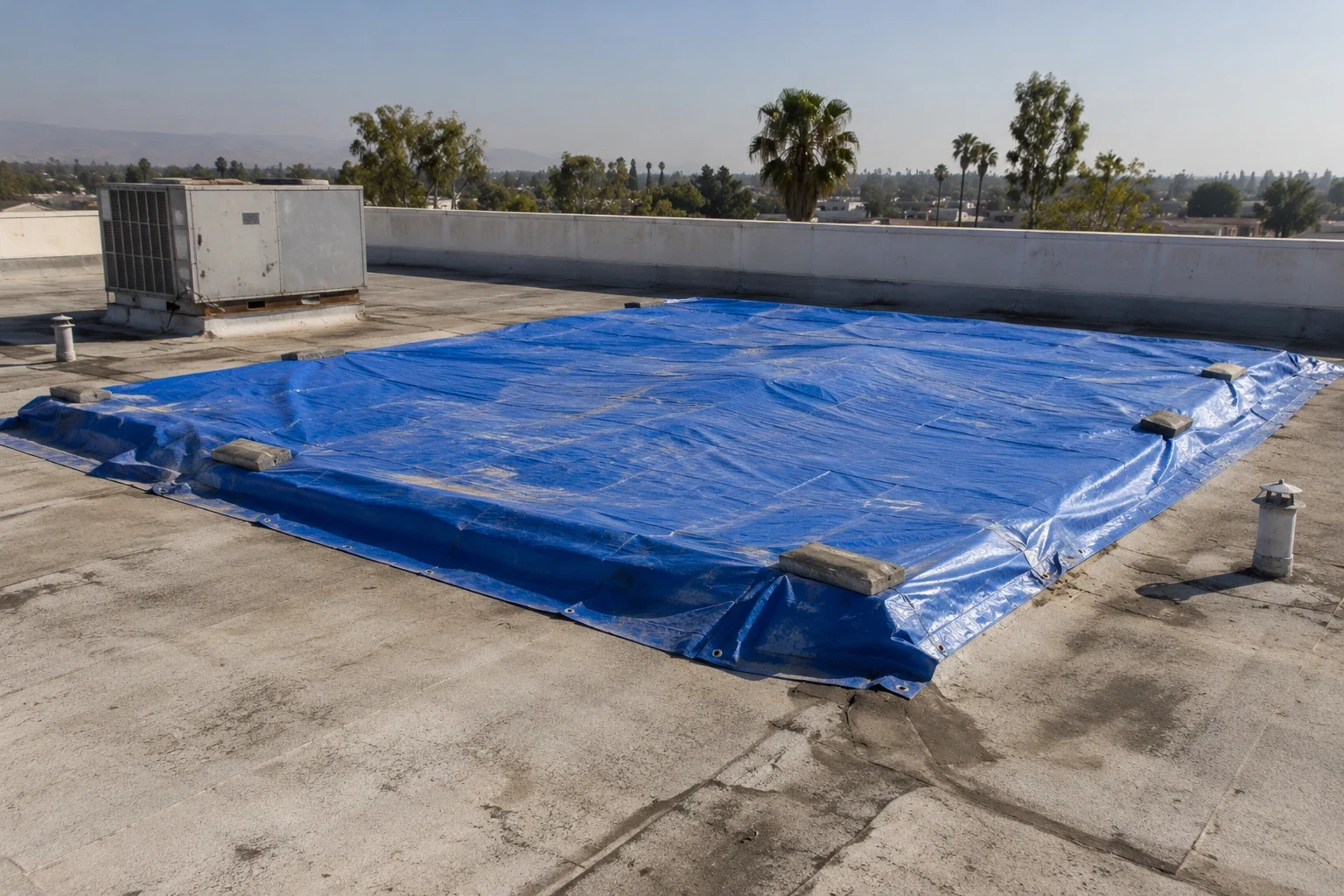
Interstate 5 and State Routes 57 and 22 meet near the southwestern edge of the city, and State Route 55 passes through Orange. Road access affects deliveries and work windows. We coordinate staging around tenant entries and rooftop equipment, then isolate the work area before opening a wet assembly. For active water entry, our emergency roof response can first control exposure; the permanent scope follows after the failed detail and surrounding layers are examined. A written record shows the repair limit, affected materials and unresolved questions.
Follow the water path
Water can travel along insulation, a deck flute or a structural member before it appears indoors. On a low-slope roof, we compare the interior mark with membrane laps, penetrations, wall transitions and changes in slope. A seam opening may admit water while looking minor from below. A blocked drain can hold water against a repaired detail and make a separate defect look like one leak. We probe where safe, photograph the surrounding field and record the relationship between the entry point and the interior symptom. That sequence keeps a localized commercial roof leak repair from expanding into an unsupported replacement recommendation.
When the surface suggests trapped moisture, an infrared scan can identify where follow-up testing may help, but it does not replace a material inspection. We record scan conditions and test openings so the owner can distinguish a thermal pattern from confirmed wet insulation. If the deck is concealed, we explain that limit and use a measured opening when access and safety allow. Findings are mapped to roof sections, giving maintenance staff a boundary for drying, removal and patching.
Keep drainage working
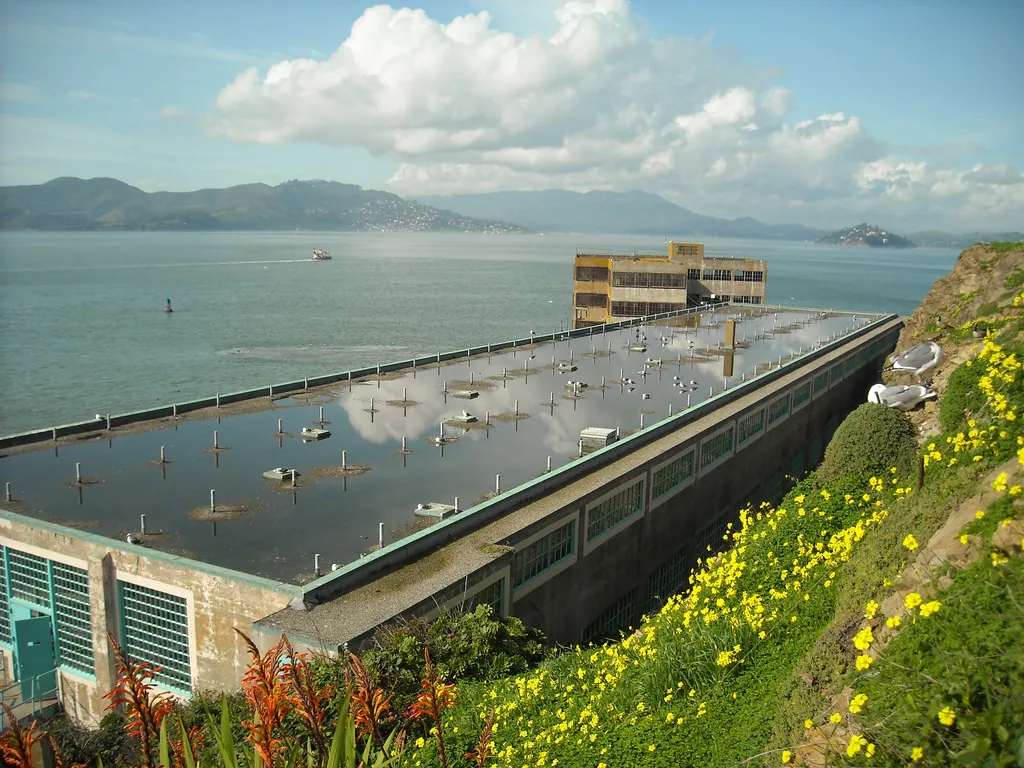
A drain bowl partly covered by debris, a loose clamp or a low area at the outlet changes where water sits after a storm. We check drain strainers, sumps, clamping rings, nearby seams and the slope that directs runoff. At a scupper, we inspect the opening, metal lining and adjoining membrane rather than treating the wall stain as proof of the source. The roof drain and scupper inspection documents restrictions, standing water and details that could let water bypass the roof surface. Cleaning a drain can restore flow, but it does not repair a split flashing or correct a depression that repeatedly retains water.
We record outlet condition, slope changes, debris, overflow routes and nearby equipment that limits access, then follow the path water takes across the roof. Where water remains after the drain is clear, we compare correction options based on assembly condition and depth. A small repair may address a seam or drain detail; a recurring low area may require a broader design review before any fill or overlay is considered.
Inspect exposed edges and transitions
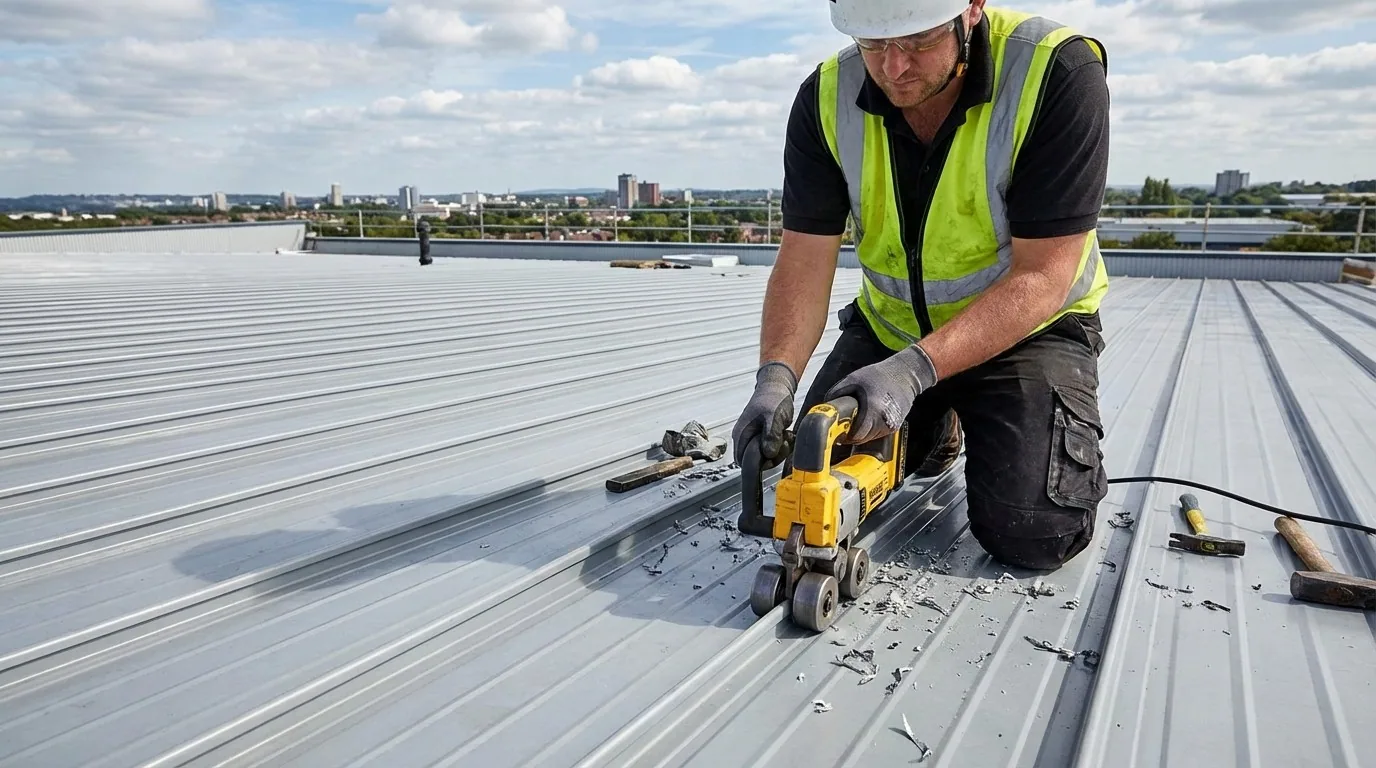
Perimeter metal and wall transitions take movement, wind pressure and repeated wetting at a narrow joint. We check whether coping is secure, where the membrane terminates, and whether a splice, cleat or sealant joint has separated. At rooftop curbs, the inspection follows the flashing up each side and around corners, with attention to the point where equipment service may have disturbed the roof. Our edge metal and coping repair can address loose or failed edge components after the assembly beneath them is understood. Adding sealant over a failed attachment may hide the opening without restoring the mechanical connection.
We record observable repair layers and note where an opening needs confirmation. For wind concerns, the review covers corners, perimeters, terminations and field seams, then separates displaced components from surface wear. An owner receives a repair comparison that identifies what can be reset, what needs replacement and where adjacent membrane must be tied in. The scope also states how occupied areas and rooftop services will be protected while crews work at the edge.
Choose a repair or replacement scope
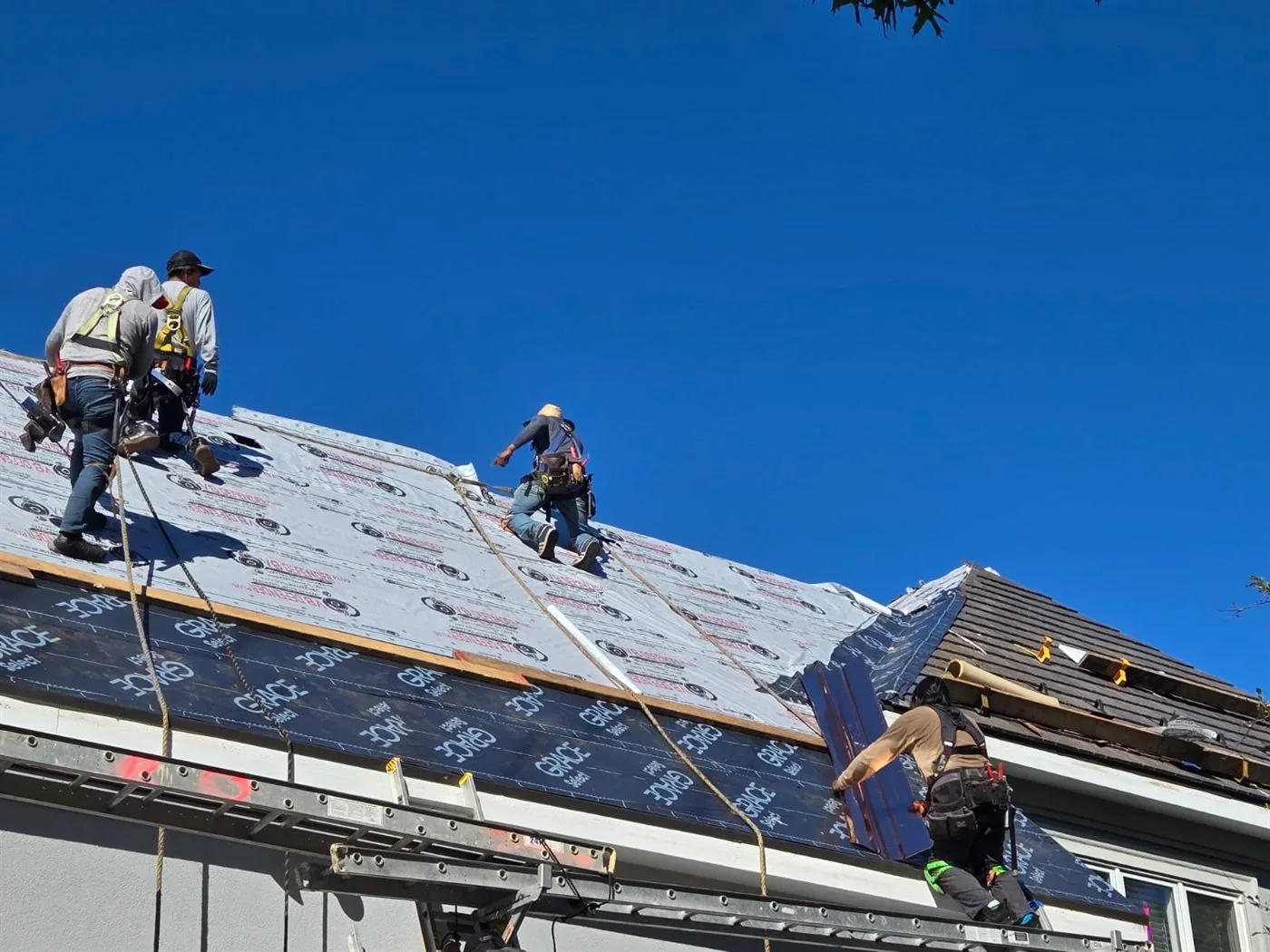
A sound field with one failed penetration calls for a different response than widespread wet insulation or a brittle membrane with recurring openings. We compare the affected area with adjacent seams, attachment, cover board and deck where accessible. A patch can be appropriate when sound material provides a dependable bond or weld around the defect. If moisture extends past the visible opening, the repair boundary must move to dry material and the assembly needs a documented closeout. Where deterioration is broad, we evaluate commercial roof replacement against a targeted repair, accounting for drain elevations, existing curbs, rooftop equipment and protection of the interior during work.
The applicable permit path depends on scope. In Orange, the locally amended 2025 California code edition follows the 2024 IBC; California's new energy rules govern applications submitted from January 1, 2026. We describe the proposed work for the owner and design team to review. A recover is considered only after the existing assembly has been assessed for moisture, attachment and added dead load. If those checks do not support another layer, removal and replacement may be the more responsible comparison.
Leave a usable roof record
The closeout should help the next person find the repaired area without repeating the investigation. We mark the roof section, describe the materials observed, photograph the failed detail before and after work, and note any concealed condition that could not be confirmed. For an owner managing several buildings, a written roof condition report turns those observations into a condition record that can be compared at the next inspection. A maintenance plan can then prioritize open seams, deteriorated flashing and drain restrictions according to their location and consequence, instead of placing every item in one undifferentiated list. For mixed-use and industrial roofs, we also serve the Katella Avenue corridor.
Our crews can respond around the clock, including weekends and holidays, when an active opening is exposing the building. Tell us which part of the Orange property is affected, whether water is still entering, and what operating limits apply below the roof. We will inspect the assembly, explain the repair boundary and separate immediate water control from any larger capital choice. The scope ties access, staging and follow-up steps to observed conditions before permanent work begins.
Questions About Orange
Can you inspect a commercial roof while the building remains open?
Usually, yes. We plan access, ladder placement, work zones and noise around building operations, then coordinate with the owner or facility contact before testing or opening materials. A test cut or repair area may require a short controlled exclusion zone. We identify that need in advance and protect occupied areas under the work.
How do you decide whether a roof leak needs a patch or a larger repair?
We trace the water path, inspect the membrane and adjoining details, and confirm whether moisture extends beyond the visible opening. A localized defect with sound surrounding material can support a patch. Widespread wet insulation, repeated seam failure or compromised attachment changes the comparison. The recommendation explains the observed boundary.
What should I prepare before a roof inspection in Orange?
Share any roof plan, prior repair record, leak location and access restriction you have. Tell us when the interior symptom appeared and whether it changes after rain or equipment service. Those details help us choose inspection points, but we verify the roof condition in person before setting the repair scope.
Can you respond when water is actively entering?
Yes. Our emergency response is available every day and overnight. We first assess safe access and the exposed area, then use temporary water control appropriate to the conditions. Once the roof can be inspected, we identify the source and document the permanent repair rather than treating the temporary measure as the finished scope.
Related Roofing Work


Request an Orange roof assessment
Tell us which building area is affected, what you have observed inside, and when crews can access the roof. We will inspect the relevant assembly and explain the repair choices. Call 555-555-5555 or request a roof assessment.