Commercial Roofing on the Katella Avenue Corridor in Orange, CA
A lifted seam beside a rooftop unit needs a different response from a blocked drain at the opposite end of a warehouse. Along Orange's Katella Avenue corridor, commercial and mixed-use activity sits near industrial districts, and warehouse and general-industrial uses are identified near Katella and Main. We inspect each roof section on its own evidence, tracing the defect through membrane, flashing, attachment and drainage before fixing a boundary. That distinction helps owners decide whether a localized commercial roof repair is enough or whether repeated failures point to a broader assembly problem. The corridor is part of the wider Orange commercial service area.
Orange classifies Katella Avenue as a major arterial and Main Street as a primary arterial. The road context can affect deliveries, work windows and the way equipment or materials reach a site, especially when a building has active loading or public-facing operations. We plan access and ground protection with the property contact, but the roof determines the repair. Our inspection notes the roof material, visible repairs, penetrations, edge condition and drain layout, then gives the owner a practical sequence for controlling water and completing permanent work.
Read large roof sections in a useful sequence
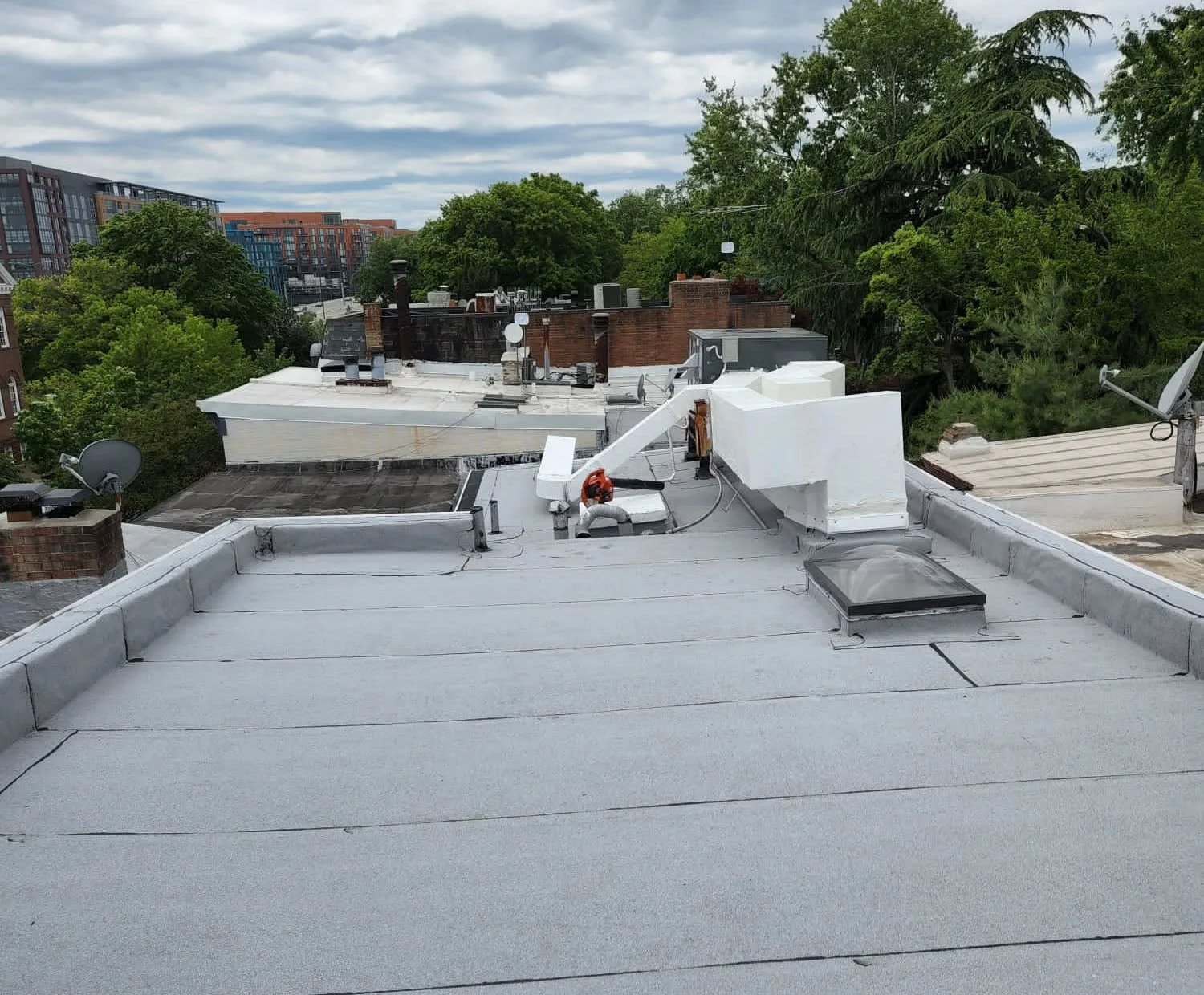
A broad roof field can hide several unrelated conditions. We divide it into sections, mark drain locations, curbs, expansion joints and visible repairs, then compare surface changes with interior symptoms. The inspection checks whether seams are open, membrane is punctured, fasteners are exposed or water is being held in a low area. We inspect the installed roof and document the system before recommending compatible repair materials. Labels, records and physical examination establish whether the system is single-ply, built-up, modified bitumen or another construction. The written roof condition report captures observations in a way the facility team can return to during maintenance.
Loading activity, equipment service and tenant traffic may interrupt roof access. We coordinate inspection zones and avoid leaving opened areas exposed when operations or weather change. Where a test cut can answer whether insulation is wet, we identify its location and restore the opening as part of the work. Thermal scanning can help prioritize follow-up points, but a scan pattern remains a screening observation until material is checked. This measured sequence limits unnecessary disturbance while giving the owner enough information to compare patching, selective replacement and a full-roof scope.
Correct the condition that holds water
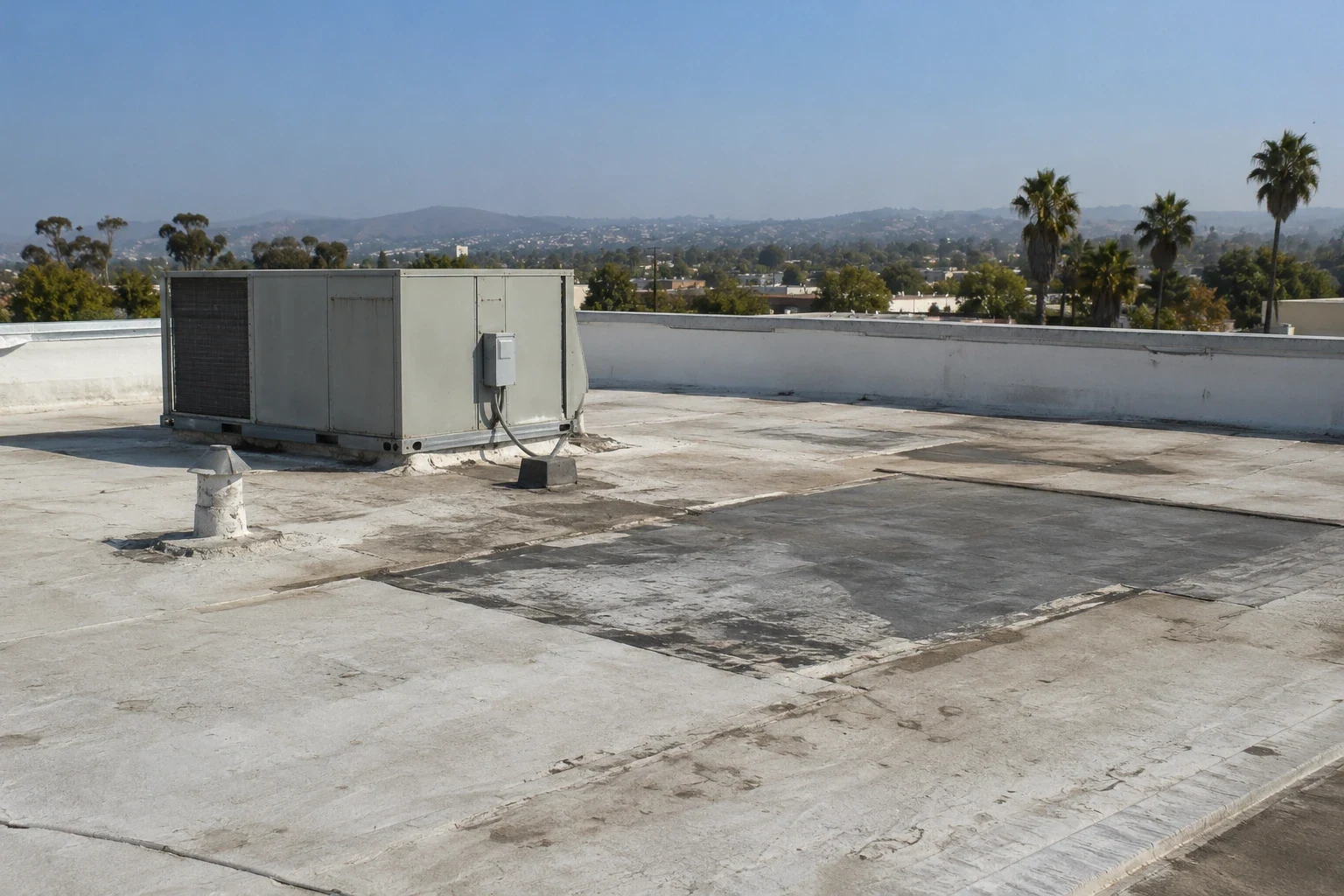
A puddle can form because a drain is restricted, a sump is shallow, a roof section has lost slope or a patch has created a dam. We inspect the outlet and the roof around it, including seams, flashing and the overflow path. The ponding water correction begins with that distinction. If debris is the only restriction, clearing and documenting the bowl may be sufficient; if water remains after flow is restored, the owner needs a measured assessment of the low area and assembly before considering a correction.
Industrial and mixed-use properties can have multiple roof sections that drain differently, particularly where later additions meet an older field. We map the change in elevation, check whether downspouts or scuppers are open and look for membrane stress near pond edges. The repair must preserve the designed route of runoff. Adding fill or coating across a drain path can shift rather than solve the problem. Our recommendation states which areas were inspected, what condition was found and whether a design professional should confirm drainage changes before construction.
Check edges, curbs and service penetrations
Wind and vibration can work at exposed edges, while trades servicing rooftop units can disturb nearby flashing. We inspect perimeter metal, terminations, curb corners, conduit supports and pipe penetrations for separation or movement. A loose counterflashing joint may direct water behind a wall; a failed curb corner can admit it into the roof layers. The wind damage assessment records uplift or displacement separately from wear, and our edge metal and coping repair addresses metal and coping details when their attachment or lap has failed.
A repair around operating equipment requires a sequence that protects both the roof and the service task. We coordinate clearances, confirm that the equipment base is not carrying an unintended roof load, and avoid attaching new material to a surface that has not been identified. If the same transition has been sealed repeatedly, we inspect the underlying termination and compare a mechanically secure repair with another surface treatment. The owner receives photos that show the defect, adjacent material and completed tie-in, making the closeout useful for the next service visit.
Fit the work to site activity
A corridor property may receive deliveries, serve customers or operate production while roof work is under way. We ask about receiving windows, interior sensitivities, equipment shutdowns and access rules before staging materials. The plan identifies a safe route, the section being opened and the protection below. If weather is changing or water is active, our emergency roof response can control exposure first; that temporary step is followed by a permanent inspection and repair plan once conditions allow. Commercial properties in Old Towne Orange also need work sequenced around daily use.
Sequencing matters when multiple roof sections connect over occupied space. We protect exposed insulation from rain, keep debris out of drains and close each area before shifting to another work zone. Noise, odor and rooftop traffic are discussed for the specific system under consideration. If replacement is needed, the comparison covers removal, insulation, deck findings and tie-ins at equipment and walls, not just a membrane surface. This gives operations staff a schedule they can use and gives ownership a scope tied to the actual assembly.
Build the next inspection around known conditions
A useful maintenance plan starts with the details that have already required attention. We record seam repairs, drain cleaning, edge corrections and areas that could not be accessed, then assign follow-up observations to roof sections. The preventive roof maintenance can catch debris, loose metal or a new opening before water reaches interior finishes. A repeat visit compares the same photographed details so a change can be separated from a condition that has remained stable.
For a property manager with several buildings near Katella, a consistent record makes budget conversations more concrete. It shows which repair closed, which item still needs testing and where replacement may be approaching. A maintenance log cannot promise future performance; it records visible conditions and completed actions. Tell us which roof area has been difficult to service, what activity it supports and when access is practical. We will inspect that section and explain what the next repair or monitoring step addresses.
Questions About Katella Avenue Corridor
Do you service warehouse and industrial buildings near Katella Avenue?
Yes. We inspect commercial roof assemblies at warehouse and general-industrial properties in the corridor. The building use helps us plan access and work sequencing; we identify the actual membrane and attachment through roof records and physical inspection before choosing a repair method.
Can repairs be done around deliveries or production?
We coordinate delivery windows, rooftop access, noise and protection below with the site contact. Some sections can be repaired in phases. If an opening cannot be closed within the planned window, we establish a temporary weather-control step and schedule the permanent detail with the right materials and access.
How do you address recurring ponding?
We inspect the drain, sump, surrounding slope, roof layers and any repair that could be holding water. Clearing a restriction does not correct a depressed area. We document the observed cause and compare a localized detail repair with a drainage correction that preserves the intended runoff path.
What does a roof condition report include?
The report identifies roof sections, observed membrane and edge conditions, drains, penetrations, photographs and repair boundaries. It separates confirmed defects from areas needing follow-up testing. That record gives facility staff a way to track maintenance and compare future observations with the current condition.
Related Roofing Work
Plan a roof inspection along Katella
Tell us the property use, roof access window and area of concern. We will map the relevant roof section, coordinate around site activity and document the repair choices. Call 555-555-5555 or request a roof assessment.