
Emergency Commercial Roof Repair in Orange, CA
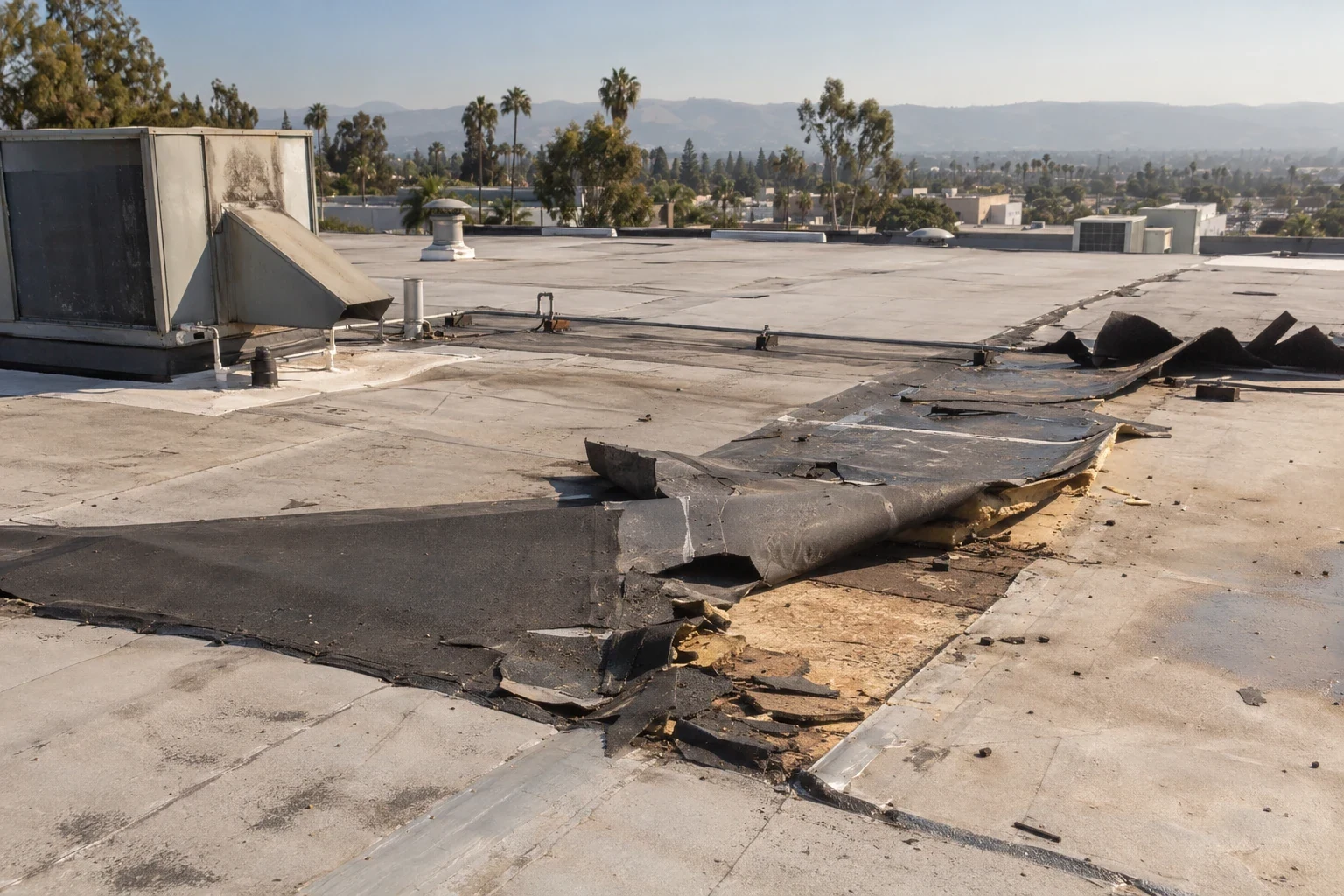
A loose sheet of edge metal and water entering below it need separate, immediate attention. We assess the unstable component, the opening behind it and the area affected inside. Emergency roof repair in Orange, CA starts with safe access and a practical way to limit further damage. Commercial Roofers Orange responds around the clock, through weekends and holidays. The initial work may involve securing loose materials, applying a temporary closure or protecting an exposed area until conditions allow the permanent repair.
Warehouses, restaurants and mixed-use properties share the Katella Avenue and Main Street corridor, with industrial districts nearby. An opening above a loading operation requires coordination with the people moving stock below it. Old Towne Orange includes dining and retail businesses among historic structures, where pedestrian areas and customer access may need protection during emergency work. We establish the actual affected area and operating limits at the property. The response is directed at the physical hazard and water entry rather than a general description of storm damage.
Safe access comes before the opening
A roof with displaced materials, standing water or uncertain deck support can be hazardous to approach. We examine available access and current conditions before putting people on the roof. Strong wind, lightning and unstable components can limit the work possible during an event. Where safe roof access is delayed, the owner still needs clear direction about keeping people away from the affected interior and involving the appropriate emergency or electrical service for hazards outside roofing work.
We ask where water is entering, which rooms or goods are affected and whether any materials have fallen. Interior photographs taken from a safe position can help locate the area. A focused leak investigation follows as access permits. Sensitive stock, intakes and operating equipment influence where temporary protection can be placed. Emergency closure work must avoid creating another hazard, obstructing a required route or directing water toward an unprotected part of the building.
Temporary closure fits the surface
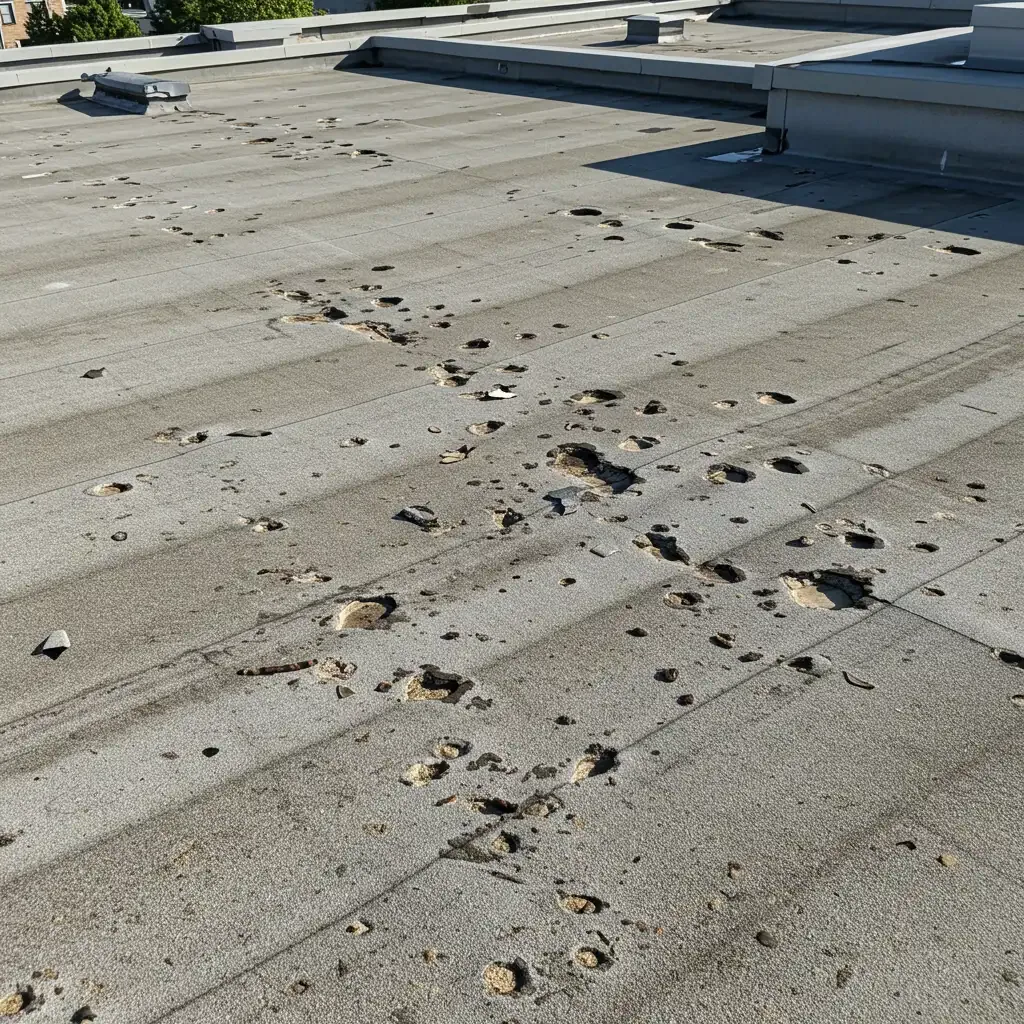
A torn membrane, missing flashing and damaged metal panel need different temporary methods. We examine the surface condition and remaining attachment, then select a suitable dry-in or covering approach. A tarp needs securement appropriate to the building and conditions; placing weight or fasteners without considering the roof can create damage. Temporary work is also checked for its effect on drainage, because a covering that blocks an outlet can shift water toward another vulnerable connection.
A closure may need follow-up if weather continues or access remains restricted. We explain the protected area and the next inspection step. The permanent scope will address the failed materials after the emergency conditions are controlled. For a punctured membrane, that can mean preparing compatible material and checking beneath the opening. For a loose edge, it can require replacing damaged components and correcting the connection to the support.
Wind damage can extend past the tear
Southern California Santa Ana winds carry dry air through mountain passages, occur most often from September through May and can cause major property damage. A lifted edge after a wind event warrants checks beyond the visible bend. We examine adjacent attachment, the membrane turn and any displaced backing. Wind-damaged roof connections can leave a wider repair boundary where movement has weakened neighboring materials.
Water beneath a torn surface can affect insulation before the emergency crew can reach the roof. We assess concealed layers as the opening is made safe and the permanent work is prepared. Wet or detached materials need their own removal limit. An initial condition photograph preserves the observed damage sequence, while subsequent physical checks establish how far the repair must extend. The owner can then distinguish the emergency closure from the layer reconstruction still needed.
Protect the operation below
A leak above an electrical room requires attention from the responsible electrical trade as well as roof repair. Water above merchandise, food preparation or an occupied desk calls for a different protection arrangement. We discuss the affected use with the owner before moving debris or opening layers. For a grocery operation, keeping water and roofing debris away from stock and active work areas can change where the crew begins.
An emergency at a building near the Katella Avenue corridor may also involve delivery routes needed during the response. We identify routes that can remain usable and work areas that need separation. The building's people handle their operational decisions with the hazard information available. We explain what the roofing work requires, which areas are being protected and what additional access is needed to complete a durable repair.
Permanent work follows the findings
A temporary seal needs review once the roof can be inspected thoroughly. We examine its connection and identify the components that failed originally. A planned permanent repair may include membrane, flashing, insulation or edge reconstruction. Material preparation and compatible connections remain necessary even if the temporary closure has stopped visible dripping. The owner receives a defined repair limit and an explanation of the condition that sets it.
Damage affecting structural support needs appropriate evaluation before the roof is closed permanently. Equipment movement can also require another trade to restore supports before flashing is rebuilt. We coordinate the sequence so the repaired roof is not cut open again for unresolved work. Completion checks concentrate on the reconstructed water path, securement and drainage. The emergency work record identifies the temporary protection and the permanent changes, helping the owner track which parts of the original problem have been resolved.
Questions About Emergency Commercial Roof Repair
Should I send someone onto the roof while it is leaking?
Keep untrained personnel away from roof hazards and use safe interior observations to describe the problem. Loose metal, slippery surfaces and damaged support can make access dangerous. We assess how the roof can be reached and what conditions permit work. Where there is immediate danger to people, electrical systems or the structure, involve the appropriate emergency service rather than attempt an improvised roof intervention.
Will a temporary tarp be removed during the permanent repair?
Temporary protection is reviewed as part of preparing the permanent connection. We determine what needs removal and whether its attachment affected the surrounding surface. The permanent materials must connect to suitable roof components, not rely on the temporary covering as their support. The scope also accounts for restoring drainage and correcting any detail altered during the emergency closure.
Can you respond during a holiday shutdown?
Roof emergency response is available during holidays as well as nights and weekends. We need an authorized contact and information about safe access, affected areas and any operating hazards. A closed building may still contain sensitive equipment or stock that needs protection. We coordinate entry and explain what can be secured or dried in under the conditions present. Tell us whether alarms, locked access points or equipment controls affect entry. The person authorizing the work should be reachable if a concealed condition changes the protection needed. We also need to know which occupied areas cannot be entered and where people can remain safely while the roof hazard is assessed.
What roof information helps after the immediate water entry stops?
Existing repair details, material information and the location of earlier leaks can help direct the permanent inspection. We compare that information with the roof condition encountered during the response. Photographs of the initial damage and temporary work help identify what changed. The repair recommendation then addresses the physical defect and concealed layer damage rather than treating the end of visible dripping as completion.
Related Roofing Work

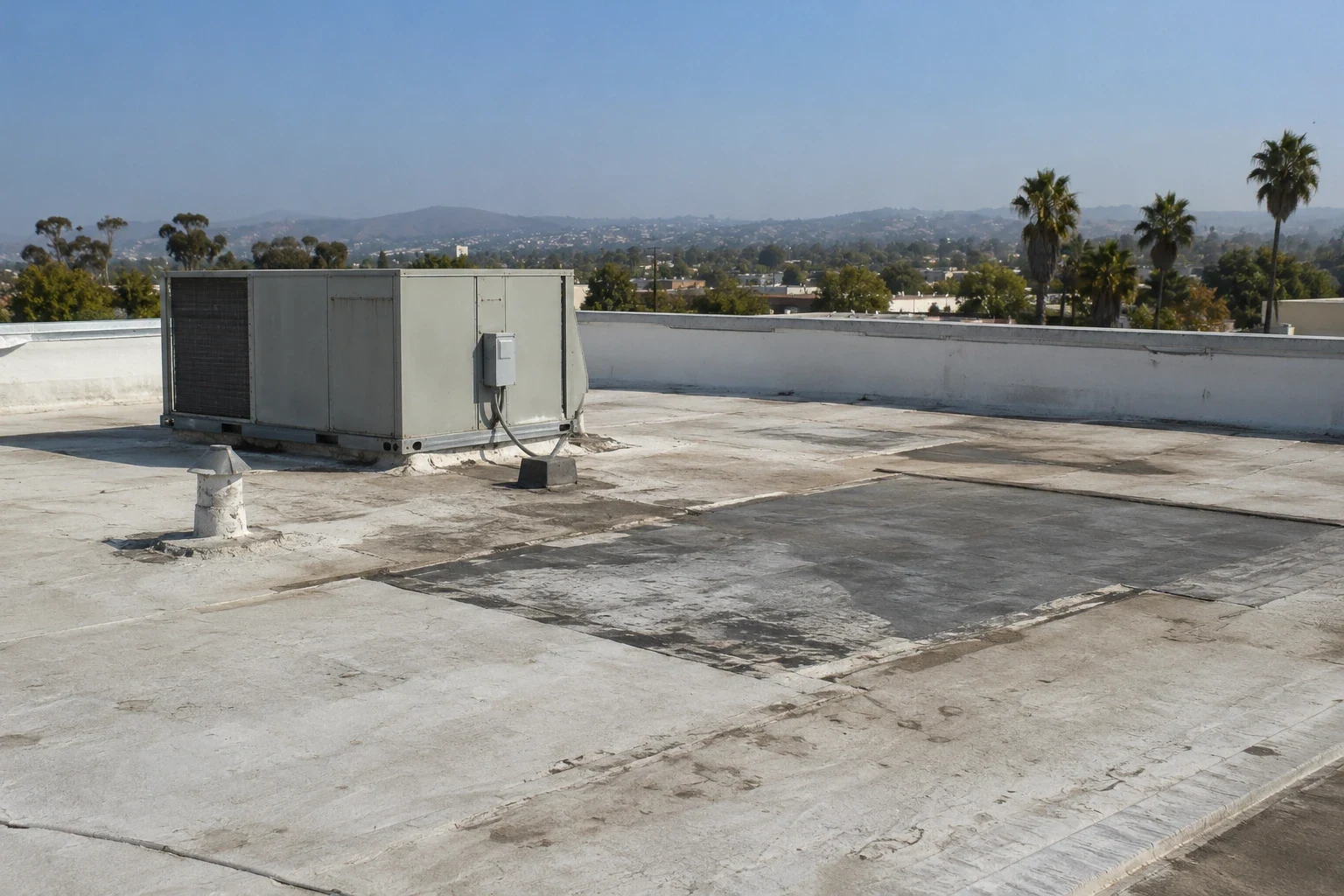
Tell us what has opened
Describe the Orange property, incoming water or displaced material, safe access and affected operations. We can assess emergency protection and the next repair step. Call 555-555-5555 or request a roof assessment.