
Commercial Roofing in Villa Park, CA
A wet ceiling tile beside an exterior wall gives a manager a location to investigate, but it does not identify the roof opening. In Villa Park, CA, we follow the water path through the actual membrane, flashing, and drainage details before setting a repair limit. The municipality has one small shopping center within its boundaries; City Hall includes a community room adjoining it, and an Orange County Public Libraries branch is adjacent to the center. For a Villa Park business, roof access, occupied areas and drainage are confirmed at the property before the repair sequence is set. The specific building still needs a hands-on inspection. We check the reported area, photograph the condition, and explain whether the evidence supports a localized repair or a closer look below the surface. A commercial roof inspection gives the owner a concise account of what we can observe and what remains to verify.
Start at the detail above the room
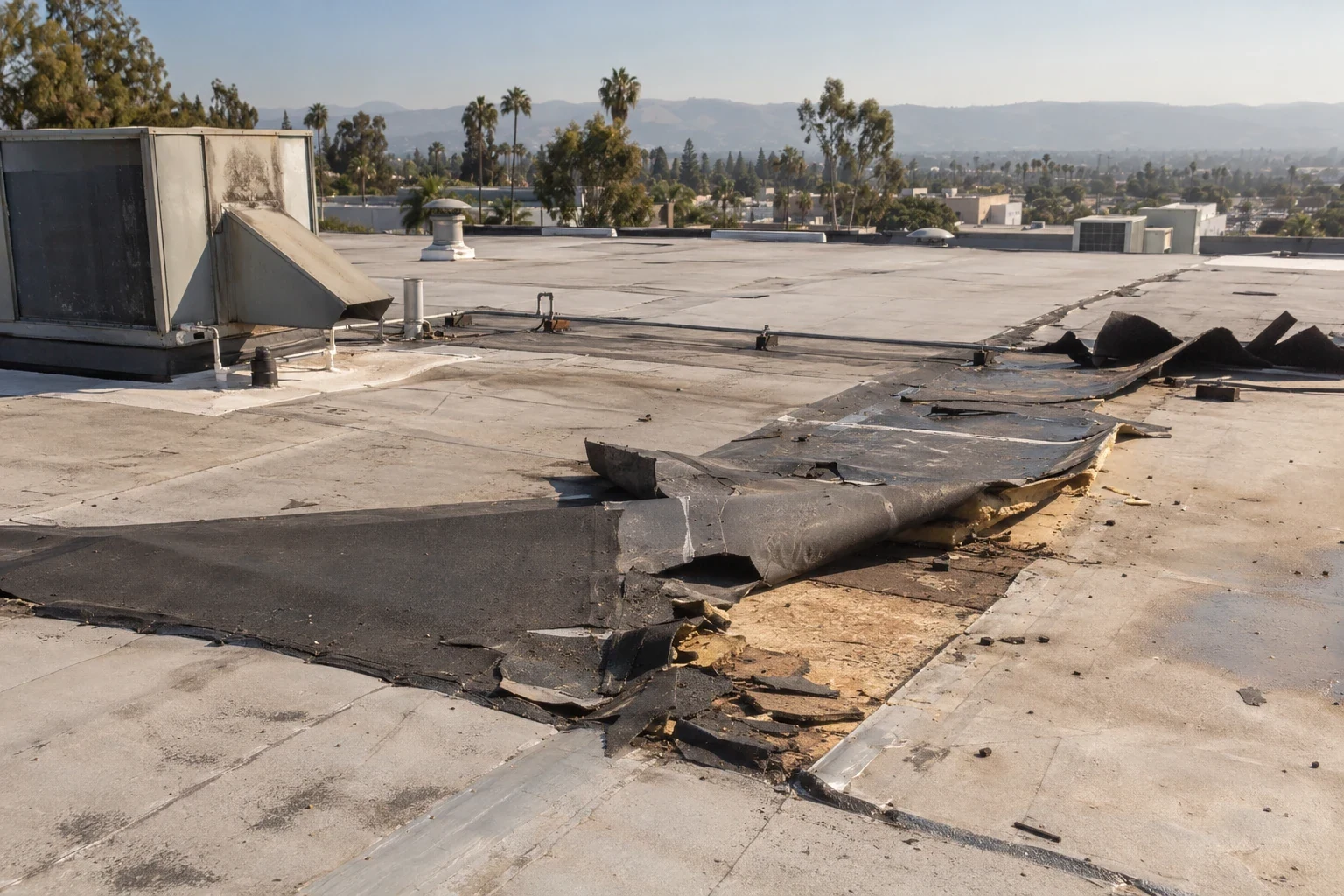
Water entering near a wall may pass through a parapet transition, a failed counterflashing joint, or a membrane termination before reaching the interior. We examine each point where materials meet and check whether the roof surface drains toward or away from the suspected opening. An exposed edge may show loose metal, a separated cleat, or a split sealant joint. We look for the actual break in the water plane, then mark where secure material begins on both sides of it. That boundary helps keep repair work tied to the failed condition.
For any occupied property, we ask the owner which rooms sit under the work, where visitors enter, and what access limits apply. If water is active, commercial leak repair first limits exposure and then identifies the entry detail that needs a permanent correction.
Test only where the answer matters
A membrane surface can look smooth while moisture remains in the insulation below. We compare visible movement, soft areas, interior staining, and nearby roof details to decide whether a measured test opening would change the scope. The opening can show the insulation condition, deck material, and number of existing layers. We record its size and location, photograph what is exposed, and close the roof with a compatible repair. If the layers are sound, that finding can keep work focused; if they are wet, it identifies material that must be addressed.
A written condition report can preserve the evidence for budgeting or a follow-up inspection, especially when several people share responsibility for a building.
Use the roof assembly to set options
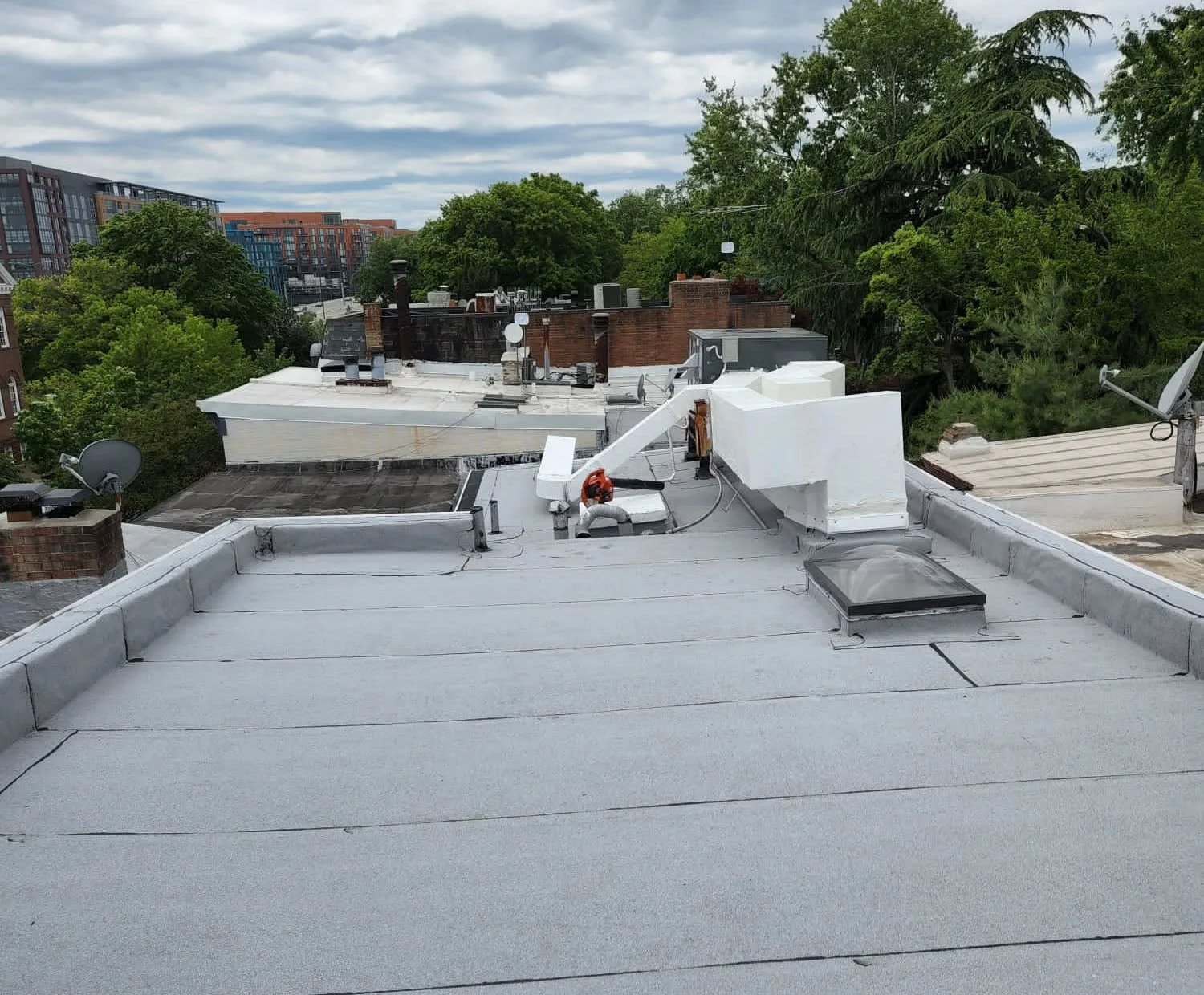
The right method depends on what is installed. A single-ply membrane may need compatible membrane and a prepared weld area; a built-up surface calls for repair materials suited to its bitumen and surfacing; a metal roof needs attention to panel seams, fasteners, and transitions. We identify the assembly during inspection rather than assigning a repair by appearance. A sound, dry area around a small defect can support a targeted correction. Deteriorated layers or multiple recurring openings may justify comparing a larger section repair with replacement.
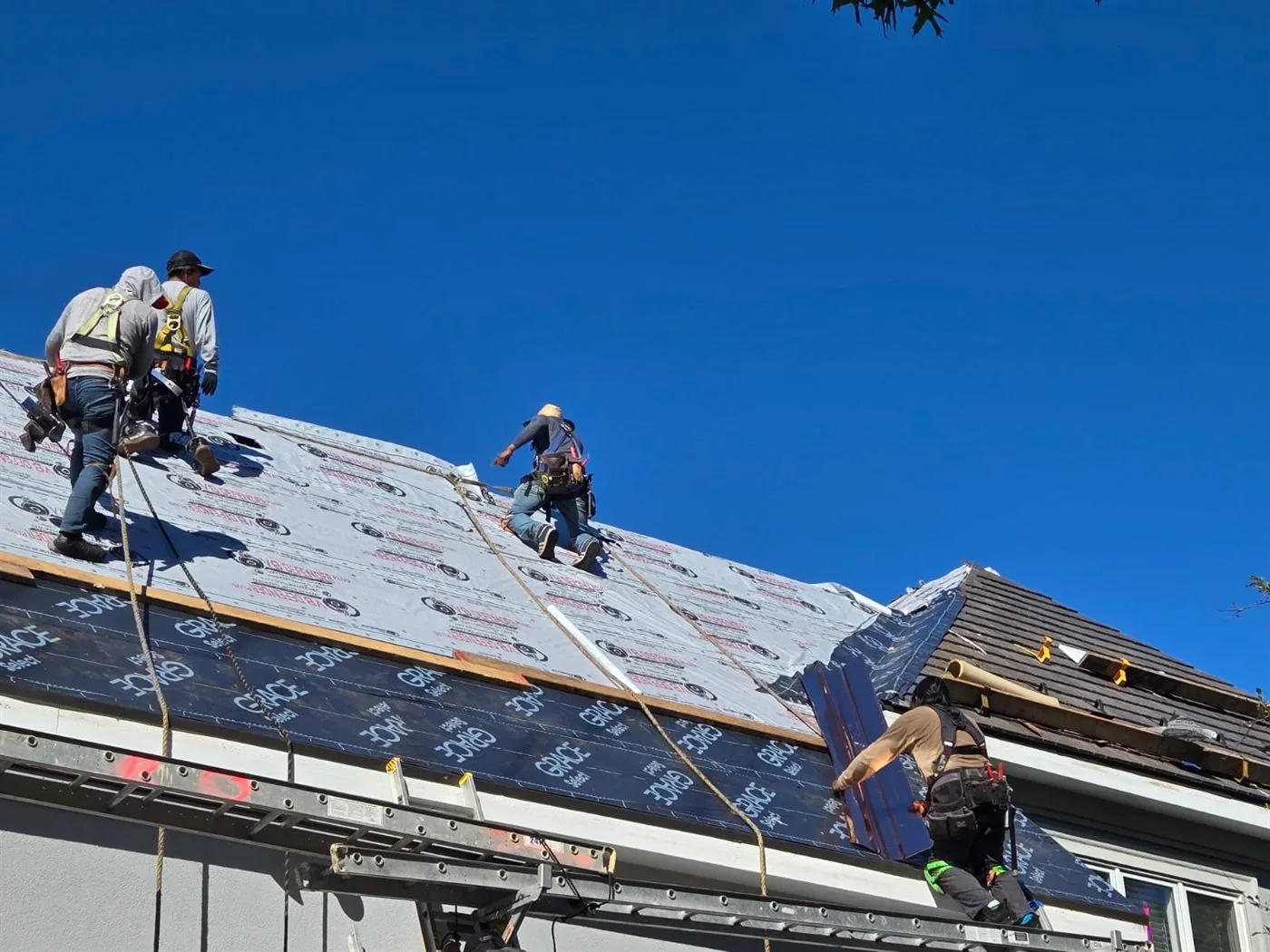
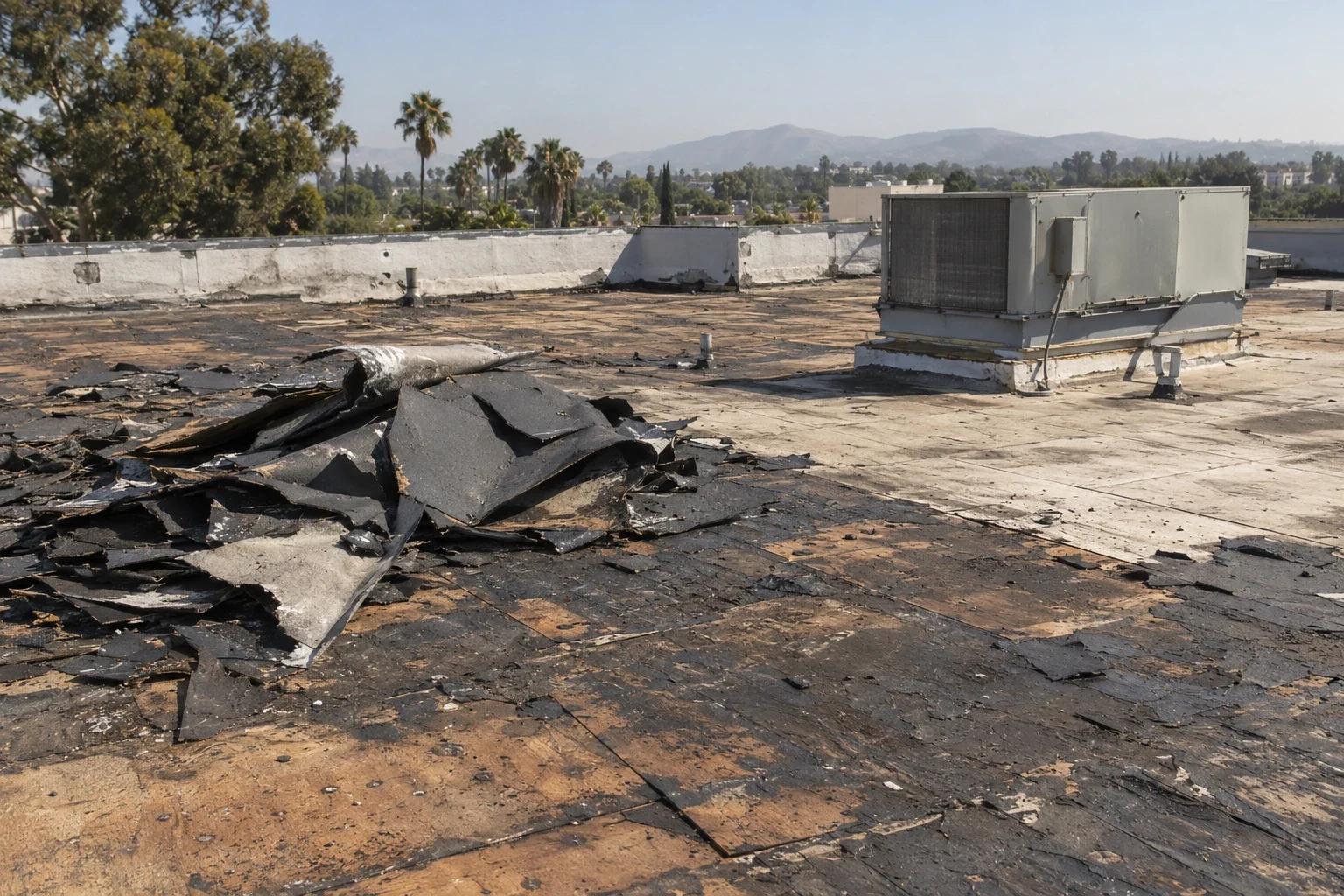
Replacement planning also considers roof access, edge details, drainage, equipment penetrations, removal depth, and protection beneath the work. A recover is not automatically suitable simply because the roof can accept another layer visually. Existing moisture, structural loading, drainage, and applicable permitting requirements all matter. We explain which items have been verified and which require design or permit review. A replacement comparison should set out those assumptions alongside the disruption of removing material and keeping the building in service.
Keep drainage in working order
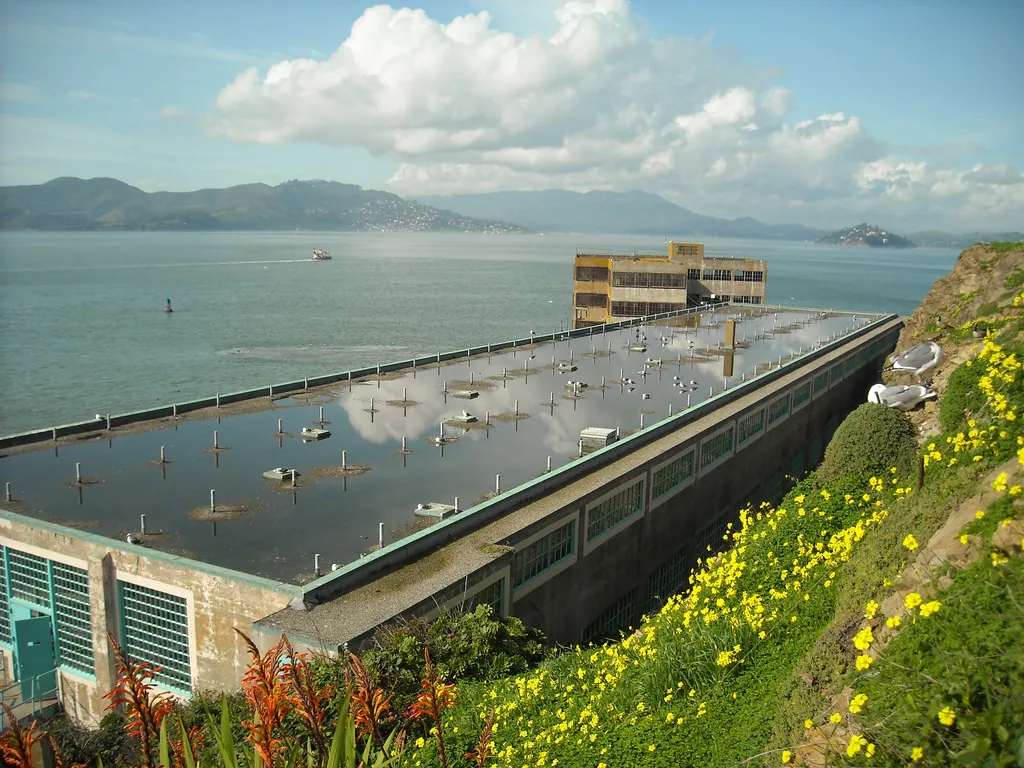
A drain restriction can force water toward a seam or low transition that was not designed to hold standing water. We inspect the strainer, drain bowl, clamping ring, and surrounding membrane. At a scupper, we check the outlet metal and the wall detail, then look below for staining or deterioration that shows where discharge has traveled. If water remains after rain, we map the affected area and separate blockage from a low or deflected surface. The repair plan should name the cause that inspection confirmed.
The nearby Anaheim station records 3.16 inches of normal January precipitation and 0.01 inches in August. We assess the actual outlet, slope, and visible evidence after weather. A drain and scupper inspection can address a clogged or failed detail once we identify the reason water is not leaving. When a sudden leak cannot wait for regular scheduling, emergency response is available around the clock, with a permanent repair scoped after the roof can be safely examined.
Coordinate access and public use
Roof access may cross a shared parking area, public entrance, or active service route. We plan where materials will be staged and how the work zone will be kept separate from people below. For a civic or library setting, the property contact can identify opening hours and any room that must remain available. Controls depend on crew access, noise, debris, and whether the roof must remain temporarily open.
Santa Ana winds affect Southern California and can damage property. After a wind report, we inspect edge metal, coping, membrane termination, and rooftop components for movement. We also check attachment around the moved piece, since replacing visible metal alone may leave the water plane open. Wind-related repairs should include the substrate and transitions needed to secure the assembly. If the inspection finds an unrelated seam or drain problem, we list it separately so the owner can make a distinct decision.
Record the repair and its limits
The closeout identifies the roof zone, repaired material, and the condition that defined the work. Photographs show the surface before the repair and the completed tie-in. If a test opening found wet insulation or sound layers, the written record states that result. Any item not included in the authorized scope appears as a separate follow-up, with its location and reason for attention. This record helps the owner compare a later inspection with the same detail rather than relying on memory.
At any building, we inspect the installed roof and drainage details before defining the repair limit. We keep each finding attached to the property actually inspected. For an owner with related operations in Orange or Fullerton, a consistent format can make separate repair records easier to compare without transferring one site's roof facts to another. A scheduled maintenance visit can return to the repaired area, inspect drainage and exposed edges, and record whether the condition has changed.
Questions About Villa Park
How do you plan roof work around Villa Park's civic and library activity?
We plan around the property’s actual operating hours, visitor routes and roof access. The repair scope is based on the inspected roof assembly and condition.
What if the interior leak is nowhere near a roof drain?
We still check drainage because water can move beneath a membrane or along a deck before appearing indoors. We inspect the reported room's roof area, nearby seams and penetrations, and any low point that could route water. A direct test can confirm whether moisture has spread. The repair follows the path and opening we can verify.
How do you decide whether to patch or replace a commercial roof?
We look at the assembly, layer condition, frequency and spread of failures, and whether sound material remains for a durable tie-in. An isolated defect over stable layers may support a localized repair. Repeated breakdown or widespread moisture can make replacement a more useful comparison. We show what the inspection supports before setting either scope.
Can you inspect a roof over a public-use building during business hours?
We coordinate access and protection with the property contact, including areas below the work and visitor routes. Inspection may be possible during normal use, but any repair or test opening needs its own sequence and protection plan. We confirm the operating limits and explain any short restriction before starting work.
Related Roofing Work

Discuss a Villa Park roof condition
Share the building use, reported leak area, roof access details, and operating limits. We can inspect the assembly, document findings, and explain the next repair decision. Call 555-555-5555 or request a roof assessment.