
Commercial Roof Recover and Overlay in Orange, CA
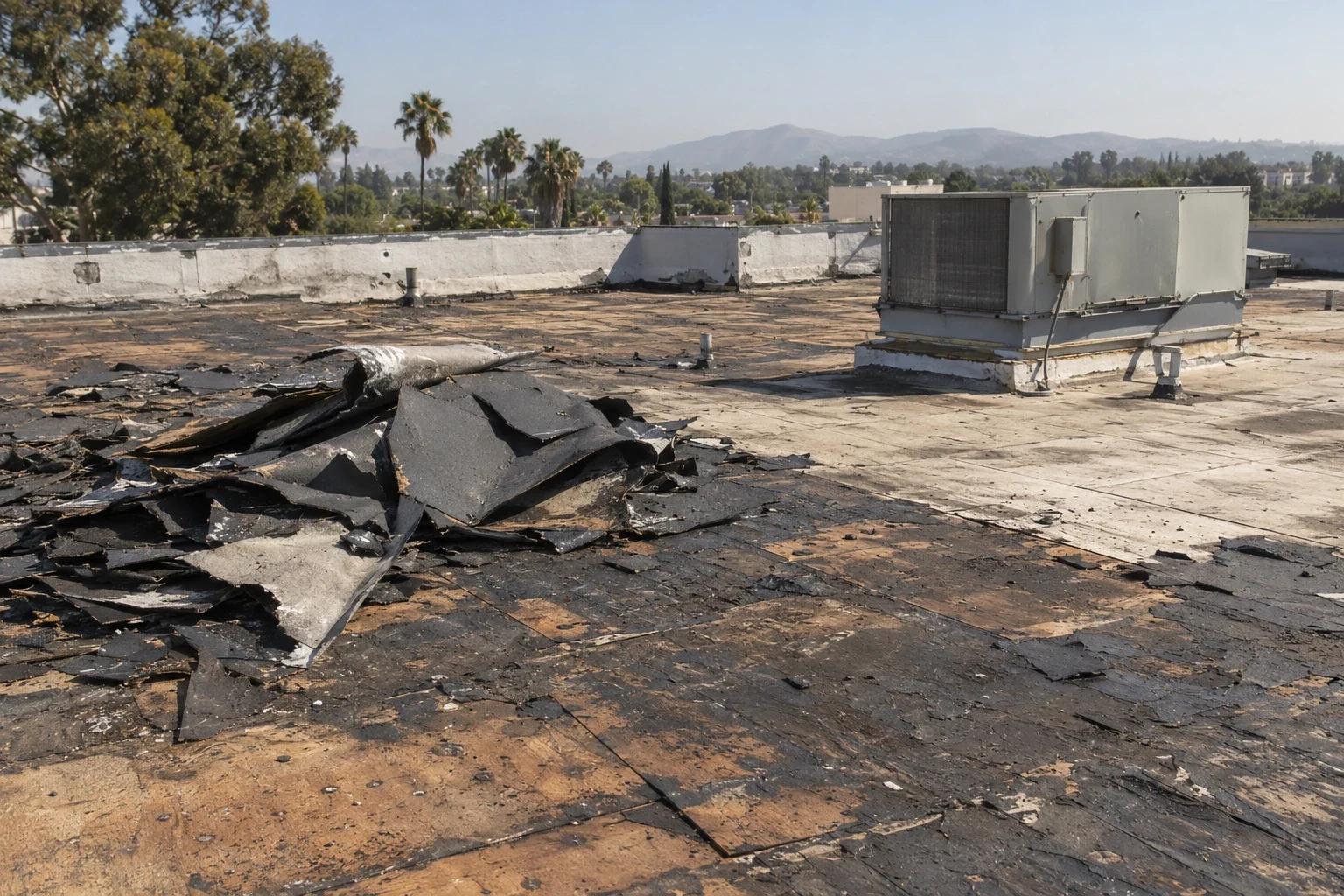
A firm roof surface interrupted by a loose patch needs a closer look before another layer covers it. We inspect the existing membrane, check its connection to the underlying assembly and determine whether moisture has reached the insulation. Roof recover work in Orange, CA begins with that layer condition. An overlay can preserve suitable materials and reduce removal, but it also carries those materials into the next assembly. Commercial Roofers Orange identifies what can remain, what needs removal and which transitions will change as the roof becomes thicker.
Orange establishes light-industrial and industrial-manufacturing districts. A recover on an operating industrial building must account for the roof structure as well as machinery and stock below it. In Savi Ranch, the commercial district shared by Yorba Linda and Anaheim, offices, hotels, restaurants and retail buildings create different operating needs. We assess the individual property rather than select a recover solely for its business use. The inspection must support the additional layers and a reliable connection at every drain, wall and equipment curb.
Wet layers need removal
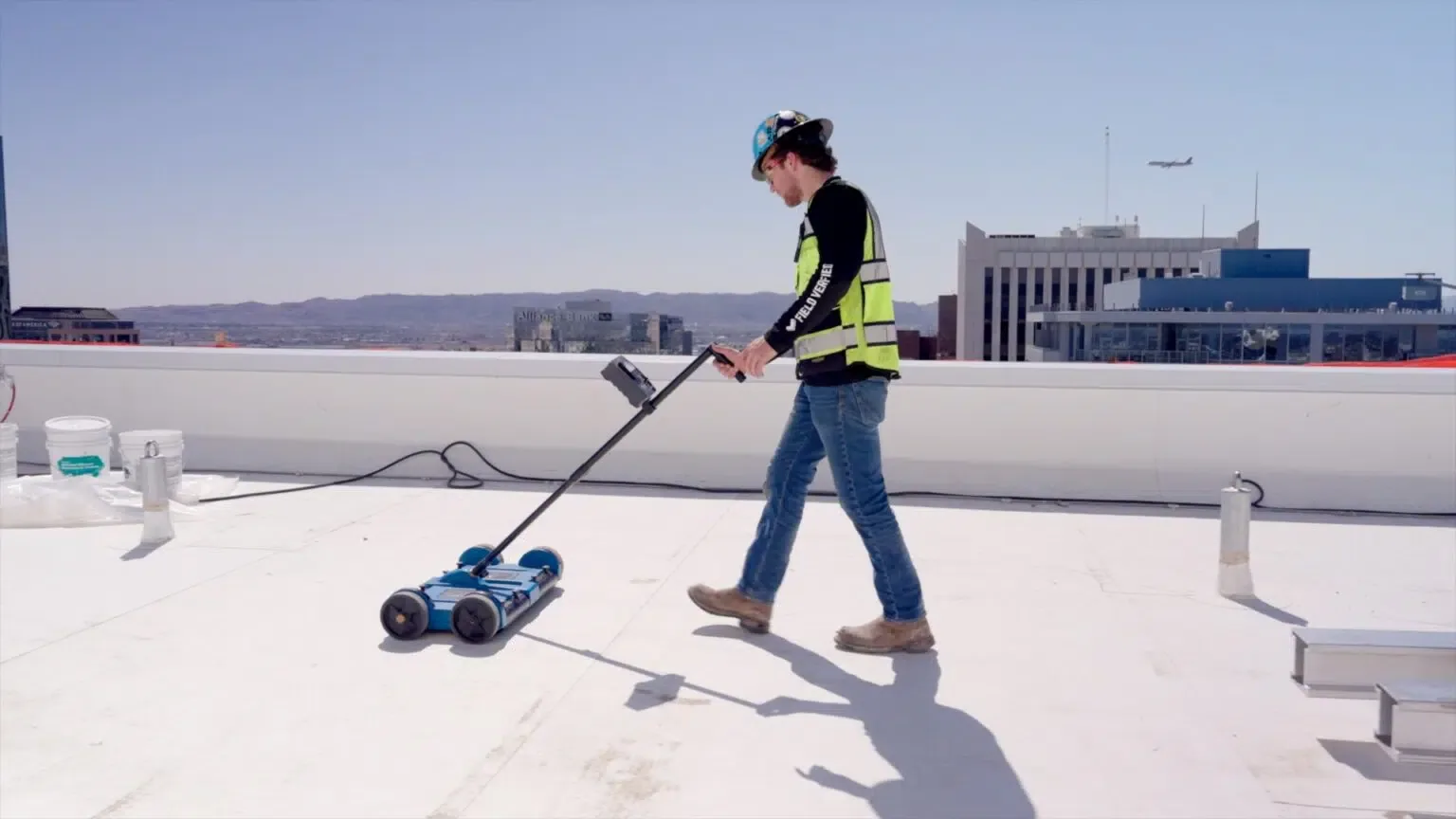
A dry-looking membrane can conceal insulation that has absorbed water. We combine visible findings with selected openings and, where suitable, an infrared survey followed by layer checks. A wet area needs a defined removal boundary, with sound material confirmed beyond that boundary. Leaving moisture trapped beneath a new membrane can preserve the original weakness and complicate future repairs. The owner needs to know how we established the limit, not just where a colored image changed.
A test opening also reveals the number and arrangement of existing roof layers. We check the proposed recover against the applicable restrictions and the actual assembly. Multiple layers, deterioration or uncertain attachment may make removal and replacement the more suitable route. We explain which finding changes the recommendation. A recover decision should not depend on the appearance of the uppermost surface while the materials supporting it remain unexamined.
The retained roof must hold
A lifted seam or detached board can interrupt the load path beneath a new system. We review the deck, existing attachment and the proposed fastening or adhesion method. Mechanical securement needs a substrate that can accept the specified fasteners; adhesion needs compatible, prepared surfaces. Where the design calls for testing or engineering input, that work belongs before installation. A new membrane cannot correct a weak connection hidden underneath it simply by covering the opening.
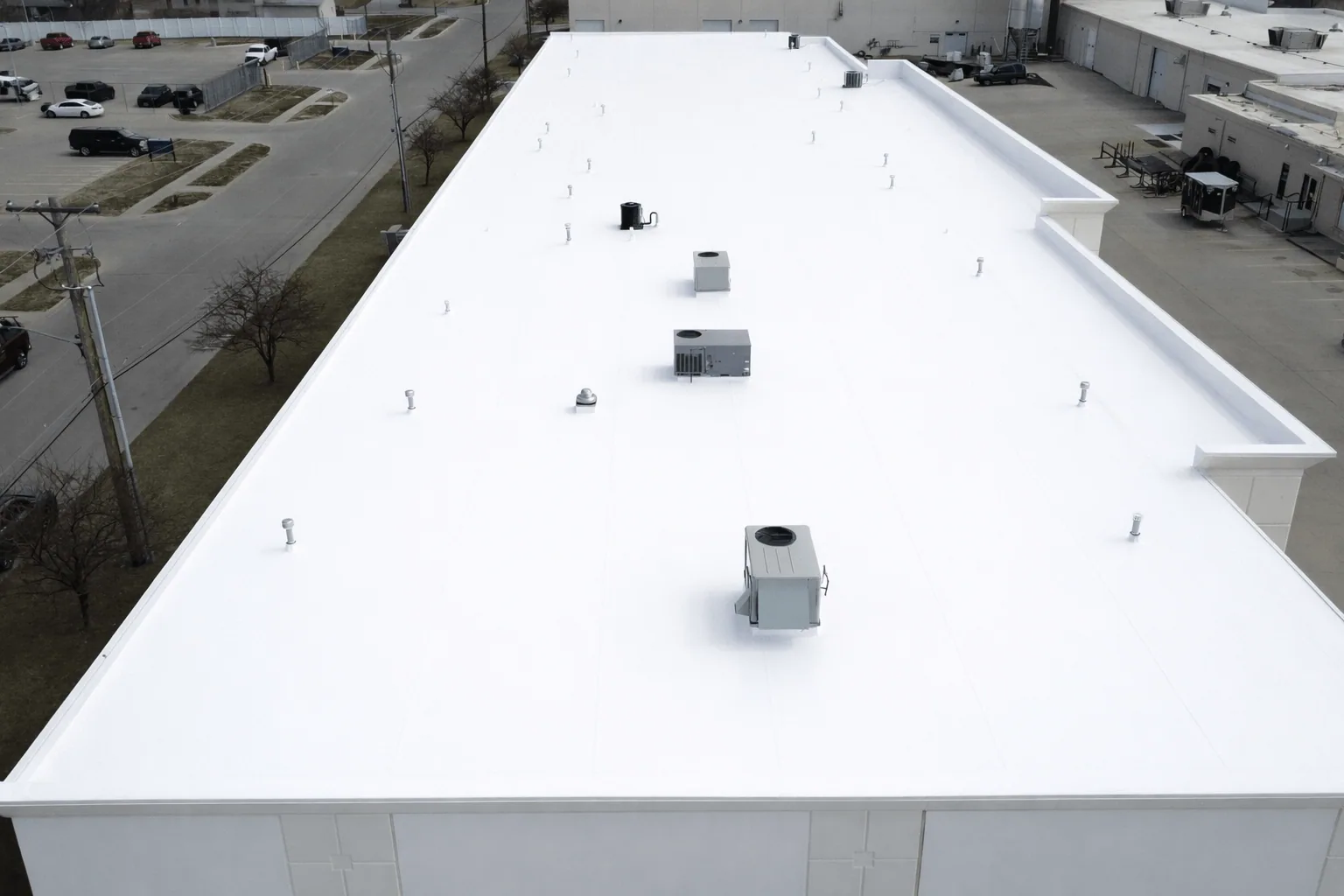
Compatibility matters at contact surfaces and transitions. A separation layer or cover board may be required between materials, depending on the selected assembly. We explain the role of a welded TPO membrane or another suitable surface within the complete roof, rather than compare membranes without their supporting layers. The repair comparison includes puncture resistance, service traffic and how the system can be repaired after future equipment work.
Extra height changes the details
A curb with little exposed flashing may become too low once insulation or a protective board is added. We measure the available height at curbs, wall terminations, doors and drains. The recover scope identifies which components need extension, reconstruction or replacement. Existing metal cannot be reused merely because it is still attached. Its dimensions, condition and connection must accommodate the new roof surface without leaving an unsupported turn or a water entry path.
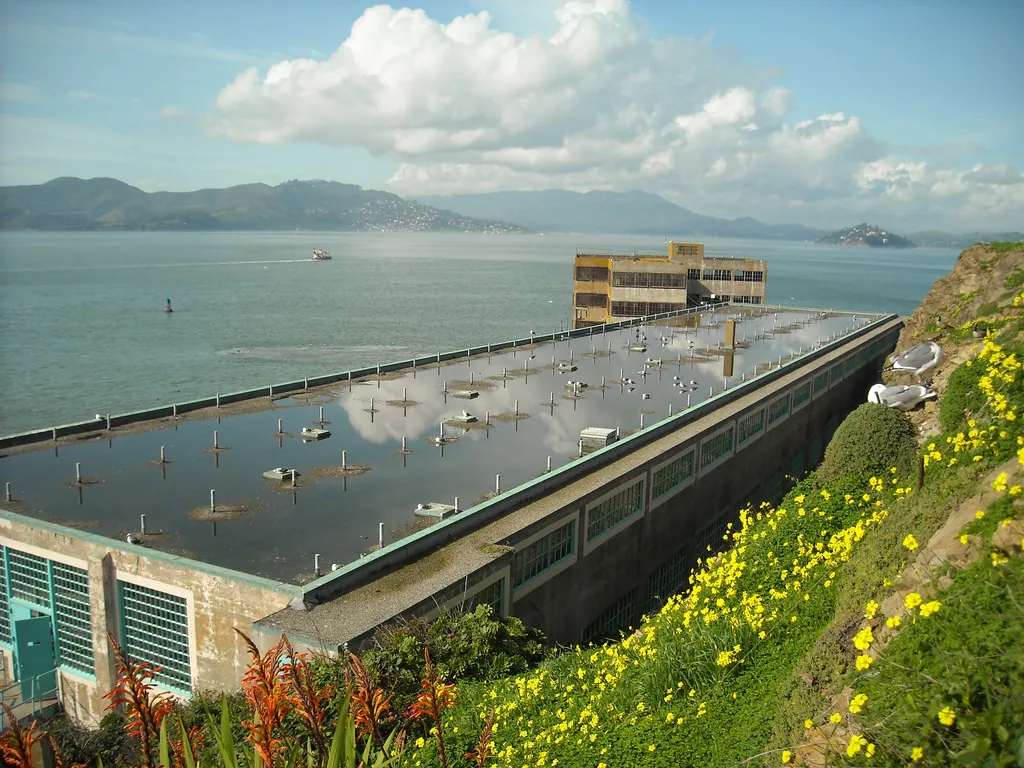
At a drain, added thickness can leave a raised rim that traps water outside the outlet. We review the bowl, surrounding depression and clamping connection before completing the new assembly. Drain and scupper alterations need to preserve a usable drainage path and the required discharge arrangement. Areas behind wide equipment curbs may also need slope correction. Those detail changes can affect whether recover remains practical even when much of the field roof is dry.
Approval depends on the assembly
Orange's adopted building code is the 2025 California Building Code with municipal amendments. We review the recover against the requirements applying to the property and proposed work. Existing layers, added weight, attachment and drainage each deserve attention. The application date sets the energy-standard edition: California's 2025 requirements govern submissions beginning January 1, 2026. Where energy requirements change the insulation or surface choice, we incorporate that change into the assembly comparison rather than treat it as a separate formality.
A roof opening can reveal a condition that changes an initially promising recover. We establish how that finding will be handled before broad installation starts. The owner should be able to distinguish a limited wet-area removal from a change affecting the entire system. Measurements and condition photographs make that distinction visible. They also let the owner review a revised scope with the actual roof condition in view, instead of comparing two descriptions that assume different concealed materials.
Install without carrying failures forward
Loose patches, abandoned penetrations and deteriorated flashing need attention before the new surface is placed. We prepare retained areas, remove unsuitable material and build the planned transitions in a sequence that preserves weather protection. For an occupied office roof, equipment access and intake protection may affect the work area. The sequence should make clear where people can operate and where the crew needs a protected work zone.
A property in Savi Ranch may need hotel service access or a restaurant intake kept clear during the work. We establish the actual operating limits with the owner. On completion, we inspect the new seams and detail connections, then identify maintenance points and safe service routes. The retained assembly information stays with the roof record so a later repair can locate old layers and avoid treating the recovered roof as an entirely new deck-to-surface installation.
Questions About Commercial Roof Recover and Overlay
Can a roof with several dry test openings still have wet areas?
Dry openings describe the locations examined, so we compare them with the visible damage and any survey findings before setting a removal limit. Suspect areas need targeted investigation rather than an assumption that the whole roof matches a convenient opening. We explain where additional checks would change the recover decision and how a wet area will be removed and closed.
Will an overlay straighten a depression beside my drain?
Drainage correction needs a designed change in elevation or outlet detail. Laying another membrane over the same depression can leave the water path unchanged. We inspect the deck relationship, drain rim and surrounding slope, then compare suitable alterations. Where a correction adds thickness, the nearby curb and wall flashing heights need to be checked at the same time.
Why might metal edge work be included in a recover?
Existing edge metal may not fit the new assembly height or provide the required connection. We examine its condition, dimensions and securement before proposing reuse. Replacement or reconstruction can be necessary even where the retained field roof is sound. A close view of the current edge and a clear description of the new transition help the owner assess that part of the scope.
Does retaining the old roof reduce all construction disruption?
Keeping suitable layers can reduce tear-off debris and exposure, but installation still requires material movement, equipment access and work at drains and edges. We identify the activities that affect the occupied property and plan their sequence. A recover also needs isolated removal where layers are unsuitable. Those areas receive their own protection and closure plan rather than being treated as incidental patching. We also review where stored materials will sit, how the roof will be accessed and which finished areas need temporary protection from ongoing service traffic.
Related Roofing Work
Check what can remain
Describe the Orange roof, its repair history and the operating limits below it. We can examine the retained layers and explain a suitable recover or removal scope. Call 555-555-5555 or request a roof assessment.