Rooftop Equipment Curbs and Supports in Orange, CA
Rust streaks below a shifted equipment bracket call for a check of the connection carrying the component. We examine the bracket, accessible support and nearby flashing separately, because a load connection and a weather seal perform different jobs. Rooftop curb and support work in Orange, CA needs those jobs coordinated before the damaged area is closed. Commercial Roofers Orange identifies the roofing correction and the equipment or structural work needed beside it. A condition photograph locates the failed connection; the physical examination establishes which component must be repaired before new flashing is completed.
The Katella Avenue and Main Street area includes industrial and warehouse uses alongside restaurants and mixed-use development. On an operating industrial building, equipment changes can affect production below the roof. Savi Ranch includes office, hotel and restaurant operations across Yorba Linda and Anaheim, each with different service needs. We discuss the actual equipment and occupancy at the property, then inspect its roof connections. The work plan identifies which equipment responsibilities need completion before roofing can proceed at the affected curb or support.
Movement starts beneath the flashing
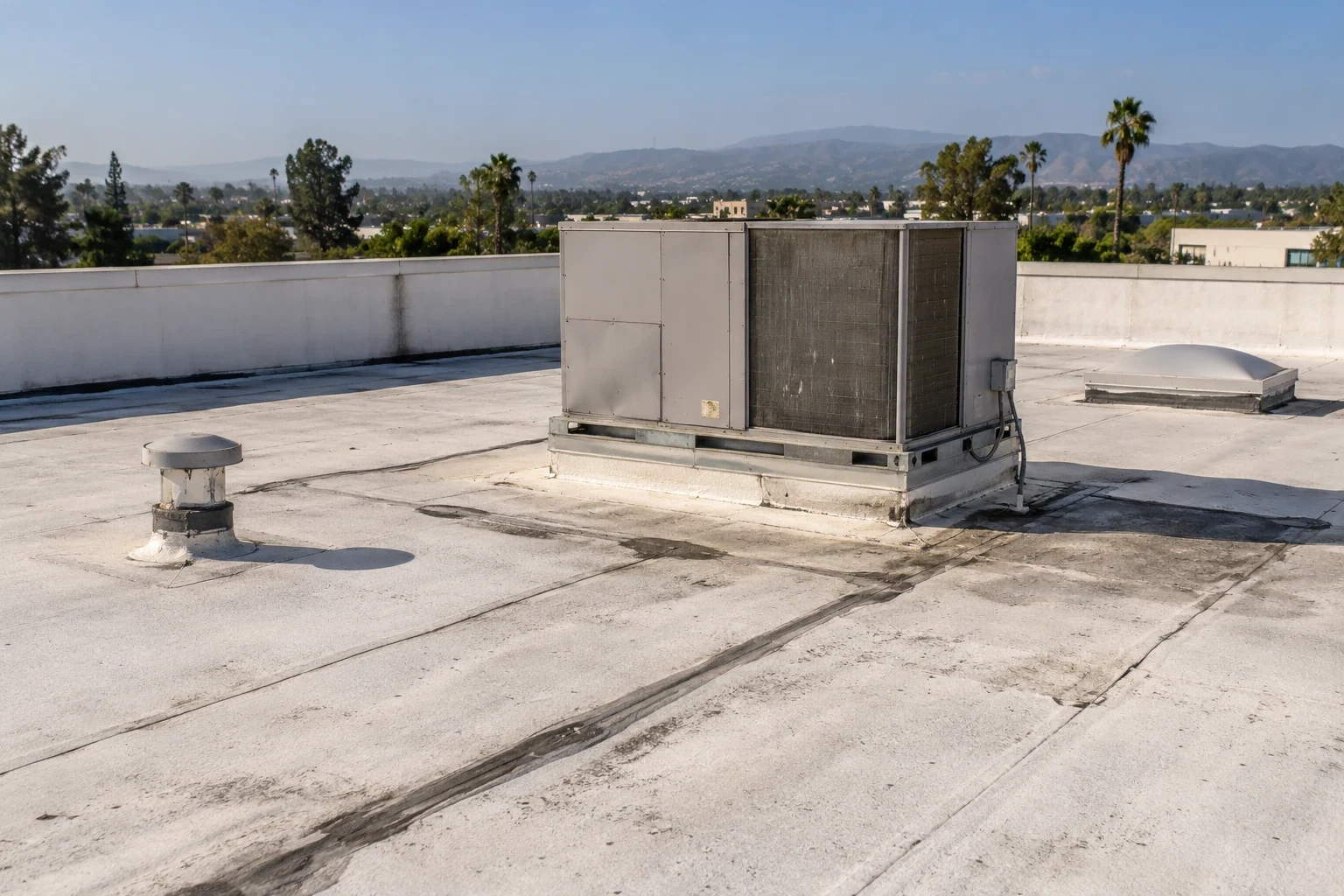
A flashing tear beside a mechanical curb may result from movement in the support or equipment rather than a defect confined to the membrane. We examine the curb, accessible backing and roof connection together. Loose or deteriorated components need correction before new sheet material covers them. Rebuilding the penetration flashing follows the repaired geometry and support. A patch across the split leaves the task incomplete if the curb continues to move.
The equipment trade assesses the unit's operation and support requirements, while structural concerns may need engineering review. We identify the roof findings that affect those responsibilities, including exposed deterioration or inadequate room for the required flashing. The owner can arrange the necessary evaluation without treating all work at a rooftop unit as a membrane repair. Selected openings can help reveal concealed backing where its condition changes the reconstruction scope.
Load placement needs a suitable base
A foot resting directly on a vulnerable surface can crush insulation or damage the membrane during service movement. We inspect the layers and proposed bearing arrangement, then coordinate a support detail suited to the assembly and equipment requirements. Loads and attachment must be assessed appropriately for the building. A new block or pad should not be placed solely to cover the mark without understanding whether it provides the needed support.
Insulation and cover-board condition matters where compression has affected the roof. We establish whether damaged layers need removal and how the replacement meets surrounding material. Pipe movement also needs accommodation through the support system rather than being resisted by the membrane alone. The revised support and waterproof connection are explained together so the owner can see how the correction addresses both the existing damage and recurring contact.
Curbs interrupt the water path
A wide curb can leave water behind it where the roof slope does not direct flow around the obstruction. We inspect the depression, adjacent outlets and flashing at the low side. Drainage and cricket work may be needed alongside a curb alteration. The change must lead water toward a usable outlet without creating another low area where new supports or equipment are placed.
A replaced unit can also change the curb footprint and its relationship to drains. We coordinate those dimensions before equipment placement and final flashing. Available height above the finished roof surface is checked so the new assembly has room for its waterproof turn and termination. A recover or added insulation can affect that height even when the equipment remains unchanged. Those conflicts belong in the scope before the membrane is cut or raised around the existing curb.
Service routes protect the connection
A unit that requires frequent attention can expose nearby flashing to tools and foot traffic. We look at the route from roof access to the service side and identify vulnerable contact points. A protected path or revised working position can reduce repeated damage. On a restaurant's equipment roof, exhaust equipment and deposits may influence preparation and the operating window for work. Those conditions are assessed at the affected unit rather than treated as the same task on every roof.
An office property in Savi Ranch may have different intake and occupied-space requirements. We agree the practical access route with the owner and equipment trade, including which finished areas need protection while work continues. The repair comparison identifies temporary equipment movement, support alterations and roofing removal where they are necessary. That makes it possible to compare a lasting component correction with another patch in the same service contact area.
Opening work follows the equipment sequence
A curb replacement can leave an opening into the building while the old component is removed. We plan temporary closure and weather protection with the installation sequence, including material readiness and access below. Sensitive equipment or goods beneath the opening need attention before work starts. A reroof on an operating building requires those equipment tasks coordinated with the roof areas being removed and completed.
Abandoned curbs and penetrations need their own treatment. We establish whether the opening can be closed and what support is needed beneath the new roof material. The closure connects to suitable surrounding layers instead of relying on an unsupported sheet spanning the gap. Existing services that remain in use require accessible flashing and appropriate support. The owner receives a clear distinction between removed openings, retained equipment connections and components awaiting another trade's work.
Check support and waterproofing together
A finished curb detail needs inspection after the equipment is in its intended position. We check the membrane connection, corners and termination using suitable methods, then examine any drainage route affected by the change. Useful views show the support work before closure and the completed flashing. Later equipment service can use that location information to avoid disturbing the repaired turn. If movement returns, the original correction can be compared with the current component condition.
Questions About Rooftop Equipment Curbs and Supports
Why might a small flashing tear require equipment work?
Movement in the curb or support can reopen a membrane repair. We inspect that relationship and identify any equipment or structural correction needed before flashing is rebuilt. The responsible trade addresses the component's support or operation, while we restore the roof connection. The owner can then coordinate a sequence that corrects the cause rather than repeat a patch against continued movement.
Can damaged insulation beneath a pipe foot stay in place?
Compressed or deteriorated material needs assessment for its role in supporting the roof assembly. We examine it and establish whether selected removal is needed. The revised support must suit the equipment and roof, with suitable layers beneath it. Covering the depression with another pad can leave the damaged material and load concern unchanged if the underlying condition is not corrected.
Should new curbs be selected before the reroof height is known?
Equipment dimensions can be established early, but the curb connection needs the finished roof elevation considered before installation. Added insulation or cover board changes available flashing height. We measure the relationship and coordinate any required extension or reconstruction. That lets the equipment and roofing work meet at a suitable detail instead of forcing the membrane into an insufficient space.
How do you close a curb for equipment that has been removed?
An abandoned opening needs suitable support and compatible roof layers before its surface is restored. We assess the deck and surrounding assembly, then define the closure with the appropriate structural input where required. The new connection is checked at its perimeter. Drainage is also reviewed because removing a curb can expose an old depression that needs a separate correction.
Related Roofing Work
Inspect the equipment connection
Describe the Orange roof's moving supports, curb damage and planned equipment changes. We can examine the connection and coordinate a suitable roofing repair. Call 555-555-5555 or request a roof assessment.