
Shopping Center Commercial Roofing in Orange, CA
A newer roof above one storefront can end against an older coated section whose surface no longer supports a suitable connection. We inspect that boundary before extending another tenant-area repair to the same stopping line. Shopping center roofing in Orange, CA needs the common assembly considered across those partial projects. Commercial Roofers Orange explains the compatible transition and surrounding material removal required. The owner can compare the repair that closes a bounded defect with wider work that changes the roof boundary, using the actual bond and layer condition rather than the storefront division alone.
Villa Park has a small shopping center next to civic and library uses, where occupied access needs attention during material movement. April 2019 brought the opening of Yorba Linda Town Center, a shopping and dining development near Imperial Highway and Yorba Linda Boulevard. These commercial settings bring pedestrian activity and varied business operations to roof work. We inspect the actual property and establish its tenant access and equipment requirements with the owner, then connect the roofing sequence to the components requiring correction.
A partial project needs a suitable ending
The edge of a new membrane section needs a weather connection capable of joining the retained roof. We examine existing coating, sheet condition and support at that line. Detached or incompatible material can require removal or a changed boundary. Assessing the retained shopping roof identifies the layers and details affecting that choice. The scope shows the new section, the preparation needed beside it and the component rebuilt where the assemblies meet.
A tenant partition below may not coincide with a practical roof stopping line. The owner needs the physical repair compared with the actual common construction. We explain how wet layers, drainage and nearby equipment affect the boundary before phases are fixed. Lease and property responsibilities are arranged by the owner with the relevant parties. Our recommendation identifies the roofing work and affected areas so those arrangements can address a concrete scope rather than a patch location disconnected from the assembly.
Shared water routes cross shop divisions
A valley or outlet can receive runoff from more than the area directly above one business. We inspect where water travels and examine the discharge components associated with the complaint. An obstruction, damaged connection or low area may need correction outside the visible interior leak location. Tracing water through retail roof details follows that route and selected layers, with the material extent used to define the repair rather than a storefront wall beneath it.
Material staging should keep the shared route usable while work proceeds. Temporary closure is planned so runoff reaches a suitable outlet instead of an opened adjoining area. A wider project may include tapered insulation or reconstructed discharge details where the geometry requires them. We identify those physical changes and the retained portions receiving water from the work area. The owner can then compare phases with the drainage tasks included, including any dependent receiving-path work handled by the appropriate trade.
Old surface treatments affect restoration
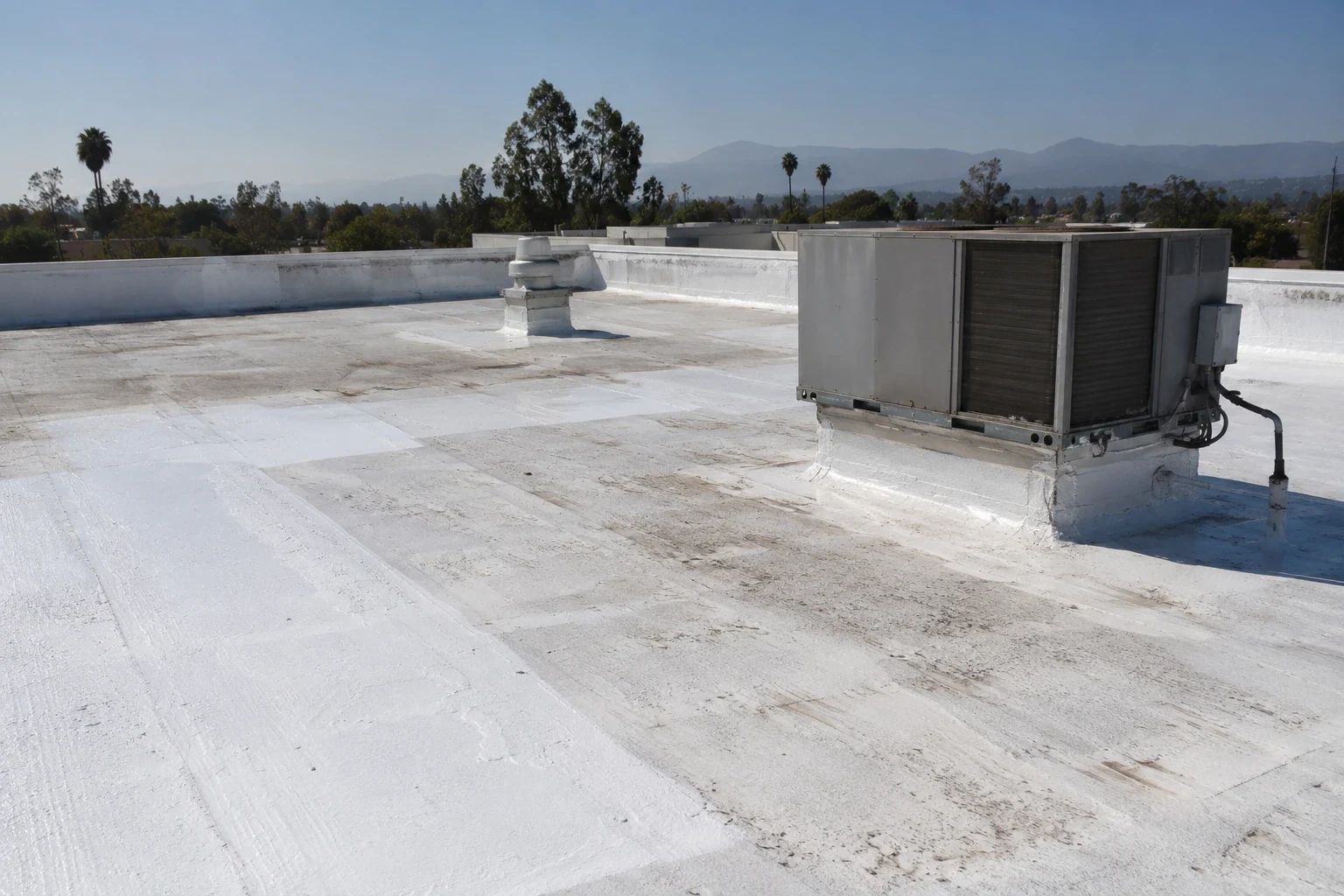
A peeling coating or patch residue can interrupt bond at the next repair. We examine the existing treatments and identify whether suitable preparation reaches serviceable material. Preparing a suitable roof for restoration includes required membrane and detail repairs before another protective surface is applied. Wet insulation or poor attachment needs additional correction. The recommendation separates those tasks, showing which assembly remains in service and what is removed before restoration proceeds.
Silicone restoration choices are considered against the product requirements, exposure and actual retained roof. The selected application needs appropriate preparation and coverage at seams, curbs and outlets. A visually uniform field can still contain deficient detail coverage. We explain the checks used for the chosen system and locate repaired areas for the owner. Wider deterioration can make replacement a more useful comparison than repeating coating over unsuitable support.
Tenant equipment changes need roof coordination
A replaced unit or added exhaust component can affect support and waterproofing on a shared roof. We inspect its location, movement and available flashing space before choosing the weather detail. Equipment or structural decisions are coordinated with the responsible participants. Permanent roofing follows the prepared component, with suitable protection while dependent work remains unfinished. The owner receives the tasks affecting the roof connection rather than only the membrane piece installed after equipment placement.
Properties combining shops with restaurant roof equipment can need exhaust deposits and service routes examined at the actual location. An adjoining grocery roof area may bring another equipment and access arrangement. We establish the particular operating requirements rather than assume all tenants use the roof alike. Suitable protection is considered where maintenance traffic crosses a completed repair, and later changes are coordinated before a new opening is made.
Pedestrian access affects handling routes
A removal path near customer doors needs preparation with the owner and relevant businesses. We establish entrances, service access and occupied areas affected by the work. Roof staging needs suitable load distribution and clear drainage. The selected installation method also needs appropriate conditions and protection for nearby equipment or intakes. Daily removal areas include temporary closure and the permanent connection required at the stopping line, with the component correction planned before the surrounding field is finished.
For a shopping property in Villa Park, the working arrangement follows its actual entrances and adjoining uses. A larger store may need related big-box roof access planning where its equipment or material-handling needs differ. We explain the tasks for each affected area and how they relate to the finished roof connection. Timing and cost are influenced by preparation, removal depth and those operational dependencies, with the inspected condition establishing the scope.
The repair comparison identifies the common roof
A finished transition, reconstructed outlet and new equipment flashing each need checks appropriate to their construction. We examine each finished connection against its intended detail and record the underlying corrections before they are covered. Views arranged by tenant area identify shared outlets and transitions, with the repair perimeter located beside the material kept in service. The owner receives attention points for those shared components. That information helps later maintenance find the work and arrange access without treating each storefront as an independent roof assembly.
A returning leak is investigated through its current water route and component condition. Earlier completion views locate the changed detail, while adjoining retained material receives its own assessment. Wider repair or replacement choices follow those findings. The owner can compare what each scope corrects, which parts remain in service and the equipment or business coordination needed. Future roof attention stays connected to the physical assembly, with common drainage and compatible transition work considered whenever another partial project is proposed.
Questions About Shopping Center Commercial Roofing
Why can a storefront repair extend past the tenant wall below?
The roof connection, wet layers or water path may require a boundary outside that interior division. We inspect the actual assembly and identify suitable material for the new repair. The scope shows the affected common roof and component work. The owner can arrange property responsibilities around that physical correction, including broader preparation where the old surface cannot receive a compatible connection.
Can an older coating remain beside a new membrane section?
Retention needs assessment of compatibility, bond and the detail joining the two areas. We examine the treated surface and supporting layers before selecting the stopping line. Suitable preparation or a reconstructed transition may be practical; detached material can require removal. The owner receives that finding and the connection completed under each option before phases are fixed.
What should a landlord coordinate before tenant equipment changes?
Identify the new support location, roof opening and responsible equipment tasks before the assembly is disturbed. We review available flashing space and the compatible weather detail needed for the installed roof. Temporary protection and permanent closure are included in the sequence. The owner receives the roofing boundary and service-access requirements so tenant alterations can account for the common roof construction.
How should shared drainage appear in a phased roof scope?
Identify runoff routes, outlets and receiving components affected by each working area. We inspect their condition and explain repairs or geometry changes needed alongside the membrane. Staging and temporary closure should preserve usable discharge. The comparison includes those tasks and the retained sections receiving water, allowing the owner to assess each phase as completed assembly work rather than an isolated surface area.
Related Roofing Work

Review the shared roof boundary
Describe the Orange shopping property's partial repairs, tenant equipment and water-entry areas. We can inspect the common assembly and explain suitable roofing choices. Call 555-555-5555 or request a roof assessment.