
Preventive Commercial Roof Maintenance in Orange, CA
A loose corner on an aging patch can change a routine maintenance visit into a defined repair. We examine its bond and the membrane beside it to establish whether cleaning or minor attention is sufficient, or unsuitable material needs removal. Preventive roof maintenance in Orange, CA should make that distinction clear. Commercial Roofers Orange checks the actual connections and supporting layers before choosing the task. The owner receives a description of work that can be completed during maintenance and a separate repair boundary where the patch can no longer serve its purpose.
Dining businesses and retail occupy the historic setting of Old Towne Orange. Their roof maintenance can require attention to exhaust areas, customer protection and service access. Anaheim Canyon brings industrial business operations with different equipment and loading needs. We establish the actual access and operating limits at each property before selecting a maintenance sequence. A drain above sensitive goods or a loose detail over an occupied route deserves attention to the consequence as well as the defect itself.
Small changes deserve a close check
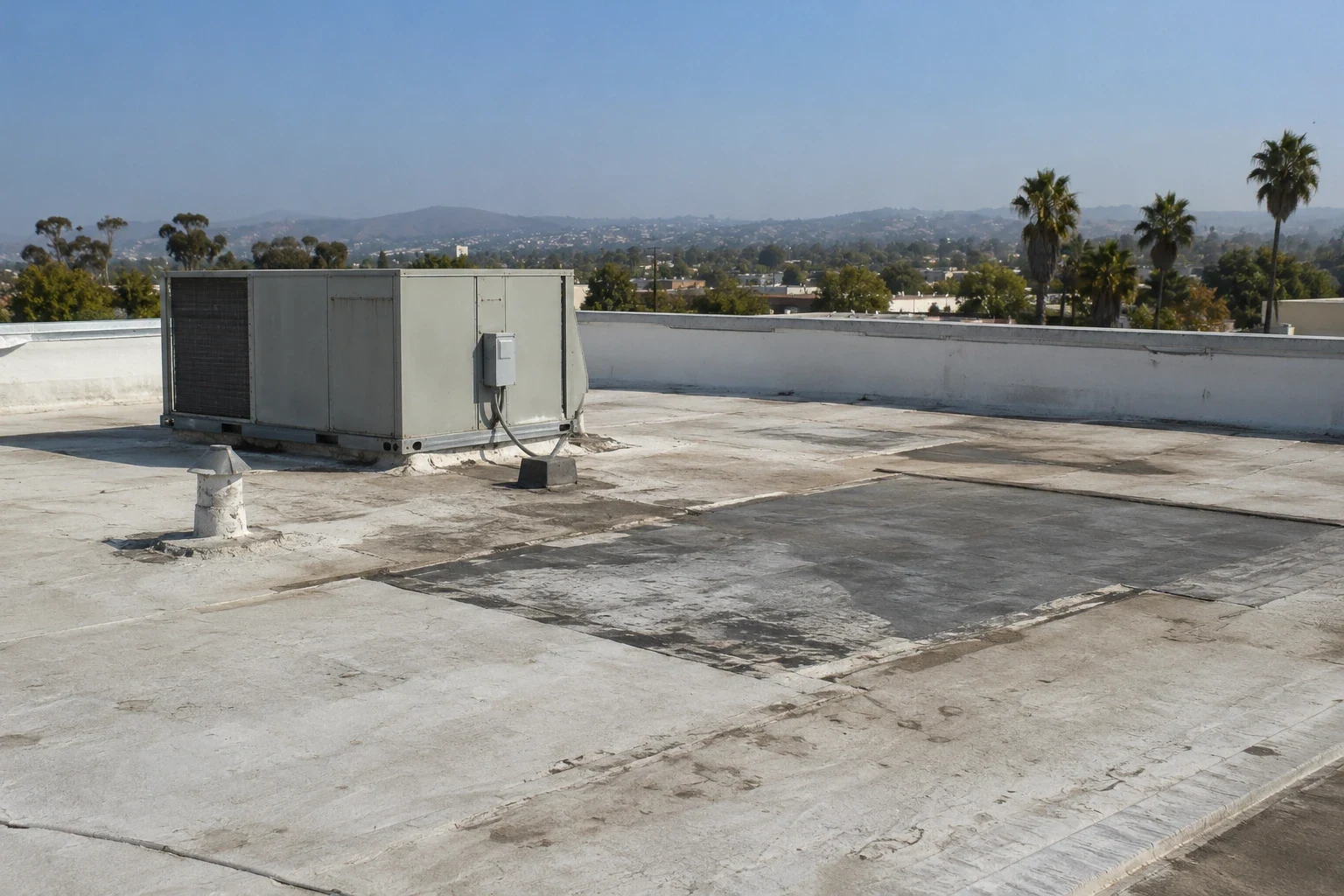
A patch perimeter beginning to separate can be easier to correct before water reaches adjoining layers. We examine existing repairs, accessible seams and exposed flashing turns for developing openings. Suitable membrane connections receive physical checks rather than a distant visual glance. Where a seam needs more than routine attention, a defined membrane repair removes unsuitable material and restores the connection. Maintenance identifies that requirement instead of spreading sealant over every visible line.
Equipment feet, loose tools and repeated service traffic can damage a roof without a storm. We look near access landings and common equipment routes for punctures or crushed surfaces. A protective walkway may help where the assembly and route permit it. The owner can also coordinate equipment service so supports are not dragged across the membrane. These changes address a recurring cause of damage, while repairing the existing opening restores the water-resistant surface.
Outlets need an open path
A clear strainer does not settle whether the drain connection is intact. We inspect the bowl, surrounding membrane and accessible discharge route alongside debris removal. At a scupper, we check the opening, edge connection and nearby accumulation. Drain and scupper work may be needed where cleaning leaves a damaged detail or an outlet raised above the surrounding surface. The task should match the condition rather than repeat the same cleaning at an outlet that needs repair.
August rainfall at the nearby Anaheim station averages 0.01 inches in its 1991 to 2020 normals; January's monthly normal is 3.16 inches. For an Orange maintenance schedule, that contrast supports completing outlet checks before the wetter season. We plan visits using the roof's condition and actual weather, with additional attention after events that leave debris or damage. A shallow depression that retains water gets a separate recommendation for investigation of slope or outlet elevation.
Service activity leaves clues
A new cable through an old flashing can change the water path around a penetration. We review accessible roof alterations and inspect the connection where another trade has disturbed it. Penetration flashing corrections need suitable material and space to complete the detail properly. A temporary dab of sealant may conceal an opening without resolving movement or the geometry of the penetration. We describe what the connection needs and coordinate access with the responsible trade.
An intake beside a dirty or deteriorated area may affect how cleaning and repair are performed. We establish the equipment's operating requirements before using products or methods nearby. On a restaurant roof, exhaust deposits can also influence surface preparation and material compatibility. The maintenance recommendation separates routine removal of debris from a roof surface that needs evaluation because contamination has affected a bond or coating.
Visits follow the roof's demands
A roof with heavy service traffic and several complicated curbs needs different attention from a lightly accessed surface with simple drainage. We consider the installed materials, accessible details, nearby debris and operating use when setting the visit scope. Seasonal checks and event-driven checks can address different needs. The owner receives a proposed pattern of work tied to those conditions, with the ability to revise it as equipment, occupancy or observed damage changes.
Southern California Santa Ana winds can cause property damage. After strong winds, loose edge components and shifted debris deserve review before they become a wider water-entry problem. Maintenance at Anaheim Canyon can include that event-related check alongside the usual equipment route and outlet examination. We distinguish a hazardous displaced component from an item suitable for the next scheduled visit, so the owner can act on the condition that matters now.
Completed tasks have a visible result
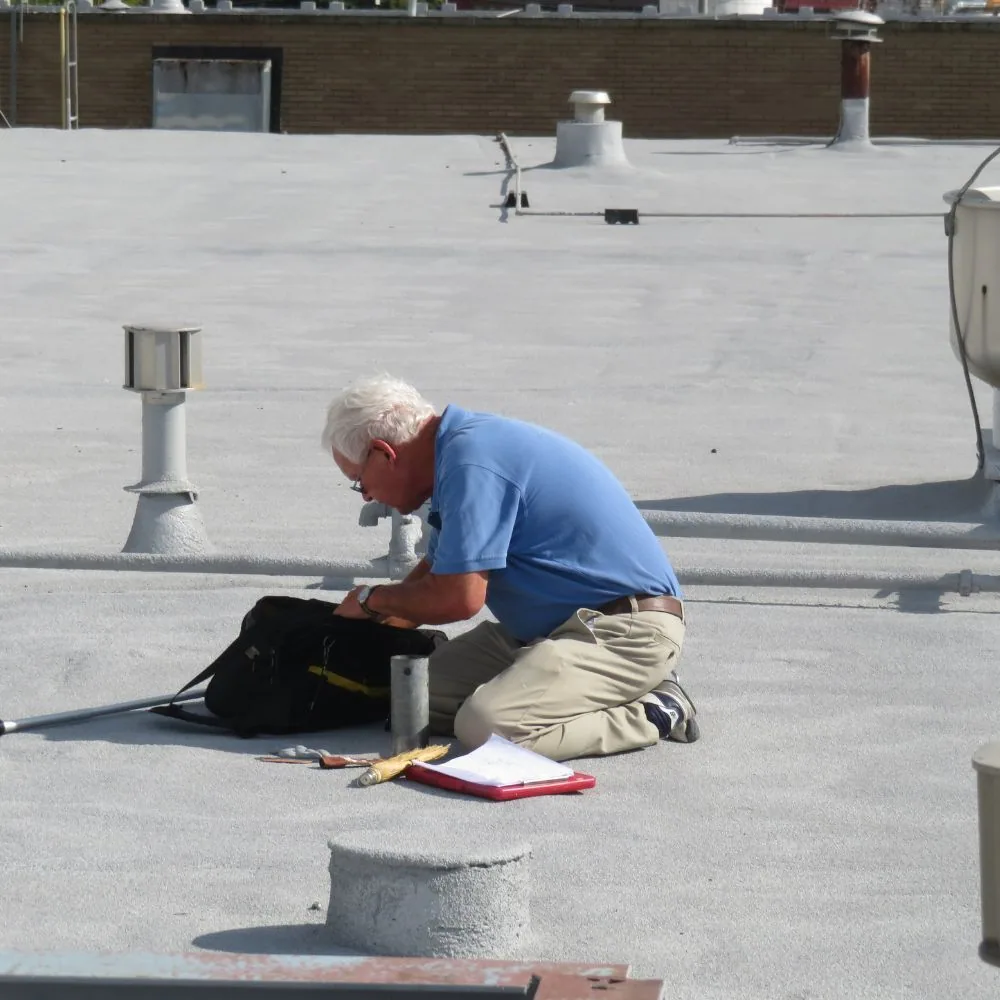
A cleaned outlet should have a follow-up view showing the restored opening and nearby membrane. A repaired detail needs its own connection check and a clear location. We record those specific results, then identify conditions still requiring approval or further investigation. That distinction helps the owner track actual roof work rather than confuse an inspection visit with completion of every repair discovered during it. An unresolved wet area, for example, may need selected openings before removal can be scoped.
The maintenance history becomes useful when it connects a recurring defect to a physical cause. Repeated damage beside the same unit can lead to a revised service route or support correction. Recurrent standing water can justify drainage work. Tracking roof condition over time helps compare those recurring tasks with a larger improvement. We keep the recommendation focused on the component and consequence so the owner can choose the next action without losing the detail in a general condition label.
Questions About Preventive Commercial Roof Maintenance
Should a maintenance visit include every old patch?
Existing patches receive attention where their bond, perimeter or surrounding material shows a developing problem. We do not remove suitable repairs simply to repeat work already functioning. A patch that conceals wet layers or prevents a compatible connection needs a different scope. We identify the specific condition and explain whether it can be corrected during maintenance or requires planned removal. We also examine the route people use to reach those patches. An isolated repair can be damaged again if tools or equipment continue to cross it, so traffic protection may belong in the same maintenance recommendation.
How should we handle damage found after an HVAC visit?
Photographs of the changed area and information about the equipment work help direct our inspection. We examine the membrane, supports and flashing affected by the activity. The equipment trade may need to correct a moving support before we rebuild the waterproof connection. Where traffic caused the damage, we discuss a protected route or working arrangement that reduces renewed contact with the repaired detail.
Can cleaning resolve water that stays beside a curb?
Debris removal restores an obstructed route, but a depression or poorly placed outlet may need an elevation change. We examine the water path after cleaning and identify the remaining cause. A cricket, tapered insulation or detail reconstruction may be suitable depending on the assembly. The owner can then compare a drainage correction with repeated maintenance of the same area.
What belongs in the maintenance completion record?
Completed cleaning and repairs should be identifiable by location and result. We include useful condition photographs and describe additional work still needed. A developing seam opening, wet-layer concern or loose component gets a specific recommendation rather than being marked as handled merely because it was inspected. That record helps the owner arrange the next physical task and check the affected detail after it is completed.
Related Roofing Work


Set the next maintenance scope
Describe the Orange roof's drainage, equipment traffic and recurring damage. We can examine the details and recommend maintenance that addresses their actual condition. Call 555-555-5555 or request a roof assessment.