Commercial Roof Drains and Scuppers in Orange, CA
Water spilling from a leader connection beneath a scupper points toward a discharge problem beyond the roof opening. We trace the accessible receiving path, check for obstruction or displacement and examine the waterproof transition above it. Roof drain and scupper work in Orange, CA needs those connected tasks distinguished. Commercial Roofers Orange repairs the roofing details and coordinates downstream work with the responsible trade where needed. The owner can see which correction restores the outlet connection and which resolves the interrupted discharge, so cleaning one visible opening does not leave water returning through a restricted route.
Warehouses and general-industrial sites near Katella Avenue and Main Street sit beside restaurants and mixed-use buildings. On an operating industrial property, drainage repair can require protection above stored goods and coordination around equipment. Retail and dining in Old Towne Orange add different access needs below the roof edge. We examine the actual outlets and affected interior areas, then plan removal and closure so a drainage correction does not leave an opening exposed above an occupied operation.
Follow water to its outlet
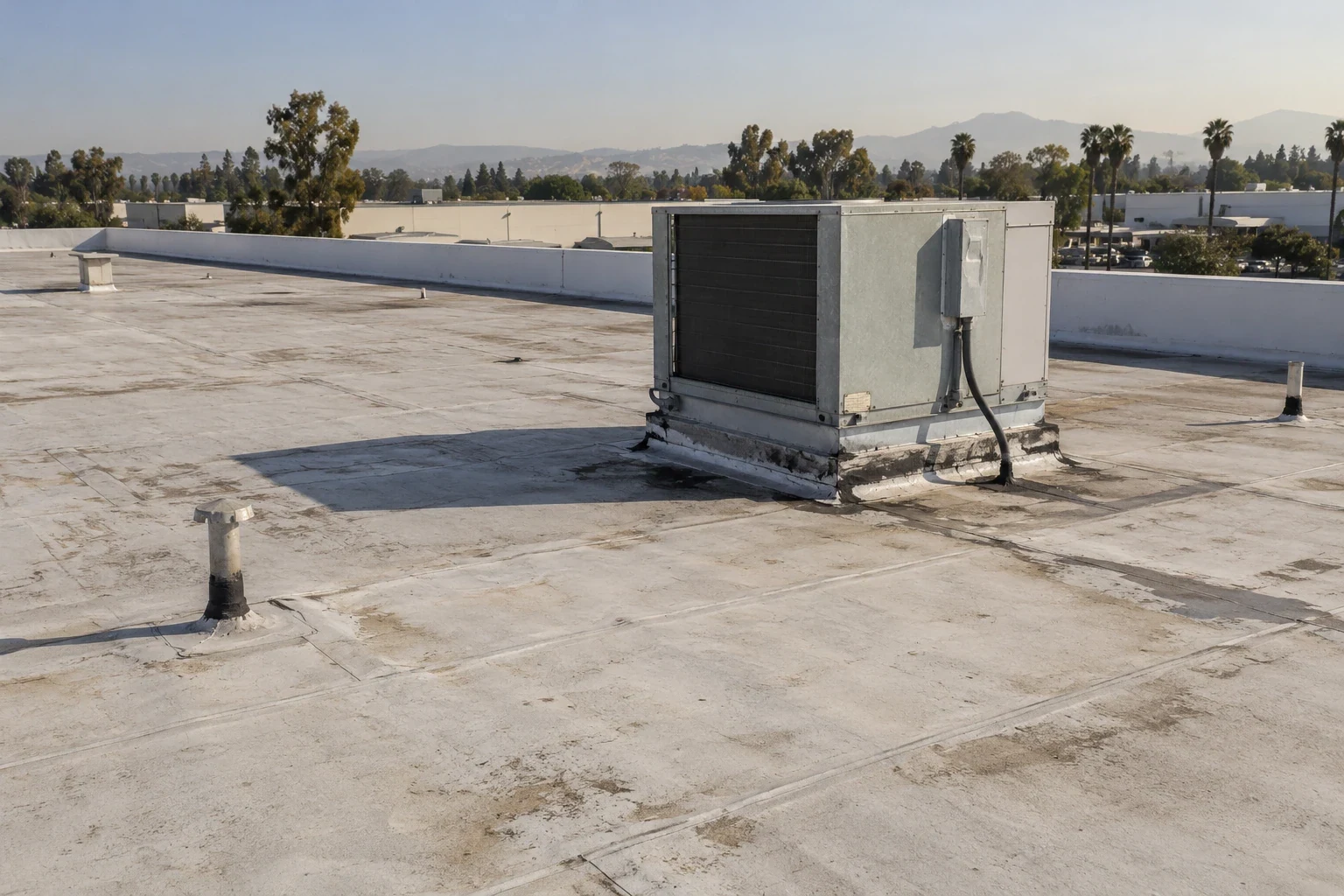
A low-slope roof needs an examination of how water moves across it, including transitions behind curbs and between roof levels. We look for accumulated dirt, persistent water lines and depressions, then compare them with outlet locations. An unobstructed drain may still sit too high for the surrounding roof. Correcting retained water requires the cause identified before insulation, membrane or outlet changes are selected.
The nearby Anaheim station's rainfall normals for 1991 to 2020 total 13.52 inches a year, with January wetter than August. That seasonal setting makes functioning discharge useful before the wetter period. We assess the Orange roof's current drainage rather than wait for a renewed interior complaint. Selected elevation checks help distinguish a shallow localized problem from a wider slope issue needing a more comprehensive design decision.
The bowl connection can fail
A cracked drain bowl or a compromised clamping connection can admit water where the outlet passes through the assembly. We inspect the accessible component and surrounding membrane, looking for separation, incompatible repairs and damaged materials. Clearing the strainer restores flow only where debris was the restriction. The waterproof connection itself may need reconstruction. Leak tracing around an outlet can compare the roof finding with water observed below.
Blocked or damaged piping needs coordination with the responsible plumbing trade. We identify where the roofing detail ends and the discharge system needs separate attention. A roof repair performed while a downstream restriction remains can leave water returning to the same area. The scope therefore explains which outlet components are included, what additional trade work is needed and how the drain connection will be completed after that work is ready.
Scuppers need a complete transition
A wall opening used for drainage must connect to the membrane without exposed gaps at its corners or throat. We examine the scupper material, dimensions and turn through the wall, then assess the receiving conductor or gutter where present. Corrosion, movement and patch buildup can each affect the connection. The repair restores the relevant roof-to-metal transition using compatible material rather than close one visible corner while leaving the rest of the throat unexamined.
Overflow provisions need consideration alongside primary drainage. We review their intended arrangement and the requirements applying to proposed alterations before moving or adding outlets. A new opening can affect wall details, support and discharge below it. The owner receives a description of those physical changes and any design or trade coordination required. Gutters and edge components also need assessment when they receive water from the repaired scupper.
Crickets redirect a blocked path
A wide equipment curb can divide the drainage route and leave water behind it. A suitably designed cricket can direct that water toward an available outlet. We assess the roof geometry, curb flashing height and the assembly needed to create the slope. Tapered insulation can form part of the correction where it fits the roof design. Added height must be resolved at the neighboring curb and terminations.
Localized slope work and broad tapered reroofing solve different extents of problem. We compare them with the observed elevations, outlet locations and retained roof condition. A drainage alteration may require selected removal so new materials connect to sound layers. The owner should know where that removal ends and whether an adjoining low area will remain. That comparison helps choose a correction with a useful water path instead of another surface patch over the same depression.
Work below the drain needs protection
An opened outlet leaves a direct route into the occupied space until its connection is closed. We coordinate removal, temporary protection and installation according to weather and interior use. On a warehouse roof, goods beneath the drain may need movement or protection before the work begins. Electrical or equipment concerns below the affected area need the appropriate responsible trade involved alongside roofing work.
For a building in the Katella Avenue corridor, loading access can influence material movement during the correction. We establish the roof access route and the usable area below the repair, then close the work in a controlled sequence. New membrane connections receive the checks suited to their system. The completed outlet is reviewed for an open path and a sound transition to the surrounding roof surface.
Watch the corrected low area
A follow-up view after drainage work can show whether debris has returned and where water still collects. We relate that observation to the original elevation and outlet findings. A remaining depression may need further design attention even after an obstruction is removed. The owner receives a clear maintenance task for the repaired outlet and an explanation of any wider condition still under review. Keeping strainers and scupper throats accessible makes that follow-up more useful.
Questions About Commercial Roof Drains and Scuppers
Why does water remain after the drain has been cleaned?
The outlet may be raised relative to the surrounding surface, or the roof may have a depression that holds water outside the bowl. We examine elevations and the intended drainage route after removing debris. The correction can involve a detail adjustment or slope work rather than additional cleaning. We explain the remaining cause and compare suitable physical changes for the assembly.
Can a cricket be installed without replacing the whole roof?
A localized correction may be practical where the surrounding layers and attachment remain suitable. We assess the required removal, available curb height and connection to retained membrane before recommending it. The new slope must lead to a usable outlet and fit the existing roof. A wider drainage problem may justify a broader assembly change, which we describe separately.
Who handles a blockage below the drain bowl?
The discharge piping may require plumbing investigation or repair while we address the roof connection. We identify that need and coordinate the sequence with the responsible trade. The owner can then arrange the appropriate work before the repaired outlet is finalized. A complete correction keeps the water path usable through the drain and preserves the surrounding waterproof detail.
Should overflow openings be changed with the primary drain?
Existing overflow arrangements need review whenever drainage is altered. We assess the proposed change against the roof design and applicable requirements before repositioning an outlet. The work may affect wall transitions and discharge areas below the roof. We explain those related tasks so the owner can review the drainage correction as an assembly change rather than an isolated new hole. Any receiving gutter or conductor also needs a check that it can accept the planned discharge without an unresolved restriction.
Related Roofing Work

Show us where water remains
Describe the Orange roof's drains, standing-water areas and affected rooms. We can inspect the water path and explain the cleaning, detail repair or slope correction needed. Call 555-555-5555 or request a roof assessment.