
Commercial Wind Damage Roof Repair in Orange, CA
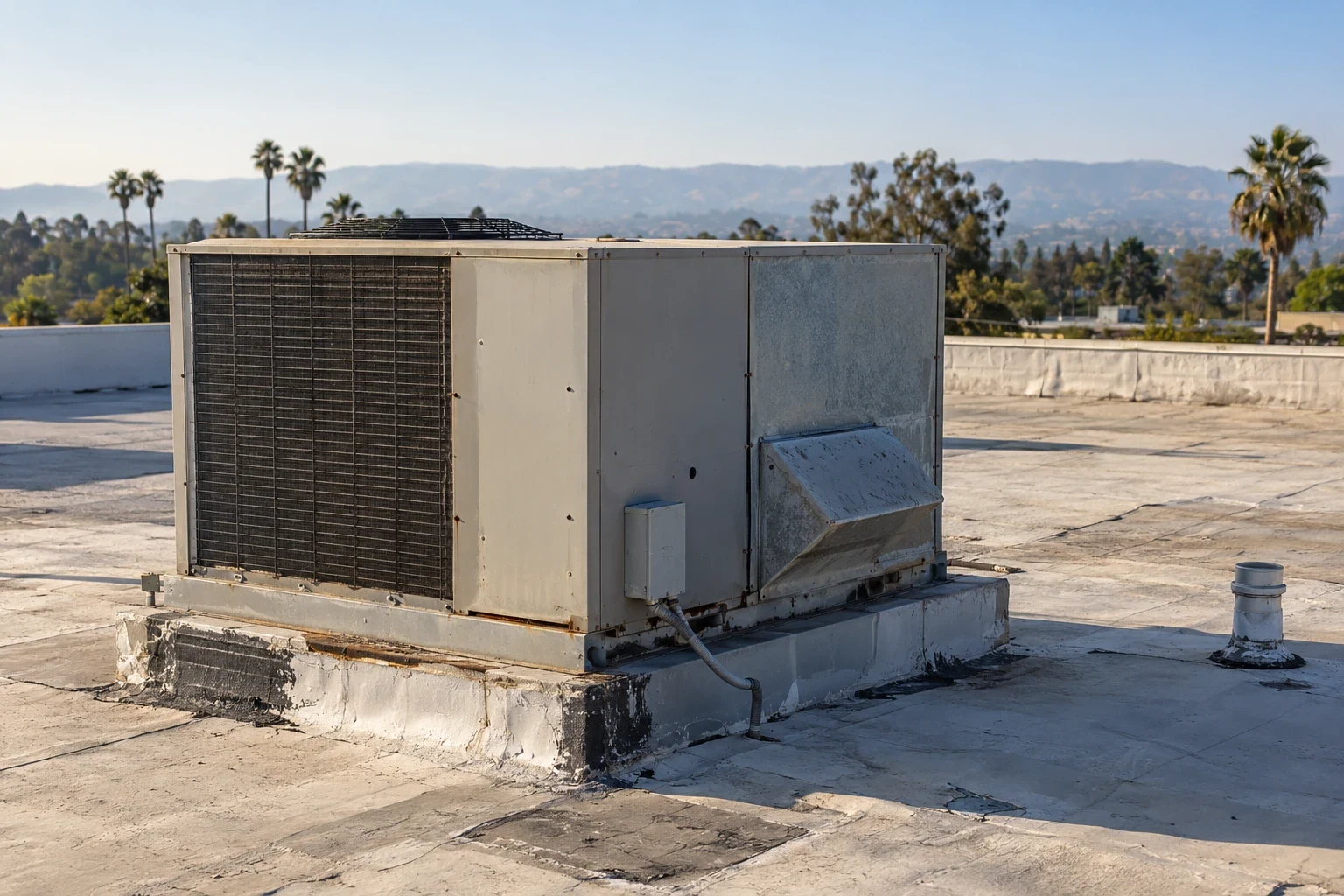
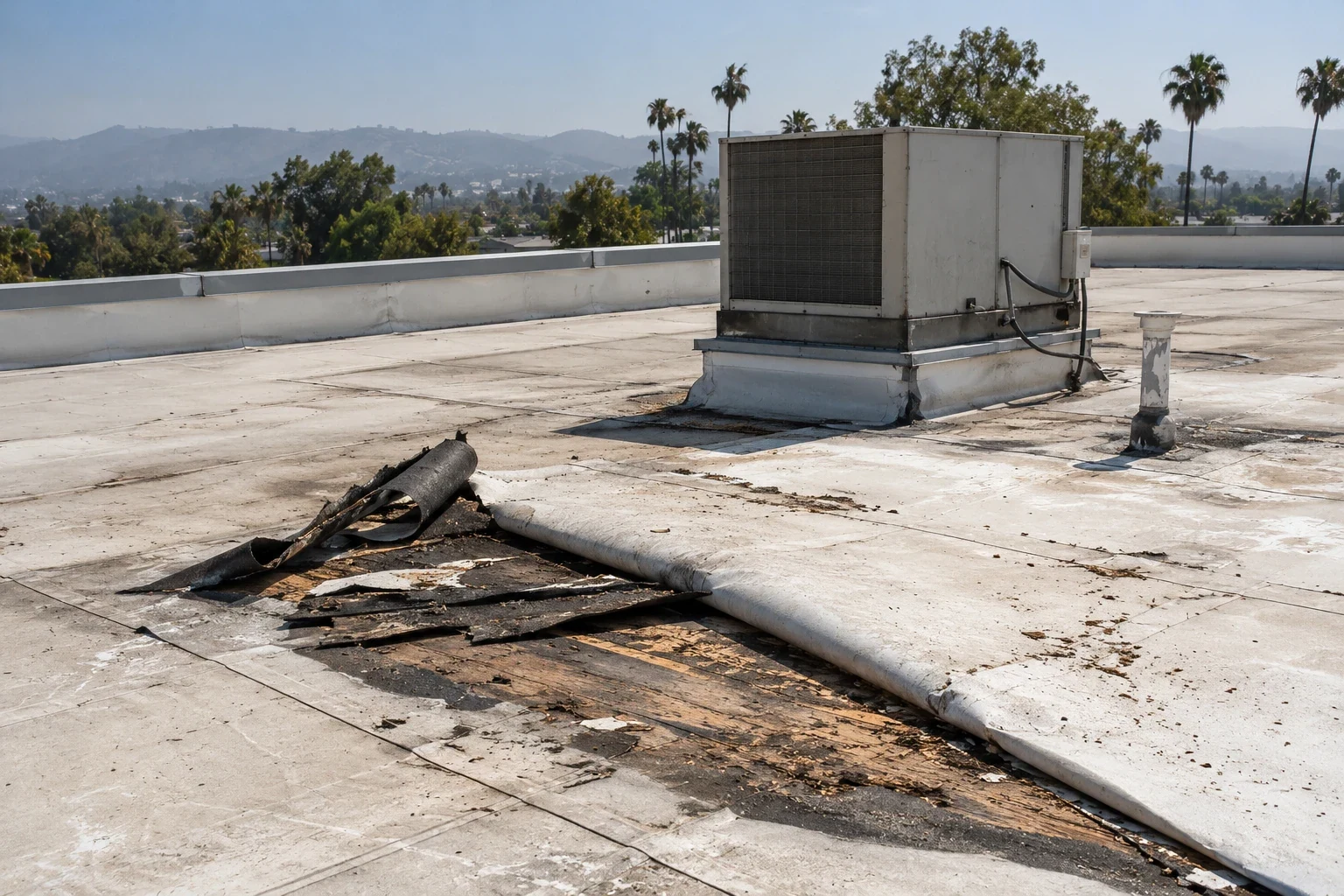
A vent housing cracked after a wind event can admit water above a serviceable roof-side curb connection. Renewing membrane around the base alone may leave the damaged upper component open. We examine the housing and roofing perimeter separately before selecting correction. Commercial wind damage roof repair in Orange, CA begins with the weather interface actually needing work. Commercial Roofers Orange explains suitable roofing retention or reconstruction and the responsible vent-component preparation involved, locating the physical tasks and occupied space affected before the owner arranges permanent closure.
Dry Santa Ana winds, most common from September through May, travel through mountain gaps in Southern California and can damage property. Fullerton's 2024 employers included Raytheon and RPM Transportation. In La Habra, Wolverine Fence and Advance Fire Protection were employers in 2023. At the affected property, the owner establishes actual operation, equipment and roof access. We inspect current construction and locate damage against those arrangements. Recommendations follow the component and supporting layers receiving correction, with protection coordinated for the particular roof portion opened.
The cracked housing and curb roofing have separate findings
We examine the accessible housing, attachment and weather interface above the curb. Responsible component participants assess its damaged shell or hood and the suitable corrective work. Inspecting wind-affected equipment and curb relationships identifies roofing-side condition and preparation alongside that component task. The membrane may remain suitable while the housing requires correction, or the curb perimeter can need its own reconstruction. We distinguish those physical conditions before defining a larger repair.
Attachment concerns require the assessment appropriate to the component and its support. A replacement housing must fit the actual receiver and leave suitable space for the specified weather detail. We identify those dimensions with the responsible participants before permanent roofing closes an altered perimeter. Useful close views locate the upper opening and adjacent roof turn. They help explain which interface is corrected under each option, giving the owner a component-level scope rather than a membrane treatment that leaves the cracked shell unchanged.
The roof around the vent needs its own damage examination
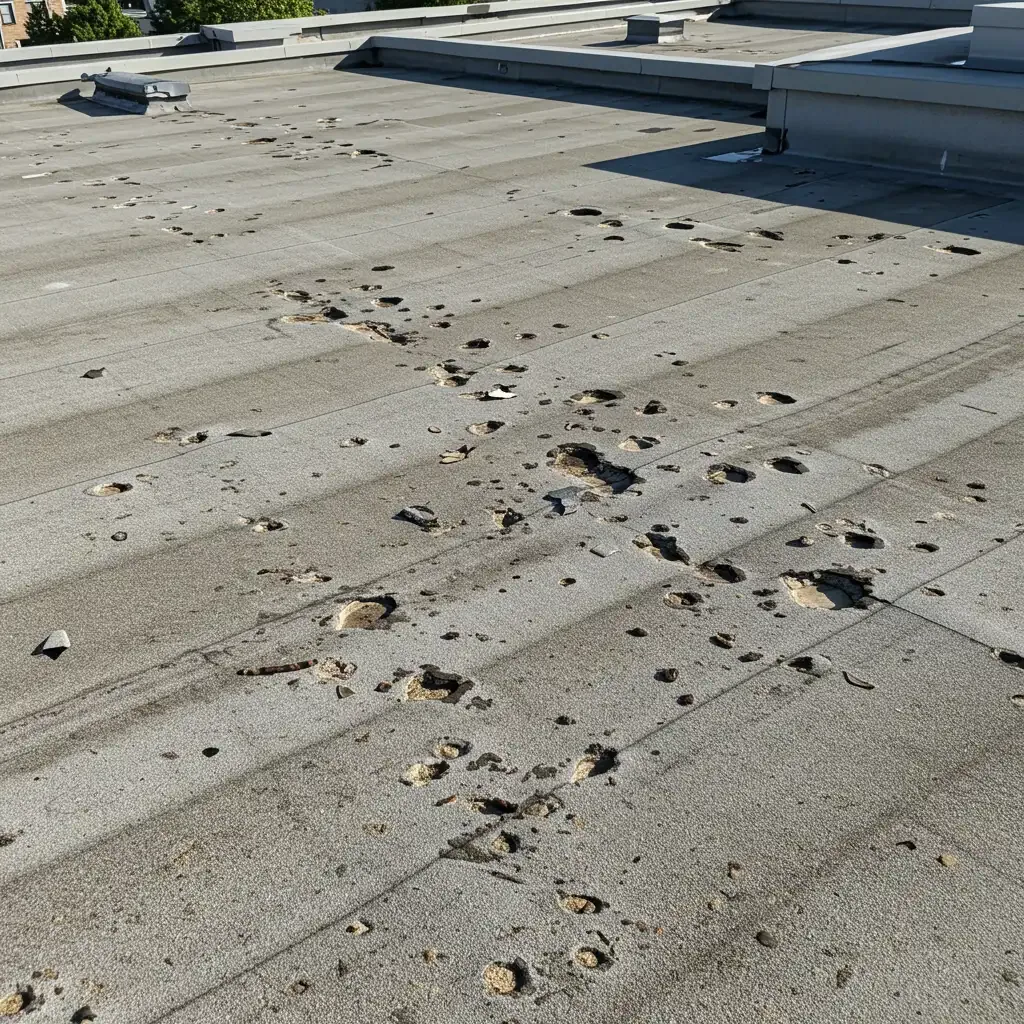
Wind-related complaints can involve torn sheet, displaced components or loosened adjoining roofing as well as the cracked housing. We inspect those details individually and locate suitable receiving material around their correction. Assessing openings beside the damaged vent identifies sheet preparation and supporting-layer work where present. Older patch treatments and affected seams are examined for compatible reconstruction, with the actual roof condition determining whether the field can remain around the component.
Water at the upper opening can also affect insulation near the curb. Selected physical checks establish the concealed condition before a permanent perimeter is fixed. Wet layers or deficient backing are included where examination indicates correction. Deck concerns receive appropriate professional review. The scope distinguishes those receiving tasks from housing work above them. The owner receives removal depth and retained material, connecting occupied protection to the actual assembly opened rather than only the dimensions of the visible crack.
A changed housing must leave room for suitable closure
The replacement component's base and attachment can alter access to the curb turn. We examine the actual receiving relationship before new roofing is finished beneath it. Examining the vent's affected flashing perimeter includes backing, joining material and dimensions needed for its compatible connection. Responsible support or equipment preparation precedes permanent weather closure, with relevant design assessment identified where geometry or loads require it.
Service access is part of that completed relationship. A new hood should leave the roofing connection appropriately reachable for its intended preparation and maintenance. We locate altered lines or supports affecting the joining area before the work limit is chosen. The owner receives the component tasks and roof material prepared beside them. Temporary protection remains necessary while the upper housing or receiving backing is unfinished, giving the permanent correction a suitable sequence through both weather interfaces.
A bounded component repair can differ from wider roof work
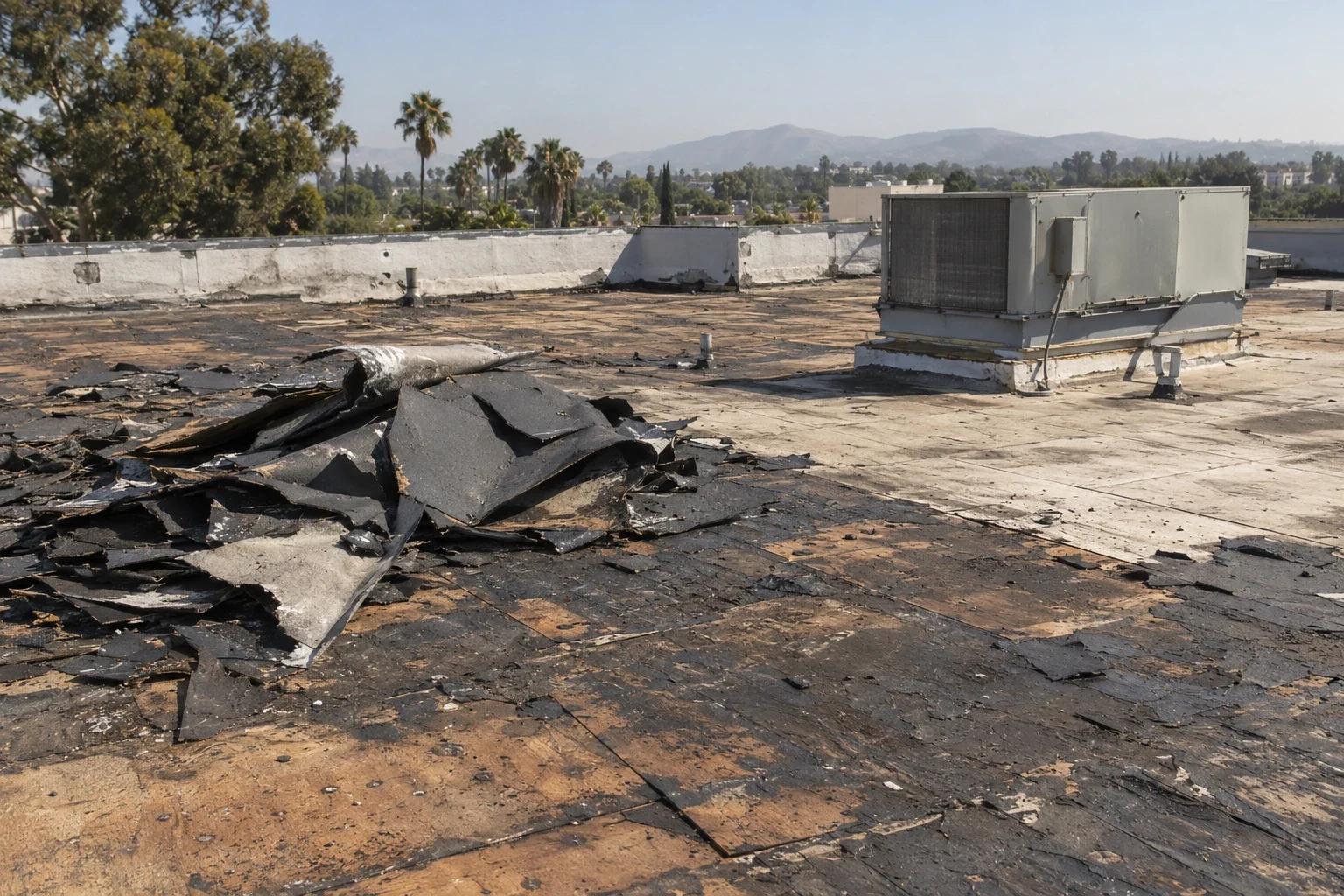
Serviceable curb roofing may permit retention while the responsible participant corrects the damaged housing. Deficient membrane or wet supporting layers can instead require more extensive removal. Comparing roof reconstruction around wind-affected details identifies the deck, insulation, attachment and perimeter work under a larger option. Recover needs suitable existing construction and applicable requirements considered with added height. The comparison includes available curb flashing space and the actual outlet relationship.
Each option locates material retained and reconstructed beneath the field. Responsible housing or support assessment is included where needed. A new surface requires compatible component details rather than stop short of the damaged upper opening. We explain further investigation by location and purpose before the owner makes a broader choice. Roof construction within restoration work connects those findings to the physical project arrangement, with removal depth and occupied-access dependencies defined for the work actually selected.
Daily protection follows the component being opened
The owner establishes occupied spaces and equipment requirements affected by removing the damaged housing or roof layers. We locate access and material movement with the responsible property participants before work. Staging needs appropriate roof loading and usable drainage. Intakes and service routes influencing preparation are considered with the chosen method. A suitable temporary closure is included while component tasks remain unfinished, with current conditions and specified material requirements governing roofing installation.
At a property in Fullerton, that arrangement follows its actual roof entry and building operation. Joining access may extend beyond the cracked component footprint. We inspect the prepared boundary before daily limits are fixed. Each portion identifies the opening, removed material and protected end detail. The owner can coordinate occupation around the housing and receiving construction involved, including support or equipment preparation that determines when the permanent weather connection can be completed.
Completed views distinguish housing work from roof correction
We inspect finished roofing through methods appropriate to its system and show important layer preparation before closure. Responsible component participants complete the checks appropriate to their housing and attachment work. Finished views locate the curb perimeter rebuilt and roof material retained beside it. Those locations help later examination identify the actual interfaces changed, keeping the roof-side correction distinct from the separate upper component. Future service contact requires suitable protection where it could damage the prepared membrane connection.
A later complaint needs the present housing, curb turn and adjoining field examined again. Earlier views help find the previous correction but current physical condition determines the next scope. Another equipment change is assessed before it restricts the weather turn or covers joining access. The owner receives suitable preparation and a repair boundary through the material now present. Follow-up information therefore helps locate a specific component task and its occupied-area dependencies rather than lead automatically to repeating the earlier membrane work.
Questions About Commercial Wind Damage Roof Repair
Why assess a cracked vent housing separately from the curb roofing?
The upper shell and lower membrane have different weather interfaces. Water can enter the component while its roof-side perimeter remains serviceable. We examine accessible conditions and identify responsible housing correction alongside any roofing required. The owner receives the actual removal and preparation tasks, allowing suitable membrane to remain where appropriate while the damaged upper opening is addressed.
Can a replacement housing change the roofing scope around its base?
Changed dimensions or attachment can affect flashing room and access to the weather turn. We inspect the receiver and identify responsible preparation before permanent roof closure. Deficient backing or incompatible joining material may require another removal boundary. The owner receives those component and roofing tasks together, with appropriate assessment where the selected change affects support or loading.
What protection is needed while the upper vent component is unfinished?
Establish the occupied area, equipment requirements and accessible closing detail with responsible participants before removal. We connect weather protection and material handling to the actual opening. Dependent housing or backing preparation precedes the permanent roofing connection. A suitable protected end point remains part of each work portion, with current conditions considered for the specified installation method.
How should another water complaint near the repaired vent be assessed?
Examine the present housing, curb membrane and adjoining layers to identify the interface now affected. Earlier views help locate construction changed during the prior correction. New physical findings determine suitable next work. We distinguish component tasks from roof repair and explain the receiving boundary, with occupied access arranged around the actual preparation needed at that location.
Related Roofing Work
Inspect the damaged housing and roof-side connection
Describe the Orange property's cracked roof vent, affected curb roofing and occupied equipment requirements. We can examine the interfaces and explain suitable permanent correction. Call 555-555-5555 or request a roof assessment.