Carlisle SynTec Roofing in Orange, CA
A patch that lifts along one edge can leave the roof more vulnerable than the original cut. The first question is what membrane and attachment are actually present. Carlisle SynTec markets commercial EPDM, TPO and PVC systems, but a roof may contain repairs, overlays or additions from other periods. We inspect markings, seam geometry and roof records before choosing a repair material. In Orange, CA, the recommendation should explain the failed detail and where a sound connection can be made.
At the Katella Avenue and Main Street corridor, the documented mix of warehouses, general industrial buildings, restaurants and mixed-use property means roof work may need to fit receiving hours or public access. That operating context affects staging, not membrane compatibility. The roof itself determines the technical scope: sheet family, layer condition, flashing, edge securement and drainage. We set those findings beside the owner's records, then compare a focused repair with a larger correction when the evidence calls for one.
Identify the membrane before specifying a patch
Sure-Seal EPDM, Sure-Weld TPO and Sure-Flex PVC are Carlisle product families with different repair requirements. We look for product labels, splices, surface texture and detail construction, then compare them with available project documents. Similar color does not prove that two sheets are the same material. An old coating or an undocumented overlay can conceal the original surface, so we note where the assembly can be confirmed and where it remains uncertain. A comparison with GAF membrane systems or Holcim Elevate product families is useful only after the installed sheet is identified.
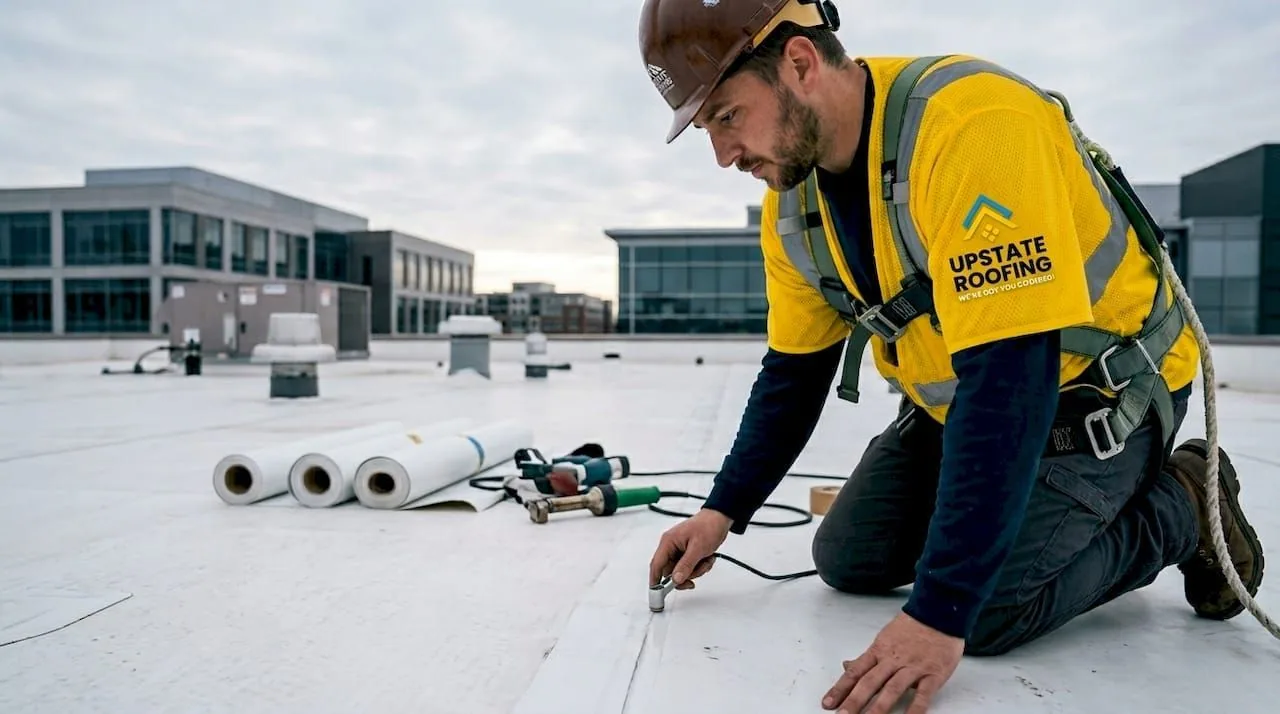
The distinction matters at seams and penetrations. EPDM joints use compatible primers, tapes or adhesives; thermoplastic membranes rely on heat-welded seams. A PVC repair material should not be substituted for a TPO sheet merely because both accept heat. If the roof has multiple layers, a small inspection opening may reveal whether insulation is dry and bonded or whether movement continues below the membrane. The finding guides whether a repair to EPDM roofing or a thermoplastic correction is the practical next step.
Compare how the sheet is held in place
A field membrane can be mechanically fastened, adhered or secured as part of an induction-welded assembly. The attachment method affects how forces and movement reach laps, perimeters and penetrations. We inspect the installed detail and accessible fasteners rather than assume that the whole roof follows one pattern. Wind damage at an exposed edge, for example, can point to a perimeter condition that needs separate attention from a field seam.
The available Carlisle system details help identify compatible arrangements, but the job condition still controls the recommendation. We review deck type where known, insulation attachment, cover board, membrane laps and terminations. At a transition, the repair may need to address both the sheet and the metal or wall surface it meets. Our edge metal and coping work is scoped to the actual termination, with photographs showing how the new detail connects to the existing roof. For a warehouse roof, we also map the access route around loading and equipment zones.
Account for exposed roof conditions
NOAA's 30-year Anaheim record places 47.2 days each year at 90 F or higher; its typical August daily maximum is 88.8 F. That summer heat pattern makes exposed seams and flashing useful inspection points during maintenance. They support checking surface aging and planning safe work windows during hot periods. We examine whether a membrane is brittle, contaminated, separated or still flexible at representative locations rather than treating warm weather as proof of damage.
A sun-exposed sheet can show dirt accumulation, chalking, softened sealant or movement at a joint, and each observation has a different meaning. We compare areas with different exposures and examine the path from the suspected opening to the interior report. Where that path is unclear, a moisture survey can help map concealed wet areas before a repair grows into a larger removal. The goal is a defined repair limit, not a climate-based assumption about the entire roof.
Rebuild the transition, not just its face
Curbs, pipes, expansion joints, drains and wall intersections concentrate changes in direction and movement. A small split at one of these details may trace to a loose counterflashing, unsupported membrane or failed sealant at the metal transition. We remove unsound material as needed and prepare a compatible receiving surface. The work must connect to sound membrane and return water to the field without leaving a pocket or open edge.
We inspect where rooftop equipment was installed or serviced, because later trade work can cut, abrade or restrain a membrane. A cover strip may hide the original detail while failing to correct the movement beneath it. Our flashing failure repair scope identifies the affected curb or wall, the components to be reset and how the new termination will be checked. The Diligence Notes separates visible damage from any concealed area that the opening did not expose.
Set the work boundary from the roof evidence
One failed splice on an otherwise sound, dry roof can be a repair. Repeated openings, compressed insulation or a brittle field sheet can change the comparison. We examine repair frequency, moisture readings, layer count, drainage and the condition of surrounding seams. If a recover is considered, the existing assembly and code requirements need review; adding a layer without resolving wet materials can preserve the problem below. A commercial roof inspection can set the baseline for that comparison.
The code in Orange is California's 2025 Building Code; its model text follows the 2024 International Building Code and includes local amendments. Permit requirements depend on the specific scope and current rules, so we identify the proposed work for review instead of promising an approval. For capital planning, our roof capital planning review can organize near-term repair and replacement decisions by observed condition and access. That comparison helps an owner see what must be addressed now and what can be monitored.
Close the repair with a usable work record
A useful closeout describes the material repaired, location, preparation and finished transition. We pair context photographs with close views so the facility manager can return to the same curb or lap later. The record also notes any roof area that could not be inspected because of access, coverings or concealed construction. That distinction prevents an observation in one test opening from being treated as proof about the entire assembly.
Old Towne Orange combines retail and dining businesses with historic structures. On an occupied property there, a repair plan also needs a clear access period and a way to protect people, stock and finishes below. We coordinate the work zone around the roof finding and keep the closeout focused on what changed. If another inspection is needed, the record gives the next visit a defined starting point: the component, repair boundary and condition to compare.
Questions About Carlisle SynTec Roofing
Can you identify Carlisle membrane from a roof photograph?
A photograph can narrow the possibilities, but markings, seam details and material condition usually provide stronger evidence. We verify the accessible roof assembly and note any area hidden by coatings, patches or later layers.
Can Carlisle TPO and PVC be repaired with the same method?
Both are thermoplastic, but their repair materials and details are not automatically interchangeable. We identify the sheet first, prepare the receiving area and check the finished weld against the compatible system requirements.
What makes a local EPDM repair fail again?
A recurring leak can indicate that the patch missed movement, wet insulation or an adjacent failed transition. We trace the water path and inspect the layer around the repair before deciding whether to extend the scope.
Does every Carlisle roof need a full replacement when seams open?
No single seam establishes the condition of the entire roof. We compare the affected area with nearby laps, moisture findings, attachment and layer condition, then explain whether a local repair or broader plan fits.
Related Roofing Work
Inspect the Carlisle roof assembly
Share the Orange building location, known roof records, current leak area and access window. We will identify the system that can be confirmed and explain the repair boundary. Call 555-555-5555 or request a roof assessment.