GAF Commercial Roofing Systems in Orange, CA
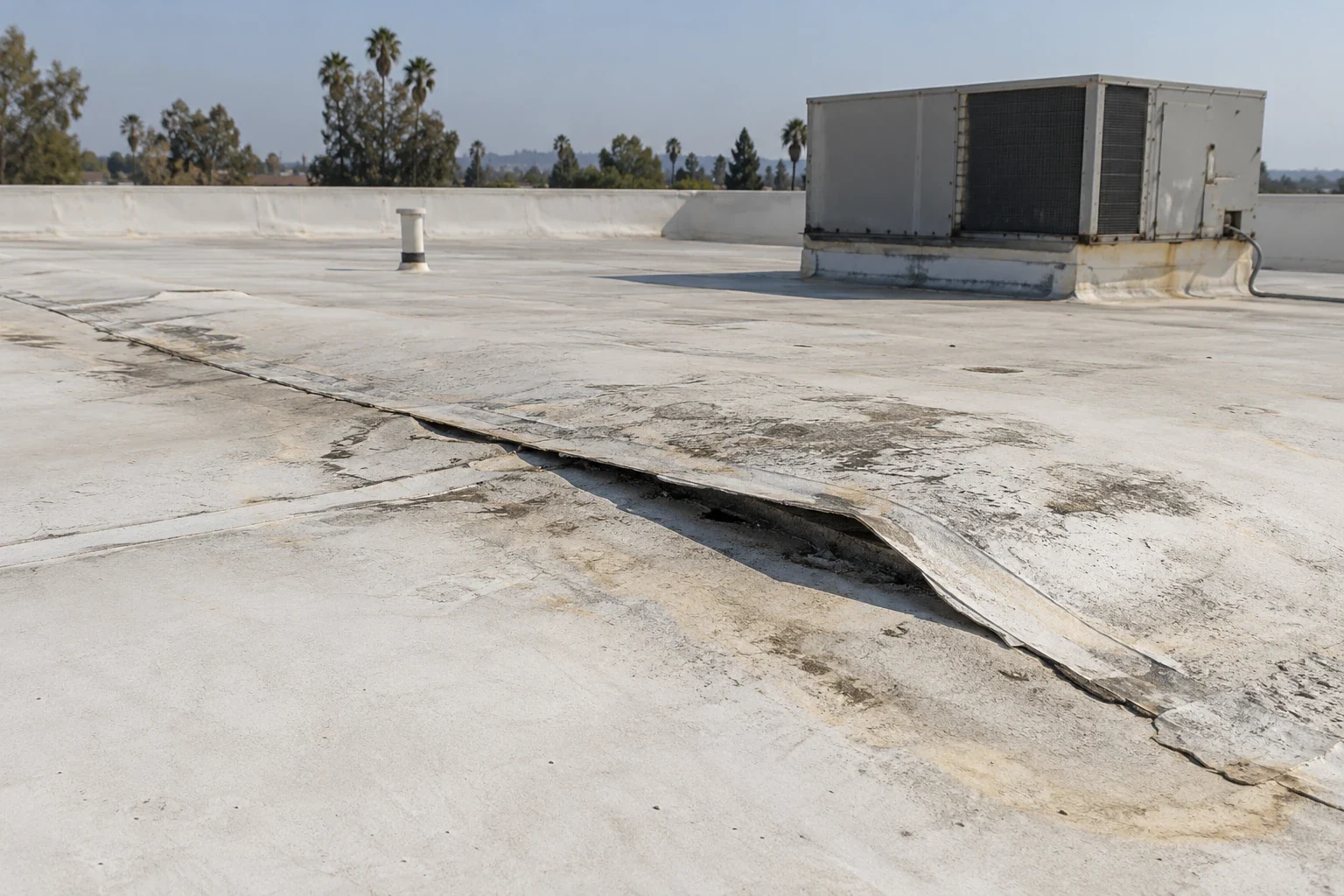
A lifted corner at a curb can look like a small patch job until movement has opened the seam below it. We inspect the membrane, flashing, attachment and nearby roof layers before setting a repair boundary. For an Orange, CA property with GAF roofing, that means identifying the installed system and checking whether later work changed the original assembly. We record the finding and explain what must be secured, welded or replaced to restore the detail.
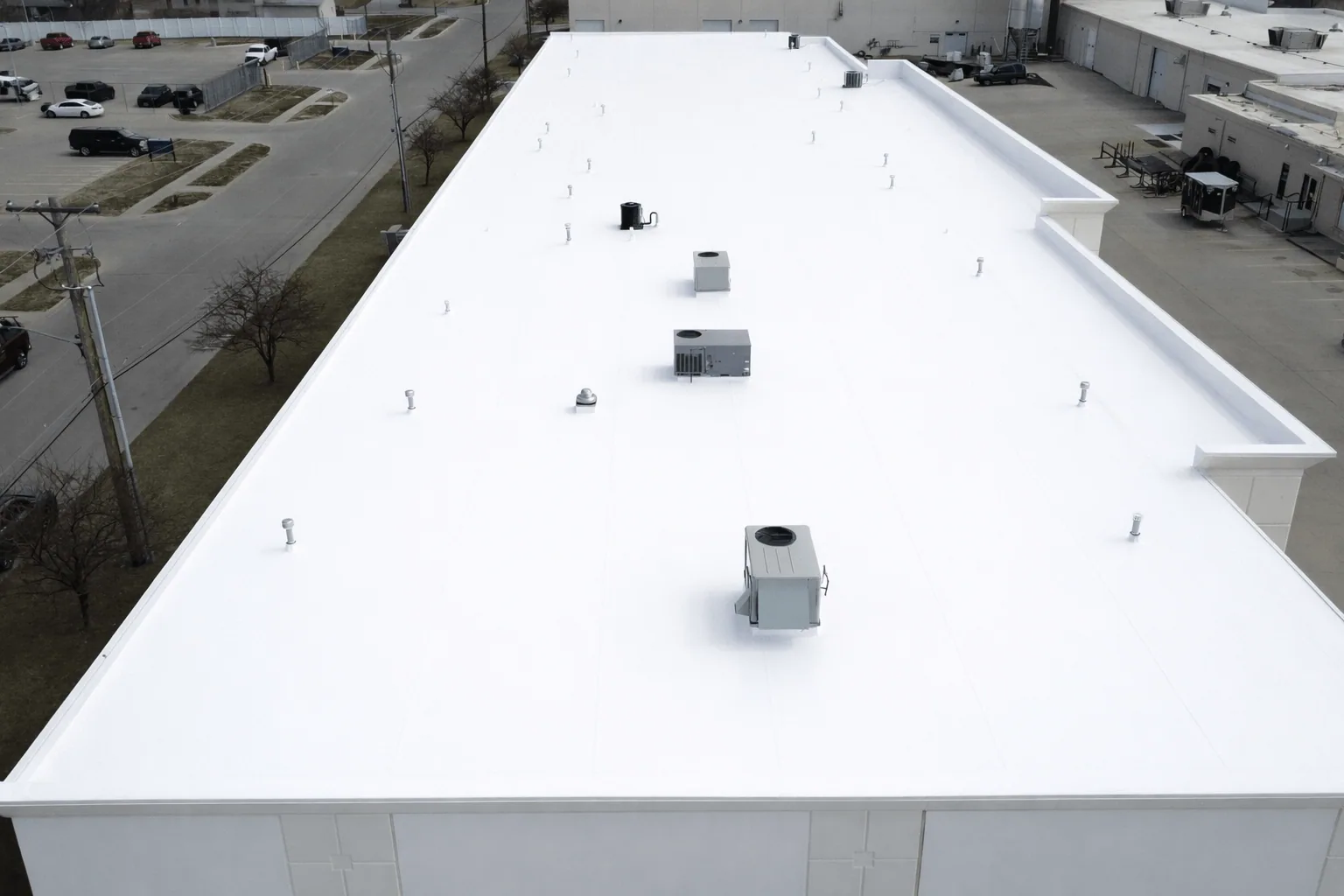
GAF offers commercial single-ply options, including EverGuard TPO and PVC, along with other low-slope systems. A product name alone does not identify what is on a particular building. In the Katella Avenue and Main Street corridor, warehouses, industrial buildings, restaurants and mixed-use properties create different access and protection needs. Our inspection connects the roof condition to the building's use before we recommend a repair or a larger scope. Owners comparing systems can also review Carlisle membrane options and Holcim Elevate membranes by their actual material and assembly.
Start with the installed layer
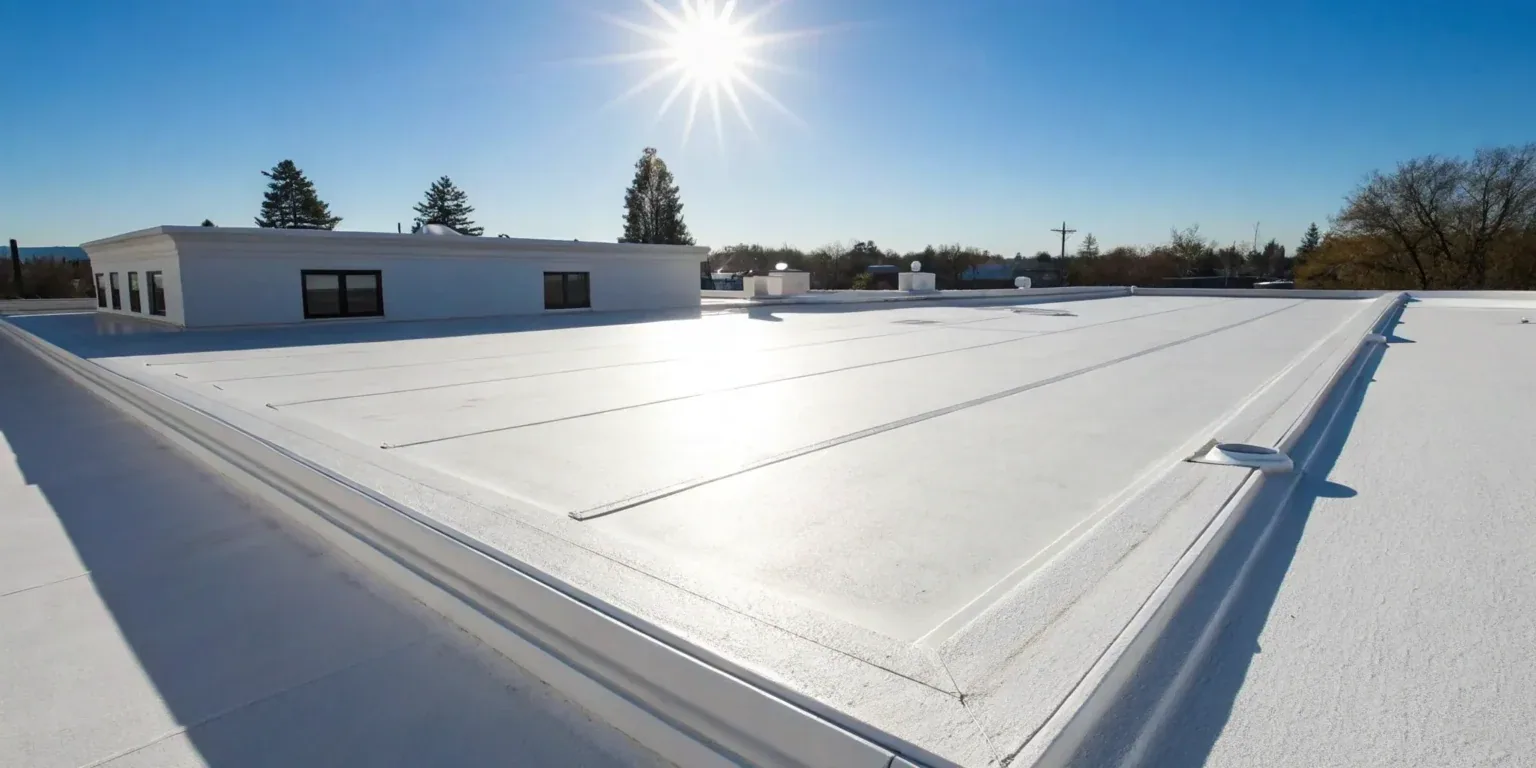
Membrane markings, roof records and field details help establish whether the surface is GAF EverGuard TPO, PVC, an asphalt-based system or a later overlay. We check seams, penetrations, perimeter metal and prior patches rather than relying on color. A white membrane could belong to more than one product family; the repair material and method must match the surface that remains in service.
We also look at the layers beneath the visible sheet. A probe or a measured opening can help determine whether insulation is dry, compressed or separated from the deck. The distinction affects the repair area and whether a local correction is sensible. Where full replacement is under review, we record what can remain and what needs removal, so the estimate reflects the actual assembly instead of a surface-only assumption.
Compare TPO and PVC by the detail
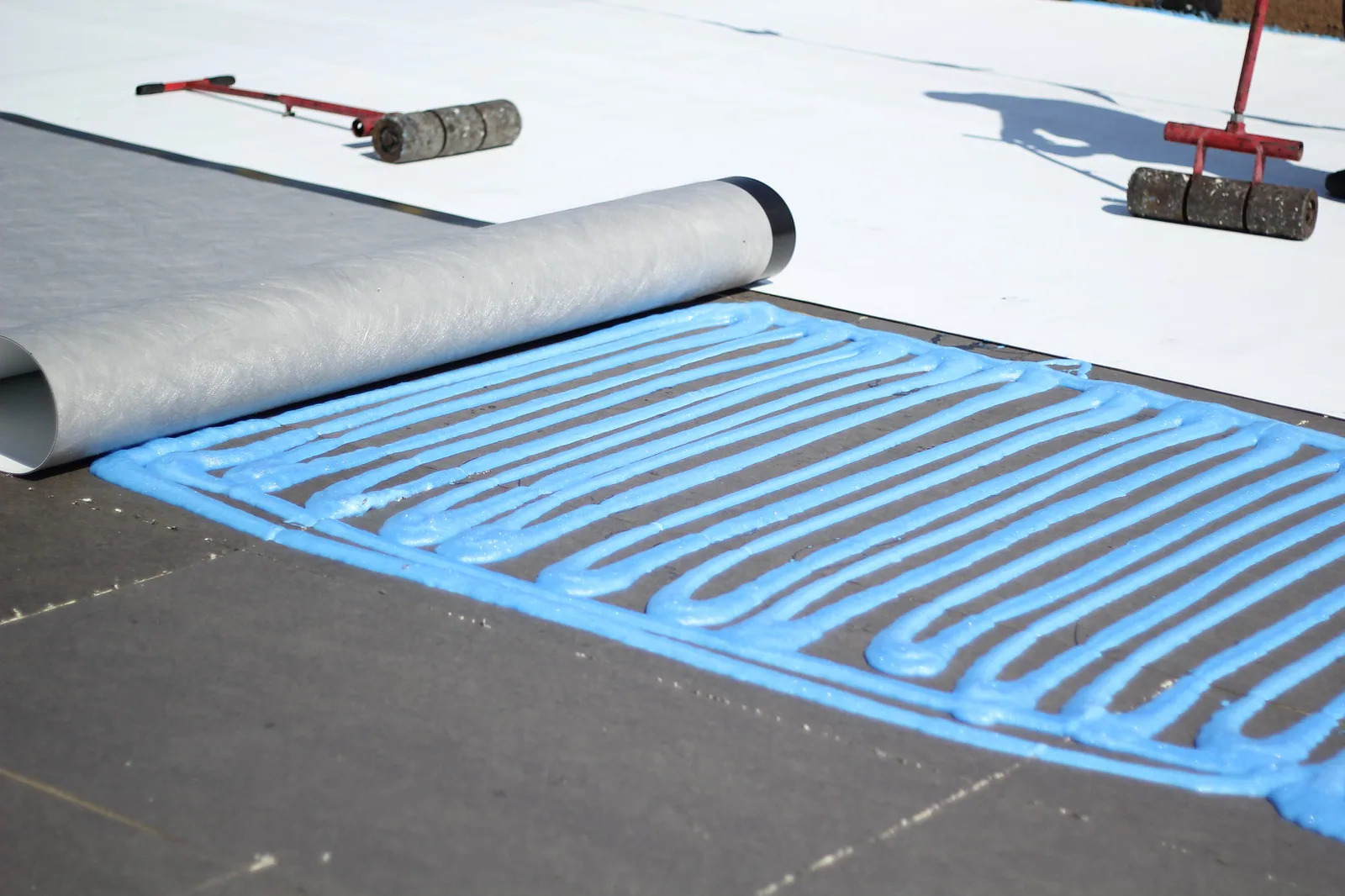
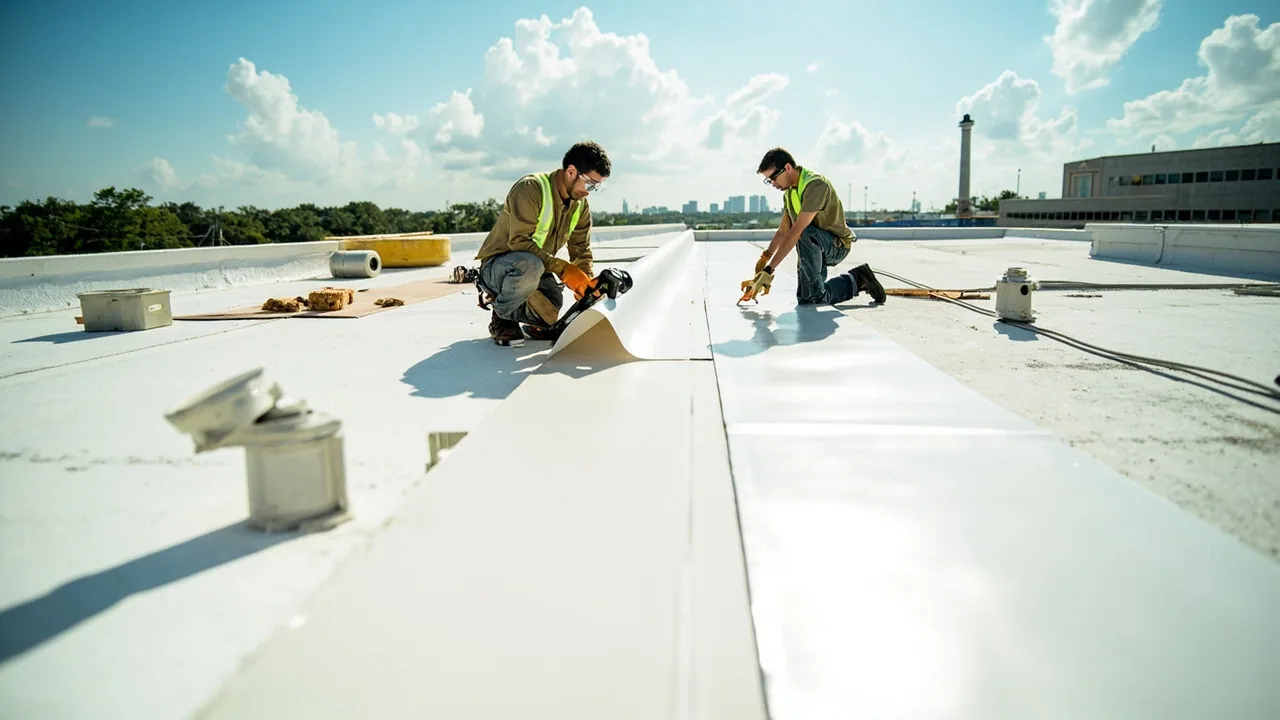
GAF identifies EverGuard TPO and PVC among its commercial single-ply membranes. Both are thermoplastic sheets with heat-welded seams, but compatibility at a repair still depends on the exact membrane and accessory. We examine the weld, lap width, surface condition and transitions at curbs or drains. A patch over a dirty or weathered area may not form a dependable bond, so cleaning and preparation are part of the scope, not a cosmetic extra.
Orange's warm, dry summer pattern matters to exposed roof surfaces. NOAA normals from the nearby Anaheim station show an August average high of 88.8 degrees F and many days at or above 90. Those Anaheim readings offer nearby climate context when we inspect exposed materials at an Orange property. It does make surface condition, UV exposure, seam movement and access timing useful inspection topics. We compare the observed assembly with the documented TPO roof construction or PVC system details before selecting a compatible repair.
Treat each seam as a field condition
A heat-welded lap can separate because of poor initial fusion, contamination, movement or damage from later rooftop work. The appearance of a seam is only a starting point. We inspect the length of the opening, probe the edge where appropriate and check nearby fasteners, plates and flashing terminations. At a penetration, the membrane's connection to the curb can be more important than the field seam several feet away.
The repair plan identifies the affected run and the material needed to close it. If a seam has separated at several transitions, isolated patches may leave connected weak points untouched. If the failure is confined to one accessible detail, a defined repair may be enough. We explain the distinction in plain terms and connect each recommendation to photographs or a condition note. For a localized opening, our seam failure repair work starts with that physical boundary.
Check drainage before closing the work
Water held near a drain can keep laps wet, expose low areas and complicate the next repair. We inspect strainers, drain bowls, sumps, overflow routes and the roof surface leading to them. Debris is one possibility; insulation compression or a deck change can also affect the path. The cause determines whether the scope is cleaning, a drain correction, localized membrane work or a broader assessment of slope and retained moisture.
On the Katella corridor, the mix of warehouses, general industrial uses and restaurants means roof access may compete with receiving hours, deliveries or customer activity. We plan a safe route to the affected roof area and discuss how the work zone will be protected below. A drain and scupper inspection can be paired with a seam check when water is present, while a condition report gives the owner a record of the observed flow path and repair limit.
Choose the repair scale from the evidence
A local patch is appropriate when the surrounding sheet is sound, the repair can connect to compatible material and the source of movement or impact has been addressed. Repeated failures, saturated insulation or widespread seam concerns call for a larger comparison. We review repair, recover and replacement options against the observed condition, current roof layers, drainage and the building's operating schedule. That gives the owner a decision tied to the assembly rather than a default to the most extensive scope.
The visible issue may be isolated even when the roof has a maintenance backlog. We separate urgent water-entry control from work that can be scheduled, then state where inspection was limited by access or concealed construction. Our commercial roof inspection can include photographs, moisture checks and a written condition record. If replacement is selected, occupied-building phasing and protection of equipment or inventory become part of the sequence, not an afterthought.
Leave a record that supports the next decision
After repairs, the work record should identify the roof area, materials used, preparation, completed detail and any condition that still needs attention. We take context and close-up photographs so a facility manager can locate the work later without guessing which curb or drain was involved. If the repair exposed wet insulation or an unusual deck condition, we document the limit and the recommended follow-up separately from the completed correction.
A building's record is more useful when each follow-up compares the same location and failure mechanism. We can review prior photographs against a later inspection and note whether the seam, flashing or drainage condition changed. Old Towne Orange includes retail and dining activity among historic structures, where keeping public access and interior finishes protected can influence how a repair is staged. The work plan should give the property team a clear contact, access window and closeout record for that specific roof area. This makes the next repair review faster because the prior work boundary and remaining condition are visible in the file.
Questions About GAF Commercial Roofing Systems
How do you tell which GAF membrane is on the roof?
Product markings, available roof records, seam construction and flashing details help establish the membrane family. When those clues do not agree, we describe the uncertainty before selecting a repair material.
Can a separated EverGuard seam be welded back together?
The surrounding sheet must be clean, compatible and sound enough to accept a new weld. We inspect the lap and adjoining detail, prepare a test area when appropriate, then define whether a local seam repair will address the failure.
When does a patch become a replacement discussion?
Several connected failures or wet insulation can change the scope. We compare nearby seams, moisture findings, layer condition and drainage; one accessible, isolated opening may remain a localized repair.
What should the closeout record show?
Photographs with location context help the facility team compare the same detail during later maintenance. The record identifies the repaired roof area, work completed, materials and any condition needing follow-up.
Related Roofing Work
Review the GAF roof condition
Tell us where the issue is on the Orange property, what roof records are available and when access is possible. We will inspect the assembly and explain the repair choices. Call 555-555-5555 or request a roof assessment.