
Military Warehouse and Depot Roofing in Orange, CA
A depressed roof area beneath material-handling marks can involve crushed insulation as well as the visible membrane damage. We examine the receiving layers and supporting construction before placing a patch over the lower profile. Military warehouse roofing in Orange, CA needs the repair comparison to include that depth and its effect on discharge. Commercial Roofers Orange explains suitable layer replacement and compatible closure. The owner can compare bounded reconstruction with a wider assembly change through the actual support, roof geometry and occupied storage space beneath the affected area.
Naval Weapons Station Seal Beach carries out weapons storage, loading, maintenance and assessment for the Pacific Fleet. Joint Forces Training Base Los Alamitos includes logistics shipping and receiving along with facility maintenance and engineering functions. For the particular military storage property being assessed, we establish its operation and access with responsible participants. The roof inspection identifies the material condition and component correction needed. Handling and protection are then arranged around the actual working portion, with the owner receiving the physical tasks included under each option.
The depressed area needs more than surface closure
Compressed insulation or damaged board can leave a roof connection without the support its selected system needs. We examine the affected extent and the construction beneath it. Reconstructing damaged storage roof support layers identifies material removal and replacement required at the actual area. Any deck or structural concern is assigned appropriate professional assessment before closure. The owner receives that deeper correction separately from the membrane perimeter formed around the rebuilt layers.
The work comparison also considers the roof profile left after support is corrected. Local reconstruction needs a suitable join to retained elevations and appropriate discharge. A broader project may permit a different insulation arrangement. We explain the material retained beside each boundary and what the new connection receives. Temporary protection is included while layer work proceeds, with the removal area defined before opening. The permanent weather detail follows suitable prepared construction instead of spanning a damaged depression as another isolated surface patch.
Wet layers can change the corrected footprint
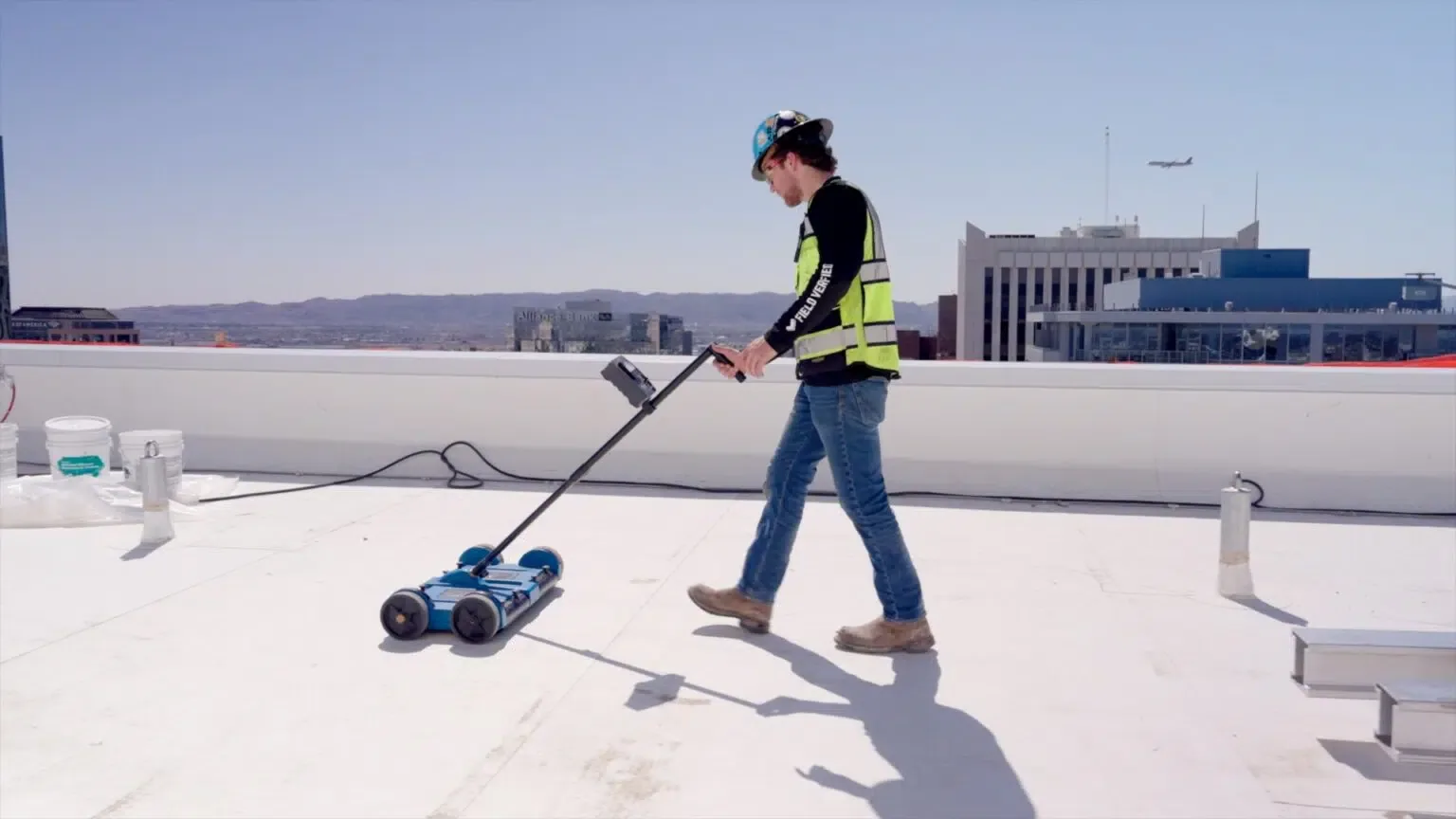
A membrane puncture beside a depressed area can admit water into surrounding insulation. We relate the reported complaint to relevant roof details and examine selected material beyond the visible opening. Investigating moisture around depot roof damage can guide physical checks where the survey conditions and construction allow useful imaging. Damp or detached material is included in the removal extent. The recommendation identifies those findings and any additional examination needed before retention or a broader assembly is chosen.
A dry, serviceable field may support a bounded layer and membrane repair. More extensive moisture or poor attachment can lead to another project boundary. The owner receives the difference through the actual material reconstructed and left in service. Interior access and protection are coordinated for the particular storage area below removal. Those dependencies are connected to the proposed opening, with stock and service requirements established by responsible facility participants rather than assumed from the building category alone.
Roof loading influences the next handling arrangement
A work area needs suitable material placement and load distribution for its construction. We identify the location and handling sequence with the owner, coordinating appropriate design assessment where loading decisions require it. Roof staging should preserve discharge and access to the components being repaired. Removal and deliveries can intersect service routes below, so practical separation is arranged for the actual occupied operation. Each daily portion includes the protection beneath its opening and a suitable temporary weather connection above.
For a property near Seal Beach, the working plan follows its actual material routes and operating limits. Related naval building roof portions can require another component or access arrangement where those functions are present. Adjoining commercial warehouse roof construction involves different property coordination. We inspect the roof relationships before phases are selected, with the work boundary tied to suitable retained layers and the closure needed at each affected component.
Facility arrangements connect to defined roof tasks
A controlled property can have requirements for personnel entry, escorts, operating limits and material movement. We establish those applicable arrangements with the owner and responsible facility participants before the project proceeds. The scope locates the actual correction and dependent component work. Required review is addressed for that defined construction. Equipment changes are arranged before permanent roofing closes their details, with appropriate temporary protection while the receiving component remains unfinished. The sequence describes the work portion and tasks rather than assume one arrangement fits every storage building.
Existing equipment supports and penetrations are assessed where the inspected damage reaches them. Their structural and weather functions need separate preparation. A unit alteration can change the opening, available flashing height or working space. We explain those dependencies and identify responsible assessment where needed. Suitable traffic protection is considered at service routes on the completed roof. The owner receives the components left accessible and the compatible weather work required around each altered detail, including construction connected to the reconstructed layer area.
The roof option includes retained support and water flow
TPO military storage roof installation and built-up depot roofing options involve different specified materials and joining methods. We assess the actual deck, insulation and attachment before explaining suitable choices. The owner receives those components with the field assembly, including the layer correction beneath the depressed area and any design task required for the selected support or loads.
A recover comparison describes the material kept beneath the new roof and how its condition supports retention under applicable requirements. Added height can affect outlet and flashing geometry. Those relationships are examined before the assembly is selected. Removal may offer a different correction of crushed insulation, moisture or backing. We compare the physical work complete under each option, with suitable drainage and component access included.
The low profile and receiving path need separate checks
A depressed area may retain water even when the outlet itself is open. We inspect nearby elevations and the accessible discharge route before defining the correction. Hardware correction is a separate task from rebuilding insulation geometry. Both are identified where found. Temporary closures direct water away from unfinished openings, and staged material is positioned to preserve the usable route. A broader assembly incorporates suitable outlet profiles with the layer work, allowing the owner to compare complete drainage corrections under the proposed scopes.
For nearby Anaheim, annual precipitation in the 1991 to 2020 station normals totals 13.52 inches. That Anaheim setting supports attention to the inspected roof's discharge and maintenance access. Installation follows current conditions and the selected system's requirements. We check new connections and reconstructed transitions under the appropriate methods, with useful layer views retained before closure. Completed locations identify the work among recognizable roof components, helping later inspection assess the corrected area and adjacent older details separately.
Questions About Military Warehouse and Depot Roofing
Why examine insulation beneath a depressed military storage roof area?
The lower profile can involve damaged support layers rather than only membrane wear. We inspect that construction before defining closure. Suitable reconstruction may need insulation or board removal, with responsible assessment where deck condition changes the work. The owner receives the actual depth and receiving boundary, allowing a supported local correction to be compared with broader assembly work.
Can drainage remain deficient after a puncture is patched?
Closing the opening does not change a separate low profile or receiving-path restriction. We inspect elevations, the inlet and accessible downstream components. The scope identifies geometry or hardware work needed alongside the membrane correction. The owner can compare those tasks under local reconstruction and broader options, including the water route left usable during each working portion.
What roof staging information affects a depot repair plan?
Establish the actual material placement, access and load-distribution needs before handling begins. Appropriate design review is identified where required. We connect those arrangements to drainage, removal and occupied-space protection. The proposed sequence explains the component work and daily closure required, so the handling plan fits the inspected roof rather than repeats a damaging placement over unsuitable layers.
How should the owner compare repair depths at a compressed area?
Compare the membrane, insulation and supporting material corrected beneath each scope. We identify suitable retained construction and any further examination needed before closure. Moisture can change the removal extent beyond the visible depression. The owner receives those findings with component and facility dependencies, allowing the local repair and wider project to address the same physical condition.
Related Roofing Work
Inspect the compressed roof layers
Describe the Orange-area storage roof's depressed areas, membrane damage and handling limits. We can inspect the support and explain suitable military roof scopes. Call 555-555-5555 or request a roof assessment.