
Standing Seam Commercial Metal Roofing in Orange, CA
A screw added through a standing seam panel to quiet movement can restrain the panel where its attachment was intended to allow it. We inspect the altered fastening and nearby deformation before recommending a repair. Standing seam metal roofing in Orange, CA needs details that manage water while accommodating the selected system's movement. Commercial Roofers Orange explains the connection correction and any panel replacement needed around it. The owner can compare the prior alteration with the intended attachment arrangement, using the damaged area and accessible clip condition to understand the scope.
Orange's road network includes State Route 55, while Interstate 5 and State Routes 57 and 22 meet near the city's southwestern area. Those corridors can influence access arrangements for material deliveries to the actual property. Anaheim Canyon has industrial and business uses, where roof equipment and owner operations can also affect metal work. We establish the building's access, panel arrangement and operating restrictions before planning repair or replacement, connecting delivery and installation needs to the inspected assembly.
Altered fastening needs examination
A through-panel fixing changes the local connection and creates an opening requiring suitable weather protection. We inspect its location, backing and effect on the surrounding panel. A compatible correction may require removal of the improvised attachment and replacement or reconstruction of damaged material. The chosen method follows the installed system's requirements. Covering the screw head alone can leave restrained movement or distorted sheet unresolved beneath the visible treatment.
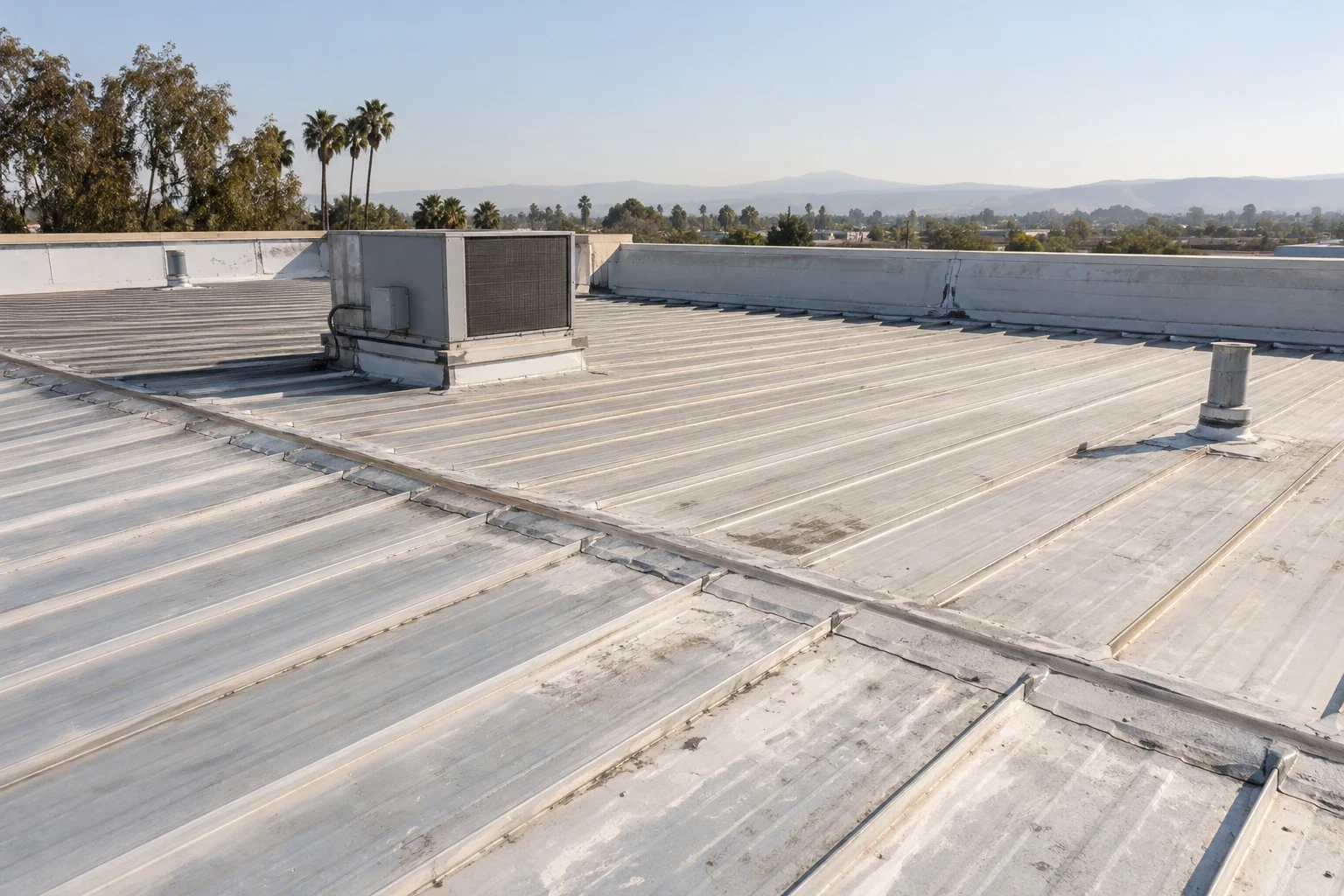
Clips, seams and end details are considered together where movement appears restricted. We inspect accessible components and coordinate further opening when concealed condition affects the choice. Metal assembly condition checks establish the damaged location and the adjoining material left in service. The owner receives a component-specific comparison rather than a general instruction to tighten every connection. A standing seam assembly's attachment arrangement needs understanding before individual fasteners are changed.
Seam damage can change the boundary
A deformed seam may need more than sealant along its visible edge. We examine its shape, continuity and connection to adjacent panels. The repair follows the type of seam and selected system's requirements. Some damage can support a suitable local correction; other conditions may require panel replacement with adjoining work needed to reach and reconnect it. The scope identifies those dependencies so the owner can understand why the removal area extends beyond a short damaged length.
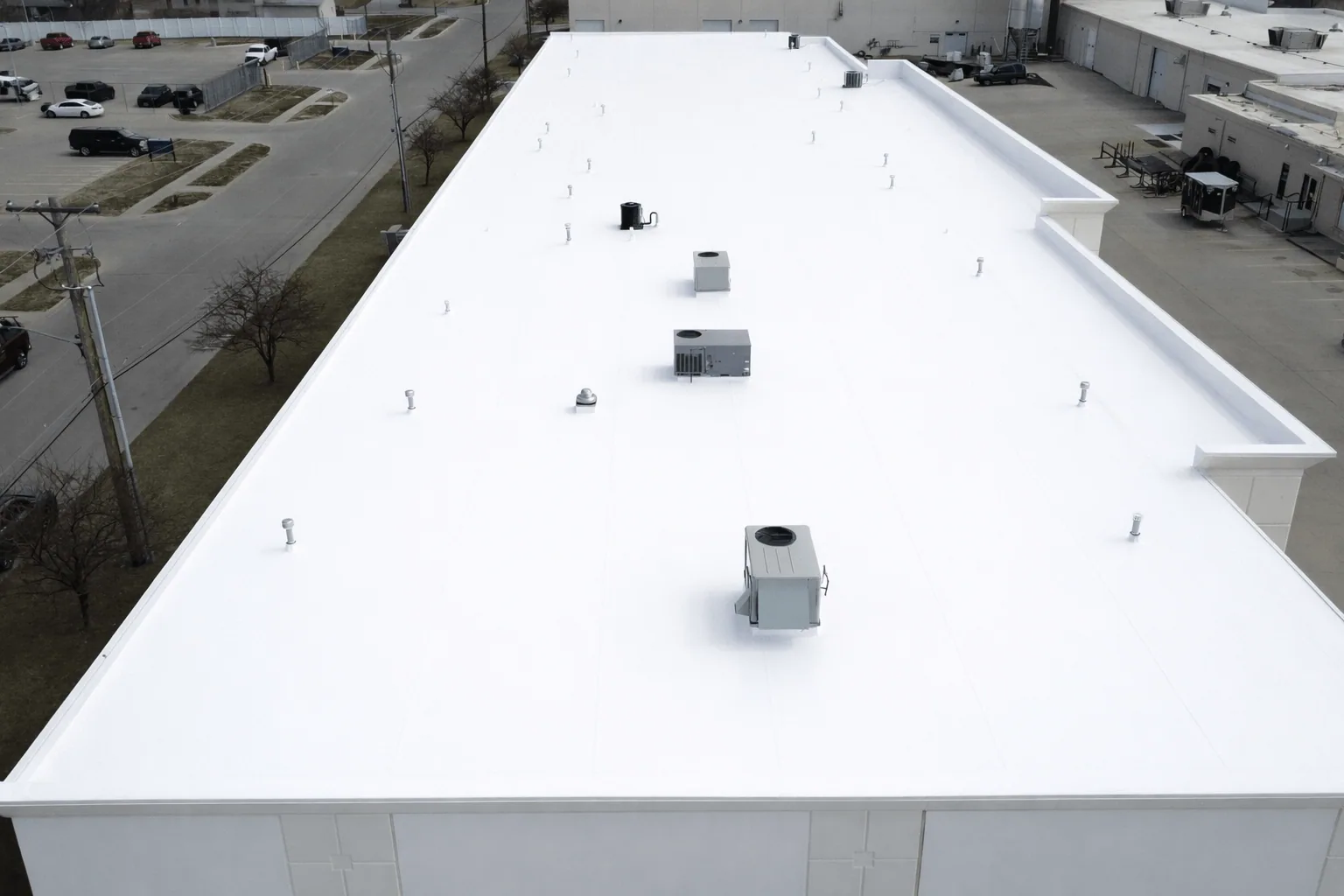
Exposed-fastener roof retrofit addresses a different arrangement and should be compared on its own construction. A membrane alternative such as TPO roof assemblies also changes the attachment, support and flashing approach. We relate those options to the building rather than treating all metal or low-slope systems as interchangeable. Repairability, equipment access and the actual drainage geometry form part of the comparison alongside the surface material.
Penetrations preserve panel movement
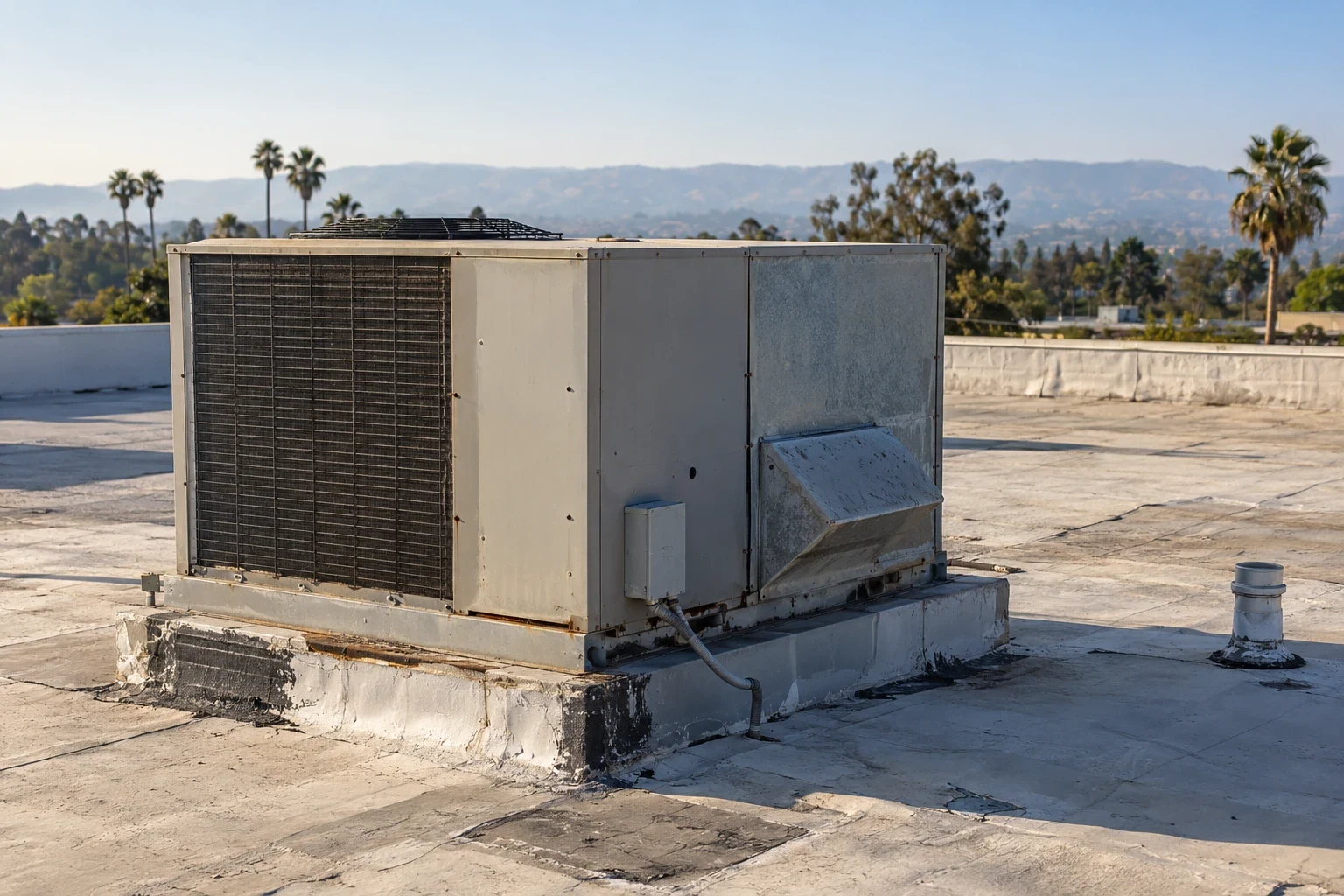
A pipe, curb or equipment support needs a weather detail appropriate to its location and the metal assembly. We inspect whether the connection bridges moving components or transfers load into a vulnerable panel area. Support and waterproofing are assessed separately, then coordinated for the selected correction. Equipment curb and support planning may be needed where an altered component has strained the existing seal or interrupted a suitable panel connection.
At a wall or roof edge, end closures and flashing must fit the panel arrangement. We examine support, attachment and the water path behind visible metal. A reconstruction may include adjoining backing or trim rather than another exposed surface seal. Regional Santa Ana winds can damage Southern California property, making displaced roof components worth prompt assessment. We inspect the actual movement and attachment after a reported event, then define the components requiring correction without assuming the entire field has the same damage.
Moisture beneath panels needs attention
Interior water can involve a damaged exterior connection or condensation within the assembly. We examine the complaint location and relevant layers before choosing a repair. Insulation, vapor control and ventilation arrangements require consideration appropriate to the building and design. A new outer panel does not by itself resolve an unsuitable concealed condition. The recommendation identifies where further examination or design coordination is needed, alongside the roof connection work justified by the observed damage.
Where panel removal exposes wet insulation or deteriorated support, the correction extends to those materials as appropriate. We show important findings before closure and explain the retained structure and layers. A wider replacement comparison includes the suitable substrate and thermal arrangement, with applicable requirements reviewed for the project. Those decisions affect the finished attachment and details, so the owner receives the complete assembly scope rather than a surface replacement disconnected from the condition beneath it.
Panel handling fits the property
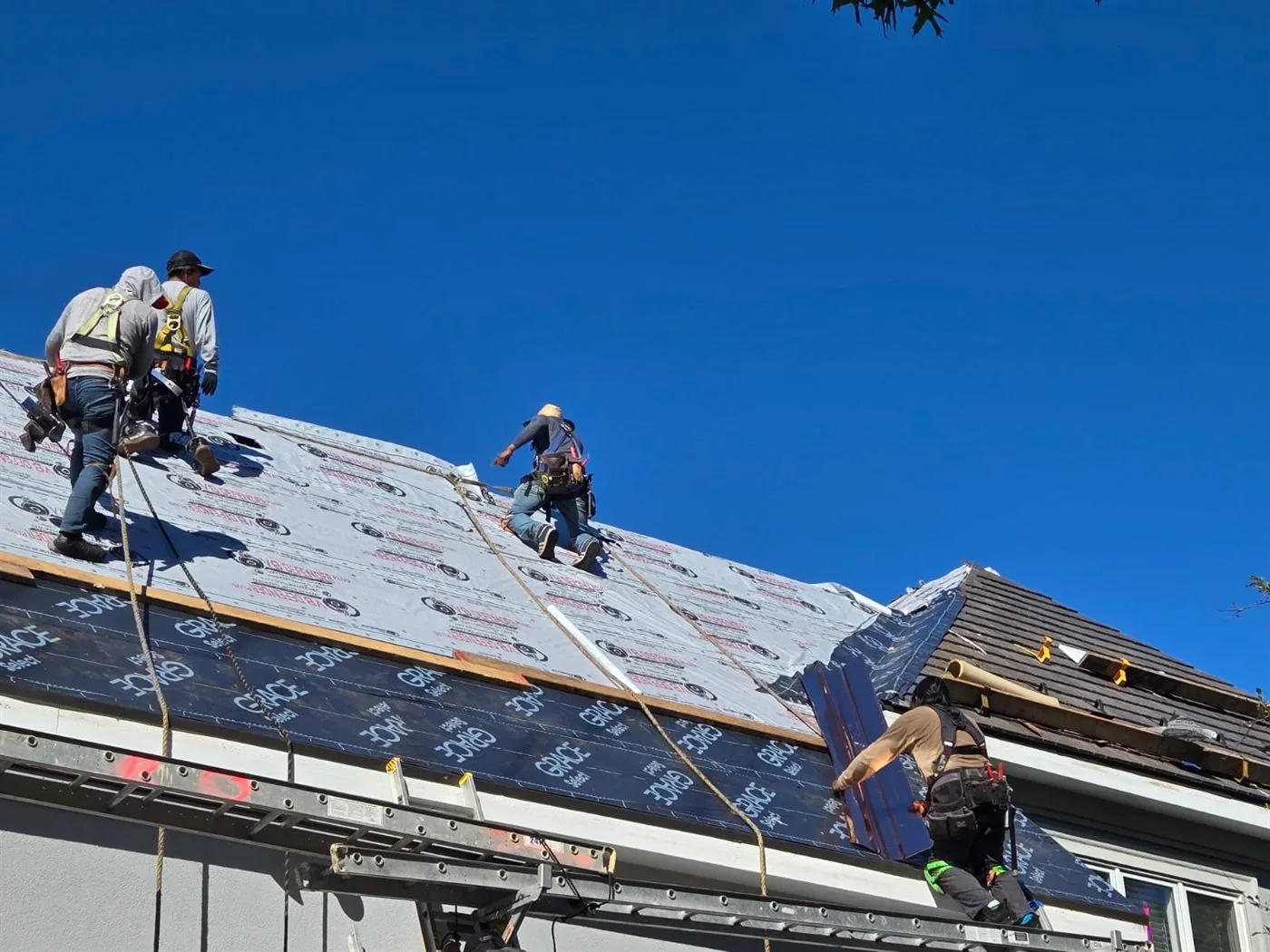
Long panels need suitable delivery, lifting and staging arrangements. We assess the roof and site access before selecting the installation sequence, coordinating appropriate handling with the responsible project participants. Material storage needs consideration of roof capacity, drainage and pedestrian routes. On an industrial building roof, equipment and the operation below can influence both access and daily work areas. We establish those restrictions with the owner before opening the affected assembly.
For a property in Anaheim Canyon, the roofing plan follows its actual delivery routes and service requirements. Replacement can require adjoining trim or equipment coordination before panels are installed and seams completed. Temporary closure is planned for the portions opened each day. The finished arrangement should retain appropriate equipment access and protection for maintenance traffic, with future alterations coordinated to avoid restraining the panel or damaging its waterproof details.
Completion checks the whole connection
A repaired seam, changed clip area and rebuilt penetration each need inspection suited to their construction. We examine attachment and detail completion, including transitions to retained panels. Condition views locate the work and show useful concealed findings before closure. The owner receives the repaired boundary and specific maintenance attention points. Those records support a later roof decision by identifying which connection changed and which adjoining assembly remains in service.
A limited repair can be useful where surrounding panels, support and details are serviceable. Broader deterioration or repeated unsuitable alterations can make replacement a more appropriate comparison. We explain the movement, drainage and attachment corrected under each choice. Later maintenance focuses on accessible seams, outlets and equipment details; new penetrations require planning for the installed panel system. The owner can use those physical requirements to coordinate work without introducing another incompatible fixing into the assembly.
Questions About Standing Seam Commercial Metal Roofing
Why remove a screw that seems to hold a loose panel still?
Its location may restrain movement or load a portion of the panel not intended for that fixing. We examine the attachment arrangement and surrounding damage before choosing the correction. A suitable repair can involve changed support or panel work, as well as closing the improvised opening. The scope explains the physical connection restored and the components retained beside it.
Can sealant alone repair a distorted standing seam?
The seam's shape and system requirements need examination. A distorted connection may require suitable reconstruction or replacement to restore the detail. We inspect the adjoining panels and access needed for that work. The owner receives the repair boundary and any dependent trim removal, so the comparison includes the connection correction rather than only treatment along its exposed edge.
Should interior dampness lead immediately to panel replacement?
The water route needs investigation, including exterior details and possible concealed moisture conditions. We examine relevant connections and layers before selecting removal. A bounded roof defect may support a local repair, while wet insulation or another assembly issue can need additional work. The recommendation distinguishes those findings and identifies the correction or further assessment required for the actual building.
What affects the scope of replacing one damaged panel?
Seam construction, adjoining attachments, trim and equipment can affect how the panel is reached and reconnected. We inspect those dependencies before defining removal. The proposed work includes suitable temporary closure and reconstruction of affected details. An owner can then compare local panel replacement with broader work where adjacent material or support also needs correction, using the same physical condition as the basis.
Related Roofing Work
Review the altered panel connection
Describe the Orange metal roof's damaged seams, added fasteners and equipment changes. We can inspect the assembly and explain suitable standing seam repair choices. Call 555-555-5555 or request a roof assessment.