
Sika Sarnafil Roofing Systems in Orange, CA
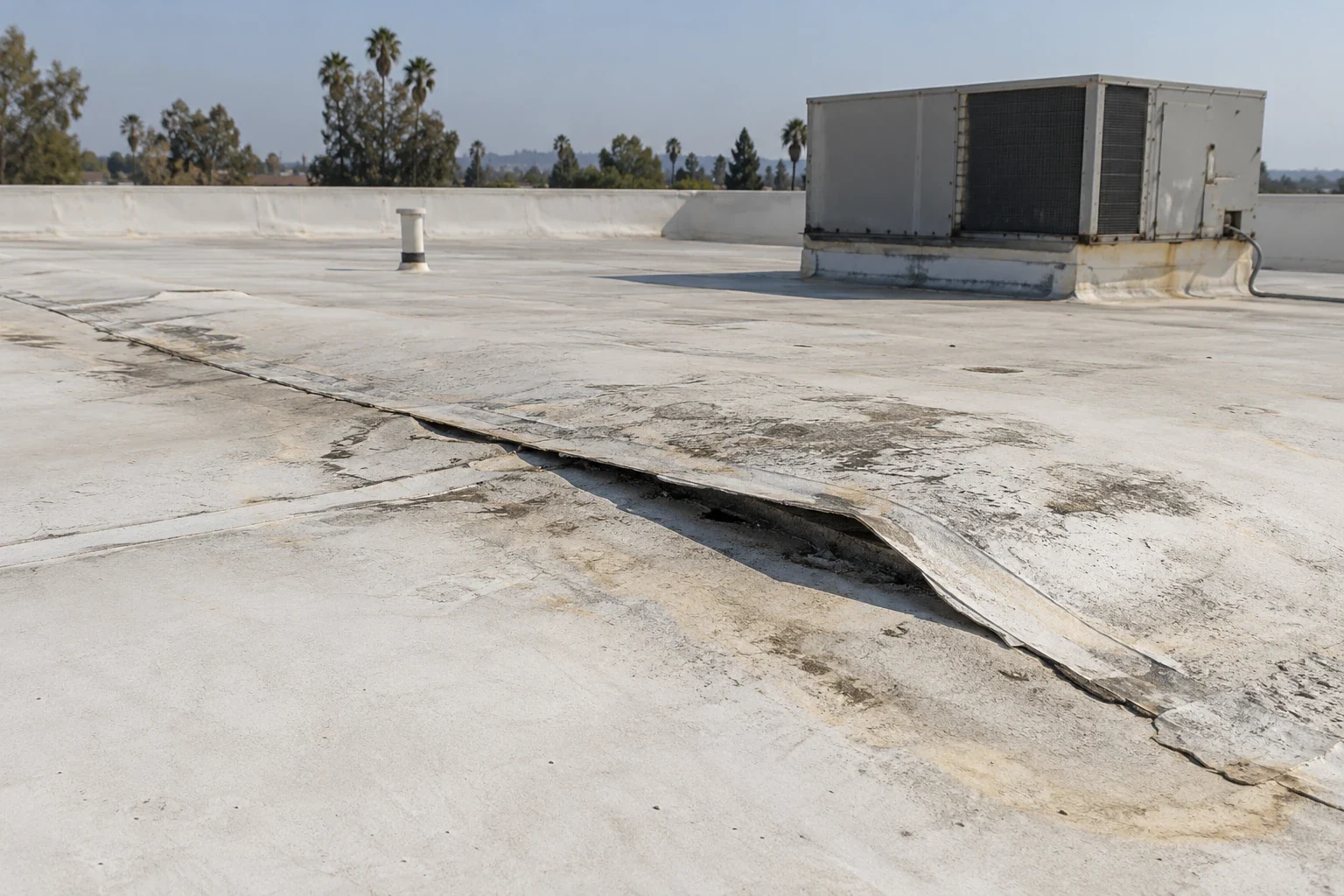
A wrinkle near a welded lap deserves inspection before anyone trims or covers it. The sheet may be secure, or the movement may connect to an open seam, poorly supported curb or wet layer beneath. For a Sika Sarnafil roof in Orange, CA, we identify the membrane and attachment method first. Sika's U.S. product information describes Sarnafil and Sikaplan PVC membranes with mechanically attached and adhered system options; we match the repair to the installed product and detail.
Orange has light-industrial and manufacturing districts, and the Katella Avenue and Main Street corridor combines warehouses, industrial buildings, restaurants and mixed uses. In those settings, the roof plan must account for equipment, deliveries and people below. Our Diligence Notes distinguish roof facts from operating constraints. We inspect the membrane, seams, transitions and drainage, then tell the owner whether the affected location supports a local correction or needs moisture testing.
Read the Sarnafil sheet and reinforcement
Sika's product catalog identifies Sarnafil PVC membrane families, including G and S products. Product details describe differences in reinforcement and system use. A label, project record or visible edge can help establish which material is present; the exposed field alone may not. We note the sheet and backing that can be identified, along with any patch or overlay that changes the surface. The specific membrane is important because accessories and seam methods must be compatible. We verify the actual sheet before recommending a product-specific repair.
Sikaplan is also a PVC membrane family from Sika. Its name should not be treated as another label for a Sarnafil product. We check for evidence of the actual sheet and compare construction at the lap and flashing. If a roof includes a modified section, that division matters at the repair boundary. Owners comparing thermoplastic products can consider GAF TPO and PVC offerings and Holcim Elevate options after the original membrane has been confirmed.
Inspect the heat-welded connection
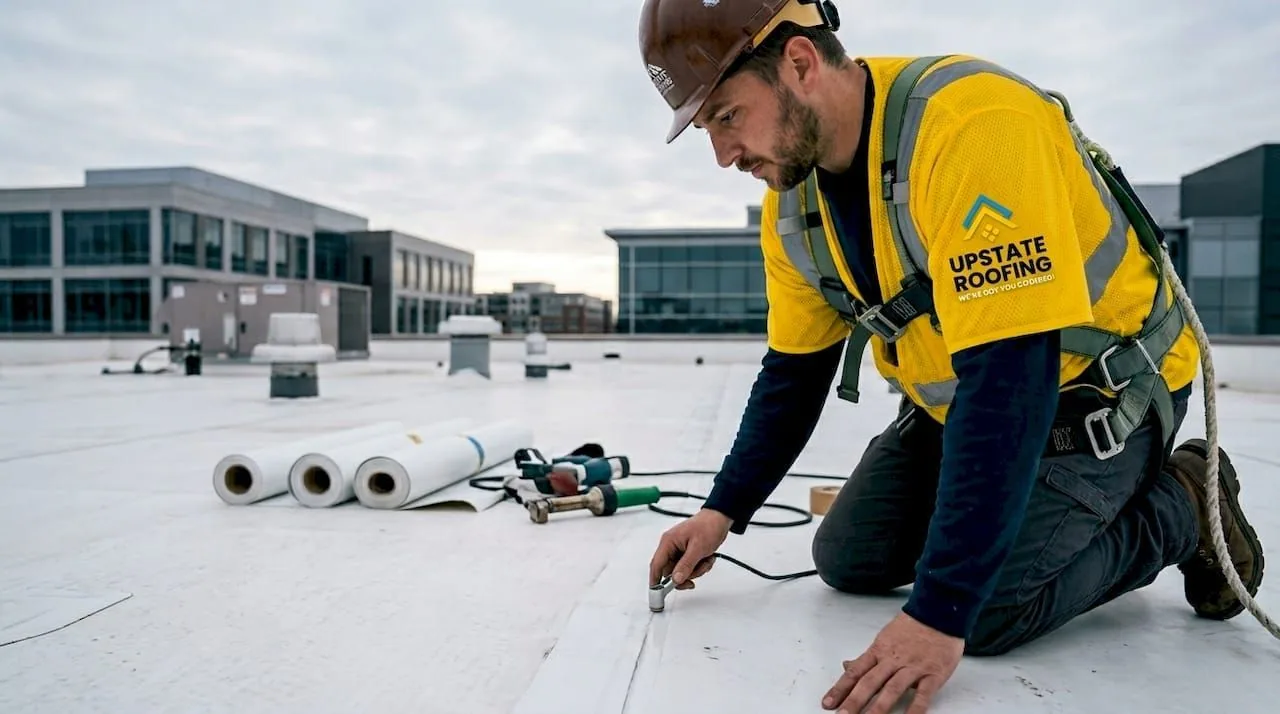
PVC sheet seams are joined with hot air, and the weld becomes part of the water-shedding surface. We check the lap for edge separation, contamination, incomplete bonding and damage from foot traffic or later trades. A seam probe can identify a loose edge; a test weld on a prepared area can help confirm the material's response. We record the test location and avoid extending a conclusion beyond the area checked.
Where a seam is open, the repair needs clean material and enough intact lap to make a continuous connection. Heat setting, travel speed and pressure influence the result, so the repair should be checked along its full length after cooling. At a pipe, curb or wall, field welding may not resolve a weak termination. We inspect the transition itself and document whether the repair extends to the metal, flashing or vertical surface. A seam failure repair begins by tracing the opening to its ends.
Choose the attachment around the deck
An adhered membrane and a mechanically attached membrane transfer loads differently. We look at the attachment pattern, insulation and cover board, and check the roof records for the deck and assembly. If wind has moved a sheet or opened a perimeter, the field membrane may be only one part of the repair. A loose termination or failed fastener can continue drawing on the lap after a patch is completed.
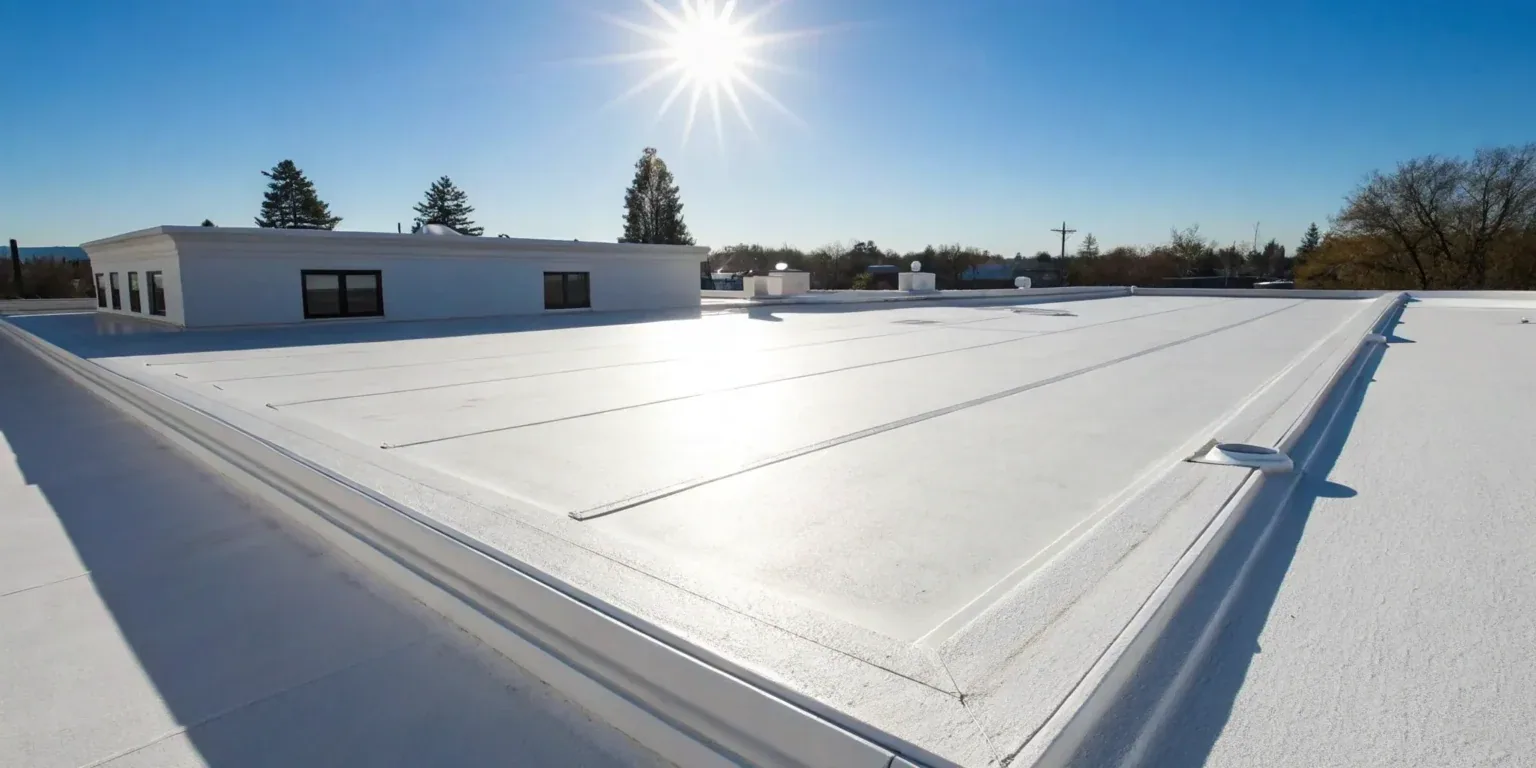
Sika's Sarnafast system information describes fastening within the seam overlap for its mechanically attached Sarnafil system. That is a product-specific detail, not a claim about every roof bearing the brand. We inspect the actual seam and exposed attachment points before describing what is present. The chosen method also affects staging and access across the building. For large uninterrupted roof fields, the PVC roofing assembly should be evaluated with its perimeter, transitions and penetrations as one connected system.
Interpret heat and sunlight on the roof
For the Anaheim station, NOAA's 1991-2020 record puts the mean August daytime high at 88.8 F; annual days at 90 F or above total 47.2. At the property, current weather and a surface check help determine the application window. We use current conditions to set safe work timing and inspect exposed membrane for actual aging, surface change, seam movement and flashing condition. A climate figure alone does not establish the cause of a leak.
A surface that has accumulated dirt or weathering may still accept a compatible repair after preparation; a brittle or contaminated area may need a wider cutback. We compare sun-exposed and shaded portions, then follow product-specific instructions for cleaning, welding or adhesive use. Around drains and HVAC equipment, rooftop access can also contribute to abrasion. The inspection marks those conditions separately so the repair targets physical damage rather than treating every color change as a defect.
Restore the flashing at each interruption
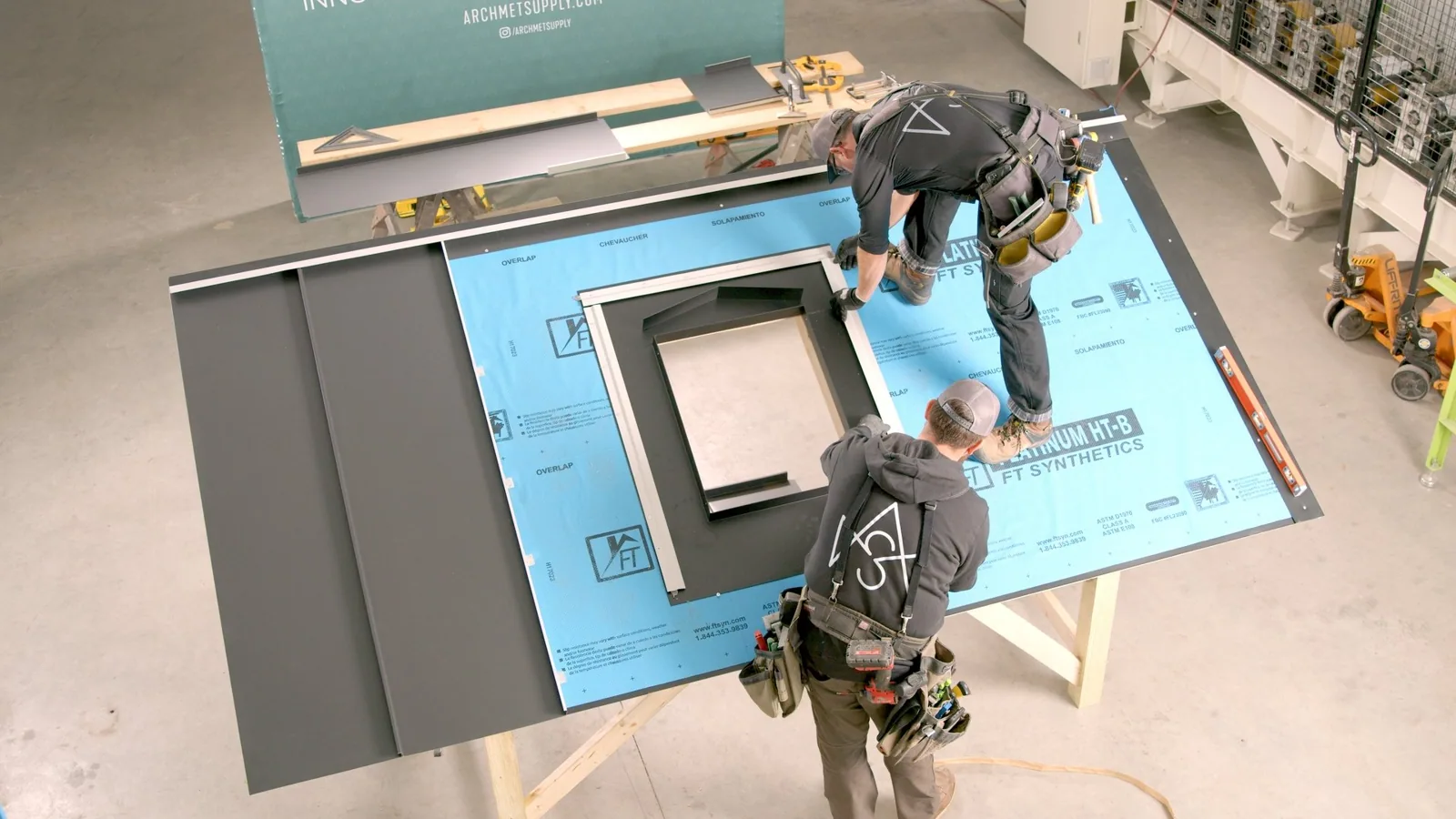
At a curb, pipe, skylight or expansion joint, the membrane has to turn upward, meet another material and remain secure through movement. We inspect corners, terminations, boots and metal counterflashing for gaps or splits. A small breach may connect to a larger unbonded area, so we check both the visible tear and the receiving surface around it. Water entry can begin at the high side and travel before appearing indoors.
When another trade has changed equipment or piping, we review the disturbed area and nearby support. A cover strip may hide a fastener or make later access difficult; documenting its location avoids guesswork during maintenance. Our penetration flashing service and perimeter metal work focus on the actual junction between the membrane and adjoining component, then show the completed detail in context.
Compare patching with a wider roof plan
A single open weld on dry, stable material may support a limited repair. Multiple seam defects, moisture beneath the sheet, poor drainage or movement at several edges can change the scope. We compare survey readings, roof layer condition, repair history and access. If a test opening reveals wet insulation, the work boundary follows the confirmed wet area rather than the interior stain alone.
Orange's amended permit framework uses California's 2025 building edition, whose model code is the 2024 International Building Code. The project scope determines review. Project scope determines which current permit provisions need review. Our recommendation describes the proposed roof work for coordination and avoids assuming an approval. For owners planning beyond one leak, a roof condition report can organize findings into immediate repairs, needed investigation and longer-term replacement decisions. The written record identifies the Sika membrane evidence and any limitations in what could be inspected.
Coordinate roof work with the property
The Katella corridor's warehouse and general-industrial uses can involve receiving activity and rooftop equipment. An Orange property may also have public or tenant access below the repair. We confirm the roof route, staging point, interior protection and contact who can authorize access. On a live building, sequencing the work in controlled sections can reduce exposure of the assembly and keep the repair record tied to the area completed that day.
After work, the closeout notes preparation, material, weld checks, repaired transitions and any conditions that need monitoring. Photographs pair the roof location with a close detail so a later visit can compare the same seam. If the material identity remains uncertain in an inaccessible section, we state that boundary. The owner receives a usable account of what was corrected and what evidence supports the next inspection, without implying that a limited repair has evaluated every concealed layer.
Questions About Sika Sarnafil Roofing Systems
Are Sarnafil G and S membranes installed the same way?
Sika describes product-family differences, including reinforcement and system applications. We identify the installed sheet and attachment from roof records and field details before specifying a repair or replacement assembly.
Can an open Sarnafil seam be checked without replacing the membrane?
We inspect the full lap and its adjoining details, prepare the receiving surface and check the resulting weld. If the sheet around the opening is sound and dry, the findings may support a localized repair.
What if a Sarnafil roof has a Sikaplan repair already?
We identify both materials and inspect how the prior repair connects to the original membrane. The repair boundary must use a compatible detail; the brand family alone does not establish that two sheets can be joined.
Does surface discoloration mean PVC must be replaced?
Color change alone does not establish membrane failure. We inspect flexibility, seams, flashing, drainage and moisture conditions, then compare those findings with the roof records and the repair history on file.
Related Roofing Work


Inspect the Sika Sarnafil roof
Share the Orange property roof records, reported leak area, current access limits and operating schedule. We will identify the membrane condition and explain the repair options. Call 555-555-5555 or request a roof assessment.