
SOPREMA Commercial Roofing in Orange, CA
A split cap sheet and an open lap can look alike from the roof hatch, but the repair depends on how the assembly was built. We identify whether the installed SOPREMA system is modified bitumen, PVC or a liquid-applied membrane before removing material or applying a patch. In Orange, CA, the inspection also records the adjacent roof layers and drainage. That tells the owner whether the failure is limited to one detail or reaches a wider section.
SOPREMA's U.S. product information describes commercial SBS-modified bitumen membranes, PMMA or PMA liquid-applied membranes, and single-ply PVC. Orange's Katella Avenue and Main Street area includes industrial, warehouse, restaurant and mixed-use properties. Each building can bring distinct roof penetrations and operating constraints, while the membrane itself dictates surface preparation and repair compatibility. We connect those findings in a work scope with a defined limit and a practical next step.
Identify the assembly before choosing materials
Modified bitumen is built with asphaltic plies; a PVC membrane is a synthetic thermoplastic sheet; and a liquid-applied system forms a continuous coating or membrane over a prepared substrate. These broad categories are not repair instructions by themselves. We inspect the roof edge, field, flashings and previous patches to determine which layers are visible. Records and markings can confirm product details, while a limited test opening may reveal what the surface does not.
A repair should connect to sound material that can receive the chosen product. We identify whether the area has a cap sheet, reinforcement, coating or incompatible older patch. Where two roof systems meet, the transition needs its own detail instead of being treated as one continuous surface. For comparison, the modified bitumen assembly and PVC membrane system have different seam and flashing approaches. The site inspection establishes which one is on the building. Once identified, its repair needs can be compared with Carlisle SynTec products or Holcim Elevate systems without confusing brand choices with the materials already installed.
Check the bitumen plies and laps
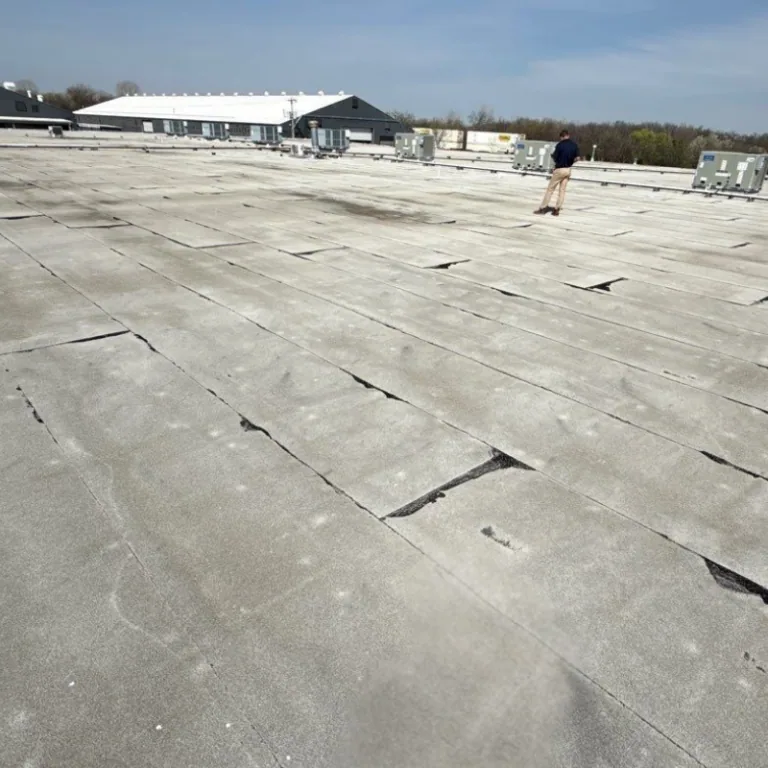
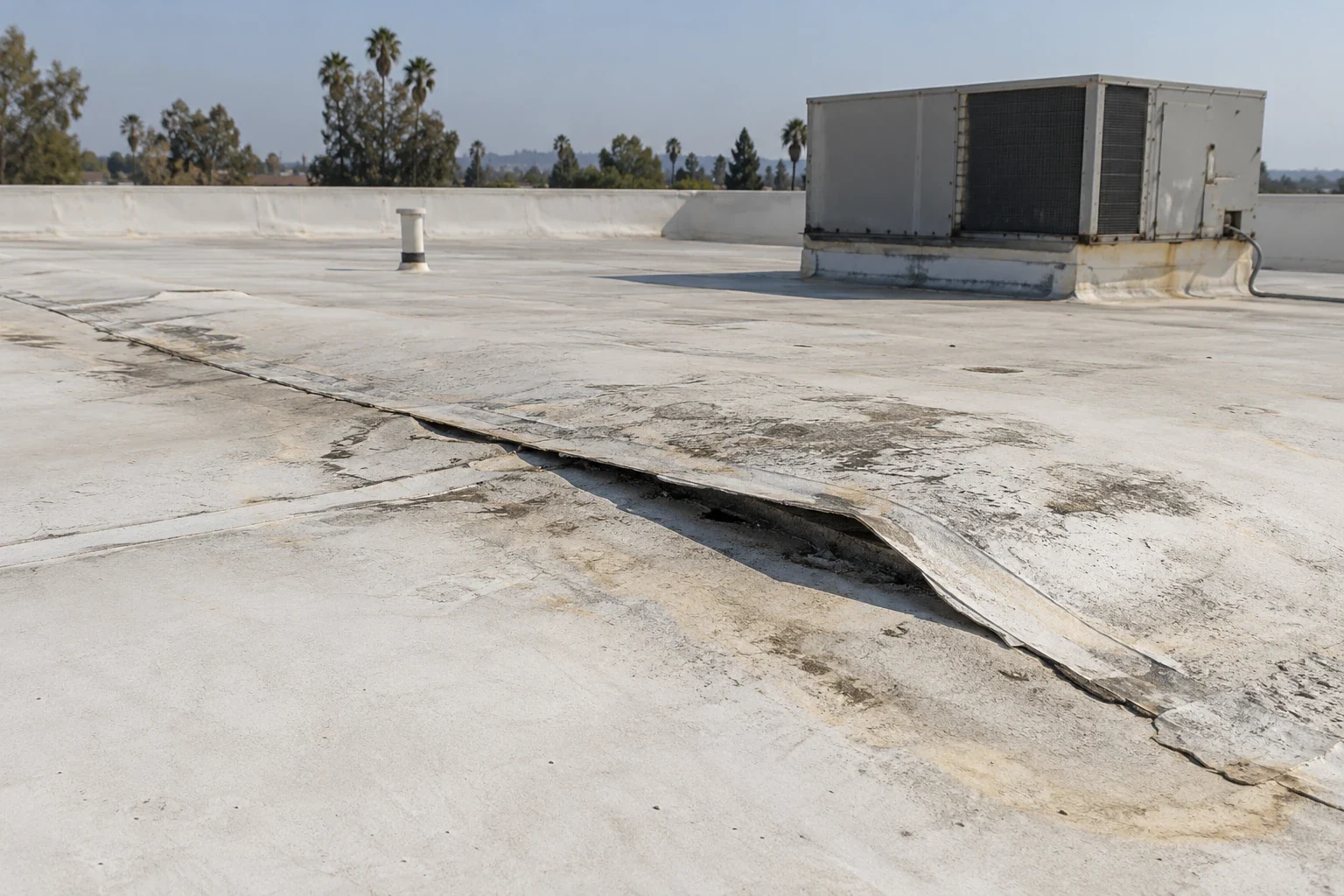
SBS-modified bitumen systems use asphaltic membranes installed in plies, with seams and flashings that must remain bonded and shed water. We inspect cap-sheet granules, open laps, blistering, exposed reinforcement and transitions at walls or curbs. One cracked area might be a local surface defect, or it might allow water into the plies below. We check adjacent material and look for movement before determining the repair size.
Heat-applied and cold-applied methods involve different preparation and fire controls. The existing roof may have an overlay, coating or prior repair that changes what can be applied. We identify the substrate and the planned method, then coordinate access and protection with the building contact. When the work involves an operating facility or sensitive inventory, the plan should state how odors, hot work or debris will be managed before installation starts.
Inspect the welded membrane detail
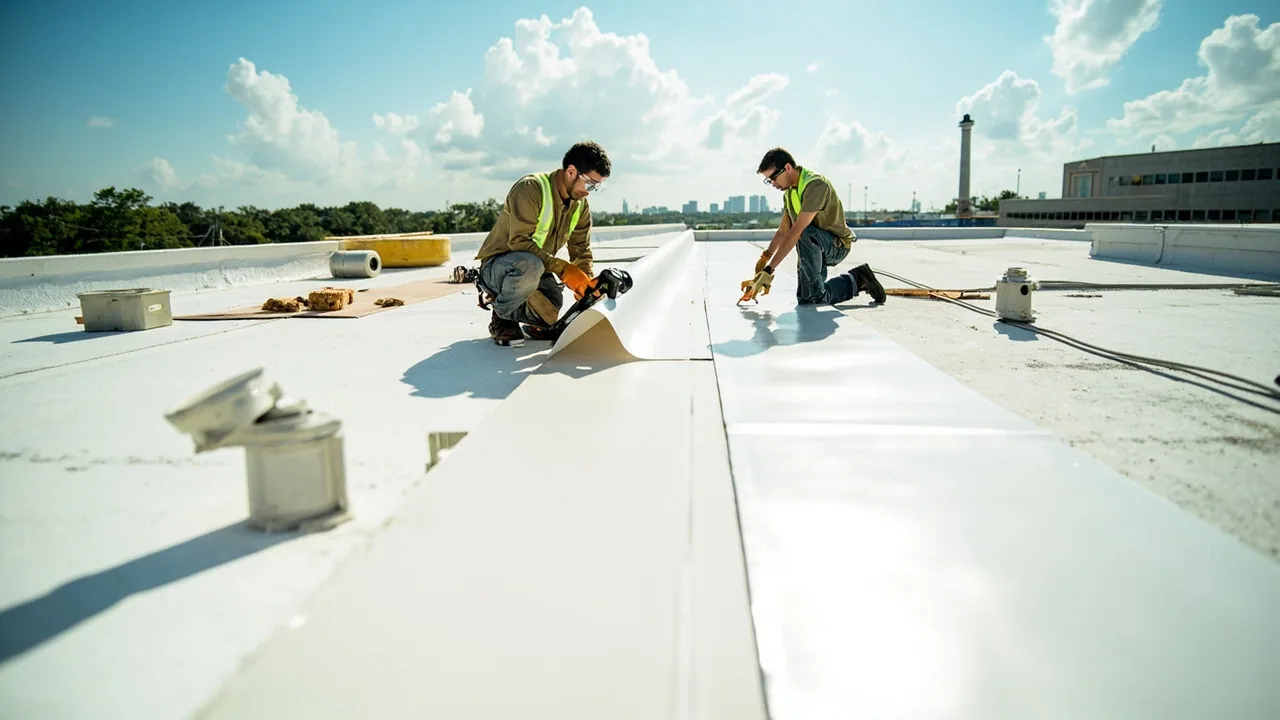
A PVC single-ply roof relies on welded laps and continuous flashing at penetrations. We check whether the seam is bonded across its width, whether the sheet has been punctured and whether the flashing turns up the curb with a secure termination. A patch placed on dirt or a weathered surface may not make a sound weld, so preparation and a check of the finished seam are part of the repair.
Mechanical attachment, adhesion and perimeter securement affect how membrane movement reaches the lap. We inspect exposed fasteners and edge terminations rather than assume that a roof follows one attachment pattern. On Orange buildings near Old Towne, surrounding dining and retail uses can affect staging and protection below the roof. We confirm the installed sheet and system documents before selecting repair components. A seam repair remains bounded by where the membrane is secure and the weld can be restored.
Test a liquid-applied system by condition
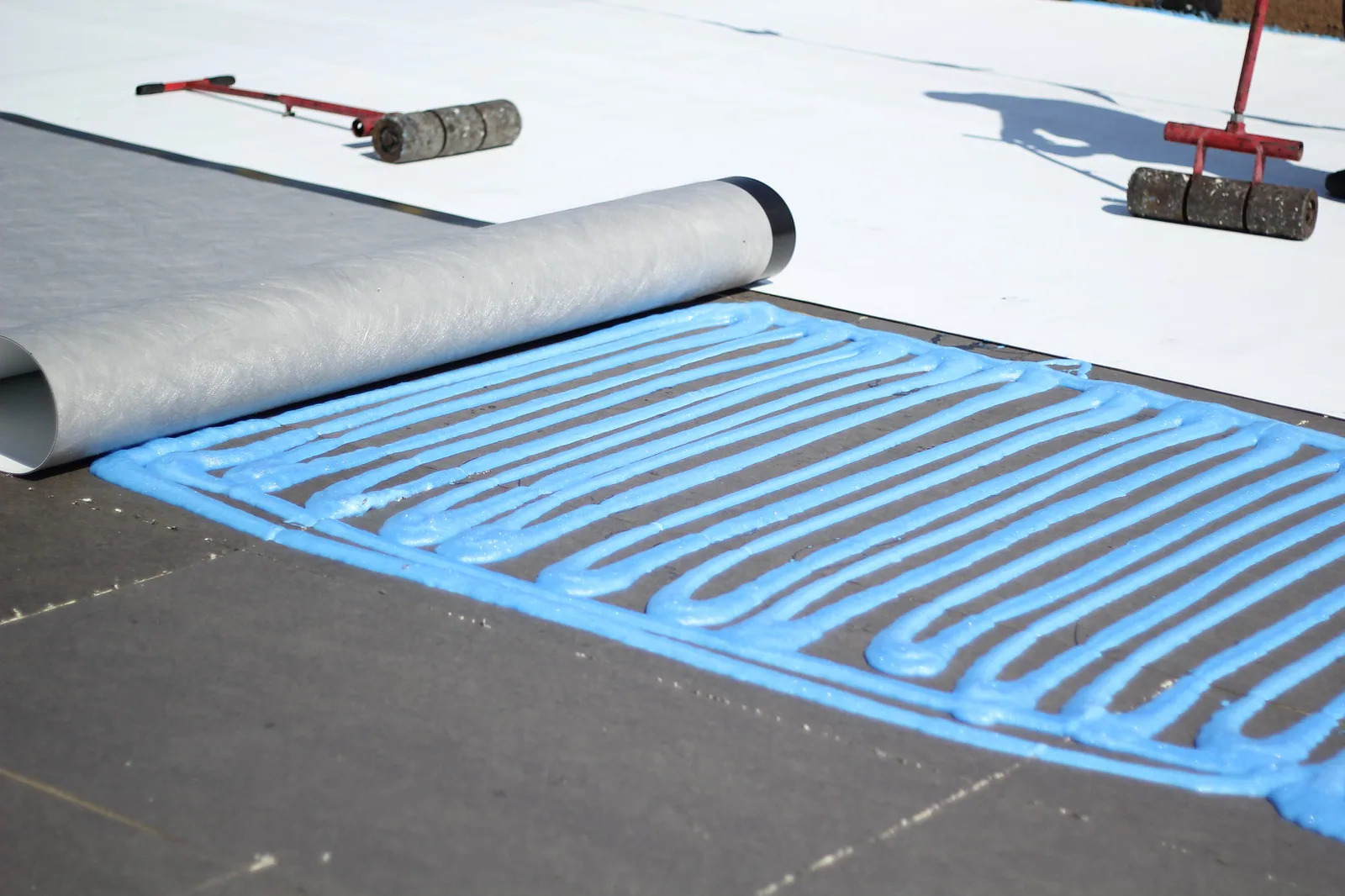
Liquid-applied roofing depends on substrate preparation, application and reinforcement at changes in direction. We check for blisters, cracks, ponding, exposed fabric, thin areas and separation at drains or curbs. A coating over a roof does not prove that the base is dry or bonded. We inspect the existing layer and test suspect areas where moisture or adhesion would change the scope.
SOPREMA's commercial product range includes PMMA/PMA liquid-applied membranes. Product type alone does not tell us that the existing substrate is suitable for another application. We confirm the base material, surface preparation and detail reinforcement before describing a restoration. If the roof is wet below or unstable, a coating may conceal rather than correct the problem. The inspection records any area where coating thickness, bond or moisture could not be confirmed without opening the assembly.
Consider Orange heat without overreading it
Anaheim's NOAA 1991-2020 record shows 0.01 inches of rain in August versus 3.16 inches in January. A dry summer can leave drain restrictions unnoticed until winter returns. The nearby station's seasonal pattern makes drainage checks a useful part of maintenance planning. Warm weather makes safe access, surface condition and application timing relevant. We check the roof under current conditions and follow the selected system instructions for temperature, drying or curing.
SOPREMA product compatibility cannot be inferred from local climate alone. A hot roof with an open lap needs the same material identification and receiving-surface inspection as any other repair. We look at movement, water, previous repairs and whether the layer can accept the next operation. If the work window changes because of heat, the property contact should know how that affects access and the sequence without turning a short pause into a substitute for inspection.
Trace water from the drain to the leak
A drain restriction can leave water at a seam and prolong contact with a weak detail. We inspect the strainer, bowl, sump, overflow and roof slope leading to each outlet. The presence of water does not establish whether the membrane, the drain or the supporting insulation is responsible. We compare surface levels, moisture readings and interior reports before defining a repair.
On the Katella corridor, warehouse and general-industrial buildings may have roof equipment or walk paths that divide drainage areas. We map the water path across those features and identify any test area needed to confirm concealed moisture. Our drain and scupper inspection can be paired with an infrared moisture survey to compare suspect and reference areas. Survey results guide investigation; a test opening can confirm conditions before removal expands.
Decide whether to repair or replace
A localized repair can fit when adjacent material is dry, stable and compatible with the chosen patch. Multiple failures, wet insulation, widespread blistering or recurring leaks can support a larger scope. We compare the roof's layer count, drainage, attachment and repair history, then explain whether a repair, recover or replacement is technically feasible. The owner sees the findings that support the cost and timing drivers rather than a single unexplained recommendation.
A roof permit in Orange is reviewed under the locally amended 2025 California Building Code. Its model-code basis is the 2024 IBC; the proposed construction scope determines requirements. We document the proposed assembly and access needs for owner and design-team review. A condition report helps track open items; replacement planning can compare removal and recover only after roof layers have been evaluated.
Questions About SOPREMA Commercial Roofing
Can a SOPREMA roof be repaired with a different SOPREMA product?
Product families use different substrates, seams and application methods. We identify the installed membrane and inspect the receiving surface before selecting a compatible repair, rather than relying on the brand name alone.
When should an SBS roof be opened for inspection?
A test opening can help when moisture, separation or concealed layers would change the work boundary. We choose its location from the roof and interior evidence, then document what the opening confirms.
Does a new coating correct ponding water?
A coating does not correct a low roof area or a restricted outlet. We inspect drainage and the supporting layers, then separate drain work, moisture repair and any surface application in the recommendation.
How do you tell if a PVC seam is repairable?
We inspect the weld length, sheet condition, contamination and surrounding attachment. A prepared test area can show whether sound membrane remains for a compatible new weld.
Related Roofing Work
Inspect the SOPREMA roof assembly
Share the Orange building details, known membrane type, leak area and roof access requirements. We will inspect the assembly and explain repair, restoration or replacement choices. Call 555-555-5555 or request a roof assessment.