
Commercial Roofing in Irvine, CA
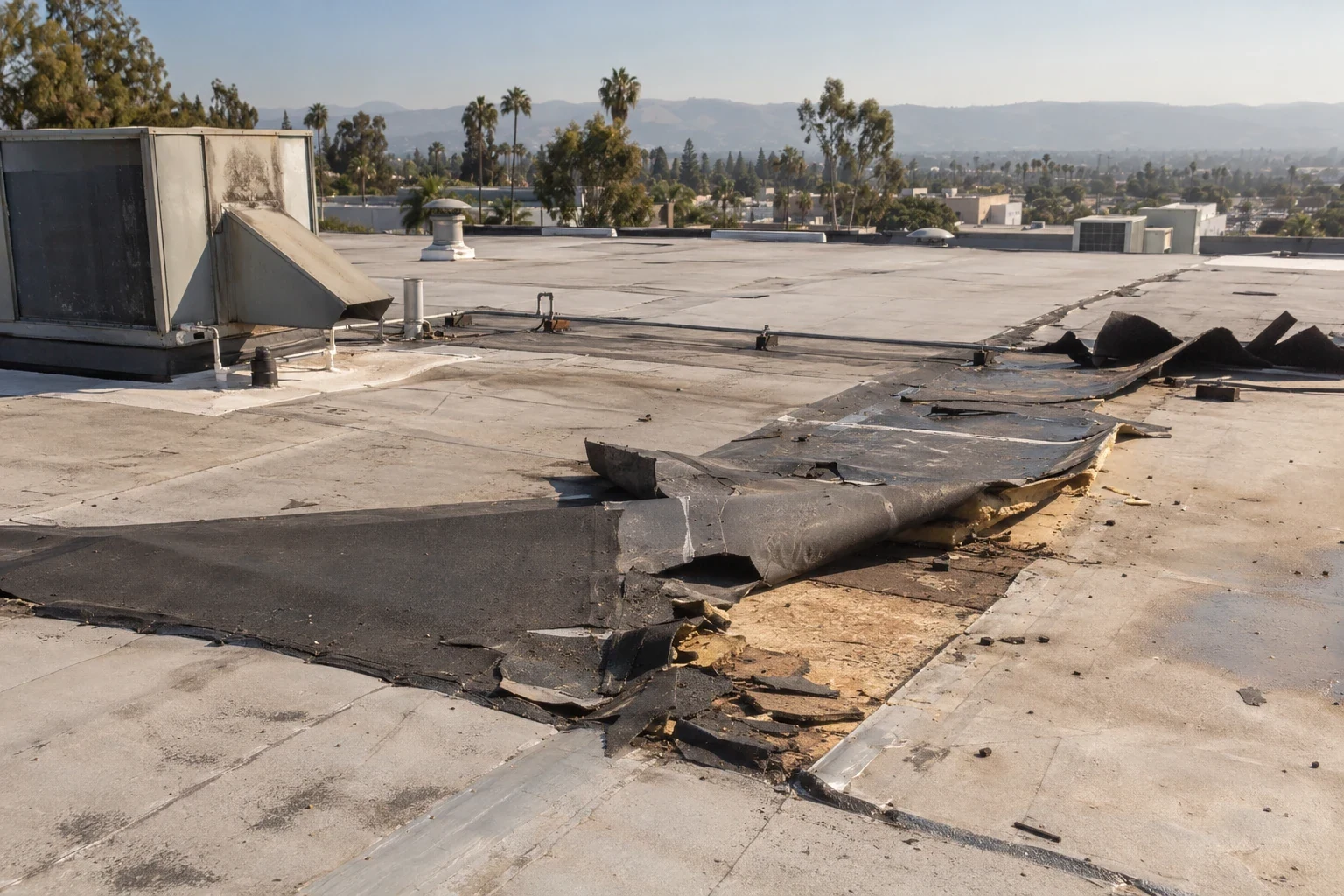
A split beside a rooftop curb can leave a dry room looking normal while water tracks through insulation above it. In Irvine, CA, we start with the roof assembly and the building use below, then follow the opening through membrane, flashing, and attachment. Irvine employers in 2021 included Edwards Lifesciences, B. Braun, the Center for Autism, the University of California, Irvine and Irvine Unified School District. For work above occupied healthcare or education areas, we confirm access hours and interior protection with the property contact. The Irvine Spectrum Center district adds retail and office activity. We document what is visible, test what needs a closer look, and explain which work can address the current condition. For a leak, commercial roof leak repair traces the water path instead of treating the ceiling mark as the source. The same inspection planning applies across the Orange service area.
Trace the opening, not just the stain
A ceiling mark records where water became visible, not necessarily where it crossed the roof. We inspect the membrane above that area, then check nearby seams, penetrations, drains, and flashing transitions that could carry water sideways. A seam probe can reveal a weak lap; a close look at a curb corner may show a split sealant bead or lifted flashing. We note which observations are direct and which areas remain concealed. That distinction matters when a building manager must decide whether a localized repair is enough or whether a test opening should verify the layer condition.
Healthcare and education operations add scheduling decisions to the repair itself. The practical need is to protect occupied rooms, coordinate access, and keep tools clear of active entrances. We can map the proposed work area, identify a safe staging point with the property team, and sequence noisy or disruptive tasks around the operating calendar. A commercial roof inspection records the accessible roof conditions and gives the owner a basis for choosing the next step.
Separate surface wear from wet layers
Discoloration, loose surfacing, and a soft-feeling area do not all call for the same repair. We compare the visible surface with seams, penetrations, drains, and any exposed edge in the same roof section. When moisture may have moved below the membrane, an infrared survey can help prioritize locations for verification, but the reading needs interpretation against roof construction, recent weather, and surface conditions. A measured opening can confirm whether insulation is damp, the deck is sound, or a repair can stop at the membrane. We record the opening and its limits so the owner can see why the scope includes one layer and excludes another.
Irvine's healthcare and education employers make continuity a useful planning question: which rooms sit below the work, what equipment needs protection, and when can access be granted? The answers affect labor sequence and temporary protection more than a generic schedule estimate. We explain these dependencies before work. If the evidence shows a wider condition, a written roof condition report can organize photos, test locations, and repair priorities for maintenance or capital planning.
Match the scope to the roof section
A repair should have a defined edge. We identify the failed material, the sound surface needed for tie-in, and any adjacent detail that must be corrected to keep water from bypassing the patch. On a single-ply roof, that can mean preparing the membrane and welding compatible material; on a modified-bitumen roof, the repair method changes with the surfacing and existing layers. We verify the assembly before specifying a method. If deterioration reaches insulation or the deck, a surface patch alone may conceal the condition without resolving it.
Replacement becomes a serious option when repairs would leave widespread wet material, repeated seam failures, or too little sound substrate for reliable tie-ins. A recover may be considered only when the existing assembly, drainage, attachment, and code requirements support another layer. We review those constraints before comparing budgets. For an owner deciding whether to repair now or plan a broader project, commercial roof replacement planning can include removal assumptions, access, protection, and phasing. A repair comparison should show the limits of each option rather than presenting a single scope without its basis.
Protect the building during the work
On a busy retail or office property near Irvine Spectrum Center, the occupied space below remains part of the roofing plan. We confirm access routes, identify areas that need interior protection, and coordinate rooftop equipment shutdowns only when the work requires them. At a retail or office property near the Irvine Spectrum district, we confirm occupied space and equipment access before opening the roof. During the walk, we identify the actual assembly and details before proposing repairs.
Drain restrictions, open laps, and damaged flashing can combine to create a larger water path. We clear or correct only the conditions included in the agreed scope, then photograph the repaired detail and adjacent transitions. Wind-driven rain can expose a weak edge even when the main membrane appears intact; Santa Ana winds are a regional Southern California hazard, so exposed components deserve a hands-on check when damage is reported. Our wind damage assessment records displaced metal, membrane movement, and other observable changes without assuming every mark came from the same event. Emergency response is available around the clock when active water entry needs prompt attention.
Leave a usable record
A work record should help the next person understand the roof without repeating the same discovery. We identify the repaired section, the material installed, the conditions found at the opening, and any nearby item that remains outside the repair limit. Photographs show the detail before and after work; written notes explain what the images cannot. If a drain or scupper needs follow-up, we state that directly and name the next action. The record can support budgeting, warranty coordination, and a future maintenance visit without implying that one inspection predicts every later leak.
Heat and ultraviolet exposure can age roof materials; we inspect the installed membrane, flashing and seam condition before recommending repair. The actual property inspection determines whether exposure has affected a roof detail. On the actual roof, we look for the effects that can be observed: brittle sealant, surface wear, open laps, and movement at transitions. An ongoing maintenance visit can check those details and record changes. A property manager with buildings in Fullerton can use the same condition-first review there. When several properties or roof sections need attention, a written priority list gives the owner a practical order for action.
Questions About Irvine
A leak appears under a rooftop unit at our Irvine property. What will you check first?
We start at the unit curb and follow the membrane outward, checking corners, seams, fasteners, and any nearby drain path. The ceiling location helps narrow the search, but water can travel before it becomes visible. We photograph the condition and separate confirmed damage from areas that need a test opening. That gives you a repair limit and a reason for each included detail.
Can a small puncture be repaired without replacing the roof section?
The surrounding membrane and layers decide that. We inspect whether the surface is sound enough for a compatible patch and whether moisture has reached insulation or deck. A small opening over dry, stable material can support a localized repair; a puncture within broader deterioration may need a wider cutback. We show the affected area and explain how far the repair must extend.
What information should we have ready for an inspection in Irvine?
A leak location, the date it was noticed, and any recent rooftop work give us useful starting points. If the building has restricted access or rooms that cannot be interrupted, share those limits before the walk. We can then plan roof access and interior checks together. Old service reports and roof plans help, but the inspection still verifies what is present today.
How do you plan repairs over an occupied healthcare or school building?
We confirm which areas sit below the work, what equipment or rooms need protection, and when roof access is available. The actual sequence depends on the repair and building operations. Before starting, we identify the work zone and any short interruptions needed, then keep the owner informed if concealed conditions change the scope.
Related Roofing Work

Review an Irvine roof condition
Tell us where water is entering, what roof information you have, and which operating limits matter. We can inspect the roof, define the repair boundary, and explain the options. Call 555-555-5555 or request a roof assessment.