
Commercial Roofing in La Habra, CA
A loose counterflashing corner or a drain packed with debris can turn a small roof defect into an interior interruption. In La Habra, CA, commercial properties include retail names such as CVS, Walmart and Costco, alongside Wolverine Fence, Advance Fire Protection and La Habra Bakery. Those businesses have different hours, deliveries and protected spaces below the roof. We inspect the membrane, penetrations and drainage before defining a repair, so the owner can see what failed and where the work should stop. Brea Olinda Unified serves elementary through continuation grades in nearby Brea, while Orange provides the regional base for coordinating crews and materials. For a building with active customers or production, the first decision is often how to isolate the repair without disrupting the whole operation. A condition photograph is useful, but it cannot replace checking the seam, curb or exposed edge that allowed water through. Our repair scope identifies the damage, the proposed limit and the protection needed to complete it.
Start where the water entered
A ceiling mark starts the search, not the repair boundary. Water can travel along a deck, insulation joint, pipe or structural member before appearing indoors. We follow that path from the affected room back to the roof, checking seams and nearby transitions for openings, lifted edges, punctures or failed sealant. If the roof is dry during the visit, we compare the location of the stain with the slope, drainage route and visible roof details rather than guessing at the entry point.
We document each suspected entry point. A photograph may show a split; a seam probe or measured opening establishes whether the bond or concealed layers are involved. When multiple conditions sit near one another, we mark which finding explains the reported leak and which needs observation or separate work. That distinction matters in a La Habra retail space where an owner may need a focused repair before choosing broader restoration. The goal is a scope tied to the physical opening, not a list of every roof condition encountered during the visit.
Check water movement around the repair
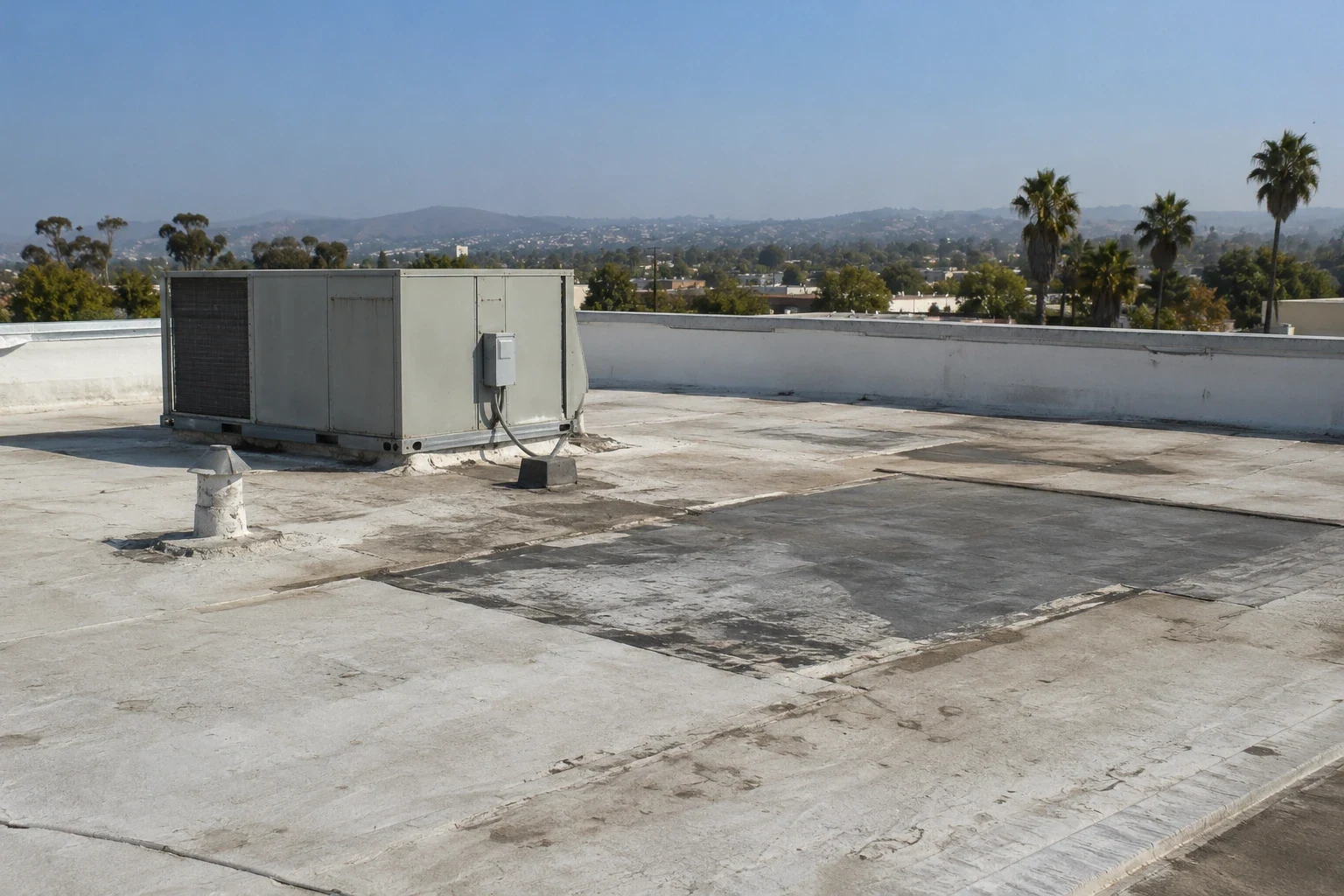
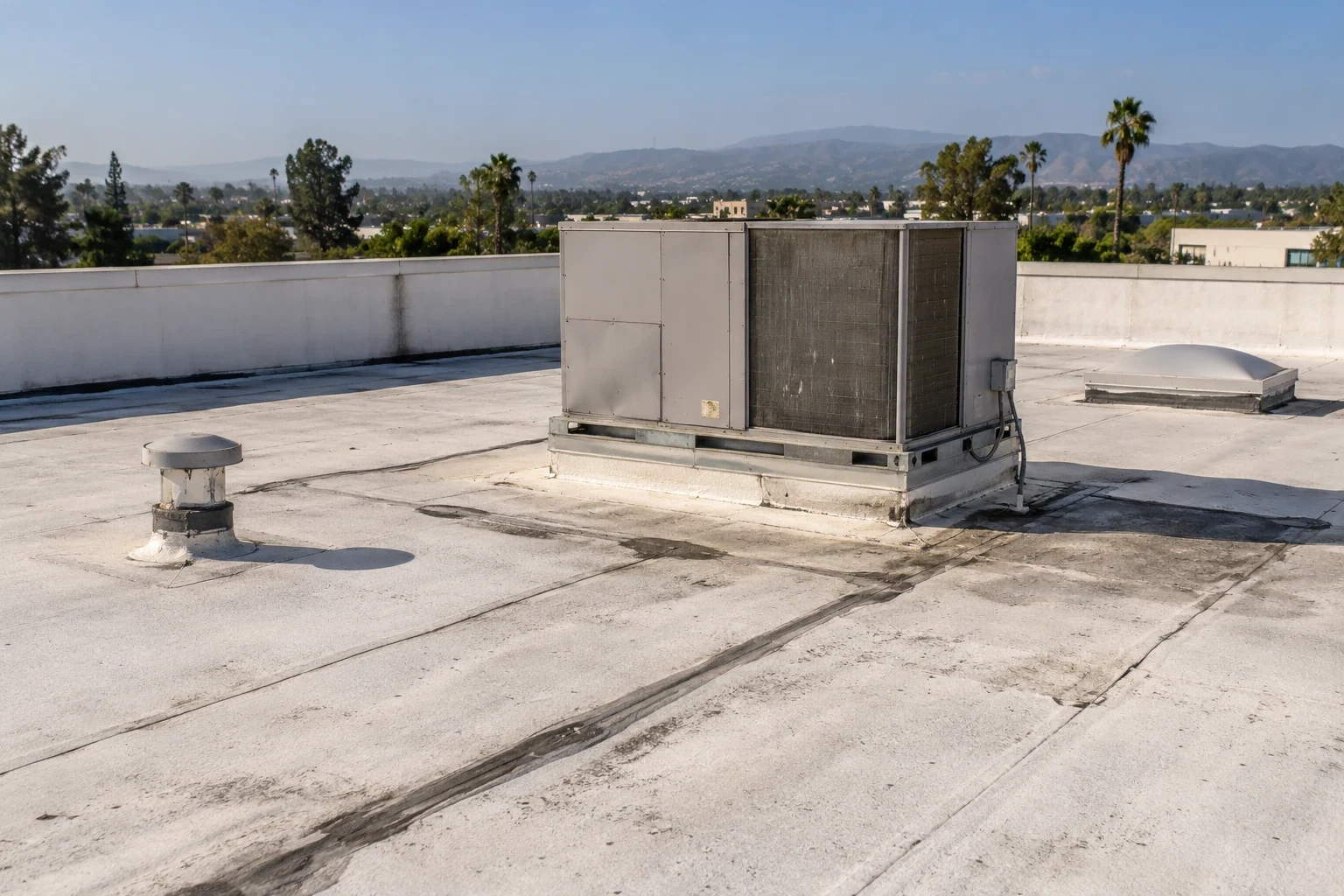
Drainage deserves attention even when the leak is several feet away. Leaves, packaging and sediment can slow an outlet; a low area can leave water against a seam or curb after rain. We inspect the path to drains and scuppers, look for debris or restricted flow, and record whether the surrounding membrane shows wear. Nearby Anaheim station normals pair an 88.8 F average August high with 47.2 days a year reaching at least 90 F; January precipitation averages 3.16 inches versus 0.01 in August. For a La Habra roof, we check exposed sealants and confirm that drainage paths can carry water before winter rain.
We check a shallow mark before calling it ponding. The report can distinguish a blocked outlet from a depression, and a drainage correction from membrane repair. If a drain body, clamp ring or flashing connection is involved, we show that detail and explain how it connects to the water path. Owners comparing work at La Habra and Brea properties can use the same record format while keeping each roof's measured conditions distinct. For broader drainage work, our drain and scupper repairs address the outlets and transitions that carry water off a commercial roof.
Keep the work area proportional
Retail and food operations add a planning question: what needs protection while we repair the roof? We review operating hours, receiving periods, sensitive interiors and access routes with the property contact. At La Habra Bakery, a repair near a production or storage area would call for a different protection discussion than one above a retail entrance. At a retail property, we confirm the customer route and protect it before opening the roof.
For a contained opening, a targeted patch may be appropriate when surrounding membrane and attachment remain sound. If the repair exposes wet insulation, deteriorated cover board or a failed seam extending beyond the first opening, the boundary may need to grow. A recover or replacement decision needs a broader layer review, including existing assemblies, drainage and penetrations. We compare these choices in writing instead of treating every stain as a replacement trigger. A roofing plan for an occupied building can sequence noisy or exposed work, but the schedule follows the actual condition and the owner's operating limits.
Make the repair limit inspectable
The proposal identifies the roof area, preparation, repair material, tie-in boundary and conditions that could change the scope after layers are opened. When an owner is comparing a repair with a more extensive project, the distinction should be concrete: what will be corrected now, what remains outside the repair, and what observation would trigger another visit. This keeps a patch from being mistaken for a whole-roof renewal.
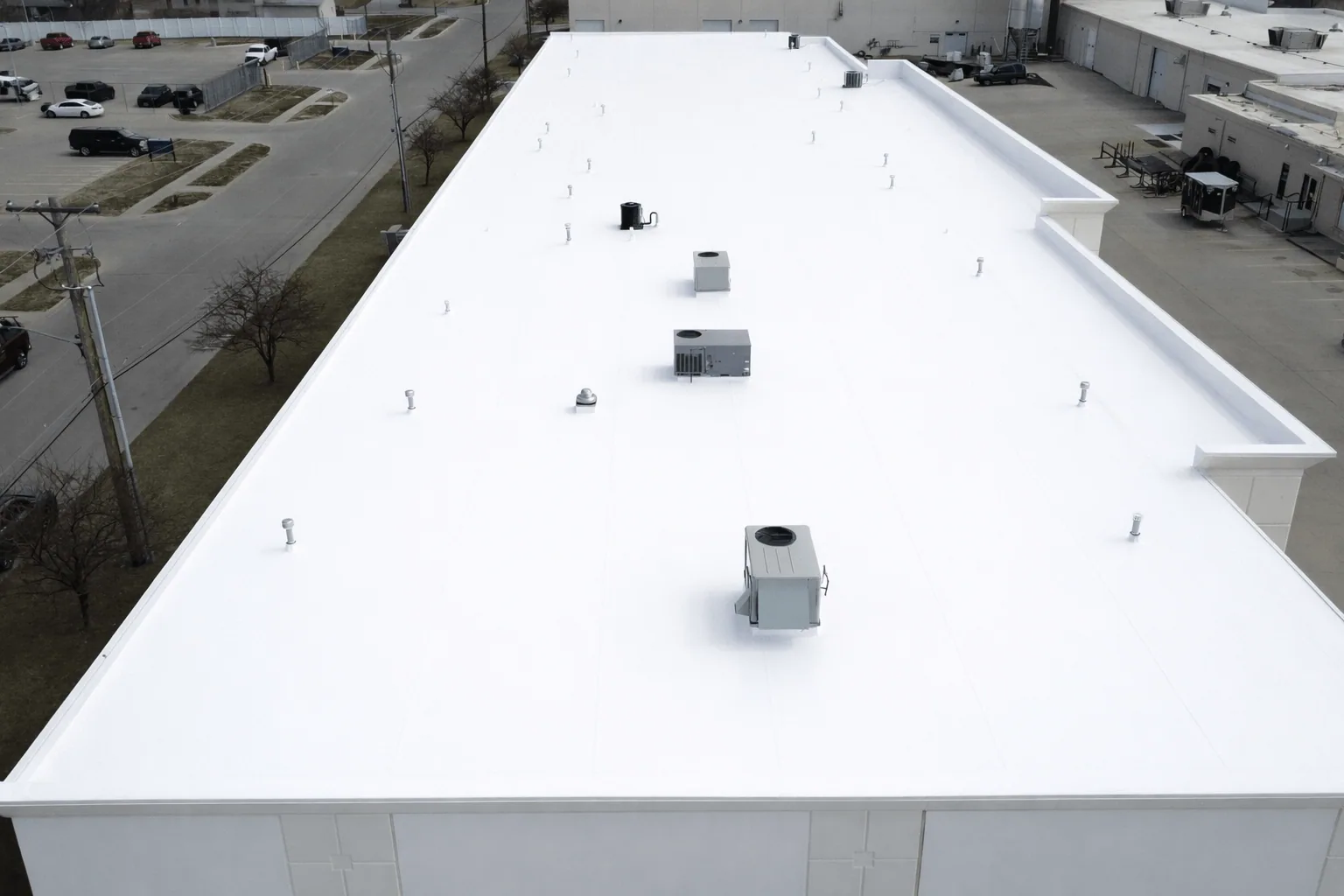
Material compatibility matters at a tie-in. We identify the existing membrane or metal where it can be confirmed and select a repair method that suits the system and substrate. A coating is not a substitute for fixing wet insulation or a loose edge; new membrane cannot compensate for a drain that remains obstructed. Where the assembly is not yet known, we say what must be exposed or tested before finalizing the material. Owners planning across La Habra and Orange can compare scopes without assuming their properties share the same roof history. A TPO roof assembly, for example, needs seams and penetrations checked as part of the repair rather than judged by surface appearance alone.
Leave a record the next manager can use
The closeout record connects the original finding to the completed work. We keep before-and-after photographs, record the repair location, identify materials when known and list any remaining item that was outside the approved scope. If a test or follow-up view is appropriate, we describe what was checked and what that observation can establish. The same record helps a new property manager distinguish a repaired opening from nearby roof conditions that were not part of the work.
For a portfolio with sites in La Habra, Brea and Orange, consistent labels make roof records easier to compare without flattening local differences. A useful file shows the condition, repair limit and next action in plain terms. If the visit uncovers several unrelated concerns, they stay separate so the owner can prioritize by water entry, safety, operational exposure and timing. Our roof condition reports can organize photographs and recommended work around those decisions. We can also assess roof sections before a planned capital project through a commercial roof survey, when the owner needs a wider view than a single leak repair.
Questions About La Habra
A stain appeared after the last rain, but the roof is dry now. Can you still find the entry point?
Yes. We use the interior stain as a reference, then check the roof area above it and the surfaces that can carry water sideways. Seams, penetrations, drains and transitions each leave different clues. If the evidence points to more than one possibility, the report separates confirmed openings from conditions that need a controlled test or observation.
Should we repair one leak or inspect the whole roof section?
The area and pattern decide the useful scope. A single isolated puncture with sound surrounding material may call for a focused repair. Multiple wet areas, recurring leaks or failing tie-ins can justify checking a wider roof section. We describe what supports each option so the owner can weigh immediate protection against the cost of opening more area.
Can a repair happen while a store or food operation remains open?
We can plan around active areas after confirming access, hours, deliveries and what sits below the work. Some repairs can be isolated; others need a temporary shutdown of a room, receiving lane or roof access point. The work plan states the protection and coordination needed before materials are removed.
What should the closeout include if a manager changes later?
Keep the original condition photographs, the marked repair location, materials used, the completed tie-in and any unresolved item together. We provide those details in a work record that lets a later manager understand the repair without relying on a verbal handoff.
Related Roofing Work
Put the roof finding in context
Tell us where water appeared, what the building needs to keep operating and what roof records are available. We will inspect the related detail, explain the repair boundary and set out the next step. Call 555-555-5555 or request a roof assessment.