
Commercial Roofing in Placentia, CA
A dark line below a roof edge can trace back to a loose termination, a backed-up drain, or a split where two materials meet. In Placentia, CA, we begin by checking the roof detail above the mark and documenting the condition that supports a repair. The Placentia-Santa Fe District sits in the city's southwestern downtown area, and the OC Bridges program includes grade-separated crossings at Placentia, Kraemer, Rose/Tustin and Lakeview. For commercial properties near downtown, we confirm the entrance, delivery route and roof access before setting the work sequence. Placentia-Yorba Linda Unified School District and UCI Health - Placentia are among the city's major employers. For occupied properties, the roof plan accounts for people and operating hours below. A commercial roof inspection gives the owner a record of visible conditions and the questions that need direct verification.
Check the edge detail
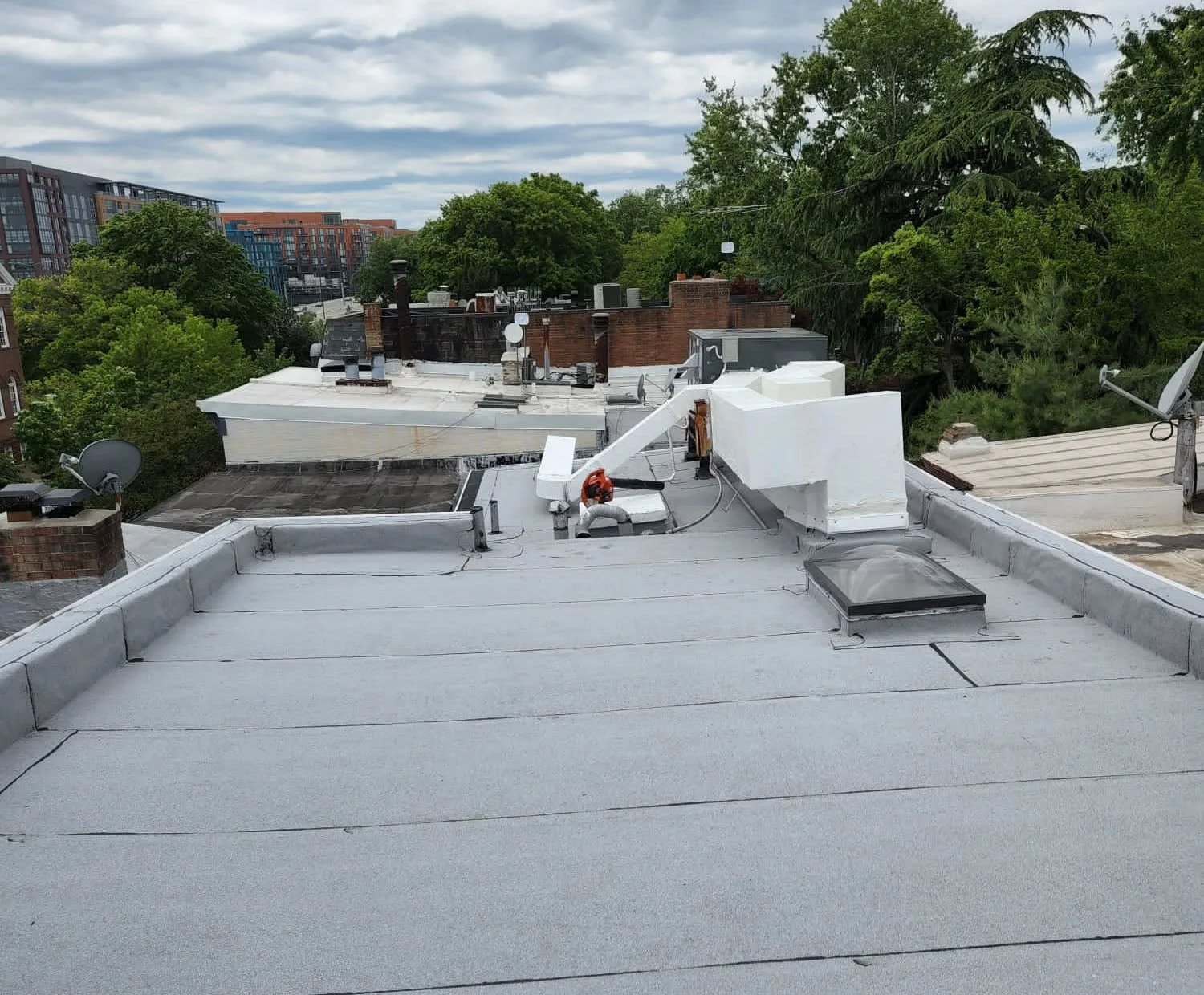
Water can enter at a parapet cap, coping joint, wall flashing, or termination bar even when the field membrane looks intact. We look for open laps, loose fasteners, split sealant, and metal that has moved away from its substrate. A stain near an exterior wall may come from an upper transition rather than the point directly overhead. We photograph each suspected entry, follow the water path where access allows, and check whether the flashing connects continuously to the roof membrane. A repair is only useful when its edge reaches sound material.
Before setting a repair boundary, we record the inspected roof zone, assembly and visible condition. Before a site walk, we confirm the actual building, roof access, and areas where interior inspection is possible. If water entry is active, leak repair starts with limiting exposure and tracing the opening, then moves to a permanent scope once the roof can be examined safely.
Confirm what lies below
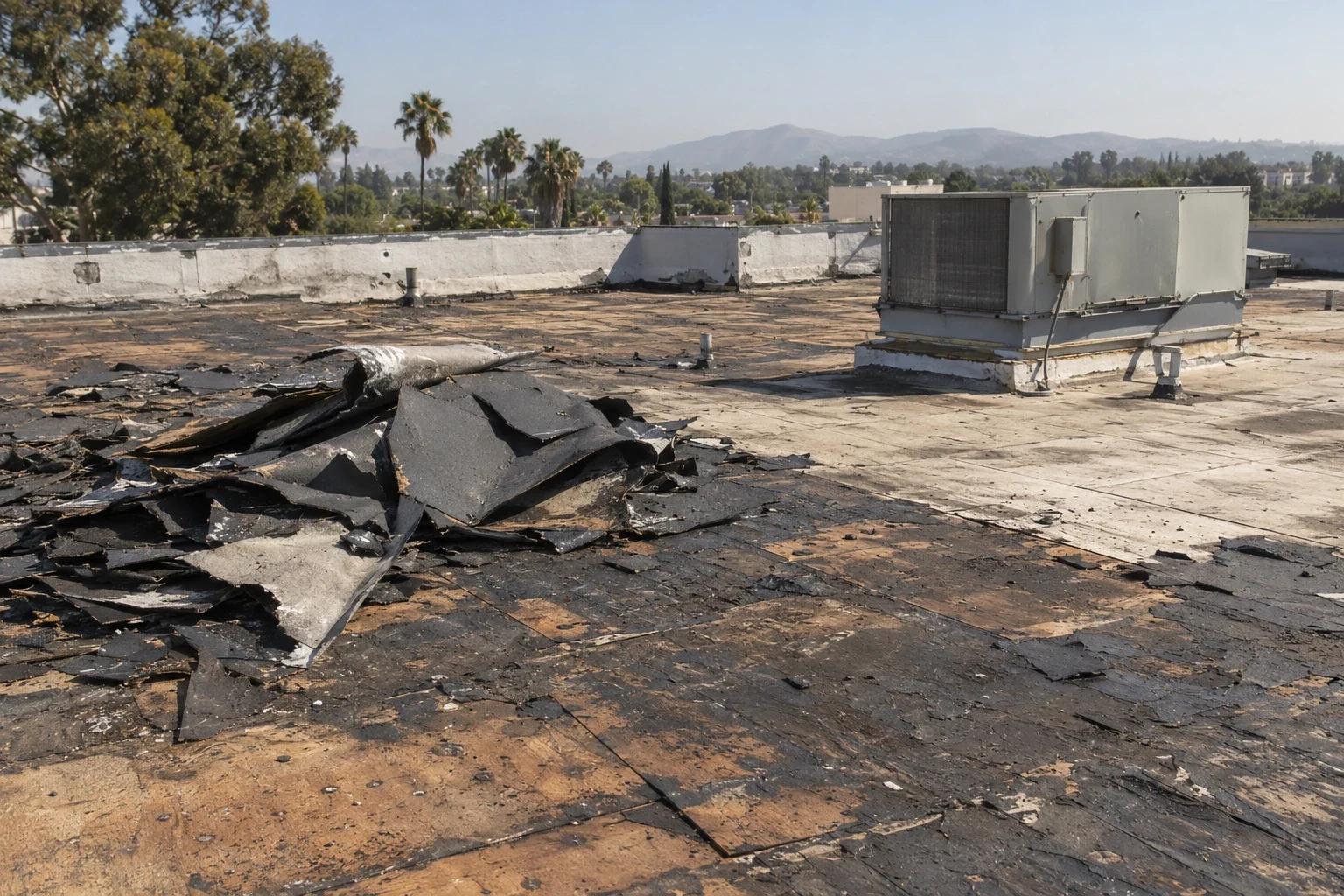
A membrane can hide wet insulation or a damaged deck. We compare soft spots, surface distortion, and leak history with the roof's construction before deciding whether to cut a test opening. The opening should answer a real scope question: is the insulation wet, is the deck intact, and how far does the affected material extend? We record dimensions and layers observed, then close the roof with compatible materials. Without that check, a broad removal area can be hard to justify, while a patch that stops too early can leave damaged material in place.
When the owner is managing an occupied medical, school, or mixed-use property, interior protection is part of the work. For a school or healthcare property, the building manager identifies current access and operating limits before roof work is scheduled. The property contact confirms operating hours and access needs before roof work begins. A condition report with photographs can show test areas, confirmed damage, and the boundaries of a recommended repair.
Compare repair and replacement
A localized repair can make sense when the defect is isolated and surrounding material remains suitable for tie-in. We identify the compatible repair method, the area that needs preparation, and the adjacent transitions that could still admit water. If the assembly has repeated seam separation, broad wet insulation, or a deteriorated deck, it may be more useful to compare repair with replacement than to extend a patch repeatedly. The decision should follow the layer condition, not just the visible stain.
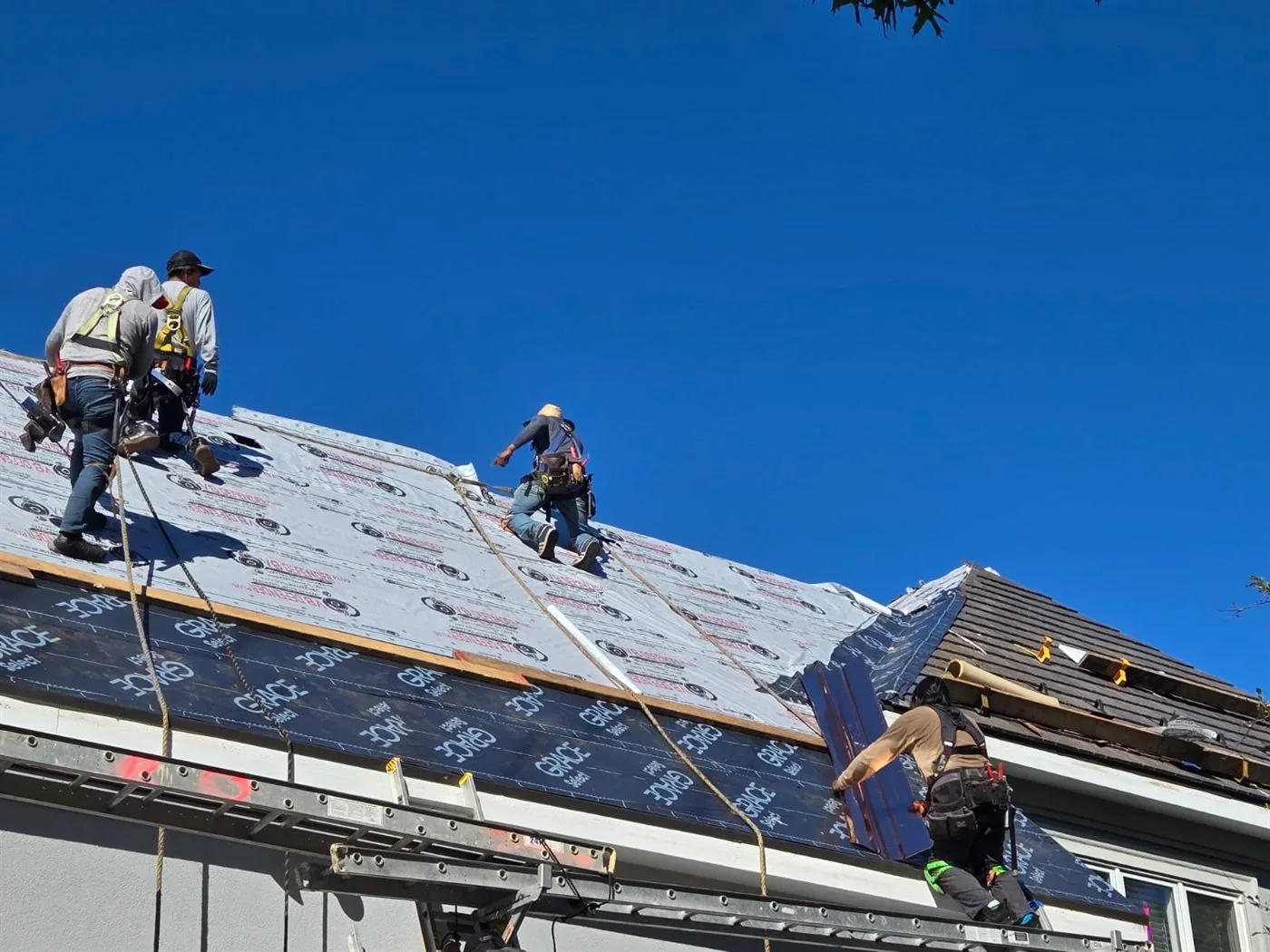
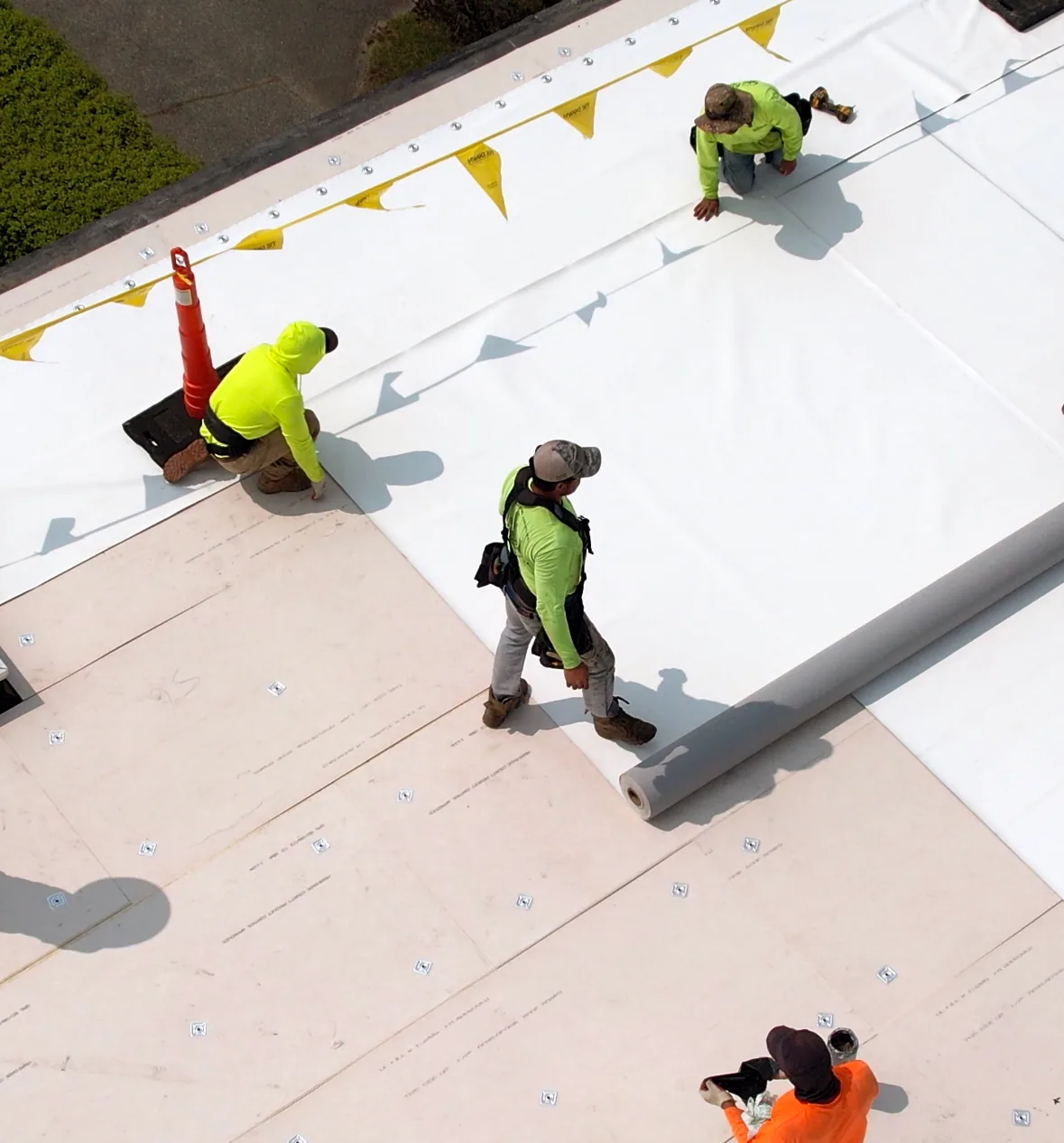
Replacement planning includes removal depth, disposal, edge and penetration details, drainage, access, and protection below. A recover is considered only after confirming the existing layers, structural limits, drainage geometry, and applicable code requirements. Before permitted work begins, we confirm the code and energy requirements that apply to the Placentia property. We check permitting needs for the property before finalizing design assumptions. Replacement planning can compare those scope drivers with the cost and disruption of a defined repair.
Keep drainage in the scope
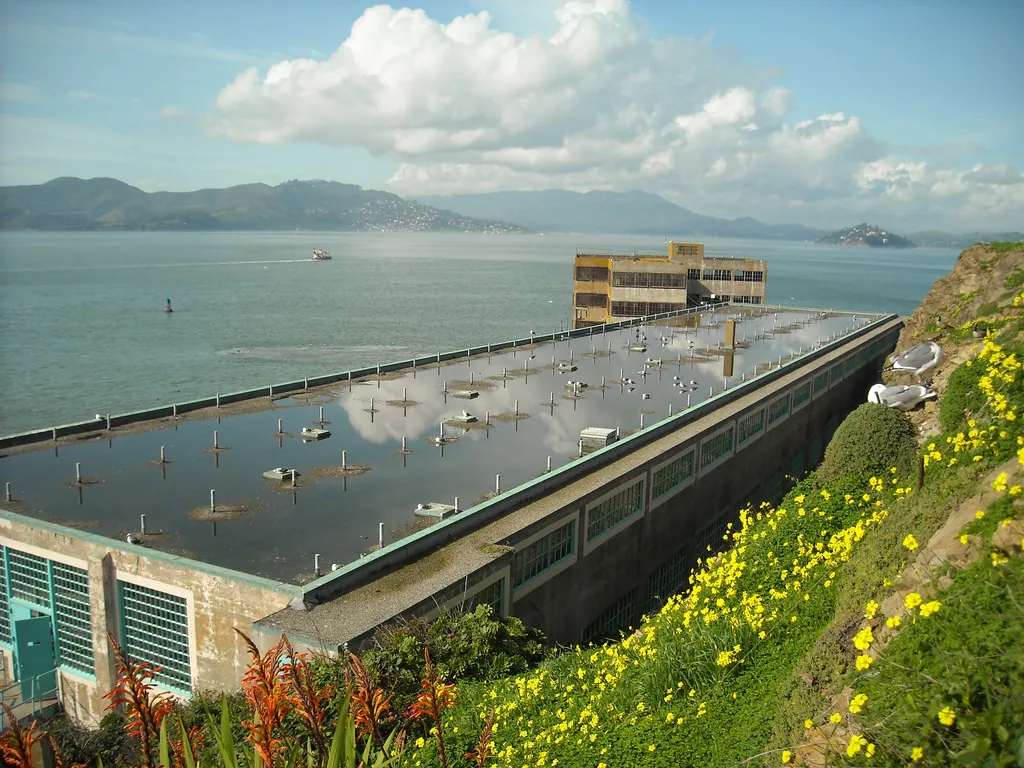
A roof drain can be clear at the strainer and still have a restriction below it. We check the bowl, clamping ring, surrounding membrane, and the path that carries water away from the roof. At scuppers, we look for debris, damaged metal, open seams, and staining below the discharge point. If the roof holds water after rain, we document where it remains and whether the surface is deflected or the outlet is restricted. Ponding alone does not identify the cause; the drain, structure, and roof layers need separate checks.
At the nearby Anaheim station, 1991-2020 precipitation normals are 3.16 inches in January and 0.01 inches in August. On the roof, we inspect slope, outlet condition and overflow path before recommending a drainage correction. Drain and scupper work can correct a documented restriction or failed detail. Regional Santa Ana winds can also displace edge components; after a reported event, we inspect metal and membrane attachment instead of attributing every leak to wind. Emergency response is available around the clock for active water entry.
Track what remains open
A strong closeout identifies the repaired area, the material used, and what inspection found beneath the surface. We include condition photographs, test-opening measurements when made, and a short description of any adjacent condition that remains outside the work. This lets an owner compare the repair with later observations and decide whether follow-up is needed. It also reduces ambiguity when a facilities contact changes or the next roof walk happens months later.
For roof work, we confirm the property's approach and loading area with its manager. For owners responsible for properties here or in Orange, clear property labels and roof-zone references keep photos tied to the correct building. Managers who also oversee Fullerton properties can compare repair records without blending separate roof findings. Preventive roof maintenance can revisit patched transitions, drains, and exposed edges. If conditions appear across several sections, we rank them by active water entry, confirmed wet materials, and repair urgency, then leave the owner with a practical sequence rather than a list without priorities.
Questions About Placentia
Will a leak near the Placentia-Santa Fe District need a full roof replacement?
A leak near the district can come from a local transition or a wider assembly problem. We inspect the specific building, trace the water path, and check whether damage is limited to one transition or extends into multiple layers. If the surrounding material supports a durable tie-in, a repair may be appropriate. Where moisture or deterioration is broader, we document that evidence before comparing replacement options.
Why would you open a roof that looks intact from above?
A test opening can verify whether insulation below a suspected leak is wet and whether the deck remains sound. We propose one when that answer could change the boundary or method of repair. The opening is measured, photographed, and closed with compatible materials. If surface checks already define the condition, no test cut is needed.
Can you inspect a roof while a school or medical building is operating?
We coordinate roof access and interior checks with the facility contact, then identify any rooms that need protection or times when noisy work should be avoided. Inspection can often be planned without interrupting normal use, but repair sequencing depends on the roof condition and access limits. We confirm those details before setting the scope.
What should a Placentia roof repair record include?
It should identify the roof zone, failed detail, materials repaired, and any layer condition found during the work. Before-and-after photographs help show the repair boundary. If another condition remains open, the record should state its location and recommended next step so it is not mistaken for completed work.
Related Roofing Work

Review a Placentia roof concern
Tell us which building and roof area are involved, what operations need protection, and whether water is still entering. We will inspect the assembly and explain the repair choices. Call 555-555-5555 or request a roof assessment.