
Cool Commercial Roof Installation in Orange, CA
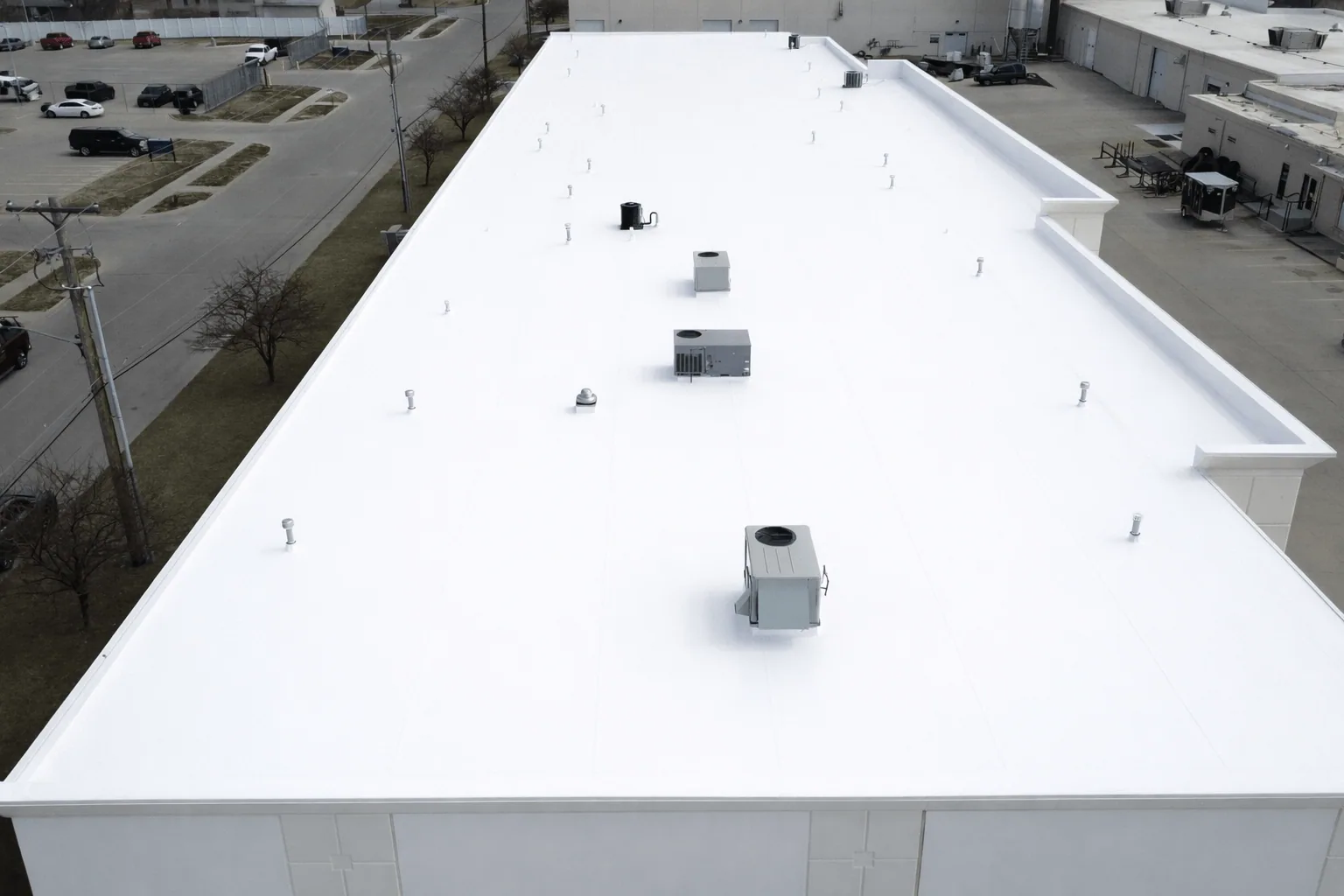
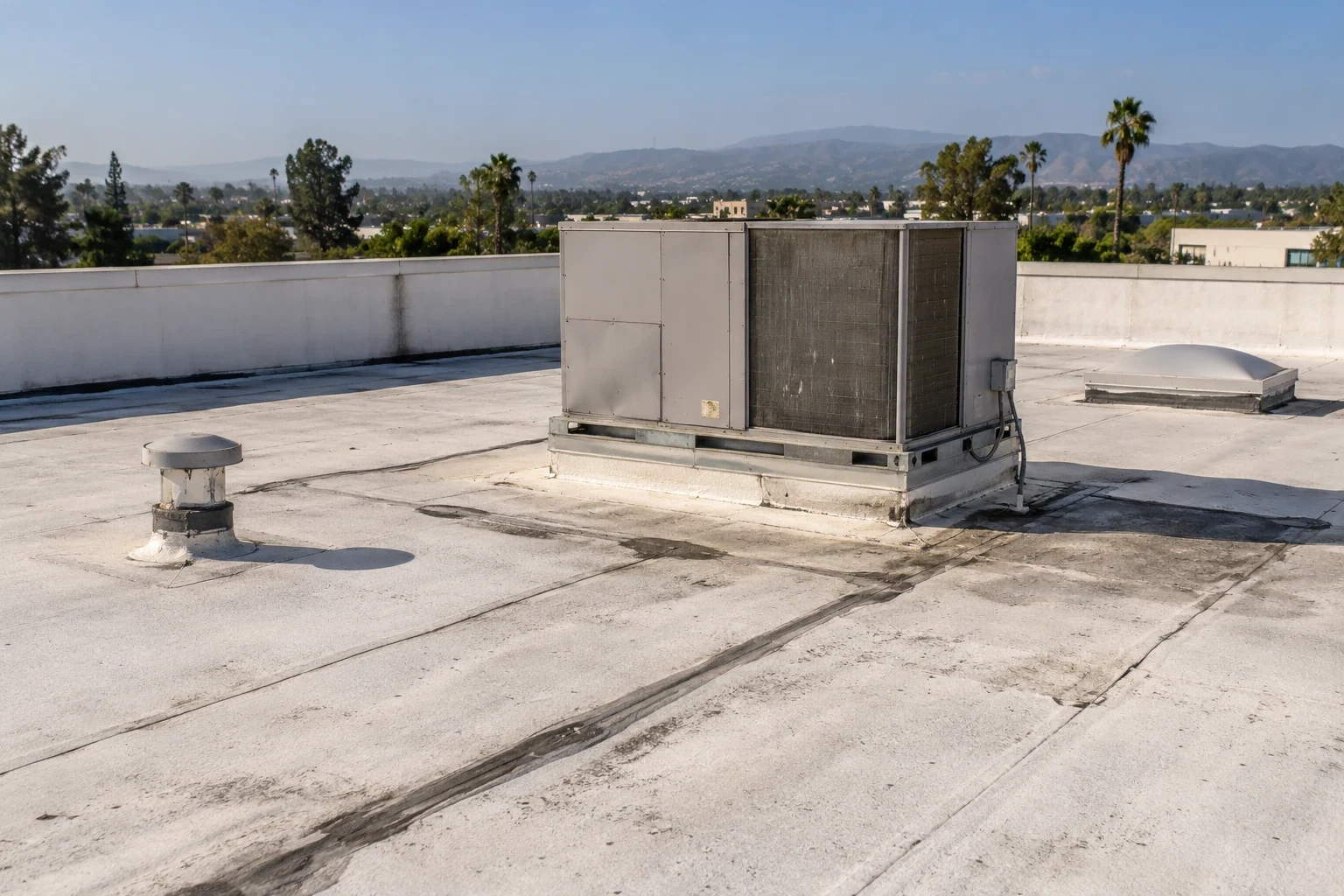
A faded membrane with failed patches needs its condition checked before a brighter surface is selected. We inspect the connections, underlying layers and drainage, then compare reflective roof assemblies that fit the building. Cool-roof installation in Orange, CA addresses solar exposure as part of a complete waterproof system. Commercial Roofers Orange explains the insulation, attachment and detail work needed beneath the selected surface. The owner can assess reflectance alongside repairability, service traffic and the physical correction of existing roof problems.
The nearby Anaheim station records 47.2 days annually reaching at least 90 degrees Fahrenheit in its 1991 to 2020 normals. That Anaheim heat context supports attention to exposed roof surfaces on Orange properties. Commercial and mixed-use activity along Katella Avenue and Main Street sits beside nearby industrial districts. A roof serving an operating industrial building also needs equipment access and protection below removal work. We examine those actual demands before recommending how a reflective assembly will be installed.
Reflectance belongs to the complete roof
A reflective surface reduces the solar energy absorbed at the roof compared with a less reflective surface under similar exposure. The building's thermal response also involves insulation, interior conditions and mechanical systems. We compare suitable surfaces with the retained layers and the thermal needs of the occupied building. The owner receives the material choice and supporting work that suit the inspected building, including the condition of layers intended to remain.
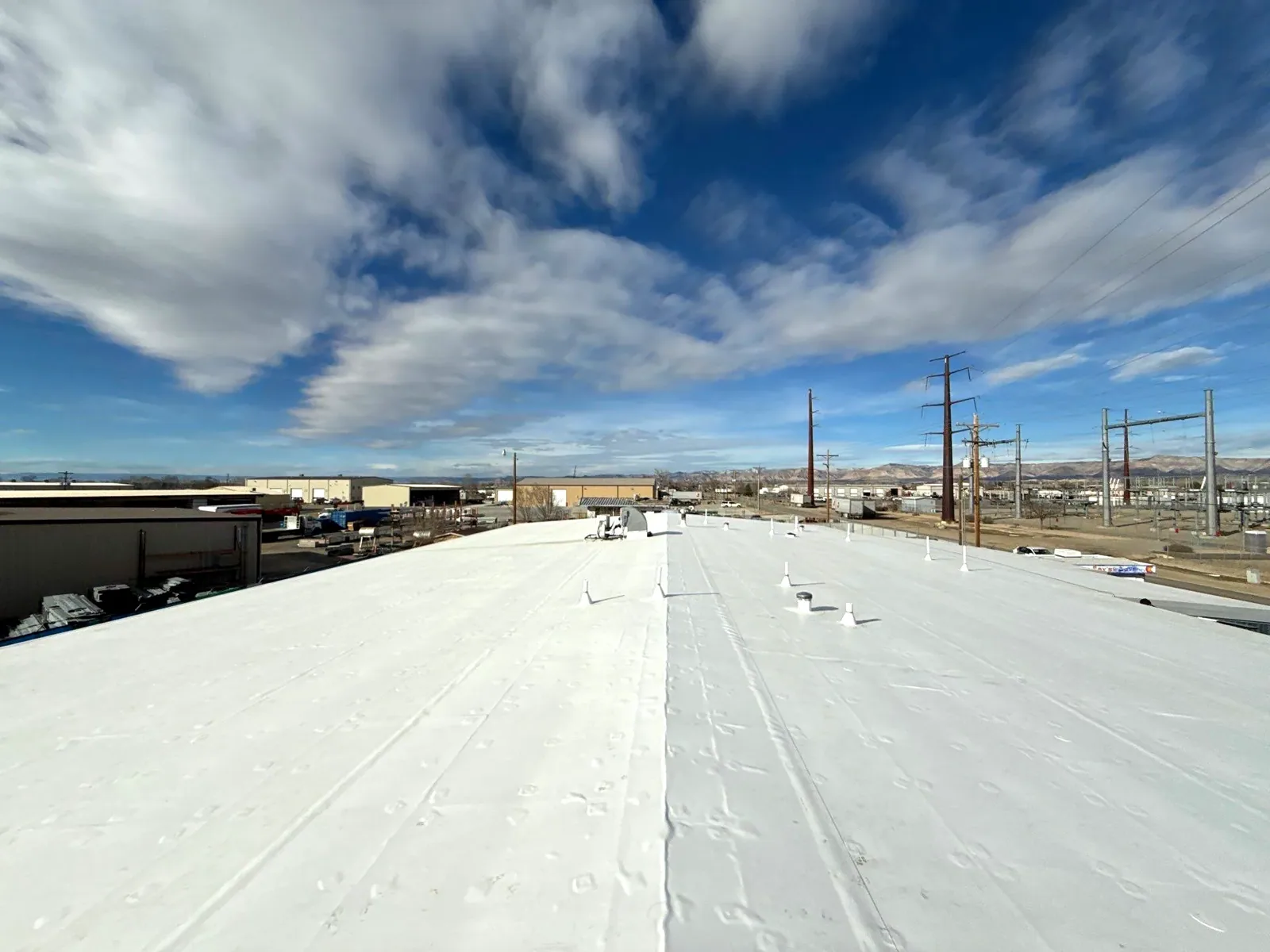
A reflective TPO membrane, a suitable PVC assembly or a coating restoration can provide different approaches. Seams, surface preparation and detail construction differ among them. We explain those differences in terms of installation and later repair. A surface selected for reflectance still needs reliable flashing, drainage and attachment. Its relationship to equipment, traffic and the retained roof determines whether the choice is useful on that particular property.
Existing failures need correction
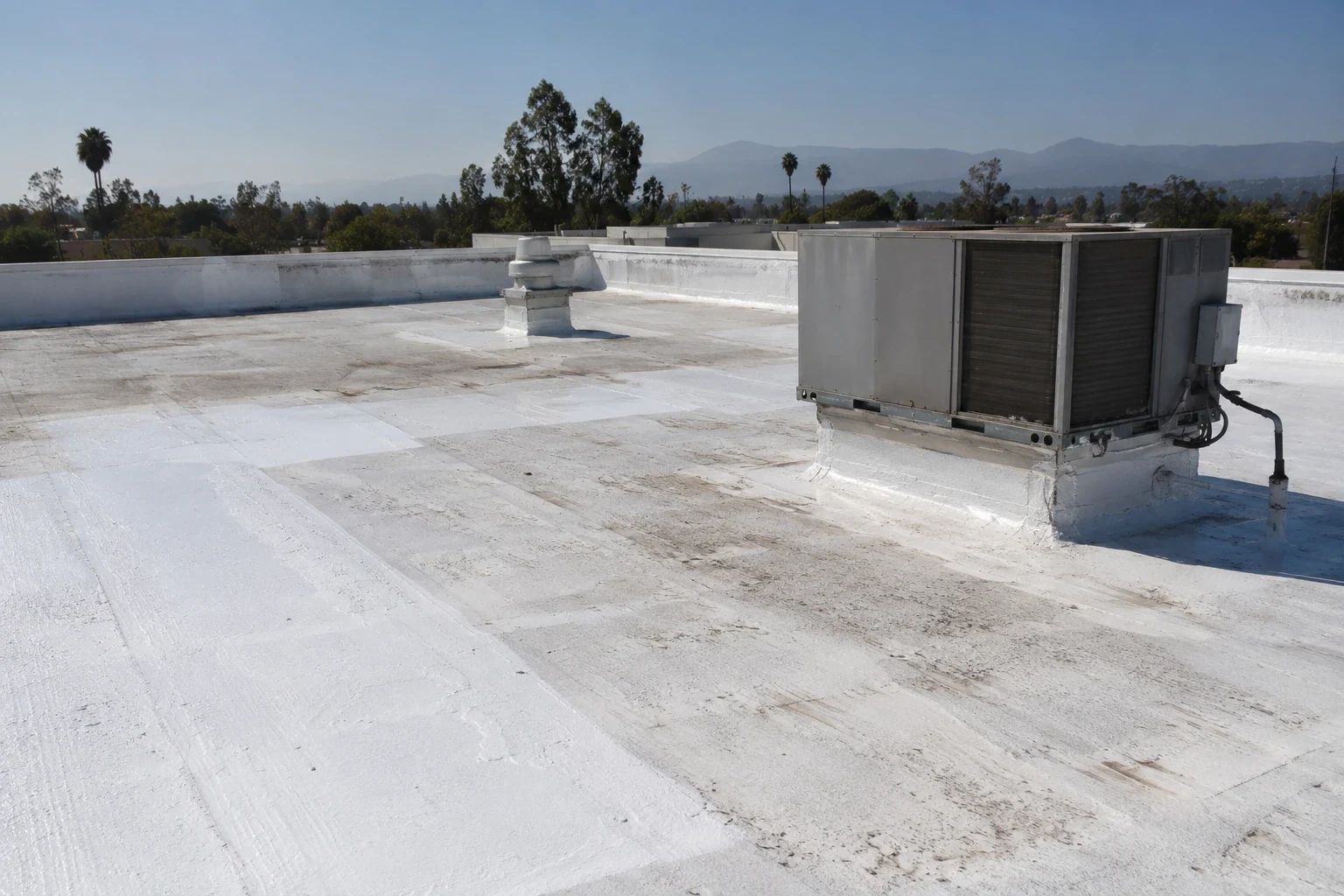
A loose seam or wet insulation area cannot be treated as merely a surface-color problem. We examine damage and selected concealed layers where they affect the proposed installation. A coating restoration on suitable material may preserve a sound roof, while a damaged assembly can require removal. The comparison identifies what each option leaves beneath the reflective surface and which repair tasks it includes.
Drain depressions, insufficient curb height and detached edge components need their own physical correction. We assess those details alongside the field roof. A new membrane over the same depression preserves its elevation; a thicker assembly can further reduce available flashing height. The owner can review the required changes at those locations before choosing a surface. That avoids completing an attractive field roof while its outlet or perimeter connection remains unsuitable.
Insulation changes the thermal assembly
A reflective membrane and an insulation layer perform different functions. We assess insulation and cover-board options with attachment, support and the installed roof design in view. Wet or crushed material needs evaluation before it is retained. The selected thickness also affects drains and curbs, so any height-related reconstruction is included in the work comparison rather than deferred until the membrane reaches the obstruction.
Orange's amended building provisions adopt the 2025 California Building Code. Energy requirements for applications submitted from January 1, 2026 are governed by California's 2025 standards. We review the requirements applying to the proposed work and connect them to the actual surface and insulation decisions. The owner receives a suitable assembly recommendation with the relevant detail alterations, rather than separate product choices that have not been considered together.
An air-conditioned interior beneath a sun-exposed roof has a different thermal relationship from an unconditioned storage area. We ask about the spaces below the work and any planned changes to their use. The assembly review can then address the intended operation, including the insulation and moisture-management design needed for it. A change in occupancy is worth discussing before the roof layers are selected and covered, while those decisions can still be coordinated.
Occupied areas shape the installation sequence
An open roof area above active work needs weather protection and a practical closure sequence. We plan removal, staging and installation according to the condition and operations encountered. Reroofing with operations continuing requires attention to intakes, sensitive rooms and access below the work. Odor, dust and material handling can affect where the crew begins and which areas need separation.
In Savi Ranch, offices, hotels, restaurants and retail share a commercial district across Yorba Linda and Anaheim. A property in that setting may need customer routes or service access protected while roof work proceeds. We establish the actual building use and restrictions with the owner. Suitable weather and surface conditions are also necessary for the selected installation method, including coating application or membrane adhesion where those methods are chosen.
Service traffic affects the surface
A roof path worn around equipment can expose the new surface to repeated contact after installation. We examine that route and propose protection suitable to the roof where needed. On an office building's roof, mechanical service activity can concentrate traffic near curbs and access landings. The finished assembly needs its service paths considered so routine equipment work does not immediately damage a repaired connection.
For an owner in Savi Ranch, restaurant exhaust or hotel equipment can also affect the roof surface locally. We examine the actual exposure and discuss cleaning and maintenance requirements for the selected material. Dirt and accumulated deposits can change appearance and surface behavior. Maintenance therefore includes outlet attention and appropriate surface care, with repairs performed using methods compatible with the installed system.
Installation checks reach the details
A completed reflective roof needs inspection at seams, terminations, drains and penetrations as well as the field surface. We use checks appropriate to the selected assembly and correct unsuitable connections while access is available. Condition views identify reconstructed details and retained transitions that the owner needs to monitor. The completion information explains the assembly and practical maintenance tasks, giving the owner a way to preserve both the waterproof connections and the selected surface.
Questions About Cool Commercial Roof Installation
Does choosing a bright membrane remove the need for insulation work?
Insulation condition and surface reflectance address separate parts of the roof. We examine the retained layers and applicable project requirements before recommending the assembly. Damaged insulation needs correction even where a reflective membrane is selected. The owner can compare those tasks together, including any curb or drain changes caused by the proposed insulation thickness.
Can a sound existing roof receive a reflective coating?
A suitable retained roof may support coating restoration after preparation and repairs. We examine bonding, moisture, drainage and detail condition before proposing it. Detached layers or unresolved openings can require a different approach. The recommendation explains the repairs and surface treatment included so the owner can compare restoration with a new membrane installation on the same physical basis.
What affects the thermal result on our building?
Interior use, insulation, mechanical systems and roof exposure all influence the building's response. We examine how the proposed surface and inspected layers interact with that building's exposure and interior operating needs. Where broader energy evaluation is needed, the appropriate building professional can review those interacting conditions alongside the roof assembly choice.
How should equipment service be handled after installation?
Service personnel need a suitable access route and awareness of vulnerable roof details. We identify protection needed near repeated traffic and show the completed curb or penetration repairs. Changes to equipment should be coordinated before the membrane is cut or altered. Compatible repair and appropriate surface cleaning help preserve the selected assembly as the building's service demands continue.
Related Roofing Work
Compare the reflective assembly
Describe the Orange building's roof condition, heat concerns and operating needs. We can inspect the layers and explain suitable cool-roof and detail choices. Call 555-555-5555 or request a roof assessment.