
Johns Manville Commercial Roofing in Orange, CA
A blister or raised lap can signal trapped moisture, poor adhesion or movement in the roof assembly. The visible shape does not tell us which layer failed. On a Johns Manville roof in Orange, CA, we start with the membrane family, seam type and roof records, then inspect the adjoining field and penetrations. Johns Manville lists TPO, PVC, EPDM and asphalt-based commercial roofing systems, so the repair method follows the material that is actually installed.
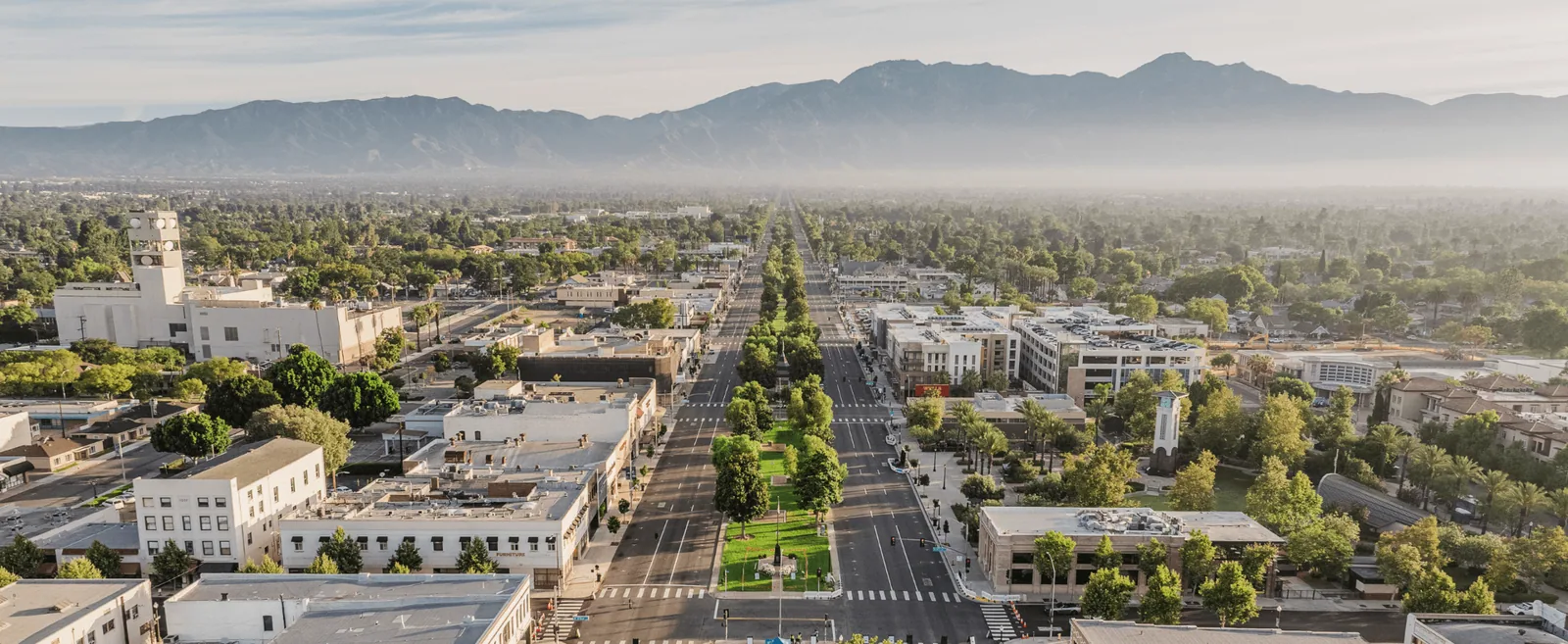
Orange has industrial manufacturing and light-industrial zoning; the Katella Avenue and Main Street area includes warehouse, general-industrial, restaurant and mixed-use activity. Those buildings can have different equipment loads and work windows, but the roof detail remains the basis for repair. We document what can be observed, test suspect areas where useful and explain how the selected scope controls water entry while protecting the building below.
Read the system as a group of layers
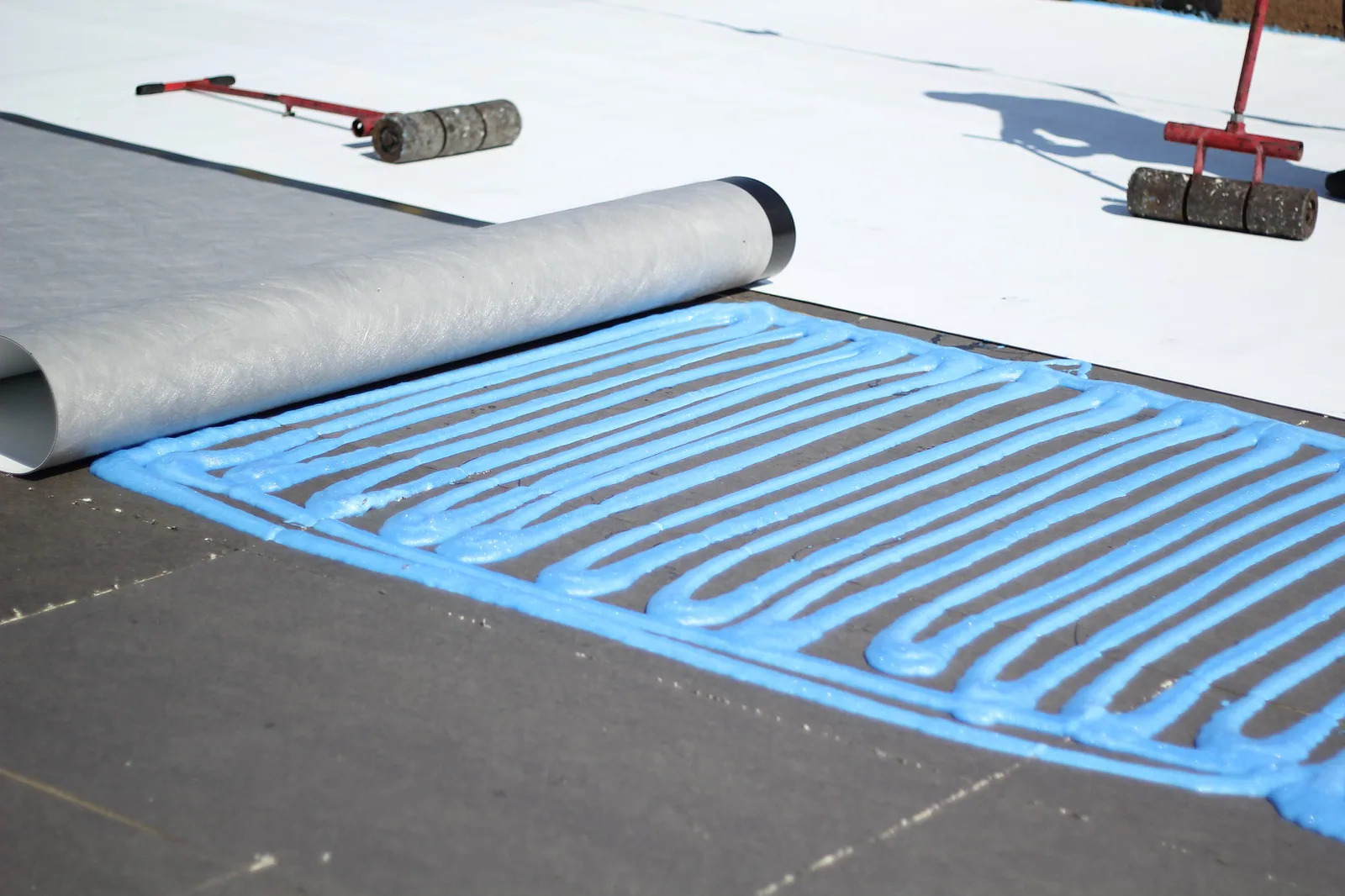
Johns Manville's commercial portfolio includes single-ply TPO, PVC and EPDM, plus SBS and APP modified bitumen, built-up roofing, insulation, cover boards and coatings. We identify the outer surface first, then look at attachment, cover board, insulation and deck where accessible. A single manufacturer name on an old project sheet does not prove that every later repair uses the original components.
The system layers work together. A membrane can be intact above insulation that has lost bond or taken on water; a coating may obscure the original roof without correcting the deck condition. We compare field observations with submittals, maintenance records and any visible product markings. A modified bitumen roof and an adhered single-ply membrane require different repair preparations, and a mixed assembly may need separate treatment at each transition. The report states which components are confirmed and which remain concealed.
Inspect the thermoplastic seams
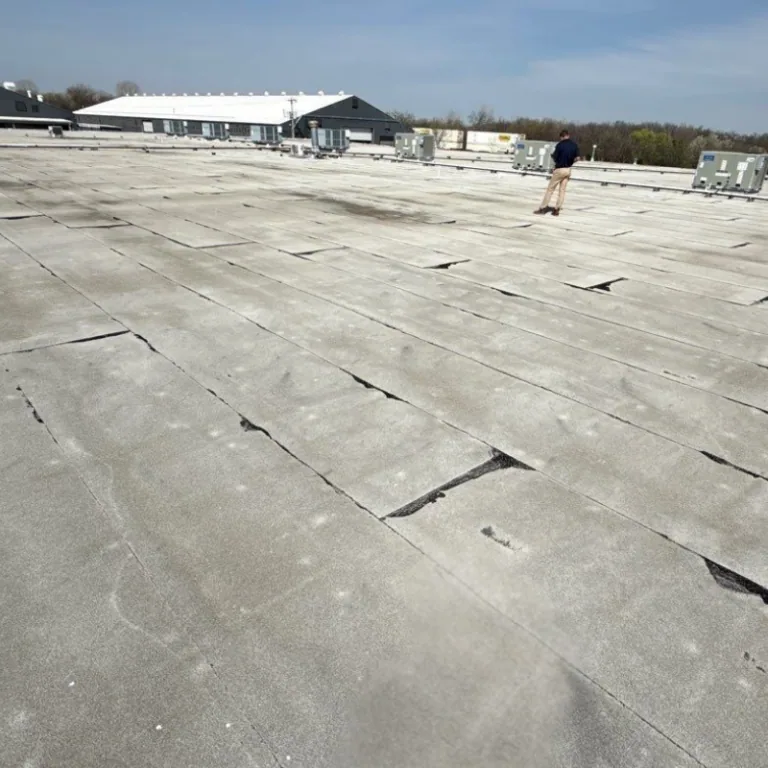
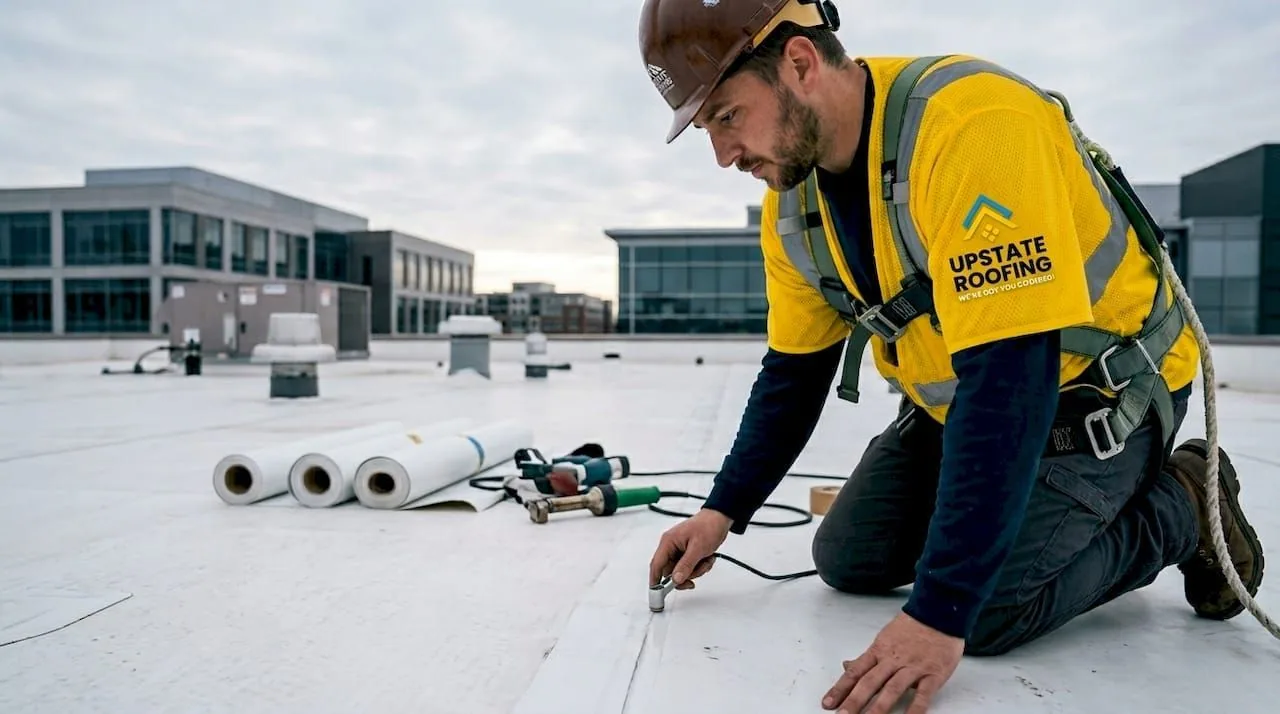
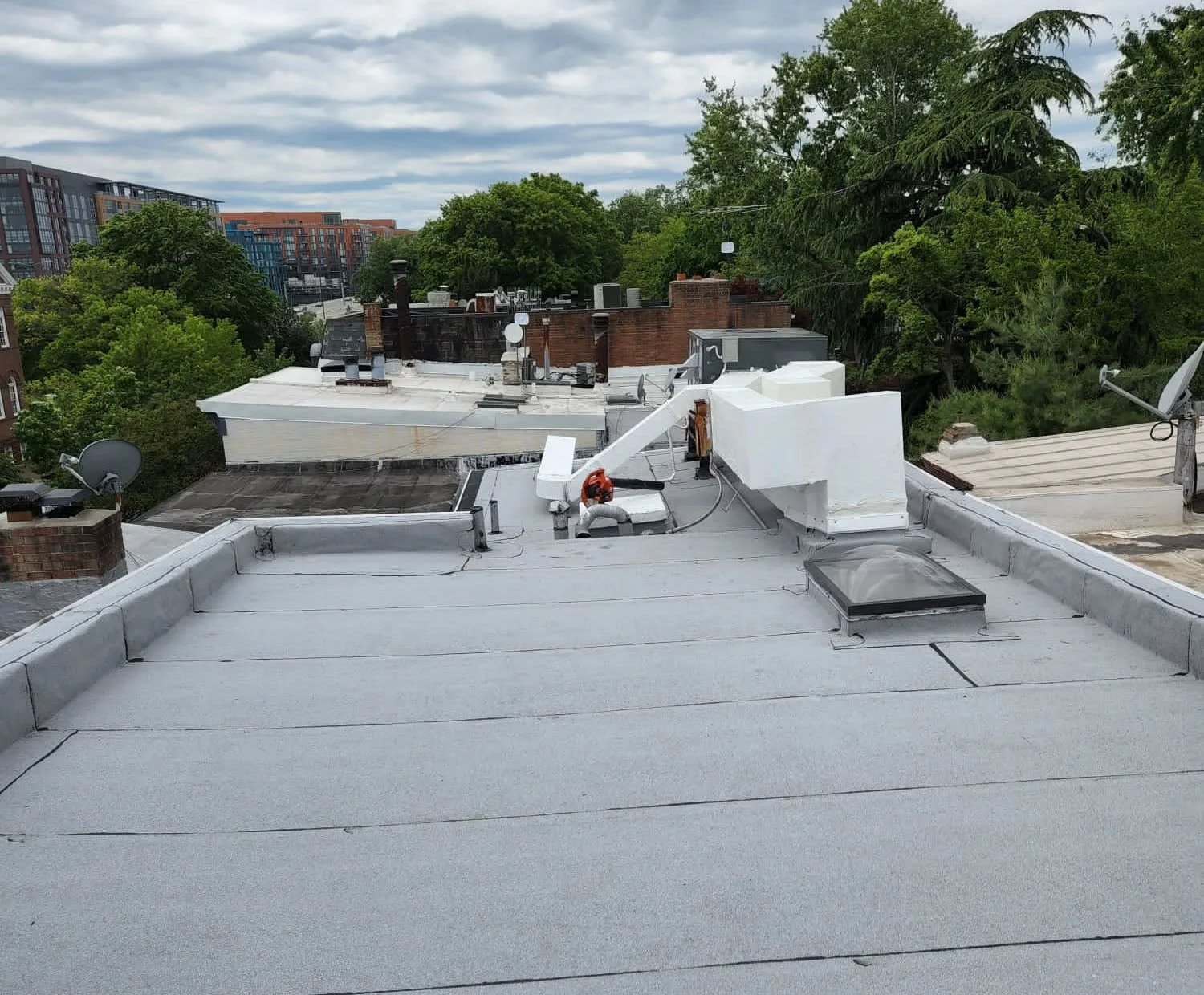
Johns Manville describes its TPO membrane as polyester-reinforced and formulated for ultraviolet resistance and flexibility during installation. Heat-welded seams join adjoining sheets, so a raised lap, fishmouth or contamination line deserves close inspection. We look at the weld width, edge bond and nearby flashing, then test whether the remaining material can accept a compatible repair. A seam that appears open in one spot may continue beneath a curb or walkway.
PVC is also thermoplastic, but it is not an interchangeable patch for TPO. If the membrane identity is uncertain, we compare the surface and repair history before selecting the welding material. Orange's summer heat makes safe timing and surface temperature relevant during field work, while Anaheim station normals provide only a nearby climate reference. The plan can include shade or a changed work window when needed. For comparison, owners can review Carlisle single-ply options and GAF TPO and PVC systems without assuming their materials are present on this roof.
Separate asphalt plies from surface coating
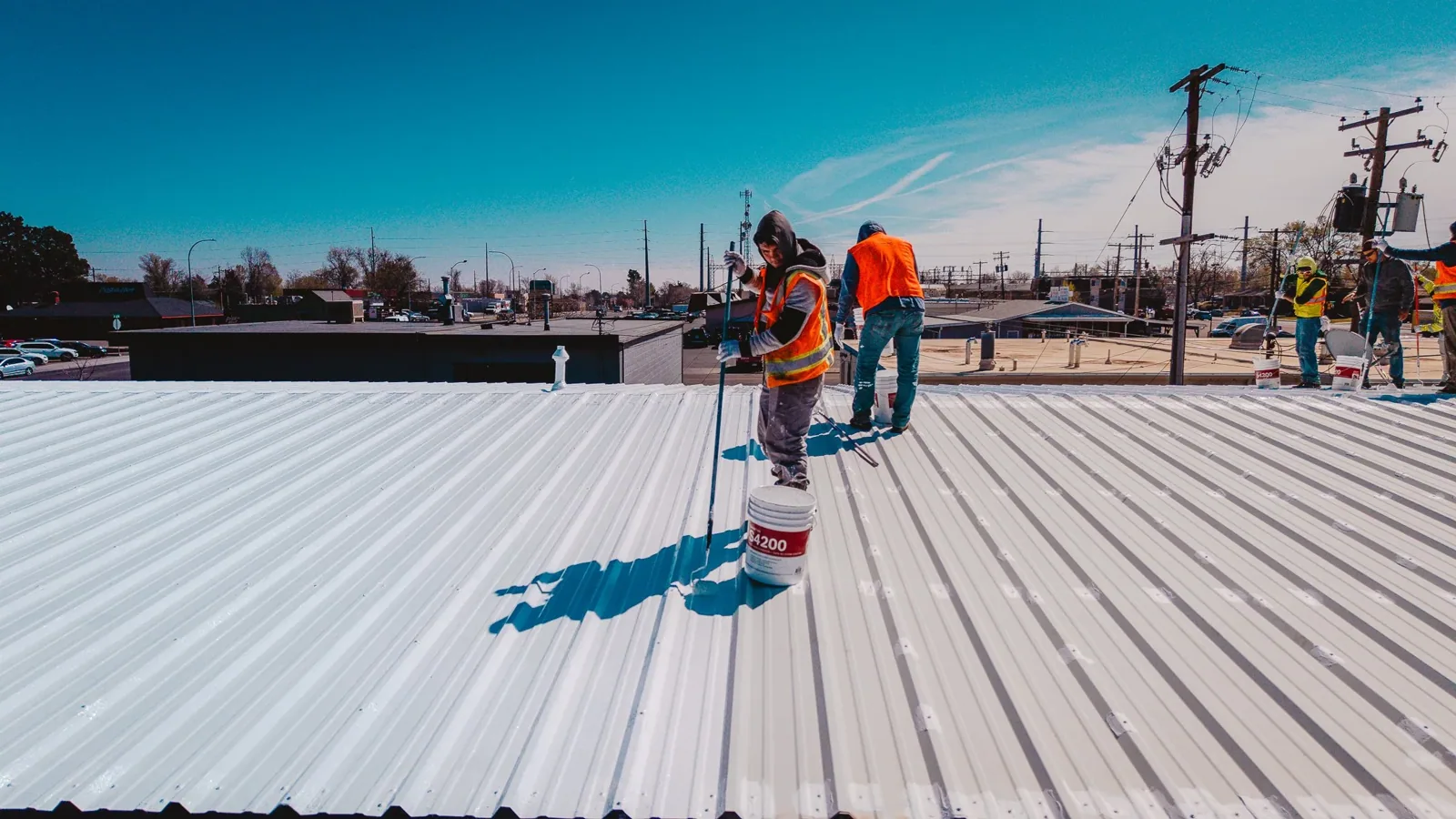
An asphalt-based roof may have several plies and cap-sheet layers, while a coating is a surface treatment over an existing assembly. We determine which construction is present before considering a coating or patch. Cracking, exposed reinforcement, open laps and loss of granules can mean different things depending on whether the membrane below remains intact. A coating cannot compensate for wet insulation or an unstable base layer.
For modified bitumen, repair planning includes adhesion between layers, flashing at walls and curbs, and the condition of the surface that will receive new material. We check whether the repair can tie into sound roofing without trapping moisture. If an acrylic or silicone coating is being considered, we first confirm substrate compatibility, existing coating condition and drainage. The review of acrylic roof coatings should start with those conditions, not with a coating color or a promised service life.
Map concealed moisture before expanding scope
A soft spot or recurring leak can extend beyond the visible stain. We use direct inspection, moisture readings and, when suitable, infrared or other survey methods to compare suspected wet zones with dry reference areas. A scan is not a substitute for opening the roof where confirmation is needed. We record the limits of the method and verify findings before recommending removal or a new roof layer.
Moisture mapping helps separate a small repair from a larger assembly problem. Water can move laterally along a deck or insulation joint, so the interior drip point may sit away from the entry. We connect the roof observations to the inside report, then mark test areas and sample results. A written roof condition report can show which readings support the scope and where a follow-up opening is recommended. That gives a property team a defensible basis for budgeting the next step.
Set an Orange work window
The Anaheim NOAA baseline gives 88.8 F for mean August daily high; days that reach at least 90 F total 47.2 in a normal year. For a roof in Orange, current conditions and the exposed components guide the work window. They point to practical questions about safe access, adhesive handling, membrane temperature and heat exposure for the crew. We choose the work window using current conditions and the approved material instructions.
Santa Ana winds are a regional weather pattern that can bring dry air through mountain passes and damage property. After reported wind movement, we inspect the perimeter and connected membrane before setting the repair boundary. We inspect exposed edge metal, terminations and rooftop attachments after a reported event, then compare the observed condition with unaffected sections. A wind damage inspection separates secure components from loose or displaced details and records any opening that requires immediate protection.
Match the scope to the failure pattern
A repair can suit an isolated puncture or a short failed lap when the material around it is sound. Repeated leaks at multiple transitions, wet insulation or widespread separation changes the discussion. We compare repair frequency, moisture results, deck condition, drainage and how the building uses the roof. The recommendation explains what can be fixed now, what should be monitored and what needs a broader capital decision.
Orange's building ordinance follows California's 2025 standards, built on the 2024 International Building Code with city amendments. The proposed roof scope and filing date set the permit and energy review. We identify the proposed roof work for the owner and design team to review. For a broader replacement assessment, our comparison records recover limits, insulation needs, drain corrections and the sequence that protects ongoing operations.
Keep the next inspection tied to this one
The work record should state the location, system components observed, repair material, preparation and completed detail. Photographs need a recognizable context and a close view of the seam, curb, edge or drain. We list areas that were blocked from view separately, so a later reviewer does not mistake a limited inspection for an all-clear across the entire roof.
Old Towne Orange combines dining and retail activity with historic structures. Where the property remains occupied, our sequence accounts for access, noise, debris handling and protection of interior finishes. We give the facilities contact an update when a concealed condition changes the work boundary. After the repair, a follow-up view can compare the same location with the earlier condition record and show whether the source of water entry has been addressed.
Questions About Johns Manville Commercial Roofing
Which Johns Manville membrane is easiest to identify?
No single clue is conclusive. We combine roof records, visible markings, seam construction and a physical inspection, then document the system elements that remain hidden beneath later repairs or coatings.
Can a JM coating go over any existing commercial roof?
The substrate must be compatible, stable and suitable for the coating selected. We inspect for moisture, loose material, contamination and drainage issues before discussing a coating as part of a repair or restoration scope.
Why does a roof scan not settle the repair scope by itself?
Survey methods identify patterns that need interpretation. We compare readings with roof conditions and confirm suspect areas directly when necessary, then state the method limits and any recommended test opening.
What changes the choice between patching and replacing?
The decision follows the failure pattern, moisture, layer condition, drainage, repair history and building schedule. We explain which findings support a localized fix and which point to a larger project.
Related Roofing Work
Review the Johns Manville roof
Send the Orange property roof records, leak locations and access constraints. We will inspect the assembly, document the findings and explain practical repair and replacement options. Call 555-555-5555 or request a roof assessment.