
Commercial Roofing in Buena Park, CA
A wrinkle that ends at a roof drain can be a sign that the membrane has shifted or water is collecting against a detail. In Buena Park, CA, we inspect the surrounding surface, the outlet, and the material layers before deciding how to repair it. Buena Park's 2021 employers included Knott's Berry Farm, Yamaha, PepsiCo and Exemplis Manufacturing, spanning visitor and production uses. The Source OC combines shopping, restaurants, and a theater. The mix includes visitor and production settings, but roof systems vary from property to property. We inspect the building itself and coordinate access with its manager. A commercial roof inspection connects visible conditions with the details that control drainage and water entry.
Inspect the surface around the outlet
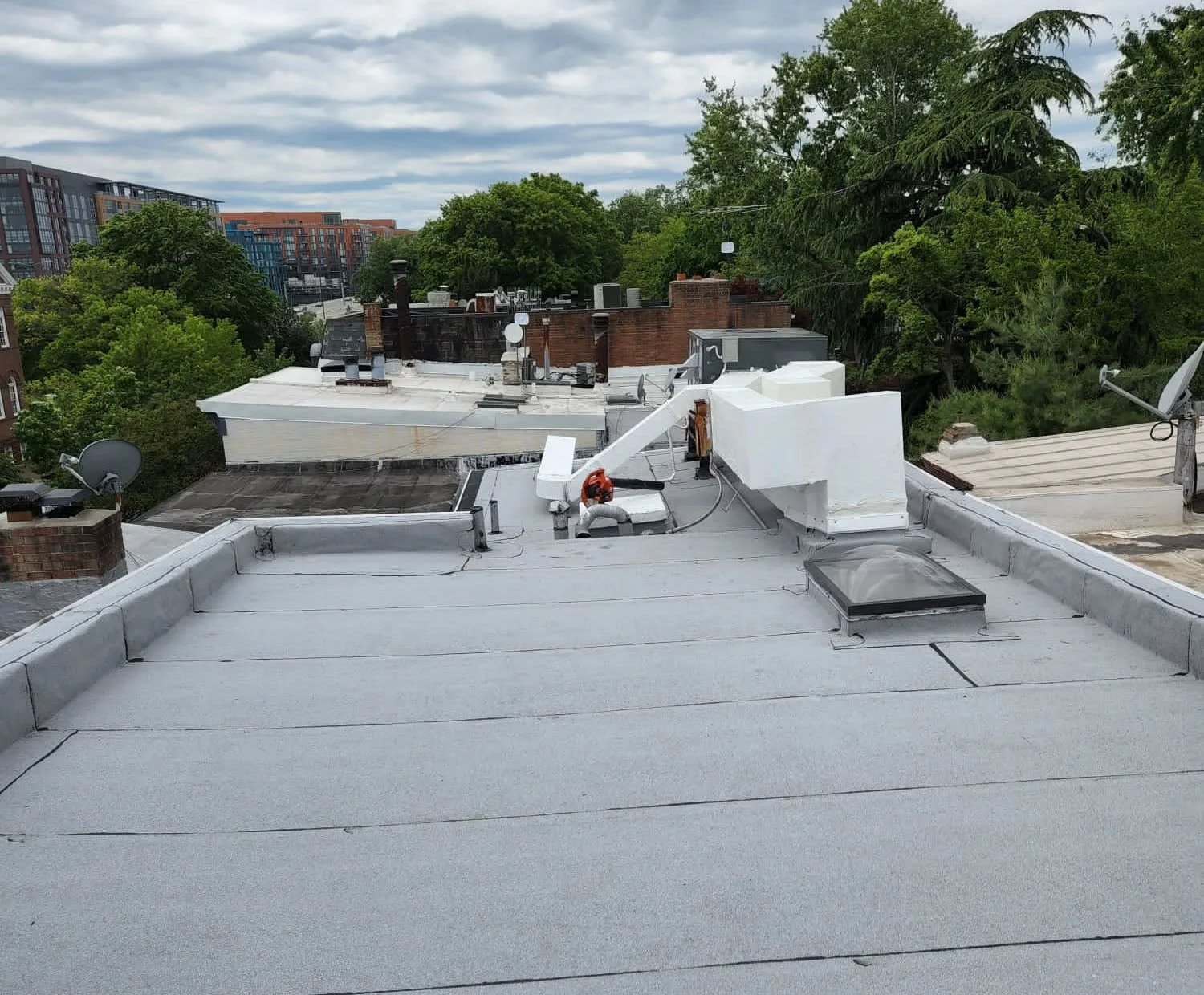
We check the drain strainer, bowl, clamping ring, membrane, and slope leading to the outlet. A clear strainer does not rule out a restriction below it, and a low area can hold water even when the drain is open. At nearby seams, we look for separation or movement that may have occurred as water remained on the surface. If a scupper handles overflow, we inspect the metal lining and the wall transition. The repair should correct the restriction or opening that inspection identifies.
The Source OC brings shopping, restaurants and a theater to Buena Park's visitor-facing commercial mix. A production floor, dining area, or public entrance can create different protection needs beneath a roof repair. We confirm the occupied areas and access route with each property manager before placing material or opening the assembly. Roof access, staging, and any interruption below are planned before the crew begins. If water has entered a room, commercial leak repair can limit exposure while we establish the roof path and the permanent scope.
Follow the water path above
A ceiling mark below a drain may begin at a seam, curb, or edge several feet away. We compare the interior report with the roof section above it, then inspect transitions where the water plane changes. At a unit curb, each corner and the membrane termination need attention. At a parapet, coping joints and wall flashing direct water away from the assembly. We note the defect and the nearby material that remains sound so the proposed tie-in is visible and supported.
At a shopping, dining, or theater property, the site contact identifies the rooftop equipment and sensitive rooms below. We check each curb and service path during inspection. For occupied buildings, a defined work zone helps protect entrances and keep materials clear of customers and staff. When an opening remains uncertain, we use a measured test or another direct check if it could change the removal boundary. The repair should address the actual penetration or seam rather than seal a nearby surface without tracing the entry.
Verify concealed roof layers
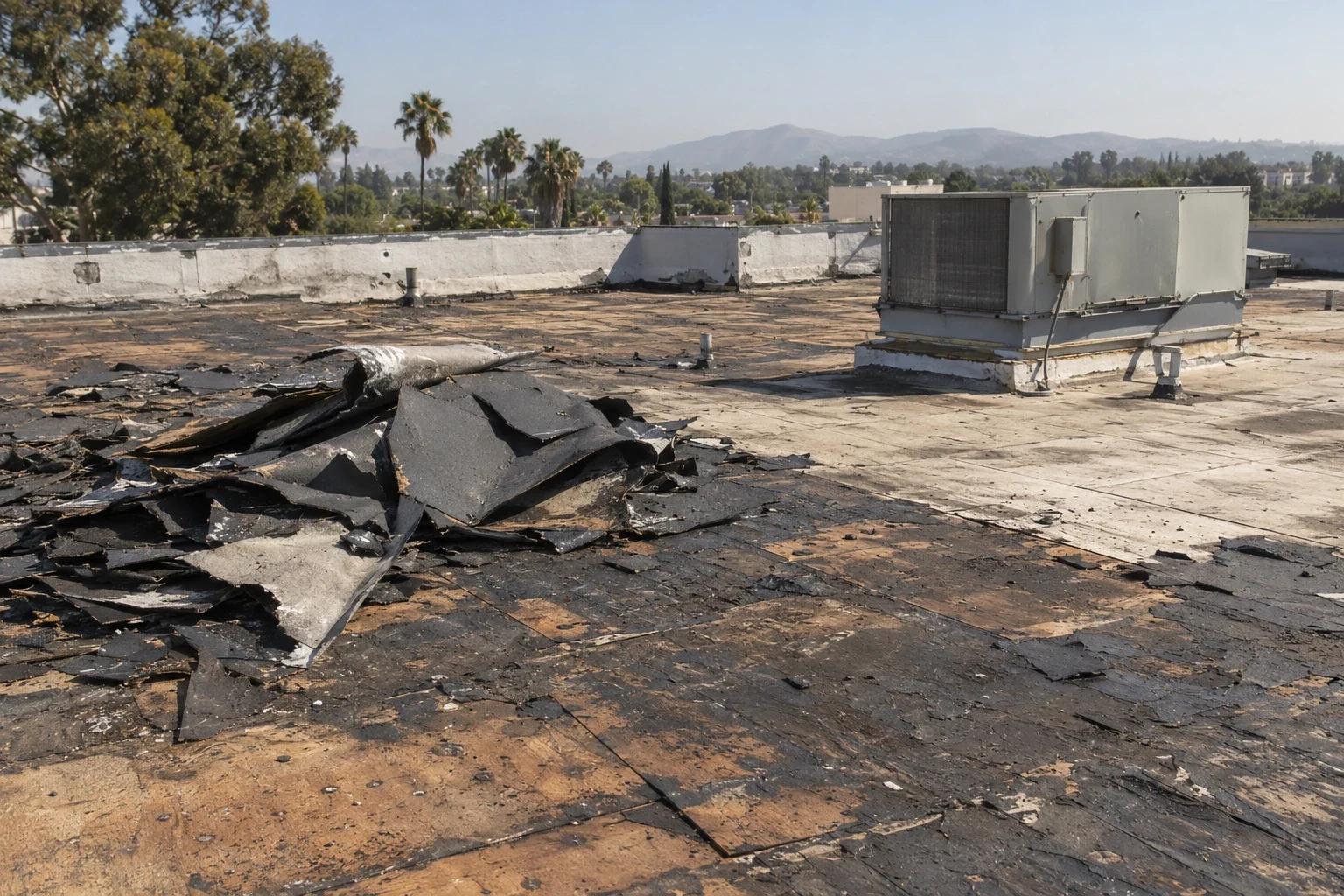
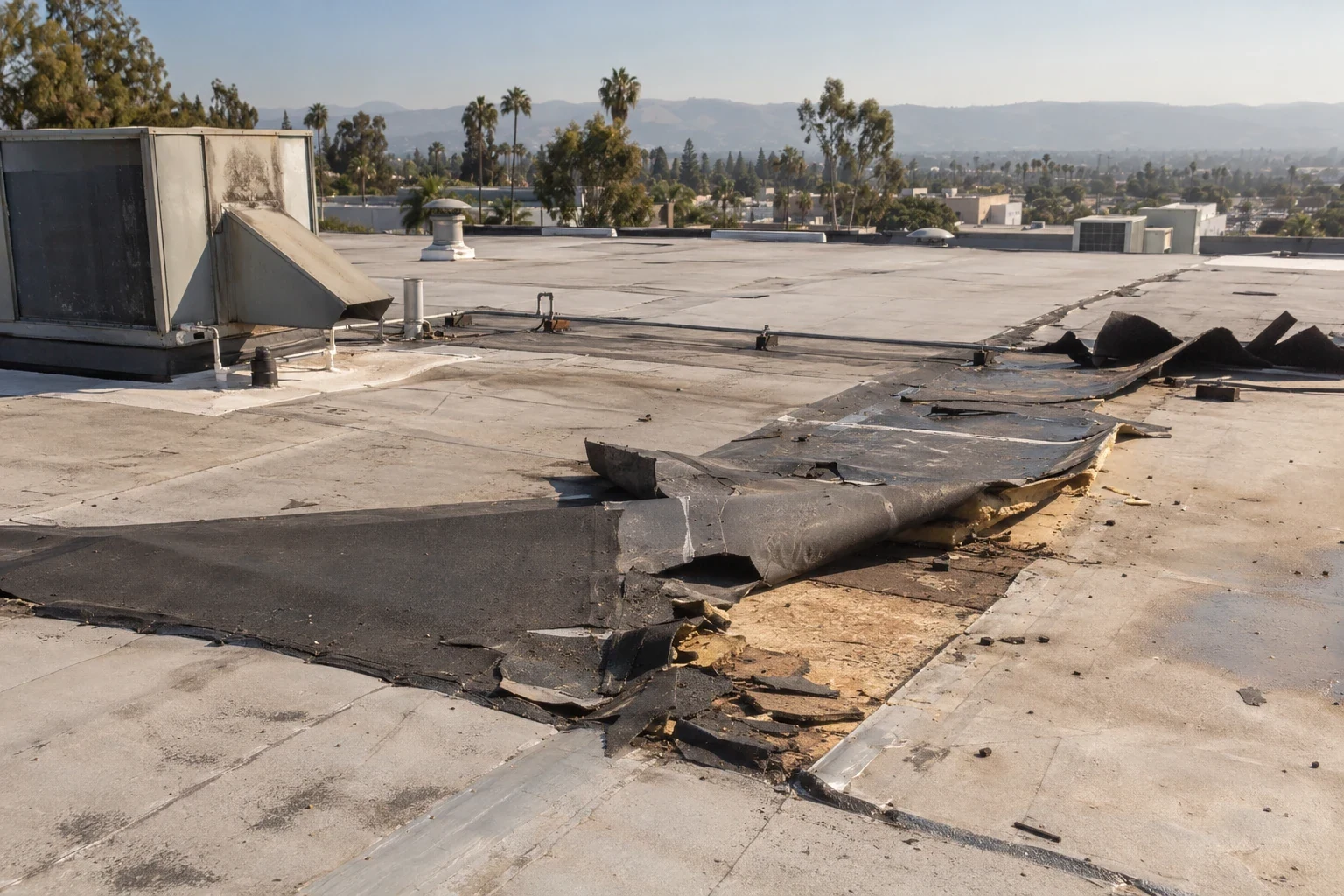
Softness, blistering, and a recurring interior leak can justify opening a small area to inspect what lies below the membrane. We select the point where that information would change the work, measure the opening, and record the material layers and moisture condition. A dry, stable substrate may allow a localized repair. Wet insulation, a deteriorated deck, or multiple roof layers can widen the scope. We photograph what the opening exposes and close it with a compatible assembly detail.
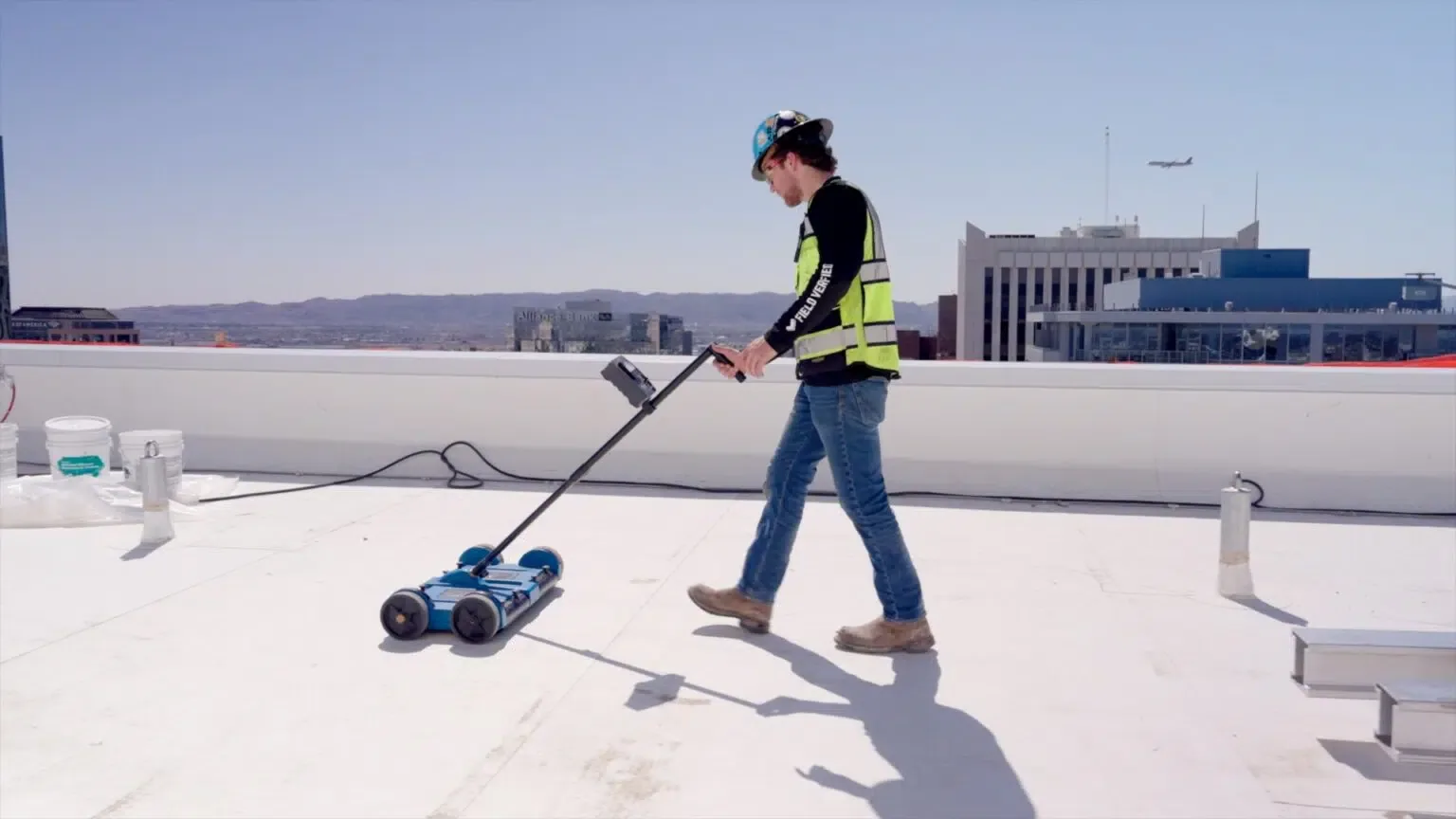
Moisture screening may help prioritize areas when a large roof has several reports or unclear leak paths. An infrared pattern is interpreted alongside roof construction, surface conditions, and recent weather. It is not a substitute for a physical check when removal limits depend on moisture. An infrared moisture survey can identify candidate test locations and preserve the distinction between a suspected area and one verified by opening the roof. That record gives an owner a basis for comparing the proposed repair with the condition actually found.
Choose the scope that fits the evidence
A local repair may fit one open seam or failed penetration surrounded by sound material. We describe how the area will be prepared, what compatible material will be installed, and how the repair ties back into the existing roof. Repeated failures, broad moisture, or a deck that cannot support patching call for a larger comparison. We base the decision on observed damage and roof layers, not a general assumption about how busy the property may be.
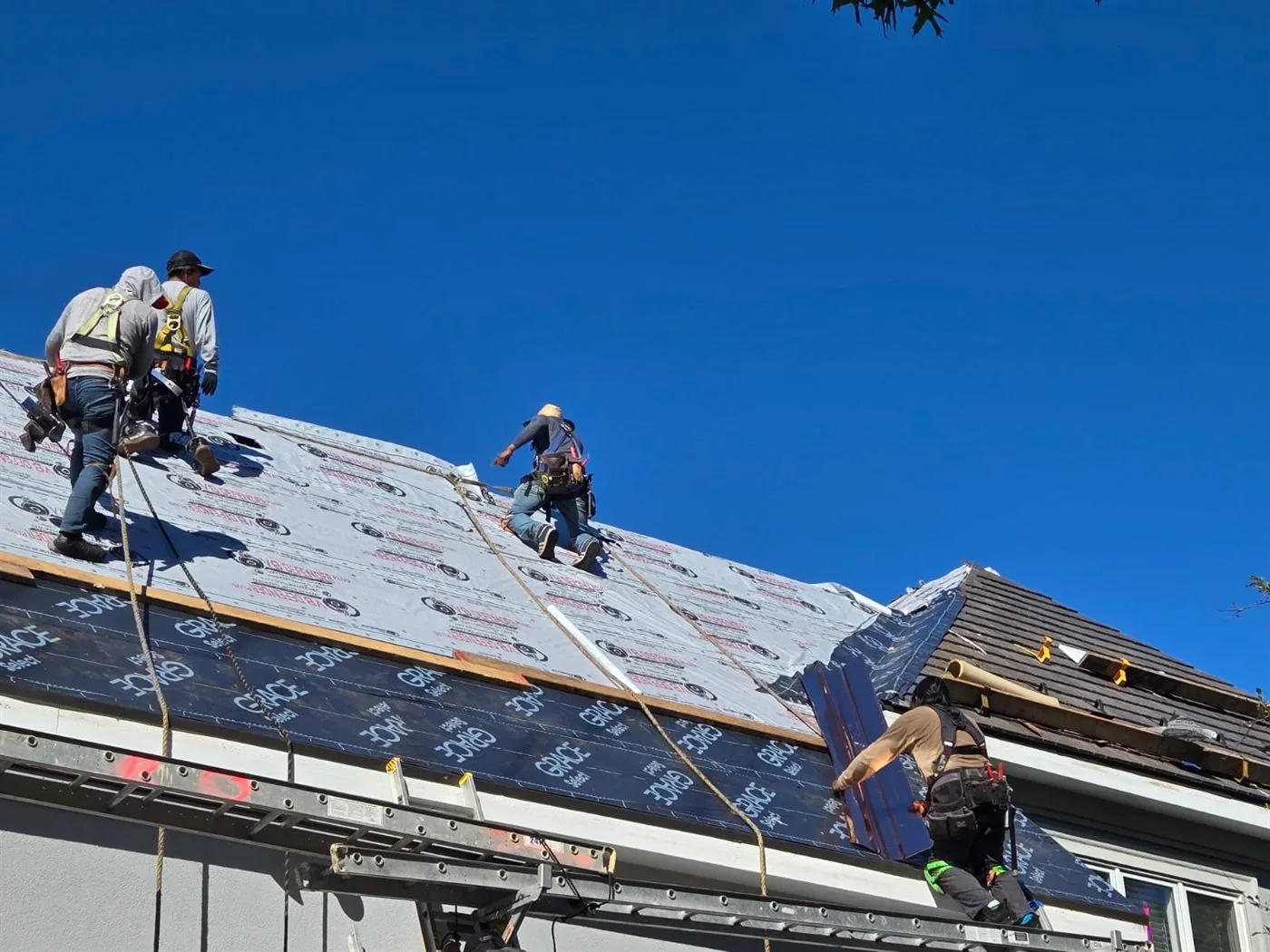
Replacement planning accounts for the existing layers, attachment, drainage, edge metal, equipment, access, removal, and protection below. A recover is considered only when the roof condition, structural capacity, drainage, and applicable requirements support an additional layer. Commercial replacement planning can compare those factors with a defined repair and show how work can be phased around operations. A roof condition report can organize photographs, test locations, and recommendations when the owner must plan multiple sections.
Protect active spaces during work
Work above a production area, dining room, or theater needs a plan for access and protection below. We confirm where people enter, what rooms need coverage, and whether equipment must be coordinated. If the roof layout allows, the crew can finish and close one section before opening the next. The property manager confirms operating windows and any planned pause in activity before the crew begins. If the roof has a temporary opening during repair, we identify how the area will be protected if weather interrupts the work.
Santa Ana winds can damage property across Southern California. After a report of wind movement, we inspect edge metal, coping, screens, and membrane attachment, then look for tearing where those components meet the roof field. A shifted component can leave a hidden gap beneath it. Wind damage repair should reconnect the failed detail and restore the water-shedding surface. Emergency response is available around the clock for active leaks that need immediate protection before a permanent scope is ready.
Record the work and remaining items
The closeout maps the repaired roof zone, names the materials installed, and records the observations that set the scope. A photo sequence shows the original defect and the finished detail. Any newly exposed moisture or deck damage is noted with its precise location and disposition. A nearby issue outside the approved scope is listed separately so the owner can decide when to address it.
A follow-up inspection can check the same drain, seam, or curb and compare its condition with the repair photographs. Preventive roof maintenance can record new wear and confirm whether earlier repairs remain secure. Property managers with sites in Garden Grove or Westminster can use a consistent record while keeping findings tied to each building. That distinction matters when different operations use different roof systems or require separate work windows.
Questions About Buena Park
Does a Buena Park business need a roof inspection after water backs up at a drain?
We inspect the outlet, the surrounding membrane, and the route leading to it. A blockage, failed clamp, or low area can each hold water for a different reason. We also check nearby seams and penetrations for an opening that may have let water reach the interior. The recommendation follows the condition confirmed on the roof.
Can you schedule repairs around a restaurant or theater operation?
We coordinate access, material staging, entrances, and rooms below the work with the property contact. The roof layout may allow work to be divided into smaller sections. If an area needs a short closure or protection, we include that step in the sequence before starting.
How do you decide whether a test opening is necessary?
We propose one when layer condition could change the repair boundary or method. The opening can confirm moisture in insulation, deck condition, and how many layers are present. We measure, photograph, and close it with compatible materials. If the visible details already answer the scope question, a test cut may not be needed.
What should we receive after an emergency roof response?
You should receive a record of the temporary protection, the visible damage, and any condition that needs a permanent repair. Once safe access is available, we inspect the assembly and define the lasting scope. The written closeout distinguishes emergency work already completed from additional work awaiting authorization.
Related Roofing Work

Inspect a Buena Park roof
Tell us where water is entering, what the building needs to keep operating, and any roof information available. We will inspect the assembly and explain the repair options. Call 555-555-5555 or request a roof assessment.