Commercial Roofing in Westminster, CA
A lifted flashing corner above a corridor can let water enter while the adjacent roof field still appears secure. In Westminster, CA, we inspect the corner, follow nearby seams and penetrations, and check where water could move below the surface. Westminster employers in 2017 included Westminster School District, Westminster High School, Kindred Hospital-Westminster, Walmart, Target and Honda World. For roof work at a school, healthcare, retail or automotive property, the manager confirms the current access and protection needs. The building contact identifies current operations and access needs. A roof inspection verifies the installed assembly and gives the owner a repair boundary grounded in what we can see or test.
Find the point water crosses
At wall flashing, we check the termination and counterflashing for separation, loose fasteners, or open joints. At a curb, we examine the corners and the membrane tie-in on every side. We also inspect drains and scuppers that could hold water against a weak transition. The interior location narrows the search, but the roof detail determines where water enters. We use condition photographs to capture the opening and adjacent surface, then probe the seam or metal connection where a direct check can distinguish a loose joint from surface staining.
School, healthcare, retail, and automotive operations bring different protection needs. A classroom, patient area, customer entrance or service bay may need a coordinated work window, which we confirm with the building manager before staging. We agree where materials can move, whether interior areas need protection, and how to keep the work zone clear. If active water is entering, commercial leak repair can begin with temporary protection before the permanent scope is set.
Use a test opening with purpose
A test opening is useful when the roof surface cannot show whether moisture has traveled into insulation or the deck. We locate it where the finding could change removal limits, measure the cut, and identify each layer exposed. Wet insulation needs removal or another supported treatment; a dry, stable assembly may allow a smaller repair. The opening is photographed and closed with materials compatible with the existing roof. We note what was confirmed and where the test stopped, so the owner can follow the scope without interpreting an image alone.
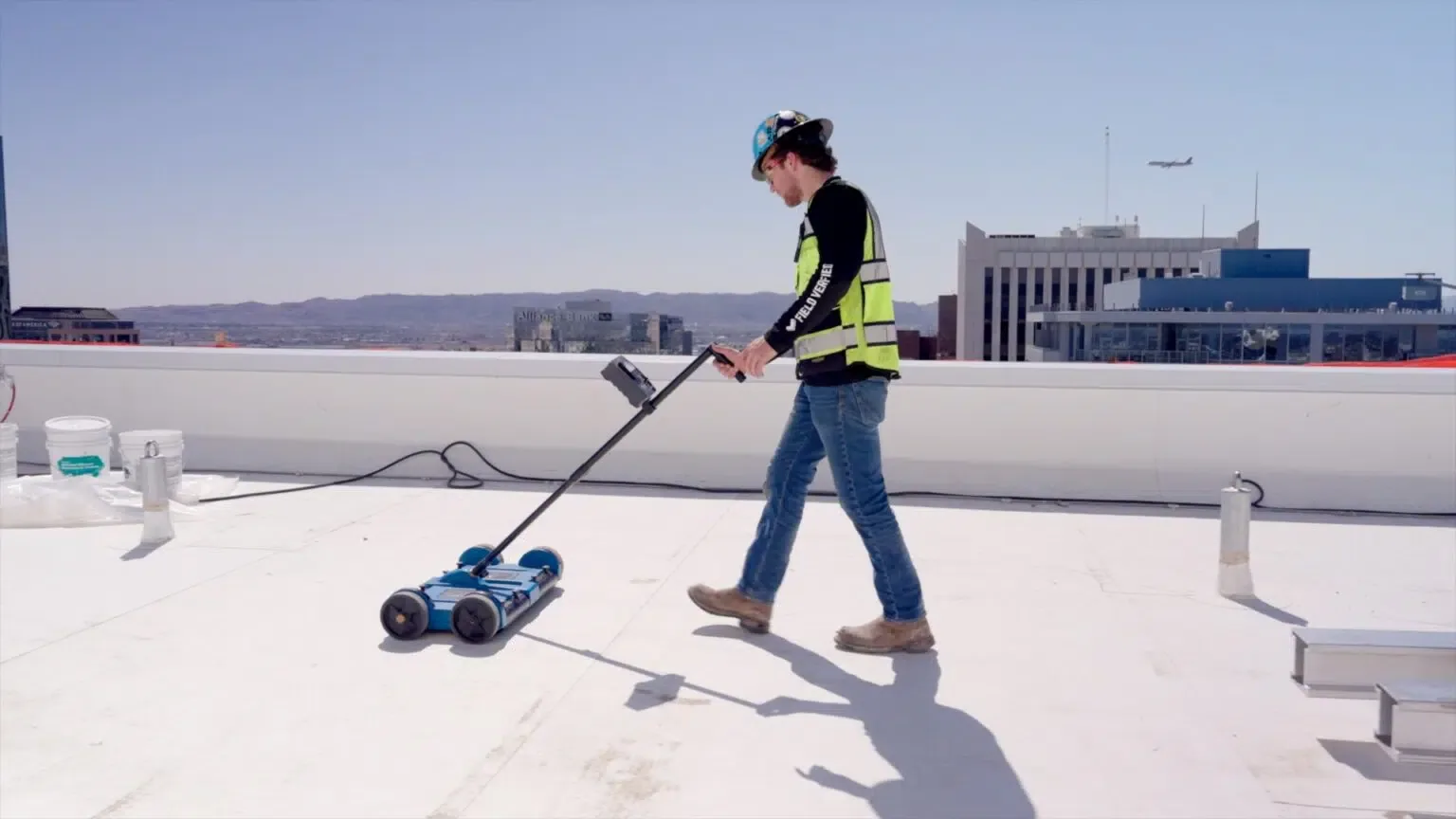
Infrared screening can help prioritize roof areas after repeated leaks or when visual evidence is spread across a large surface. The reading is compared with roof construction, shading, and the timing of the survey; it does not automatically prove trapped moisture. We select direct verification points where they can resolve the repair question. A moisture survey can support that sequence when the report labels screening findings separately from confirmed conditions.
Keep options tied to roof condition
An isolated seam opening over dry material may support a local repair. Several recurring failures, wet insulation in separate zones, or loss of secure attachment can change the decision. We check the adjoining field and transitions to establish whether a stable tie-in remains. The proposal identifies which details will be repaired, what preparation is needed, and how much material may need removal. If the deck condition is not visible, we explain what test would answer that question rather than presenting an assumption as a finding.
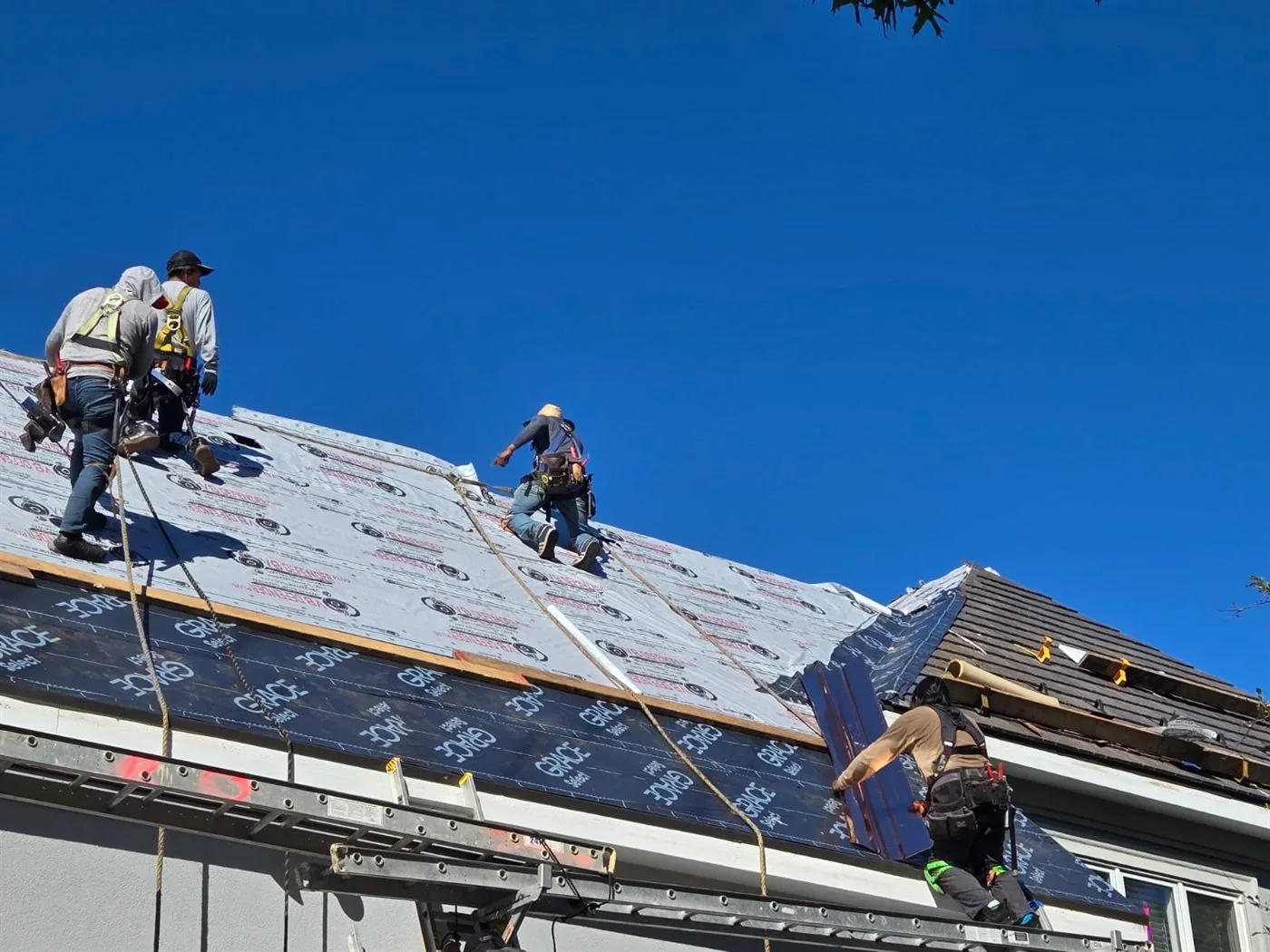
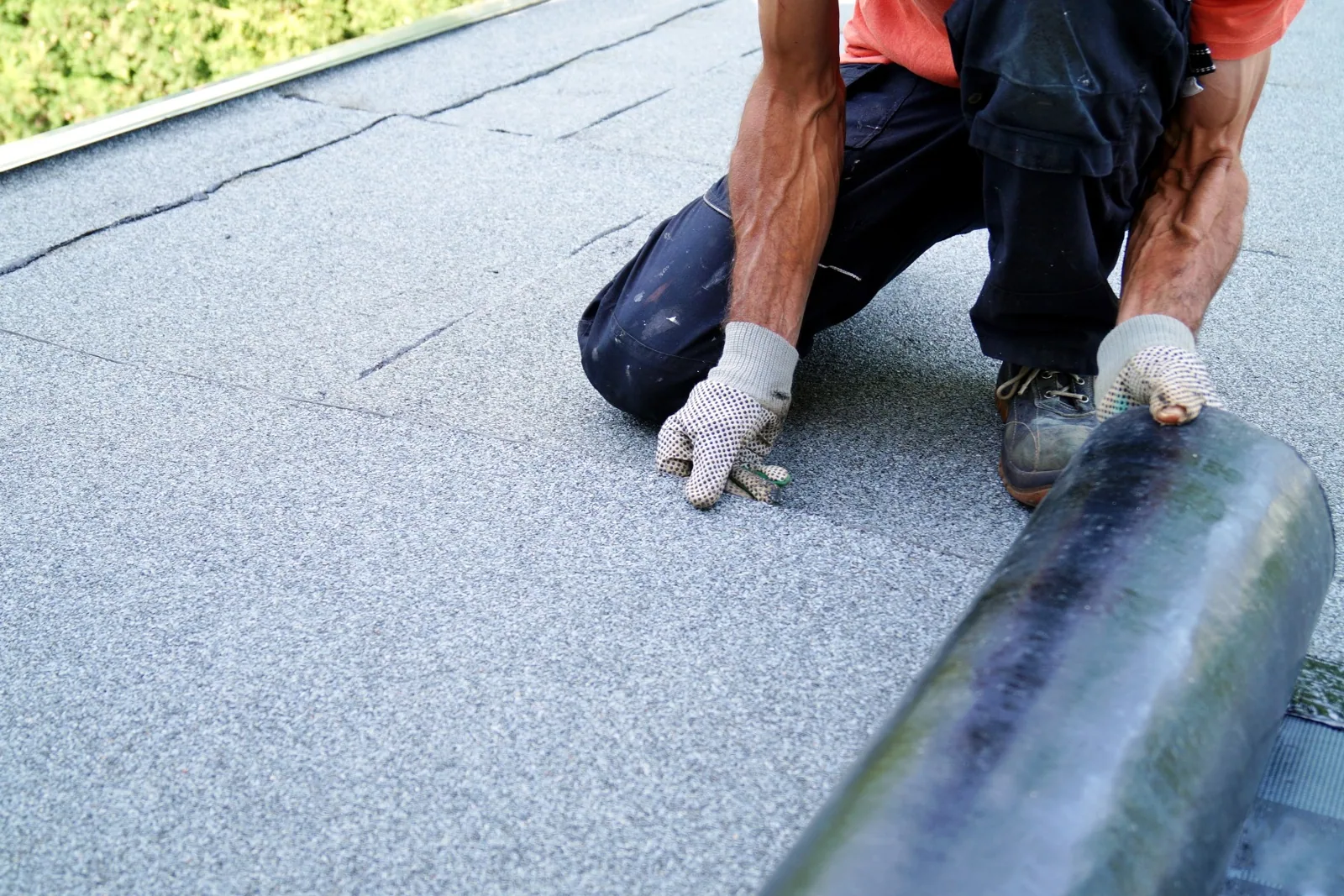
Replacement planning covers removal depth, drainage, perimeter metal, equipment penetrations, access, and protection below. A recover is considered only when existing moisture, roof attachment, structure, and applicable requirements allow another layer. Those constraints are checked for the actual property. A low-slope roof with several equipment curbs needs careful coordination because each penetration interrupts the water-shedding surface. We inspect the flashing height, corner seals, and membrane bond around each curb included in the work. A metal roof instead calls for panel and fastener checks, so we identify the assembly before estimating the labor or access needed. Commercial replacement planning compares a larger project with the verified repair alternative and describes the effect on building operations. For owners who need to sequence work across more than one property, a condition report can separate urgent water entry from future maintenance and capital planning.
Protect the rooms below
A repair over a busy entrance needs overhead controls, a safe route for tools and material, and clear notice to the people using that entrance. A school or healthcare property may also have rooms that cannot be entered during certain hours. We work with the site contact to map those limits, identify interior protection, and close completed roof areas before moving the crew. If equipment needs to be paused, that requirement is stated in the work plan rather than discovered during installation.
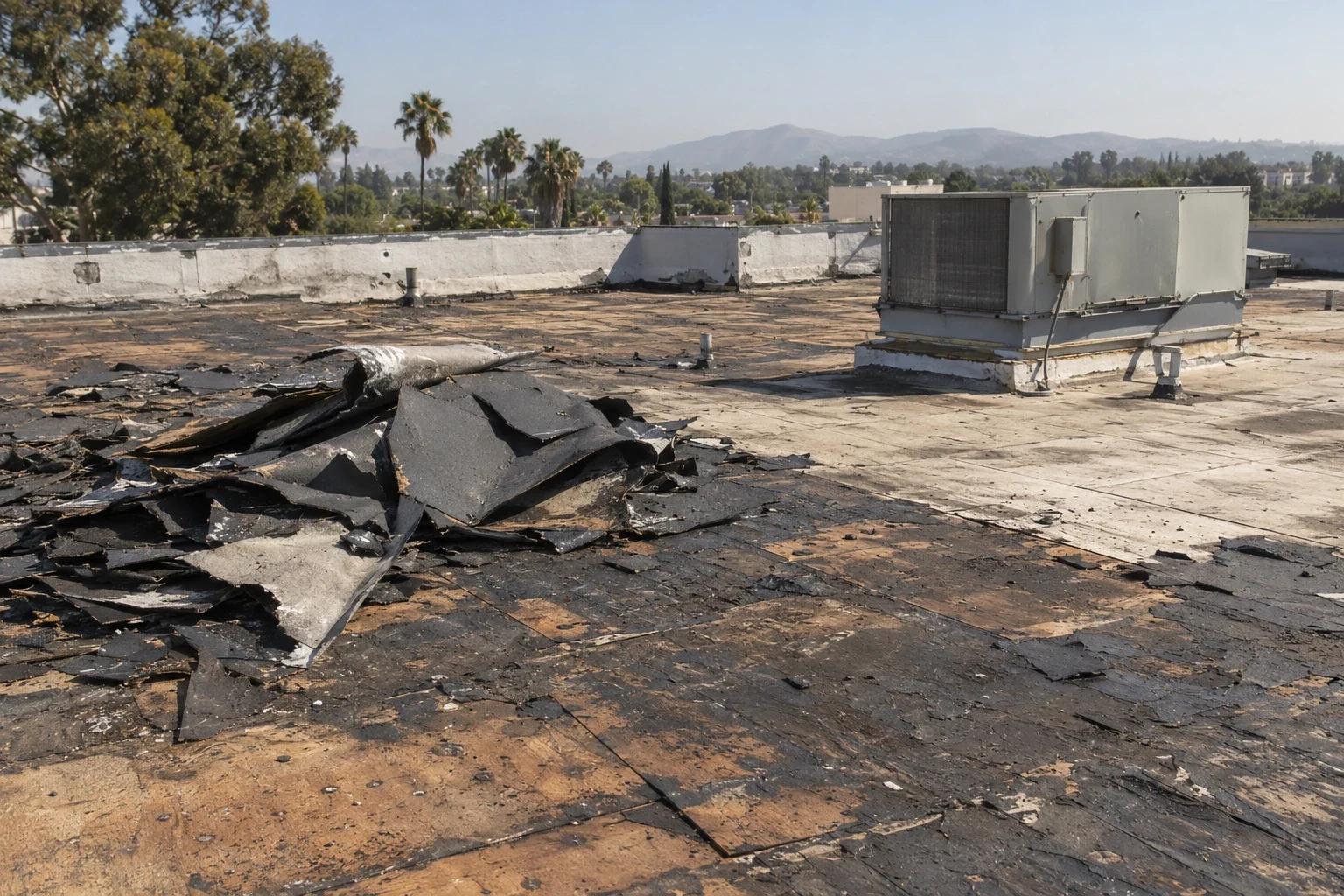
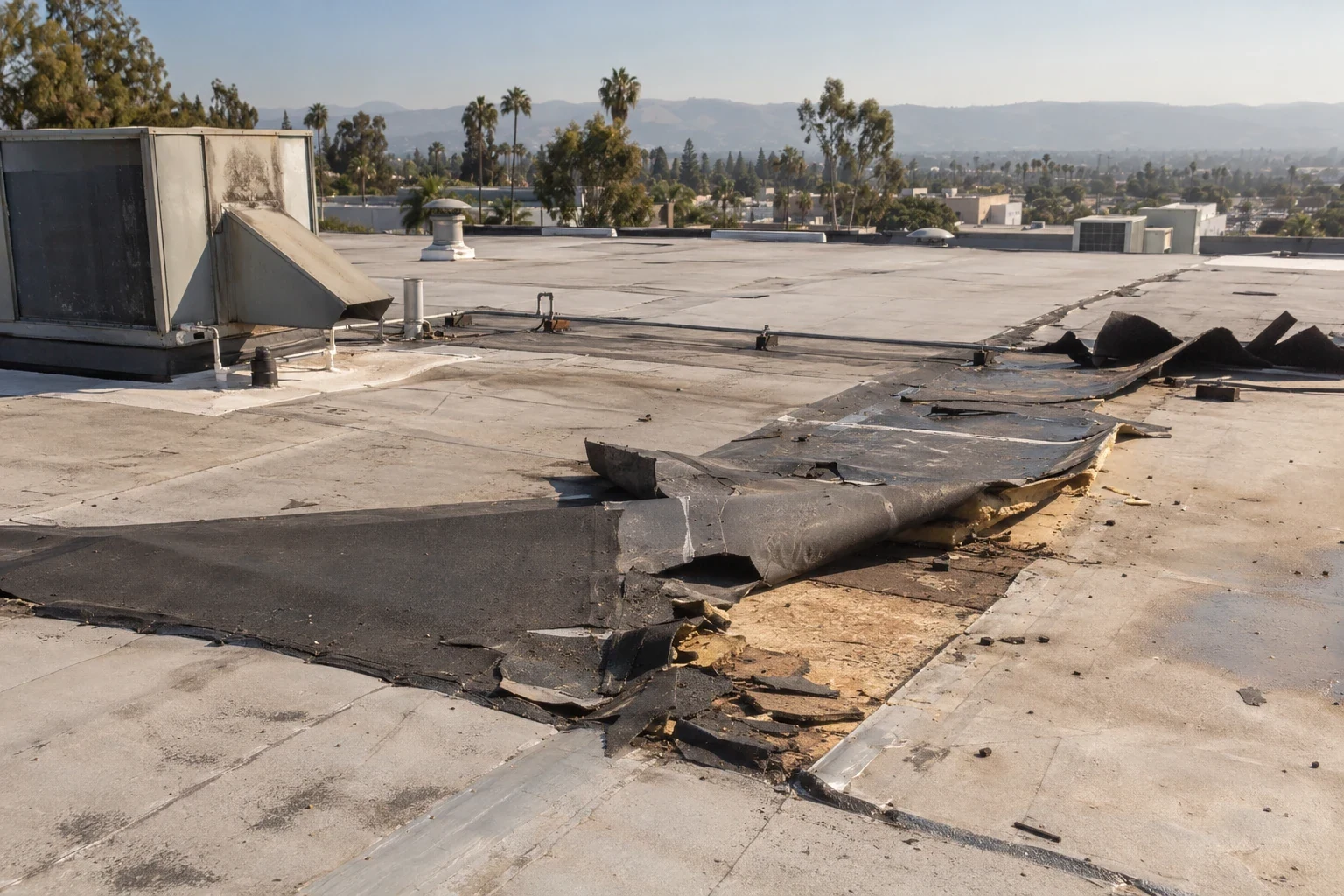
Santa Ana winds can cause damage across Southern California. Following a reported event, we check perimeter metal, coping, rooftop screens, and membrane edges for movement, then examine the securement behind them. A displaced component can expose fastener holes or tear adjacent flashing, so the visible item may not define the whole repair. Wind damage repair addresses the failed attachment and water-shedding detail. Emergency response is available around the clock when water is actively entering a Westminster building and the opening needs prompt attention.
Leave a clear work record
The closeout should identify the roof section, the detail that failed, the material installed, and any layer condition verified during repair. We photograph the defect before work and the completed connection afterward. If another item remains outside the agreed scope, its location and next action belong in a separate note. That distinction helps a facilities manager understand which work is complete and which decision remains open.
A later inspection can compare the same seam, drain, or flashing area with the earlier photographs. Preventive roof maintenance can review repaired details and note any change. A property team coordinating work in Garden Grove or Fullerton can use a consistent record format while keeping findings attached to each building. The roofs, access plans, and operating limits remain property-specific; the value of a common record is that it makes the differences visible.
Questions About Westminster
A roof leak shows up inside a Westminster classroom, but the roof looks dry. What do you inspect?
We examine the roof area above and around the room, including seams, penetrations, wall transitions, and drainage. Water can move under a membrane before appearing indoors. We compare the reported timing with visible conditions and use a test opening only when it could establish whether insulation or deck is affected.
Can you work above a retail entrance while the business is open?
We first confirm how the entrance is used and whether the roof layout allows the repair to be isolated. The plan may include overhead protection, a separate pedestrian path, or a short closure while materials move. We set that sequence with the property contact and explain any restriction before work begins.
Does an infrared survey tell you exactly how much roof material to remove?
It identifies patterns that may warrant direct checks. We interpret readings against the roof assembly and conditions during the survey, then verify selected locations when the result could change the scope. Removal limits are based on confirmed layer condition, not a thermal image by itself.
What details should we get in writing after a repair?
The record should name the roof zone, failed component, repair material, and any concealed layer condition found. Photos should show the original defect and finished tie-in. If another issue was excluded, the note should identify its location and recommended next action so the owner can track it separately.
Related Roofing Work
Inspect a Westminster commercial roof
Share the leak location, property use, prior repair history, and access limits. We will inspect the roof and explain what the evidence supports. Call 555-555-5555 or request a roof assessment.