
Commercial Roofing in Huntington Beach, CA
A loose edge strip can leave the roof perimeter open even when the center field has no visible damage. In Huntington Beach, CA, we check the metal, membrane termination, and attachment beneath the edge before setting repair limits. Bella Terra and Old World Village are shopping centers in the city, while Boeing has a major installation there; some buildings at that installation originally supported the Apollo program. The city also lies above an oil field and has an offshore oil terminus connected to inland refining infrastructure. At retail and industrial properties, inspection of the installed assembly sets the repair method and limits. We inspect the actual property, identify its assembly, and plan access around its operation. A roof inspection records the details that determine whether a local repair can stop water entry.
Check the exposed edge
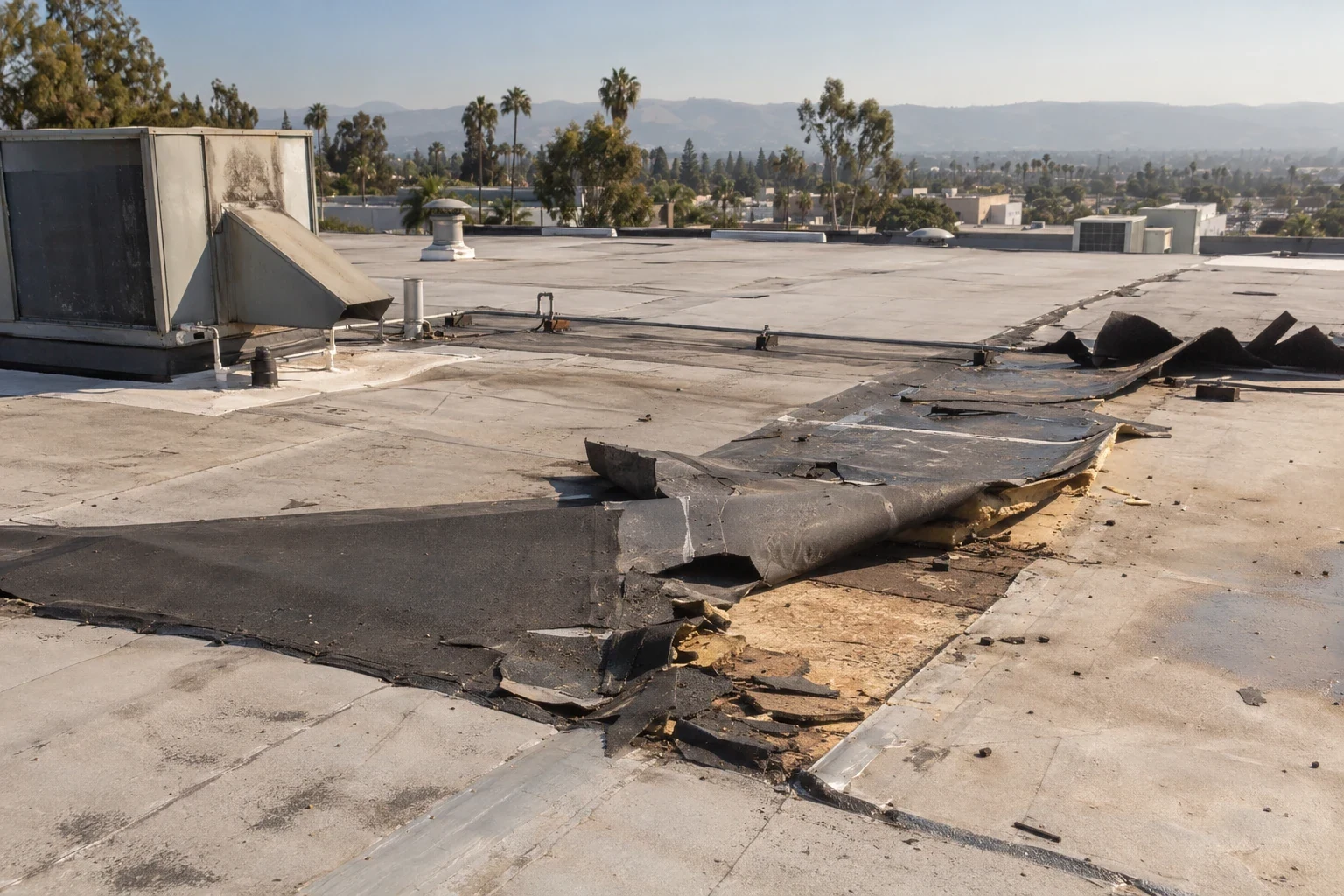
At the roof perimeter, we examine coping joints, metal cleats, fasteners, membrane termination, and the substrate that holds the assembly. A loose cap may be only the visible part of a failed connection. We check whether water can pass beneath the metal and whether nearby flashing has pulled away from the wall. Around equipment and pipe penetrations, we follow each transition and probe the membrane seam where it meets the flashing. The repair limit reaches material that can accept a secure tie-in.
Retail and industrial properties can have different access schedules. Before staging, we confirm the operating area below, equipment routes and protection needed at the property. We check the roof layers and attachment before choosing compatible repair materials. If wind has moved metal or membrane, a wind damage inspection checks the attachment and adjacent water-shedding detail, not only the component that shifted.
Trace water through the assembly
A ceiling mark can appear beyond the roof opening because water follows insulation joints or deck flutes before it reaches a room. We compare the interior location with the roof above it, inspect nearby seams and penetrations, and check the drainage path. At an oil-related or manufacturing property, equipment supports and service traffic may create extra transitions, but we verify the actual roof rather than assume those details. At a shopping center, a leak near a storefront might originate at a parapet or rooftop unit farther upslope. A marked water path prevents a repair from stopping at the nearest visible stain.
When entry is active, temporary protection can reduce exposure while the roof is assessed. The permanent scope should state which membrane, flashing, or edge connection failed and what adjoining area must be prepared. Commercial leak repair can address that opening after we confirm the material and conditions needed for a sound tie-in. Around-the-clock emergency response is available when water cannot wait for a standard service window.
Verify what the membrane conceals
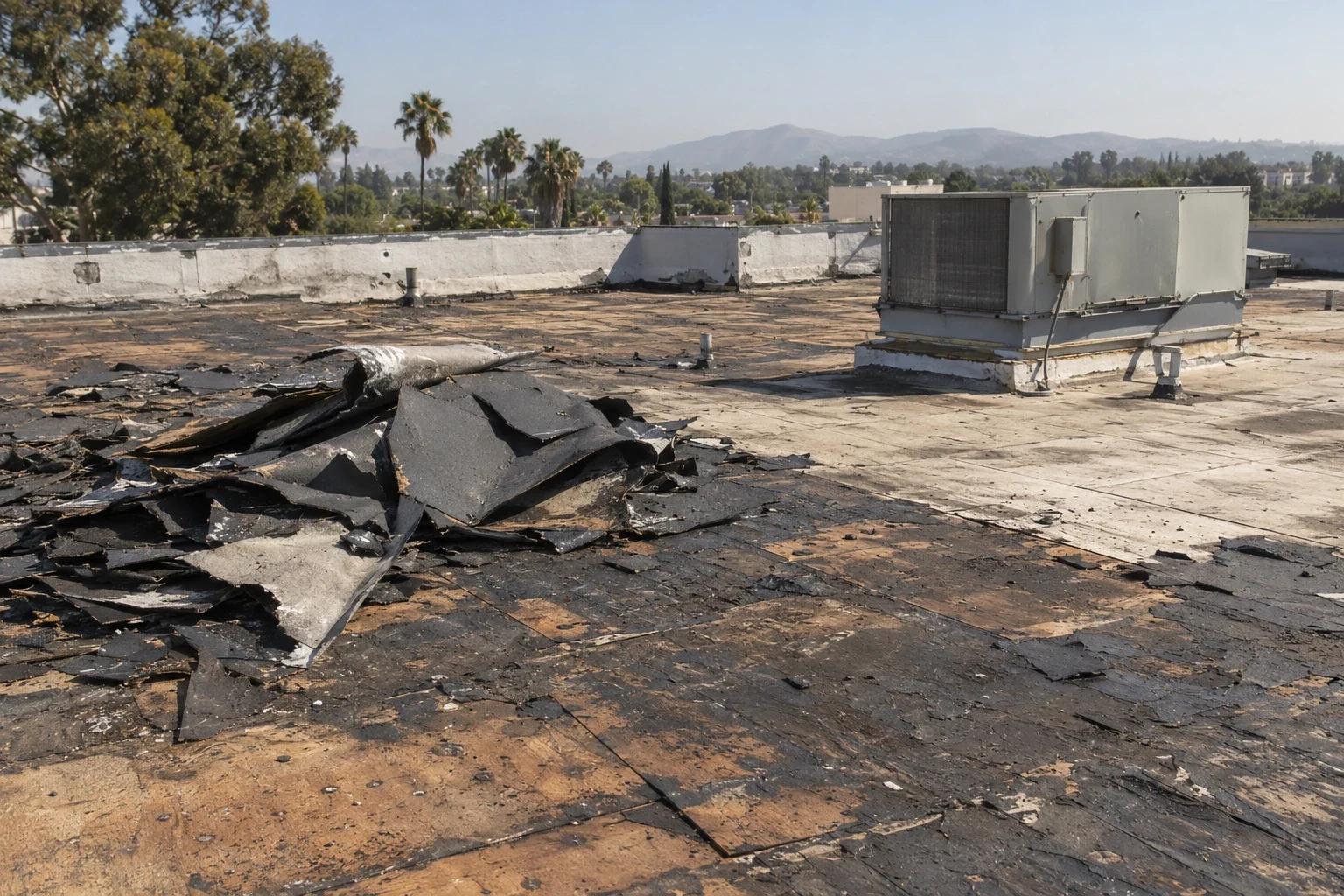
Softness, bubbling, or a recurring interior leak can make a test opening useful. We select a location that can answer whether insulation is wet, the deck is sound, and how many roof layers are present. The opening is measured and photographed, then repaired with compatible materials. If the layers are dry and secure, that finding may keep the repair local. If moisture extends beyond the visible defect, we show the evidence before increasing removal.
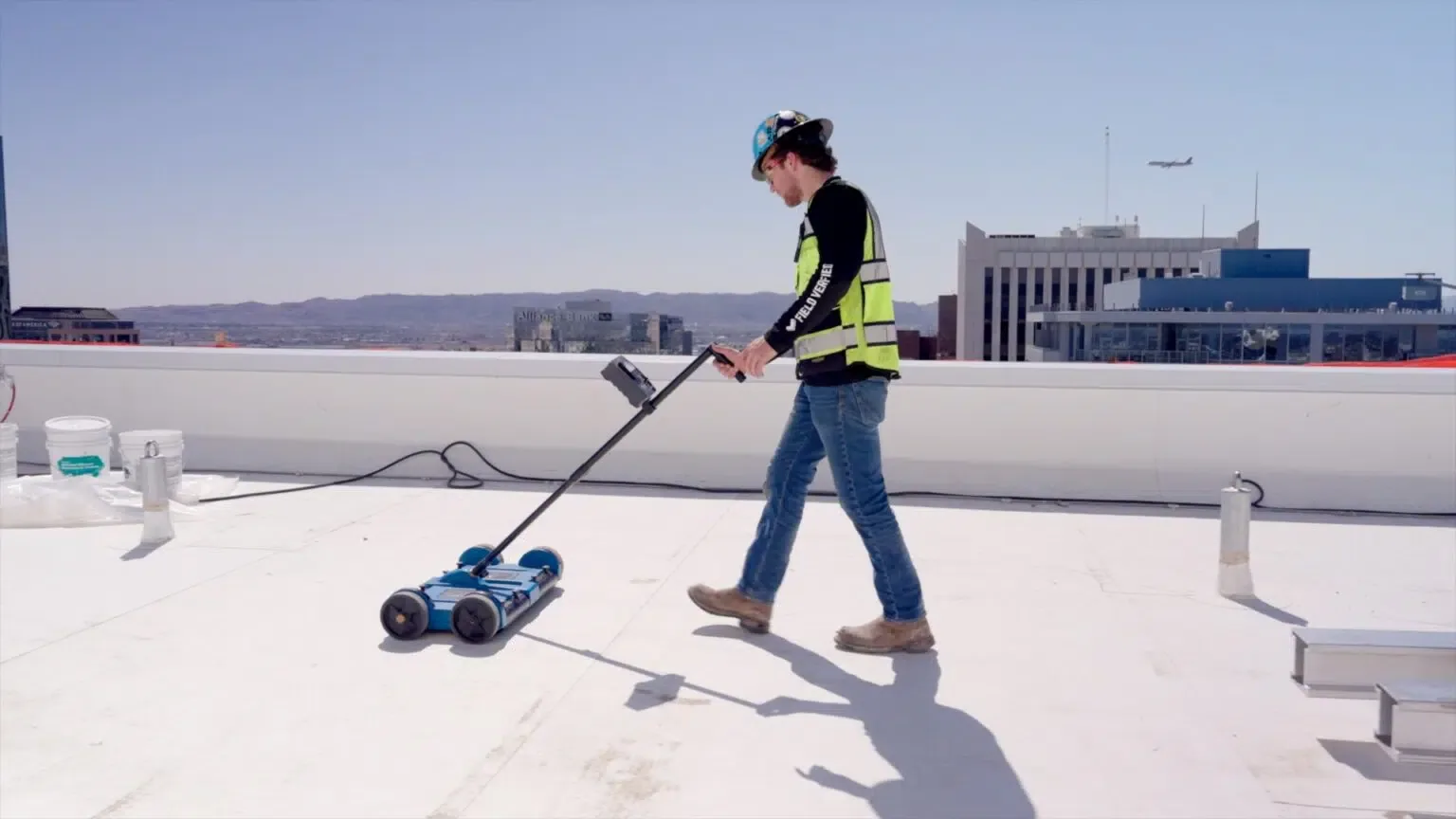
A moisture survey can help target areas across a roof, particularly when several reports or stains exist. Infrared readings are affected by roof composition and conditions during the scan. We compare them with construction records and visible conditions, then make direct checks where the result changes the work boundary. An infrared survey supports decisions when suspected moisture is not presented as confirmed until it has been checked. The report should identify which locations were tested, what they showed, and which areas still need observation. When the scan does not align with the leak history, we revisit the path and choose a test based on the roof detail rather than enlarge removal to match an uncertain pattern.
Compare the full repair scope
A local patch is a practical choice when a discrete failure sits within stable material. We detail surface preparation, replacement material, and the connection to nearby flashing or metal. Several openings, repeated edge movement, widespread moisture, or poor attachment may call for a replacement comparison. The decision should reflect the assembly, not the number of times a ceiling tile has been changed. We explain what is confirmed and what remains concealed.
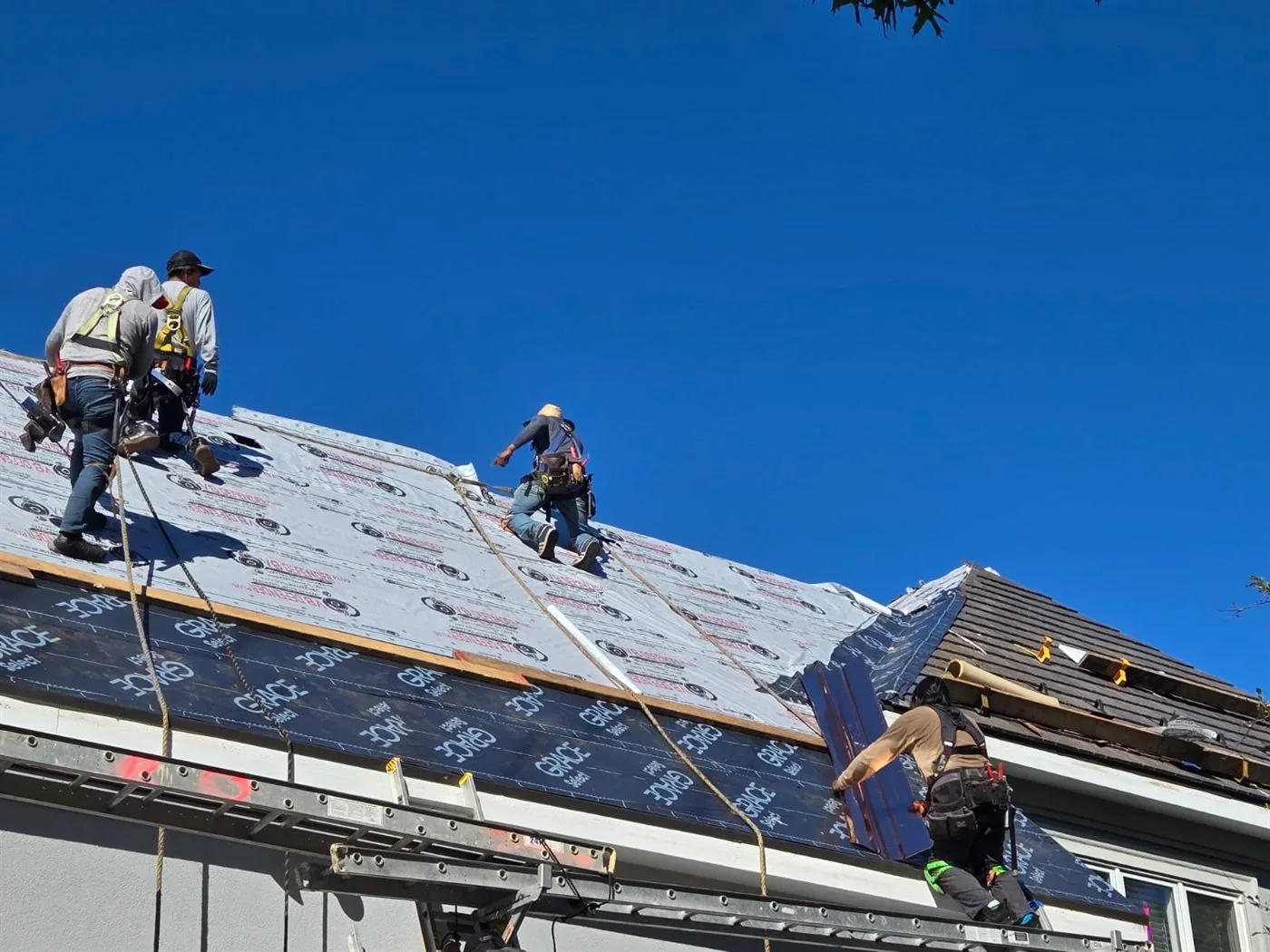
Replacement planning includes tear-off, disposal, perimeter metal, equipment curbs, drainage, access, and protection for active spaces. A recover is considered only after evaluating existing moisture, attachment, structural loading, and applicable requirements. For industrial roof work, the site contact identifies operating controls, equipment access and material routes before staging. Replacement planning can include phasing to keep portions of a facility operating. A roof condition report can preserve the findings for maintenance and capital decisions.
Record the detail after repair
We identify the roof zone, the failed edge or penetration, and the material used to close it. Photographs show the opening and completed connection. If the work exposed wet insulation, corrosion, or a deck concern, the report explains whether it was included and what remains outside the authorized scope. These notes help the property team compare later observations with the actual work rather than relying on a general invoice description.
At a coastal market, owners may ask whether environmental exposure changes roof maintenance. We inspect membrane, metal and attachment at the property before setting a repair scope. A maintenance visit can check exposed edges, metal joints, drains, and repaired seams on the actual property. Before a crew leaves, we confirm temporary protection is secure, roof access is restored, and the property contact knows what work is complete and what still needs follow-up. Owners with buildings in Newport Beach or Costa Mesa can compare work records while keeping each property's findings distinct.
Questions About Huntington Beach
Does a building connected to the local oil infrastructure need a special roofing scope?
At industrial sites, the facility contact confirms equipment access, delivery timing and operating restrictions before work begins. We inspect the actual assembly and ask the site's representative about access, equipment, safety, and operating controls. Any roof-specific scope follows observed conditions and applicable project requirements confirmed for that property.
After wind, how do you tell if a loose edge is the only damage?
We check the metal attachment, membrane termination, adjacent flashing, and the surface just inside the perimeter. A lifted component can pull or tear the water-shedding layer beneath it. Photos and measurements record the affected detail, and we extend the repair only where the material or attachment shows damage.
Can you repair a shopping center roof without closing every storefront?
We plan the work zone with the property manager and identify which entrances or rooms sit below the repair. Some scopes can be divided so completed areas are closed before work moves to another section. The roof layout and access route determine what protection or short closure is necessary. Before mobilizing, we confirm where tools and removed materials can be staged, whether delivery traffic crosses the work zone, and how the crew will leave the area safe at the end of each shift.
What does a measured test opening tell us?
It can show the insulation condition, deck material, and layers beneath the membrane at a selected location. We use it when that evidence could change the repair limit or removal method. The opening is documented and closed with compatible components; results apply to the tested area and are not stretched to the entire roof.
Related Roofing Work

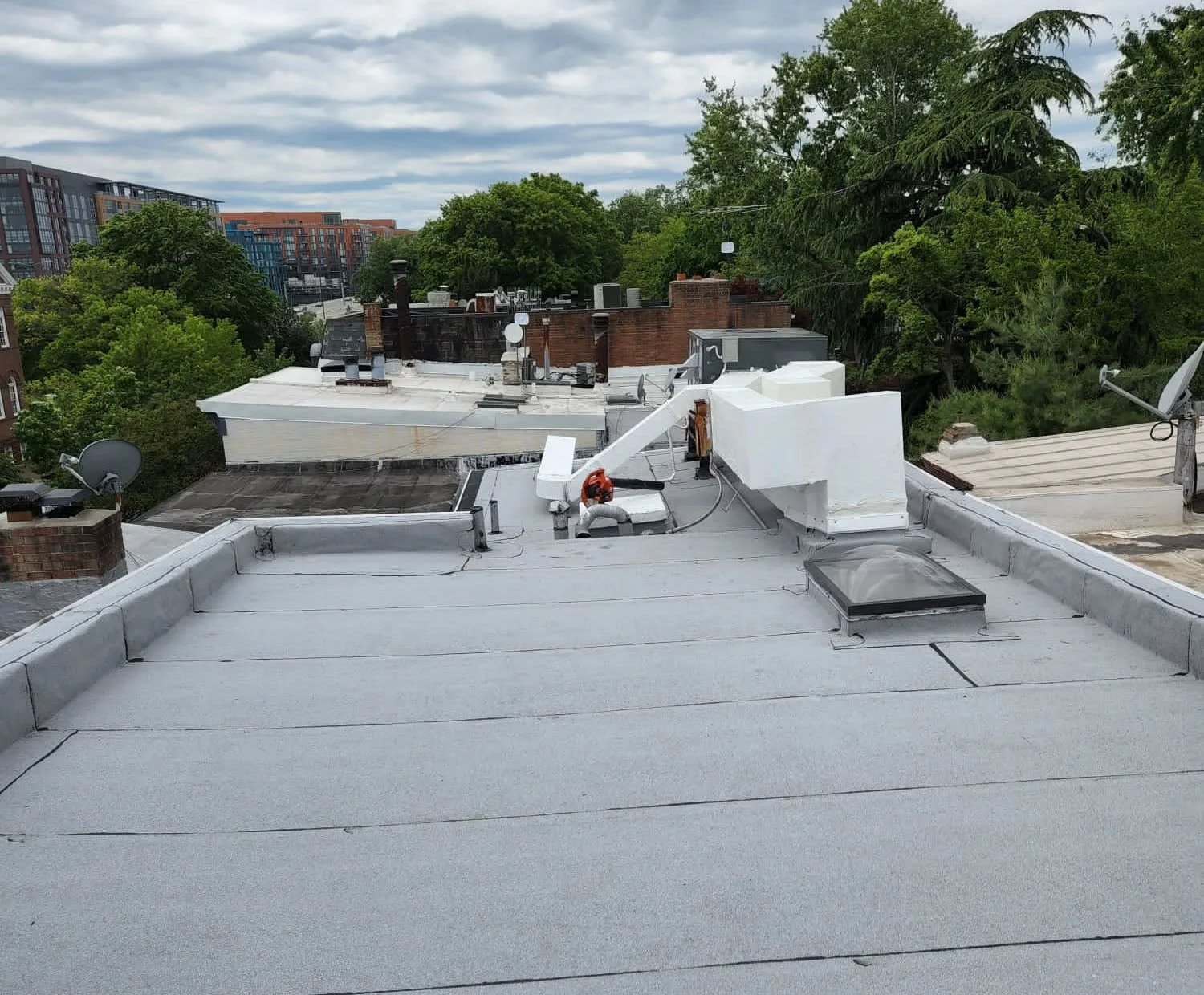
Review a Huntington Beach roof condition
Tell us which property and roof area are involved, what operations need to continue, and whether water is active. We will inspect the assembly and explain the repair options. Call 555-555-5555 or request a roof assessment.