Commercial Roofing in Costa Mesa, CA
A split at a rooftop equipment curb can let rain reach the insulation while the surrounding roof still sheds water. In Costa Mesa, CA, we check the curb, its membrane tie-in, and nearby drainage before assigning a repair boundary. Retail and services account for a large part of the local economy, with South Coast Plaza a major commercial center. The southwestern industrial quarter includes electronics, pharmaceutical, and plastics businesses. South Coast Metro extends across northern Costa Mesa and southern Santa Ana, mixing commercial, cultural, and residential uses. Office, residential, retail and industrial operations can shape staging and protection below the work. We inspect the actual system and confirm the work limits with its owner. A roof inspection records the accessible details and identifies where a closer test could change the scope.
Follow the curb and seam
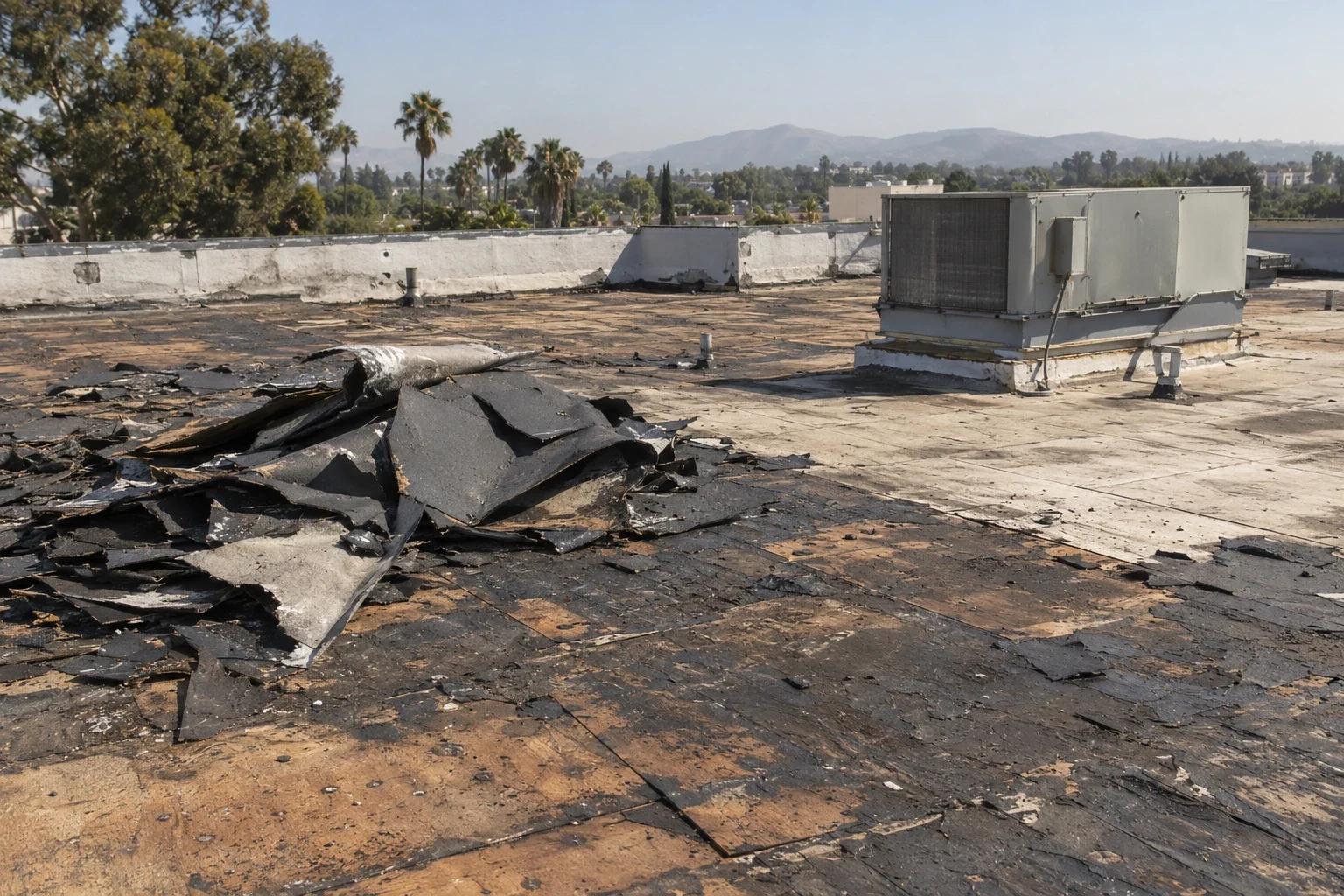
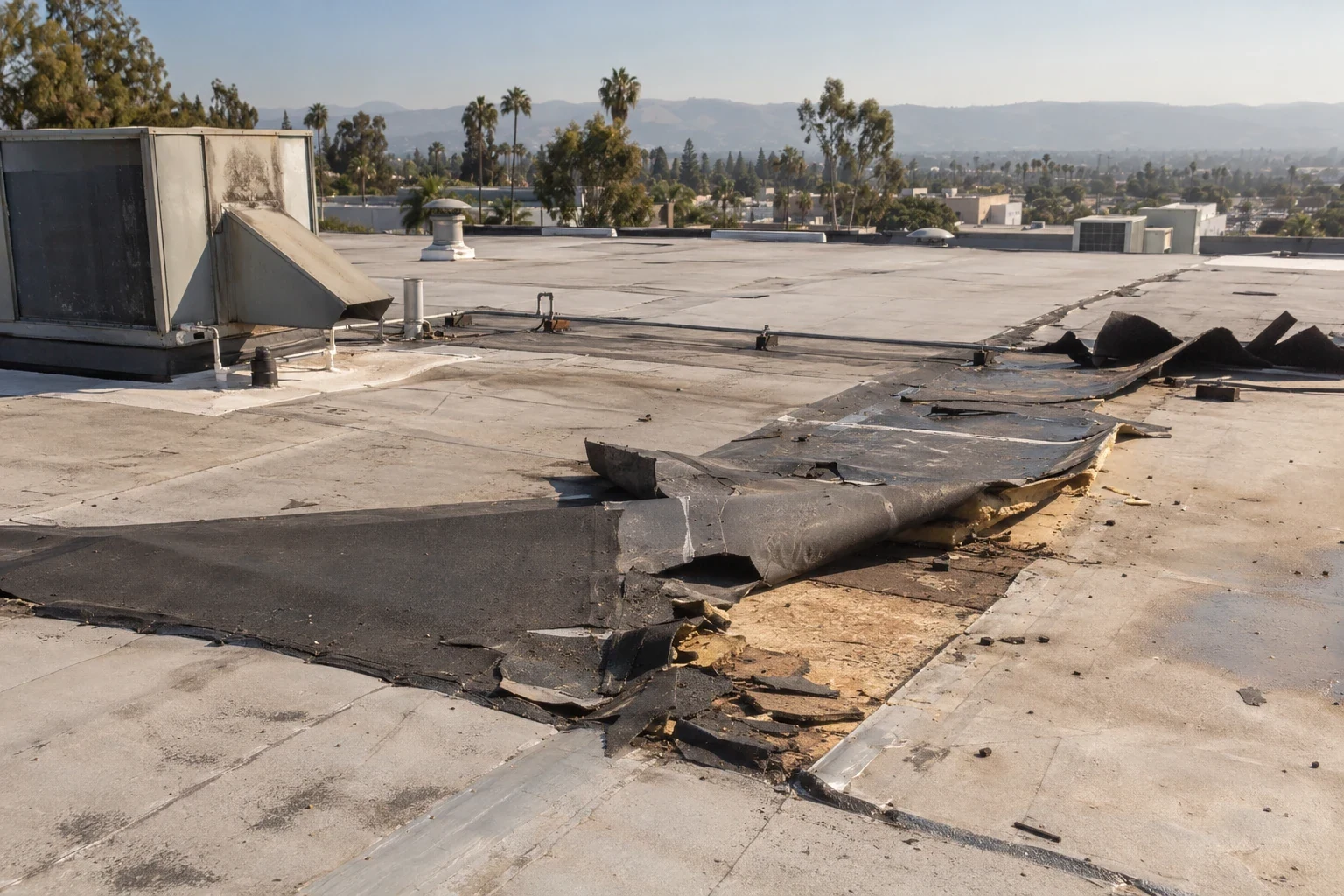
A curb corner can fail where flashing rises, turns, or meets the main membrane. We examine each side, the termination, the seam bond, and any service path where foot traffic may have worn the surface. If a roof unit sits near a low area, we also check how runoff moves toward the drain. The condition photograph shows the opening; a seam probe or measured check helps determine whether the surrounding material can support a tie-in.
South Coast Plaza is one part of Costa Mesa's retail economy, while the southwestern industrial quarter has a different business mix. We inspect the actual assembly at each site, then set the repair boundary and agree with the building contact on roof access, staging, occupied hours and interior protection. A retail location may need a protected customer path; an industrial site may have equipment, production, or delivery constraints. We ask the property manager what must remain in service, then coordinate access and interior protection to fit the actual building. When water is active, commercial leak repair can address immediate entry before a broader replacement decision is made.
Check beneath the membrane
A stain below a roof does not show how far moisture has moved. We compare leak timing, surface condition, nearby seams, and the route from equipment or drains. If that evidence leaves a question about insulation or deck condition, a small test opening can confirm the layers. We record its size, the materials exposed, and where moisture begins or ends. The opening is then closed with a repair compatible with the roof assembly. This evidence helps keep removal proportional to what is actually affected.
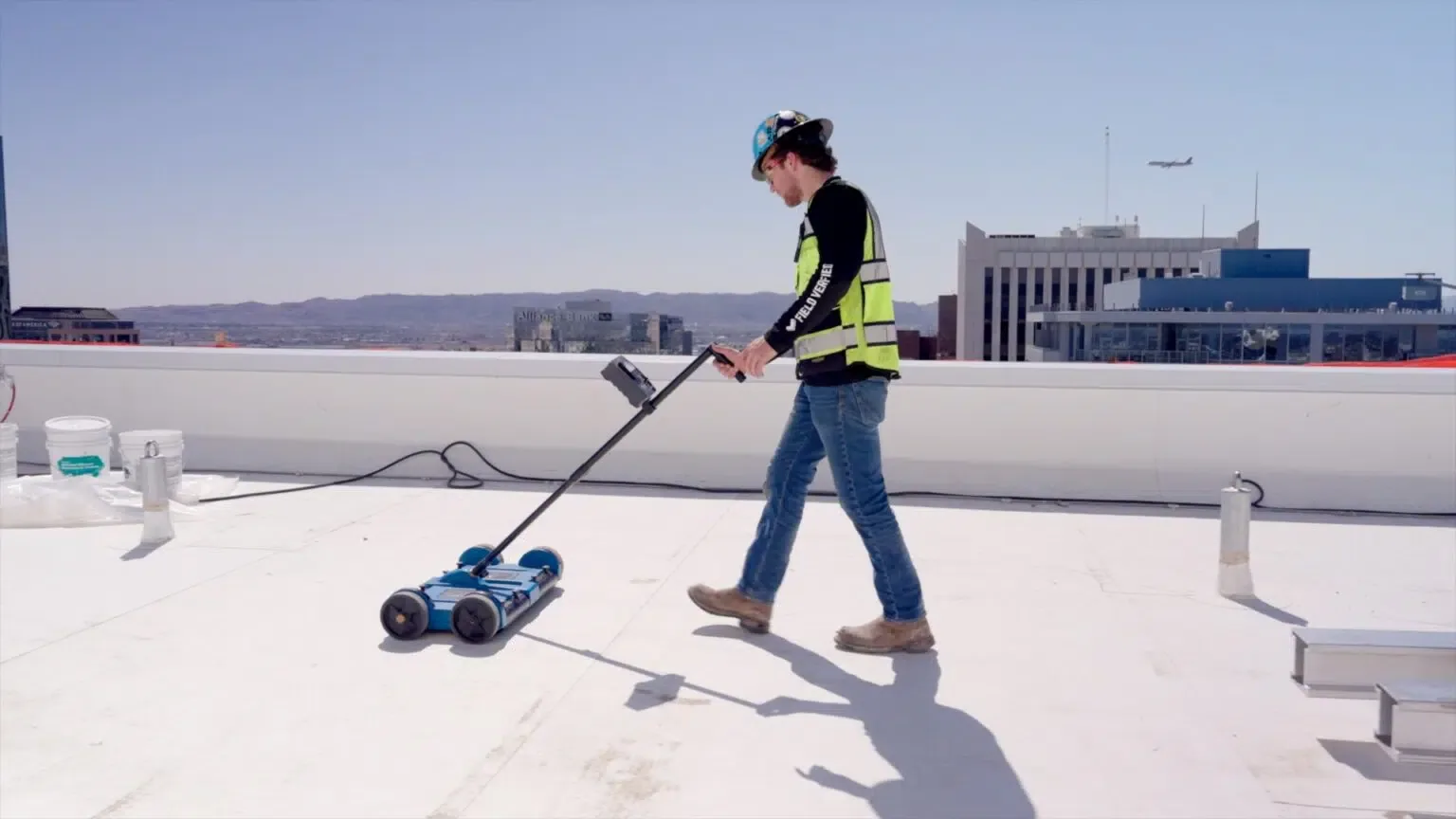
On wider roofs, a moisture survey can identify areas for direct checking. An infrared pattern may be influenced by the roof's construction and conditions at the time of inspection, so it cannot alone establish where wet material ends. We compare readings with visible details and verify the locations that could change the scope. Infrared moisture screening can help organize that work when the resulting report distinguishes suspected areas from confirmed findings. The owner can then decide whether selective repair, expanded removal, or continued observation best fits the evidence.
Separate repair from renewal
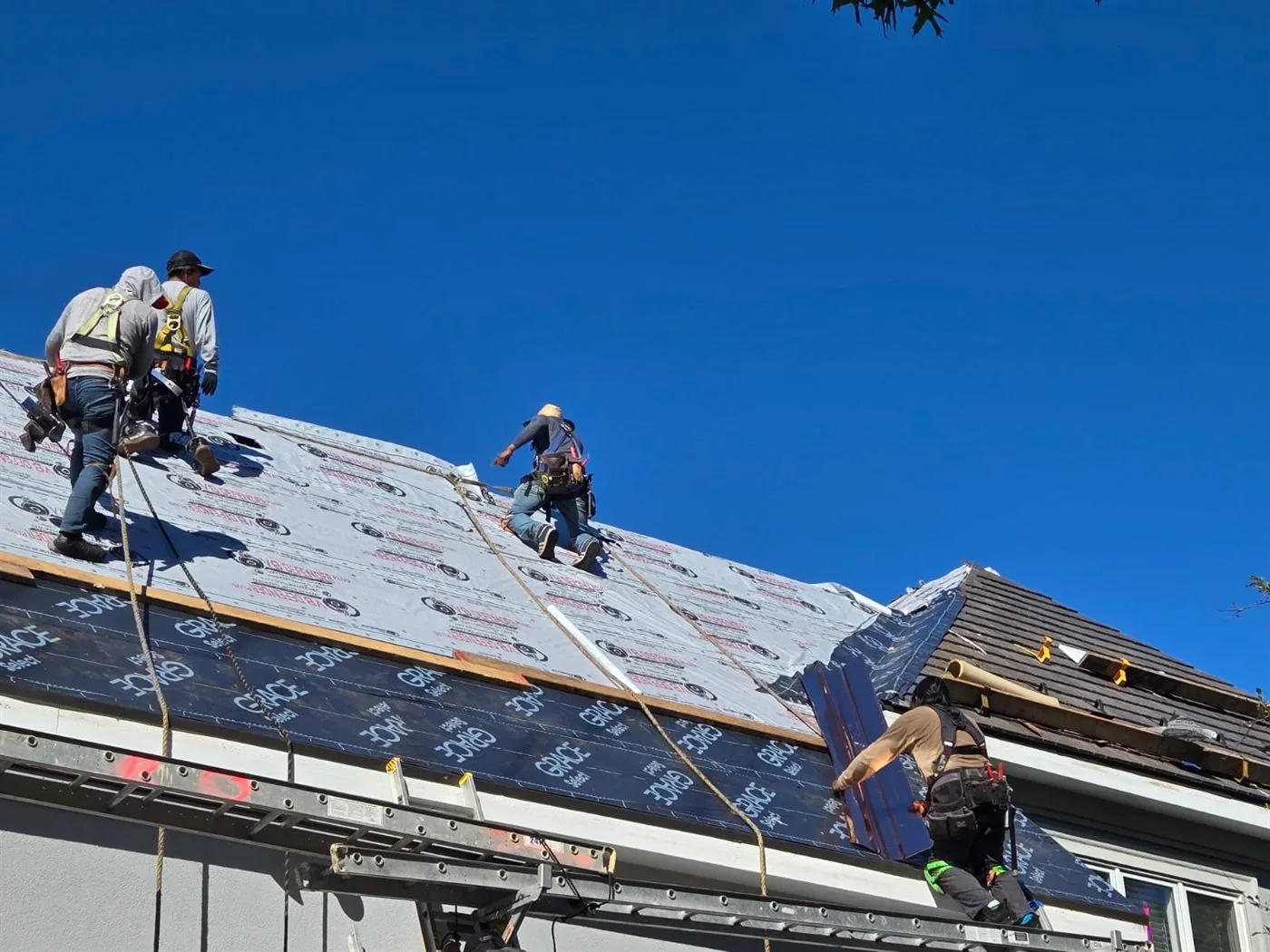
A repair can be appropriate when failure is local and stable material remains for a compatible tie-in. We identify what must be removed, how the seam or flashing will be reconnected, and which adjoining details need attention. Repeated leaks at different curbs or seams may show a broader condition, especially when test openings find moisture in several areas. We explain the pattern and compare a defined repair with a larger project so the owner can weigh current work against future disruption.
Replacement planning checks the existing layers, attachment, deck condition, drainage, rooftop equipment, and perimeter details. A recover is possible only when those conditions and applicable requirements support adding another roof layer. South Coast Metro includes a mix of uses across two cities, so the project scope remains specific to the Costa Mesa property being evaluated. Commercial replacement planning can describe tear-off, access, material staging, and phasing. A photo-backed roof report gives the owner a record of findings and assumptions behind each option.
Plan for the people below
Retail work may need clear customer routes and protection around entrances. Industrial work can require coordination near equipment, exhaust, loading, or production areas. South Coast Metro's mixture of commercial and residential uses adds another reason to confirm the property-specific operation rather than rely on a district label. We locate rooms and routes beneath the repair, coordinate roof access with the site contact, and identify any temporary interruption before work starts.
Santa Ana winds affect Southern California and can damage roof edges, coping, and rooftop components. When a property reports wind-related damage, we inspect the moved part and its attachment, then follow any split or lifted membrane around it. Wind damage repair should restore the connection that failed instead of fastening a loose piece over an open water path. Emergency response is available around the clock if water is actively entering. After temporary protection, we inspect the assembly and write a permanent scope that distinguishes wind displacement from pre-existing wear where evidence allows.
Keep a property-specific record
We record the roof zone, materials observed, repair performed, and any condition that remains outside the work. Photographs show the failing detail before repair and its completed tie-in. If a test opening exposed wet insulation or a sound deck, the notes state what was found and where. A property team can use that record to plan the next inspection and to avoid confusing an unfinished recommendation with completed work.
For a roof with several curbs or drains, a follow-up view can compare each detail against the condition photographed during the repair. Preventive roof maintenance can revisit those points and note changes over time. A manager also responsible for sites in Fountain Valley or Huntington Beach can keep one reporting format while preserving separate evidence for each assembly. The record should support the decision at hand, whether that is a repair now, a planned project, or another check after weather.
Questions About Costa Mesa
How do you protect customer access during roof work at a Costa Mesa retail property?
Commercial roof service in Costa Mesa covers properties in the city's retail, office and industrial settings. Retail work may call for protected customer access, while an industrial site may require equipment or delivery coordination. We inspect the actual property identified by the owner and base any repair recommendation on its assembly and condition.
A leak appears under a curb in an industrial building. What do you examine?
We inspect curb corners, flashing height, membrane tie-in, nearby seams, and the path to drains or low points. We also ask whether service traffic or equipment work may have affected the surface. If moisture may extend below the membrane, a measured opening can establish whether insulation or deck needs repair.
Can a roof be recovered instead of torn off in Costa Mesa?
We consider a recover only after checking moisture, attachment, existing layers, drainage, structure, and applicable requirements. A dry, stable roof may support another layer; wet insulation or failing attachment can make removal necessary. The proposal explains what has been confirmed and any remaining design review before comparing options.
How do you protect customers or employees during a repair?
We plan material access, overhead protection, and work zones with the building contact. A repair above a customer entrance may need a separate path or short closure, while industrial work may require equipment coordination. We identify those details before opening the roof and communicate if concealed conditions change the sequence.
Related Roofing Work

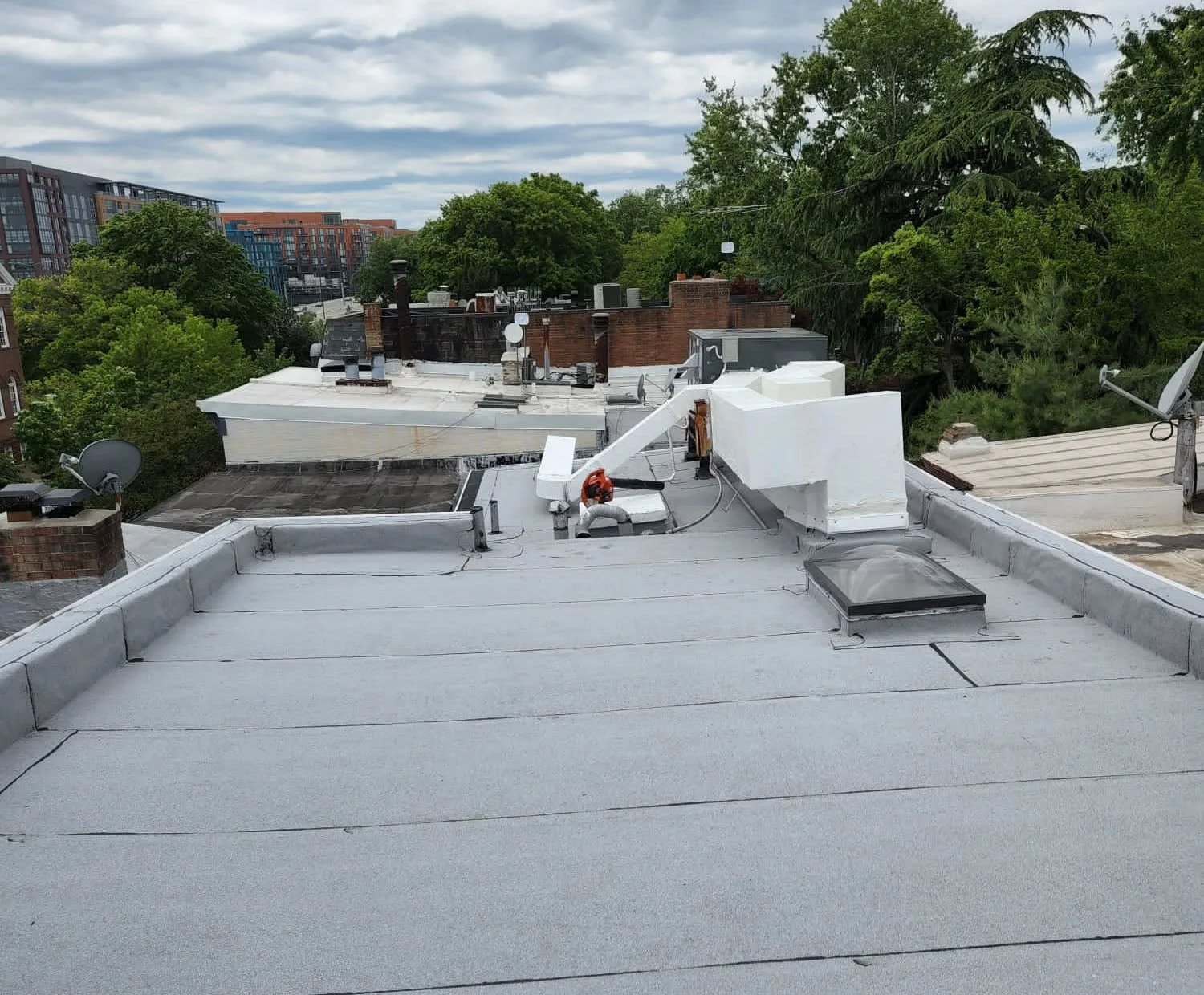
Review a Costa Mesa roof
Send the property location, roof concern, and operating limits. We will inspect the assembly, document what is confirmed, and explain the repair options. Call 555-555-5555 or request a roof assessment.