
Commercial Roofing in Lake Forest, CA
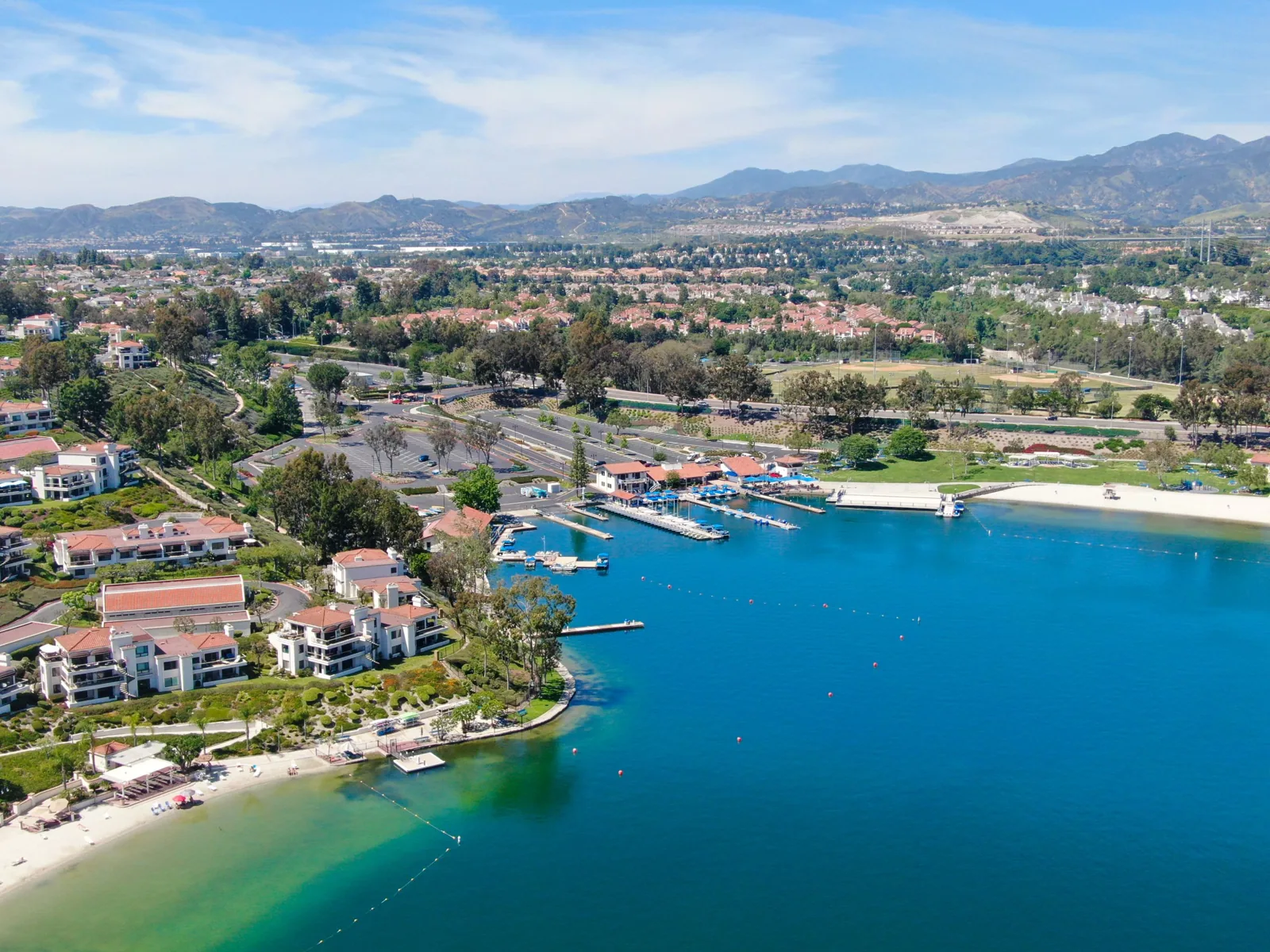
A lifted edge near a rooftop unit can let water reach insulation long before anyone sees a ceiling stain. Lake Forest is home to headquarters for Oakley, Panasonic Avionics and aircraft developer Karem Aircraft. Employers in 2020 also included Bal Seal Engineering, Alcon Research, LoanDepot, Schneider Electric and Cox Communications. We start with the assembly in front of us: seams, penetrations, attachment, drainage and the path into the building. Lake Forest sits near Irvine and Mission Viejo, where commercial property owners also need roof decisions tied to active operations. For this property, a clear inspection distinguishes an isolated opening from a larger condition and identifies what should be protected during the work. We record the finding, set a repair limit and explain what remains uncertain before recommending a patch, restoration or replacement.
Read the roof detail before the stain
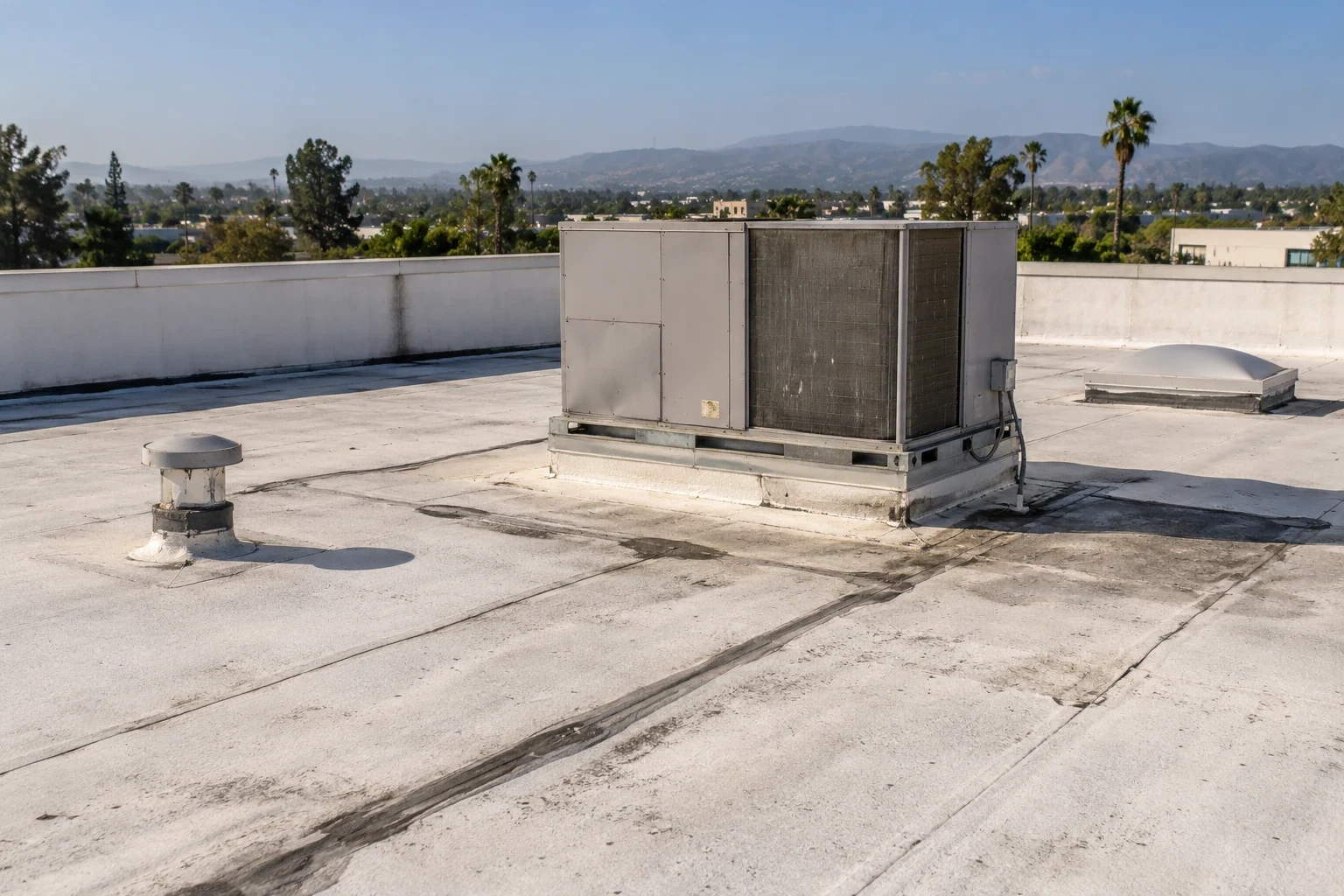
Water rarely follows a straight line from roof opening to occupied room. It can move along a deck flute, insulation joint, conduit or structural member, then appear far from the failed detail. We compare the interior report with roof seams, curbs, wall transitions and drains. At each likely entry point, we look for a split, loose termination, puncture, displaced flashing or a repair that has separated. A photograph gives the owner a visible reference; probing or a small measured opening can tell us whether the bond or layer below also needs attention.
We keep separate observations separate. A seam that has opened is different from a blocked outlet, even if both sit in the same roof zone. That matters at a Lake Forest office or engineering operation where a focused repair may be possible without disturbing the rest of the roof. We record what is confirmed, what needs additional testing and how the finding relates to the reported water entry. For a broader condition review, our commercial roof inspection records defects by location and priority, so the owner can compare urgent repairs with planned capital work.
Separate exposure from appearance
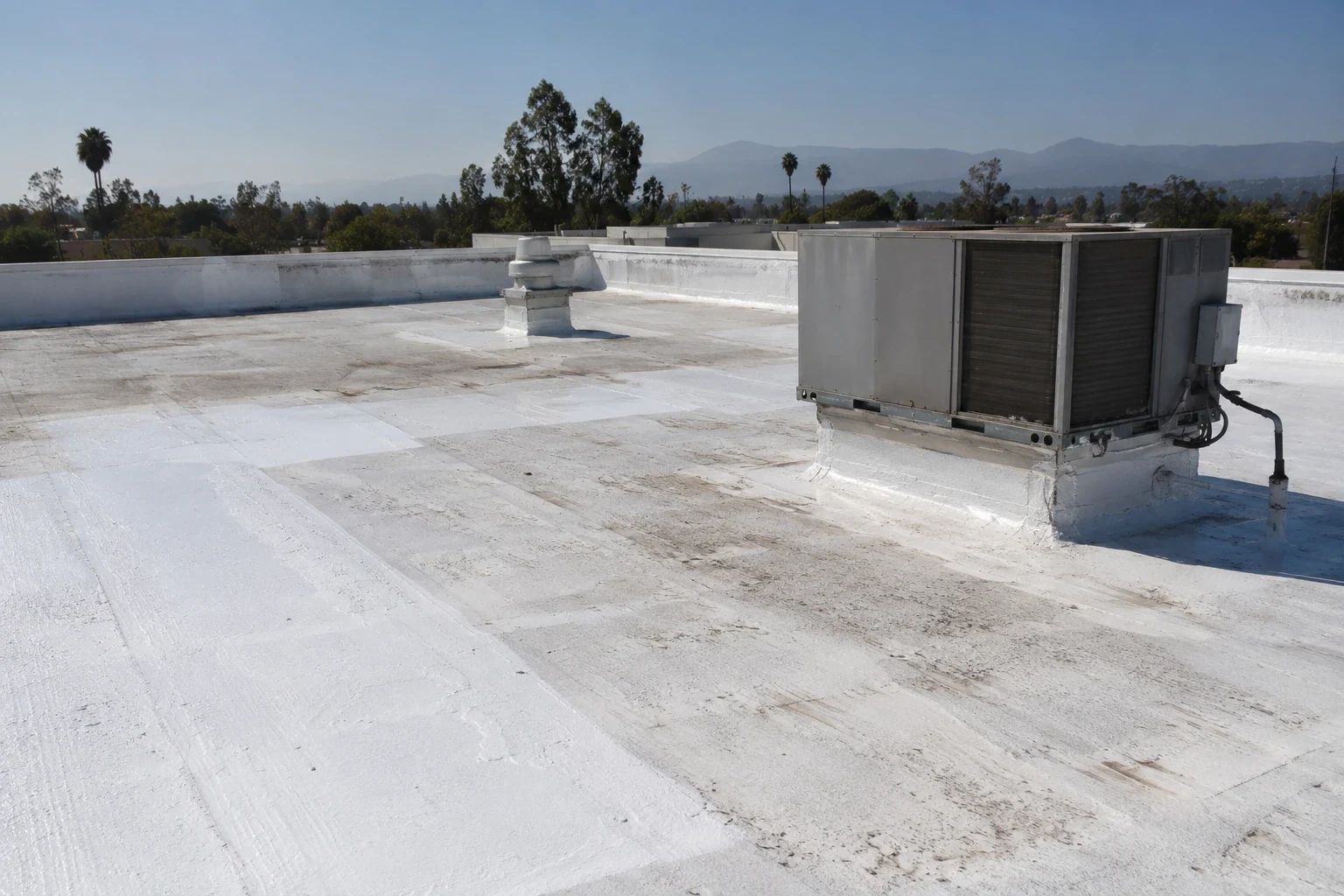
A discolored membrane is not automatically a failing roof, and a clean surface does not prove every seam is sound. We check the material for brittleness, open laps, poor adhesion, abrasion and repairs that no longer tie into the surrounding field. At penetrations, we inspect the transition between the pipe or curb and the roof surface. Around equipment, we look for condensate paths, service traffic and repeated foot travel that can wear a route through the membrane. We document the installed assembly and observed conditions at the property before setting the repair boundary.
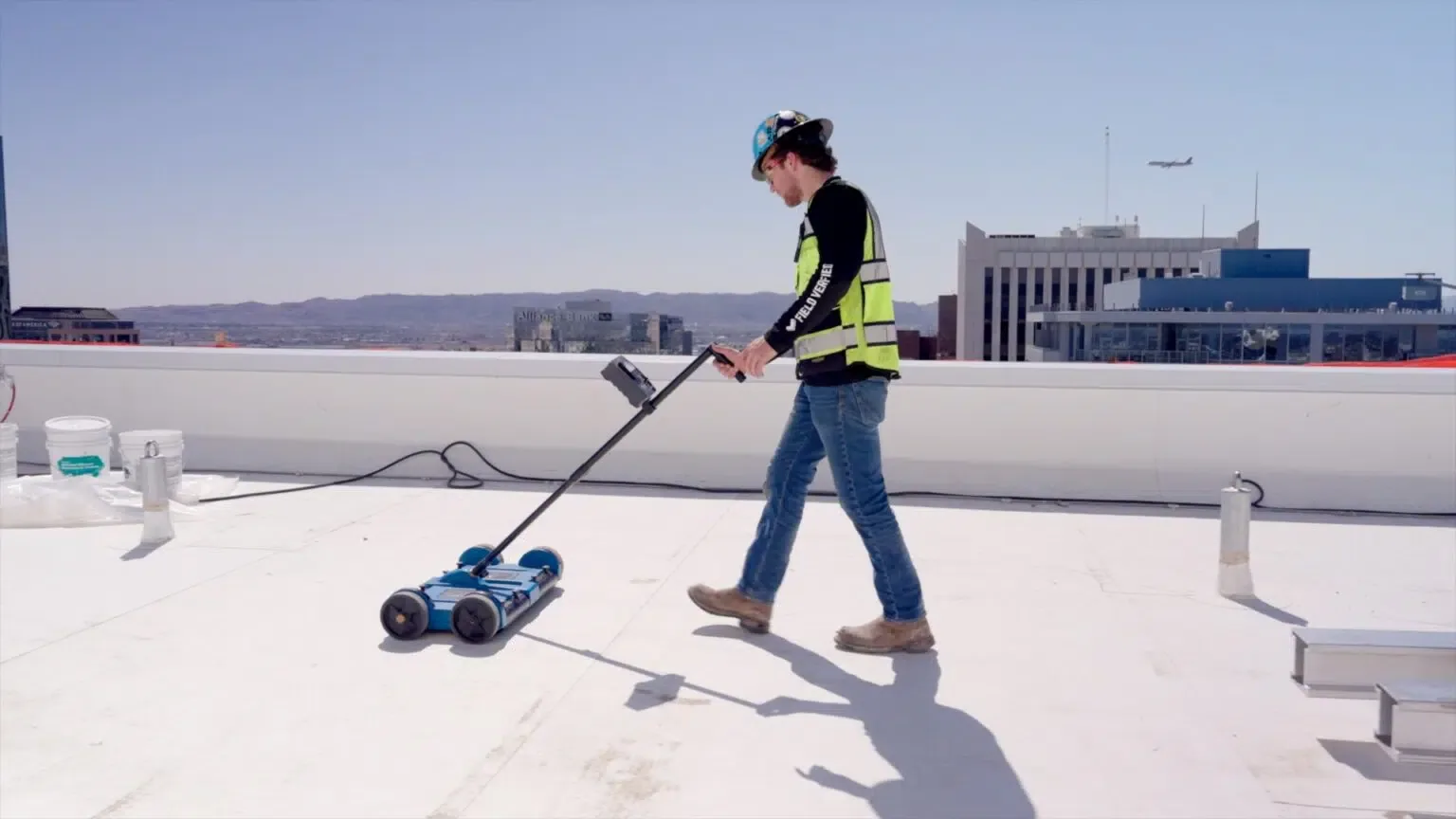
When the roof has an existing coating, we test whether it remains bonded and whether the substrate is dry enough to support another layer. If it does not, coating over it can trap a problem rather than resolve it. A recover also depends on layer condition, moisture and the assembly's ability to accept added material. We explain whether the next step is localized repair, moisture testing or a larger review. An owner with properties near the Irvine Spectrum district can compare reports, but each roof needs its own measured findings. The infrared moisture survey can help map suspect areas when a visual walk cannot establish how far wet material extends.
Plan access around the work inside
Roof access and interior protection affect the sequence. We identify where material will be staged, how technicians reach the repair, what area below needs protection and whether building staff must coordinate equipment shutdowns. A communications or laboratory space may have sensitive operations below the roof, while a customer-facing office can have a different access window. The owner's contact identifies those operating limits; our inspection translates them into a work plan tied to the specific repair.
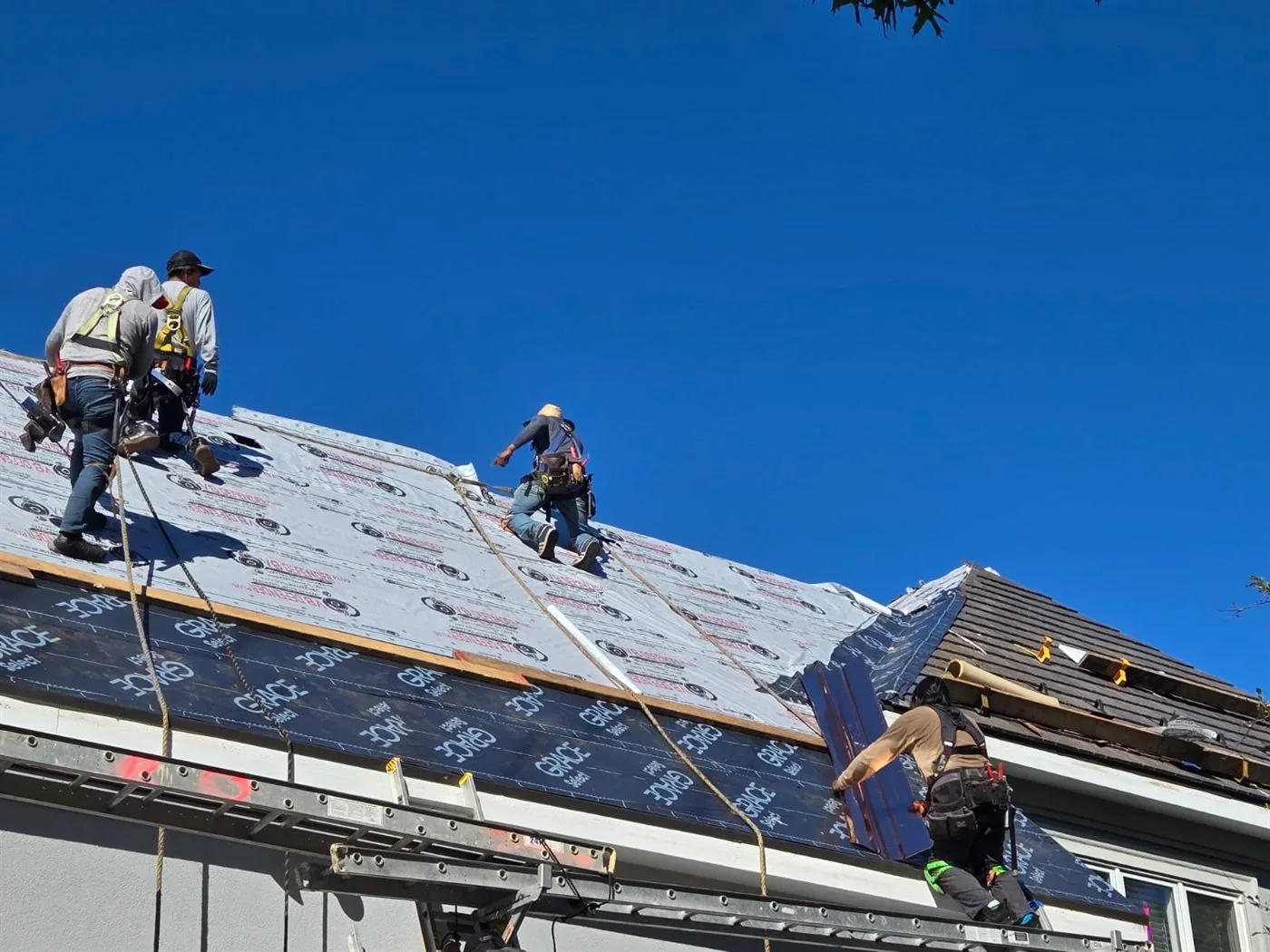
If a leak is active, temporary protection may be needed before permanent materials can be installed. We describe that interim step and what it does, then set a separate scope for the lasting repair. For a larger reroof, the sequence may divide the roof into work zones so entrances and critical rooms stay usable where conditions allow. The occupied-building work plan should name the affected areas, expected access restrictions and the points when the owner needs to review progress. This same planning matters in neighboring Mission Viejo, though its buildings and roof findings remain distinct.
Choose a scope that matches the layers
A repair proposal should make clear what will be removed, what remains, how new material ties into the existing assembly and what condition could change the scope after opening. If only a small area is damaged and the nearby field is sound, a bounded patch may be practical. If insulation is wet, fasteners have lost holding or multiple seams are separating, the proposed boundary may need to widen. We explain why, rather than pricing a larger area simply because access is already arranged.
Heat and seasonal rain place different demands on the same detail. NOAA normals at the nearby Anaheim station record frequent summer days at or above 90 degrees and most precipitation in the cooler months. The nearby Anaheim station provides a regional reference for summer heat and seasonal rainfall when we plan roof inspections. They help frame why we check heat-aged sealants, exposed flashing and drainage readiness before winter rain. A roof coating restoration can renew a compatible, dry substrate, while damaged layers or trapped moisture call for another solution. We discuss these options beside silicone coating systems only when the existing assembly and condition make them relevant.
Give the next decision a clear record
Owners should be able to reopen the file months later and understand what was found. We identify the roof zone, show the condition in photographs, record the repair limit and list completed work separately from deferred items. If an opening revealed a layer issue, the record says what was visible and what was replaced. If a follow-up view is recommended, it gives the owner a reason and a timeframe rather than a vague reminder to watch the roof.
That record can support maintenance planning across a Lake Forest property and another site near Irvine without suggesting that their assemblies match. We label observations by building and area, then summarize which work protects against active water entry and which can be planned. Our roof condition report can help a facilities team sort repairs by urgency and budget cycle. For a sale, acquisition or capital review, a roof due-diligence survey can provide a broader assessment than a leak visit. The closeout should leave no ambiguity about what was repaired and what remains outside the work.
Questions About Lake Forest
A leak showed up far from the rooftop equipment. How do you trace it?
We compare the room location with the roof slope, deck direction, seams and openings above it. Water can travel before it becomes visible indoors. We inspect likely transitions and use a probe or measured opening when needed to confirm whether the suspected detail explains the leak.
When does a coating make sense for an existing roof?
The surface and layers underneath need to be compatible, dry and sufficiently sound. We check adhesion, seams, penetrations and moisture before recommending a coating. If the coating would cover wet insulation or unstable material, we explain a repair or replacement option instead.
Can repairs be planned around a sensitive office or lab schedule?
We ask which rooms, equipment and access routes are affected, then sequence work around those constraints where the roof condition allows. The proposal identifies protection, staging and any short interruption that needs coordination before work starts.
What records should we keep after the crew leaves?
Retain the marked repair area, before-and-after photographs, material information, completed scope and any remaining item. We can assemble those details into a condition report so the next facilities manager can see what changed and what still needs review.
Related Roofing Work
Describe the roof and the operating limits
Share the leak location, roof records and any access or schedule constraints. We will inspect the related detail, explain the repair boundary and provide a written next step. Call 555-555-5555 or request a roof assessment.